







:quality(85):upscale()/2026/04/10/039/n/1922283/cb3481e569d98e495097f0.31125477_.jpg)
:quality(85):upscale()/2026/03/16/901/n/1922398/7098afdb69b86a52587585.46389067_.jpg)
:quality(85):upscale()/2025/08/14/650/n/1922283/470aeb83689df49cdc1bb6.14084110_.jpg)
:quality(85):upscale()/2023/10/03/668/n/1922283/1f15c8a9651c2d209e5eb5.32783075_.jpg)
:quality(85):upscale()/2025/09/09/891/n/1922283/7222624268c08ccba1c9a3.01436482_.png)











Europe goes all out to make a deal with Trump on Greenland
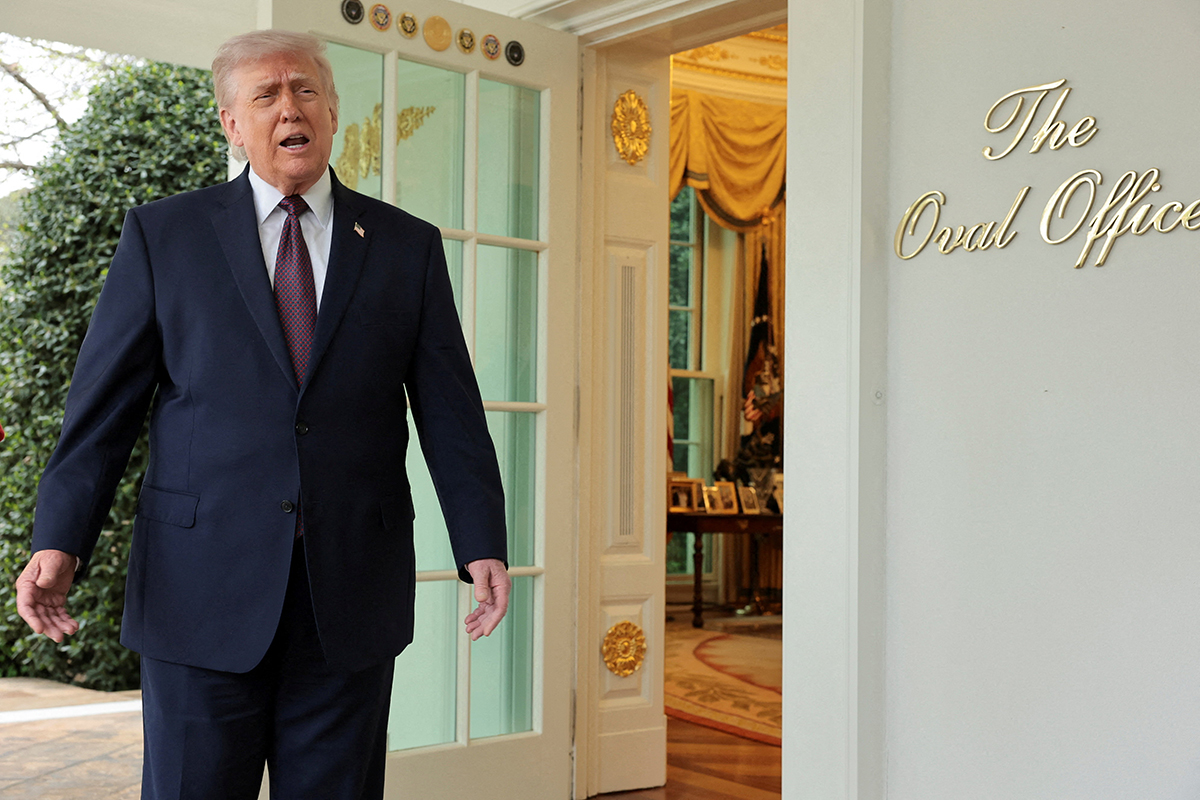
BRUSSELS — EU leaders are scrambling to come up with a deal on Greenland’s future that would allow Donald Trump to claim victory on the issue without destroying the alliance that underpins European security.
From proposals to using NATO to bolster Arctic security to giving the U.S. concessions on mineral extraction, the bloc’s leaders are leaning heavily toward conciliation over confrontation with Trump, three diplomats and an EU official told POLITICO. The race to come up with a plan follows the U.S. president’s renewed claims that his country “needs” the island territory — and won’t rule out getting it by force.
“In the end, we have always come to a common conclusion” with Washington, German Foreign Minister Johann Wadephul said after meeting U.S. Secretary of State Marco Rubio, adding that their talks on the Arctic territory were “encouraging.” German Chancellor Friedrich Merz said he hopes “a mutually acceptable solution” will be found within NATO.
The foreign ministers of Greenland and Denmark will meet U.S. Vice President JD Vance alongside Rubio at the White House on Wednesday. They are hoping for “an honest conversation with the administration,” according to another EU diplomat familiar with plans for the meeting.
The art of the deal
Asked to describe a possible endgame on Greenland, the first EU diplomat said it could be a deal that would give Trump a victory he could sell domestically, such as forcing European countries to invest more in Arctic security as well as a promise that the U.S. could profit from Greenland’s mineral wealth.
Trump is primarily looking for a win on Greenland, the diplomat said. “If you can smartly repackage Arctic security, blend in critical minerals, put a big bow on top, there’s a chance” of getting Trump to sign on. “Past experience” — for example when EU allies pledged to spend 5 percent of GDP on defense — showed “this is always how things have gone.”
On defense, NATO Secretary General Mark Rutte laid the groundwork for a deal when on Monday he said countries in the alliance were discussing ways of bolstering Arctic security. While the shape of the “next steps” touted by Rutte remain to be defined, a ramped-up investment by European NATO members is one possibility that could fit with Trump’s desire to see Europe shoulder greater responsibility for its security.
On mineral extraction, details are blurrier. But a deal that guarantees the U.S. a share of profits from extraction of critical raw materials is one possibility, said the EU official.
For now, capacity to extract critical raw materials from Greenland is limited. Denmark has spent years seeking investment for long-term projects, with little luck as countries have preferred obtaining minerals at a much cheaper rate on global markets.
The EU is planning to more than double its investment in Greenland in its next-long term budget — including funds oriented toward critical raw materials projects. This could be a hook for Trump to accept a co-investment deal.
Yet, if Trump’s real aim is the island’s minerals, Danes have been offering the U.S the chance to invest in Greenland for years — an offer refused by American officials, several diplomats said. If Trump’s push on Greenland is about China and Russia, he could easily ask Copenhagen to increase the presence of U.S troops on the island, they also say.
A third EU diplomat questioned whether Trump’s real aim was to get into the history books. Trump’s Make America Great Again slogan “has become a geographical concept; he wants to go down in history as the man who has made America ‘greater’ — in geographical terms,” they said.
Preserving NATO
Above all, governments are trying to avoid a military clash, the three diplomats and EU official said. A direct intervention by the U.S. on Greenland — a territory belonging to a member of the EU and NATO — would effectively spell the end of the postwar security order, leaders have warned.
“It would be an unprecedented situation in the history of NATO and any defense alliance,” German Defense Minister Boris Pistorius said Tuesday, adding that Berlin is talking with Copenhagen about the options at Europe’s disposal if the U.S. launches a takeover.
EU Defense Commissioner Andrius Kubilius and Danish Prime Minister Mette Fredriksen both said a military intervention would be the end of NATO. “Everything would stop,” Fredriksen said.

“No provision [in the alliance’s 1949 founding treaty] envisions an attack on one NATO ally by another one,” said a NATO diplomat, who was granted anonymity to speak freely. It would mean “the end of the alliance,” they added.
Trump said “it may be a choice” for the U.S. between pursuing his ambition to take control of Greenland and keeping the alliance intact.
Preserving NATO remains the bloc’s top priority, the first EU diplomat said. While both privately and publicly officials have forcefully rejected the idea Europe might “give up” Greenland to the U.S., the comments underscore how desperate governments are to avoid a direct clash with Washington.
“This is serious – and Europe is scared,” said a fourth EU diplomat involved in discussions in Brussels on how the bloc responds. A fifth described the moment as “seismic,” because it signaled that the U.S. was ready to rip up a hundred years of ironclad relations.
Still reeling
While European leaders are largely on the same page that a military conflict is unconscionable, how to reach a negotiated settlement is proving thornier.
Until the U.S. military strike on Venezuela on Jan. 3, and Trump’s fresh claims the U.S. needs to “have” Greenland, the Europeans were very conspicuously not working on a plan to protect Greenland from Trump — because to do so might risk making the threat real.
“It’s been something we’ve anticipated as a potential risk, but something that we can do very little about,” said Thomas Crosbie, a U.S. military expert at the Royal Danish Defense College, which provides training and education for the Danish defense force.
“The idea has been that the more we focus on this, and the more we create preparations around resisting this, the more we make it likely to happen. So there’s been anxiety that [by planning for a U.S. invasion] we may accidentally encourage more interest in this, and, you know, kind of escalate,” Crosbie said.
But the problem was that, having spent six years studiously avoiding making a plan to respond to Trump’s threats, Europe was left scrabbling for one.
Europeans are now faced with figuring out what they have in their “toolbox” to respond to Washington, a former Danish MP aware of discussions said. “The normal rulebook doesn’t work anymore.”
Officials consider it the biggest challenge to Europe since the Second World War and they’re not sure what to do.
“We know how we would react if Russia started to behave this way,” the fourth diplomat said. But with the U.S, “this is simply not something we are used to.”
Victor Jack, Nette Nöstlinger, Chris Lunday, Zoya Sheftalovich and Seb Starcevic contributed reporting.