








:quality(85):upscale()/2026/04/10/039/n/1922283/cb3481e569d98e495097f0.31125477_.jpg)
:quality(85):upscale()/2026/03/16/901/n/1922398/7098afdb69b86a52587585.46389067_.jpg)
:quality(85):upscale()/2025/08/14/650/n/1922283/470aeb83689df49cdc1bb6.14084110_.jpg)
:quality(85):upscale()/2023/10/03/668/n/1922283/1f15c8a9651c2d209e5eb5.32783075_.jpg)
:quality(85):upscale()/2025/09/09/891/n/1922283/7222624268c08ccba1c9a3.01436482_.png)











Fog of war clouds global rate cut outlook
President Donald Trump is demanding that the Federal Reserve immediately lower borrowing costs. But the war in the Middle East has now made any interest rate cuts much less likely in 2026 — not just in the U.S. but around the world.
With oil prices surging past $100 a barrel and Gulf shipping routes disrupted by Iran, governments and investors are bracing for a repeat of the 2022 energy shock from Russia’s invasion of Ukraine. And from Washington to Frankfurt, and London to Tokyo, the world’s central banks are likely to strike a more wary tone on inflation while assessing the fallout during a flurry of policy meetings taking place this week.
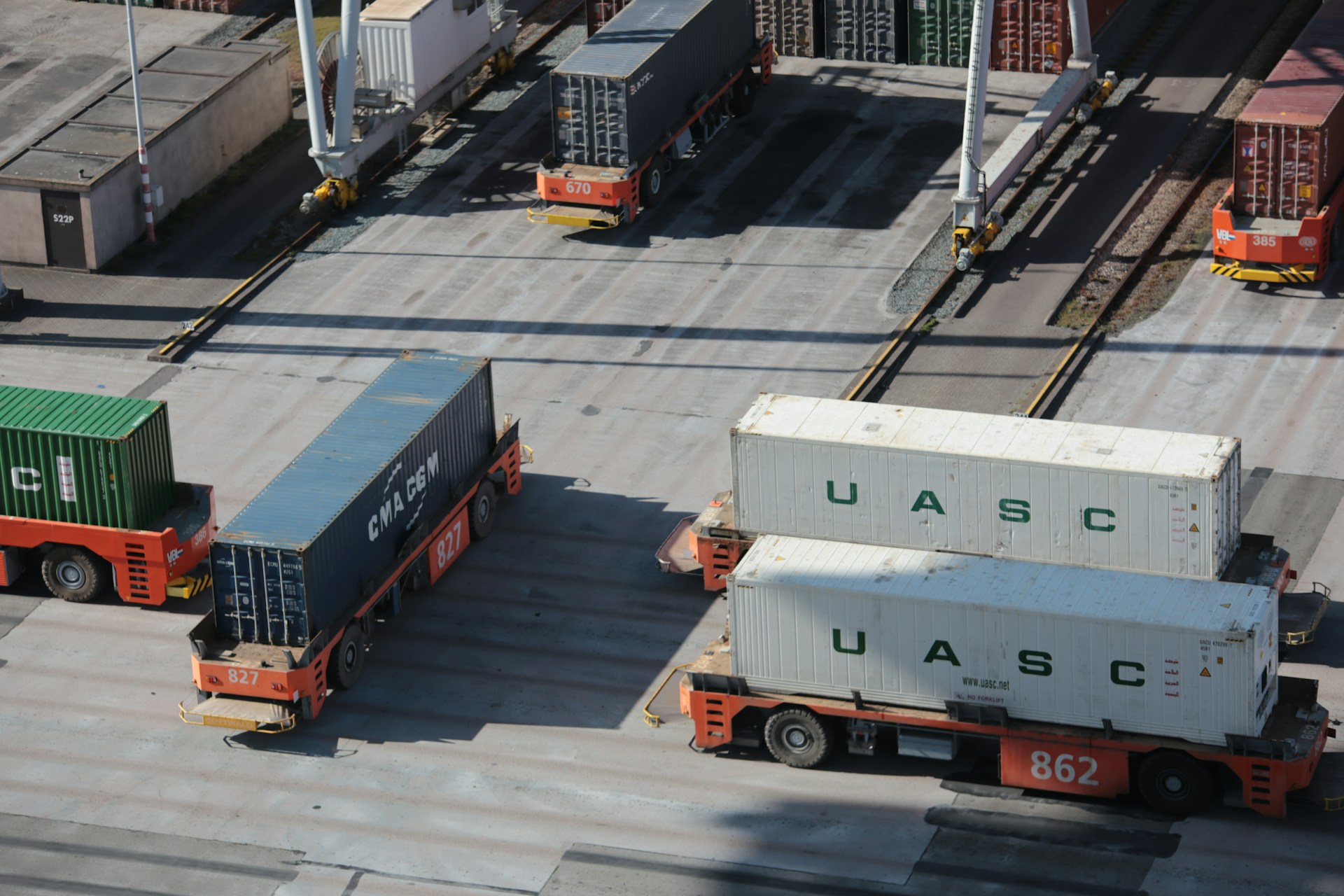
The effective closure of the Strait of Hormuz, a channel through which roughly a fifth of global oil passes, is pushing up costs not only for energy and transportation, but also for other key goods that are shipped through the waterway. The result could be a toxic mix for central banks: higher prices and lower employment, two problems they’re not equipped to address simultaneously.
“My best guess, but spoken with no conviction at all, is that this gets sorted out somehow in the next few weeks, and by the middle of the year, oil prices have come back down a fair amount,” said William English, a former top staffer at the Fed who is now a professor at Yale University. “But there’s a real risk, of course, that things go on for longer and are more damaging. And in that case, all bets are off.”
The specter of a prolonged global energy crunch could dash the hopes of consumers, businesses and investors worldwide for rate cuts this year — and in some cases, throw those plans in reverse.
No immediate moves are likely except in Australia, which raised its target rate by a quarter-point on Tuesday. But markets have already repriced their bets on what comes next from monetary policymakers. Indeed, if the Fed does cut rates later this year, it might be one of the few major central banks that does so, given that other economies like Europe are more exposed to higher energy costs than the U.S.
Before the war, investors saw a chance of cuts from the Fed, the European Central Bank and the Bank of England. Now they’re pricing in an altogether tighter policy stance: at least one ECB rate hike this year, a 60 percent chance of a BoE increase, fewer and later cuts from the Fed and more urgency in raising rates from the Bank of Japan.
Central bankers will prefer to wait until they get a better gauge of the economic repercussions from the conflict because “the shock could turn out to be negligible or very large,” said EFG chief economist Stefan Gerlach.
But few doubt the need for strong messaging as central banks are wary of repeating 2022, when energy price shocks combined with the after-effects from Covid and fiscal stimulus to morph into the worst inflation spike in half a century.
“There will be a significant contingent worrying about upside inflation risks in light of the 2022 experience,” J.P. Morgan economist Greg Fuzesi said ahead of the ECB’s policy-making council’s meeting on Thursday.
The Iran conflict is further complicating efforts by Trump to demonstrate to voters that the GOP is addressing cost-of-living concerns before this year’s midterm elections. Already, the war has caused a surge in politically salient gas prices and erased some of the progress toward more affordable mortgage rates. And it’s further muddied the picture for a central bank that the president has been pressing hard to take decisive action toward rate cuts.
Now, when Chair Jerome Powell and other Fed officials meet on Wednesday, they’re expected to be more open to the idea of rate increases later this year, though that’s still not the likeliest outcome. As Yale’s English pointed out, higher costs might ultimately increase the case for rate cuts if they slow the economy significantly.
“With the higher oil prices and the shock to the global economy, the likelihood of overheating seems reduced now, so that’s one of the reasons you might be comfortable waiting through some period of higher inflation,” rather than hiking rates in response, English said. “This might be enough to push the economy into real weakness, and in that case, they might well have to cut.”
But if households and businesses start to worry about a new acceleration in inflation and start expecting higher prices, that dynamic can be self-fulfilling and might call for rate hikes.
Hawkish policymakers are already signaling the ECB won’t hesitate this time. “A reaction by the ECB is potentially closer than many people think,” Peter Kažimír, Slovakia’s central bank governor, told Bloomberg last week. “We will be ready to act if needed.”
President Christine Lagarde pledged to ensure that consumers “don’t suffer the same inflation increases like those we saw in 2022 and 2023.” Back then, the ECB was slow to react, helping inflation surge past 10 percent.
Economists say today’s backdrop looks very different: In 2022, rates were near or below zero, balance sheets were bloated and fiscal policy was highly expansionary. “When inflation rose, it did so in an environment of strong demand supported by both fiscal and monetary stimulus,” said Gerlach. Now, tighter monetary and fiscal policy should limit the risk of energy shocks spilling through the economy into second-round effects.
Still, Barclays analyst Silvia Ardagna says that if medium-term inflation expectations “deteriorate significantly,” she expects “the ECB to act more swiftly than in 2022, but to tighten policy gradually.”
Nick Kounis, of Dutch bank ABN AMRO, also sees a more hawkish tone. “Uncertainty on the conflict is high, but if the current situation persists through to the April meeting, a hike becomes a distinct possibility,” he said.
Many analysts say the first obvious central bank casualty of the war is likely to be the Bank of England, which was widely expected to cut this week but is now seen firmly on hold. That’s because the U.K. still hasn’t quite gotten on top of the inflation that was unleashed four years ago.
Andrew Benito, an economist with hedge fund Point72 in London, reckons that the inevitable increase in fuel prices and household energy bills alone will add a full percentage point to headline inflation by summer, with “second-round” impacts on other prices pushing it even further away from the BoE’s target.
That, says Deutsche Bank’s Sanjay Raja, will force the bank into some “uncomfortable trade-offs”: The U.K. economy has already slowed over the last year due to global trade uncertainty and various government tax hikes to close the budget deficit. Hiking rates when the economy is already struggling could risk needlessly making things worse. But any sign of complacency could be disproportionately punished by the markets, given that the BoE performed worse than any other major central bank during the last inflation shock (the headline rate peaked at over 11 percent).
Raja expects BoE Governor Andrew Bailey to highlight the differences with 2022 — when inflation was accelerating rather than slowing — as one reason not to overreact to today’s price spike. However, he expects that Bailey, like the ECB and others, will talk tough about not letting business and households develop an inflationary mindset again.
More important will be the Bank of Japan’s decisions and press conference on Thursday, due to the outsized influence of Japanese interest rates on global financial markets. For decades, Japan kept interest rates low and printed money furiously to escape deflation. As long as it did so, Japanese and foreign investors borrowed yen cheaply to throw at higher-yielding markets such as the U.S.
Now, however, the BoJ’s concerns have finally switched from deflation to inflation, and BoJ Governor Kazuo Ueda is now in a hurry to “normalize” policy. Its key interest rate, at 0.75 percent, is the lowest in the developed world outside Switzerland.
But Japan, too, faces a big headwind from higher energy prices because of its dependence on imports, and Gregor Hirt, chief investment officer for Multi Asset at Allianz Global Investors, argues that the BoJ will hesitate before raising rates again.
The trouble with waiting and seeing is that the yen has already lurched lower, prompting alarm in Washington and sparking rumors of possible intervention to support it.
“In order to stop further weakness, the BoJ may have to move up a rate hike to stabilize the currency,” Hirt said.
Meanwhile, the war has presented the Swiss National Bank, which has kept interest rates at zero since June 2025, with a different kind of conundrum.
One risk is that a global “flight to safety” drives the Swiss franc to even greater heights against the euro and others. That could make so many imports cheaper that the overall inflation rate could turn negative. Alternatively, the boost in energy prices could have the same malign impact on inflation as it will elsewhere.
“The SNB will probably prefer to wait and see which of the two effects will have the greater impact on inflation prospects before acting in one direction or the other,” said ING economist Charlotte de Montpellier, who expects the Swiss central bank to stay on hold.
That response, shot through with varying degrees of nervousness, looks likely to be the dominant one this week. But things will look very different if the war situation hasn’t improved by the next round of meetings.





:quality(85):upscale()/2025/10/09/670/n/1922283/00b944c868e7cf4f7b79b3.95741067_.jpg)