












:quality(85):upscale()/2026/03/16/901/n/1922398/7098afdb69b86a52587585.46389067_.jpg)
:quality(85):upscale()/2025/08/14/650/n/1922283/470aeb83689df49cdc1bb6.14084110_.jpg)
:quality(85):upscale()/2023/10/03/668/n/1922283/1f15c8a9651c2d209e5eb5.32783075_.jpg)
:quality(85):upscale()/2025/09/09/891/n/1922283/7222624268c08ccba1c9a3.01436482_.png)
:quality(85):upscale()/2023/09/18/918/n/1922398/a1136b676508baddc752f5.20098216_.jpg)










How Europe will try to save Greenland from Trump
BRUSSELS — If European governments didn’t realize before that Donald Trump’s threats to seize Greenland were serious, they do now.
Policymakers are no longer ignoring the U.S. president’s ramped-up rhetoric — and are desperately searching for a plan to stop him.
“We must be ready for a direct confrontation with Trump,” said an EU diplomat briefed on ongoing discussions. “He is in an aggressive mode, and we need to be geared up.”
U.S. Secretary of State Marco Rubio said Wednesday that he planned to discuss a U.S. acquisition of Greenland with Danish officials next week. The White House said Trump’s preference would be to acquire the territory through a negotiation and also that it would consider purchasing the island — but that a military takeover was possible.
As diplomatic efforts intensified in Europe, French Foreign Minister Jean-Noël Barrot said he and his counterparts from Germany and Poland had discussed a joint European response to Trump’s threats.
“What is at stake is the question of how Europe, the EU, can be strengthened to deter threats, attempts on its security and interests,” Barrot told reporters. “Greenland is not for sale, and it is not for taking … so the threats must stop.”
POLITICO spoke with officials, diplomats, experts and NATO insiders to map out how Europe could deter the U.S. president from getting that far, and what its options are if he does. They were granted anonymity to speak freely.
“Everyone is very stunned and unaware of what we actually have in the toolbox,” said a former Danish MP. “No one really knows what to do because the Americans can do whatever they want. But we need answers to these questions immediately. They can’t wait three or five or seven years.”
On Wednesday, POLITICO set out the steps Trump could take to seize Greenland. Now here’s the flip side: What Europe does to stop him.
Option 1: Find a compromise
Trump says Greenland is vital for U.S. security interests and accuses Denmark of not doing enough to protect it against increasing Chinese and Russian military activity in the Arctic.
A negotiated settlement that sees Trump come out of talks with something he can sell as a win and that allows Denmark and Greenland to save face is perhaps the fastest route out of trouble.
A former senior NATO official suggested the alliance could mediate between Greenland, Denmark and the U.S., as it has done with alliance members Turkey and Greece over their disputes.

U.S. NATO Ambassador Matthew Whitaker said on Wednesday that Trump and his advisers do not believe Greenland is properly secured. “As the ice thaws and as the routes in the Arctic and the High North open up … Greenland becomes a very serious security risk for the mainland of the United States of America.”
NATO allies are also mulling fresh overtures to Trump that could bolster Greenland’s security, despite a widely held view that any direct threat from Russian and Chinese ships to the territory is overstated.
Among other proposals, the alliance should consider accelerating defense spending on the Arctic, holding more military exercises in the region, and posting troops to secure Greenland and reassure the U.S. if necessary, according to three NATO diplomats.
The alliance should also be open to setting up an “Arctic Sentry” scheme — shifting its military assets to the region — similar to its Eastern Sentry and Baltic Sentry initiatives, two of the diplomats said.
“Anything that can be done” to bolster the alliance’s presence near Greenland and meet Trump’s demands “should be maxed out,” said one of the NATO diplomats cited above.
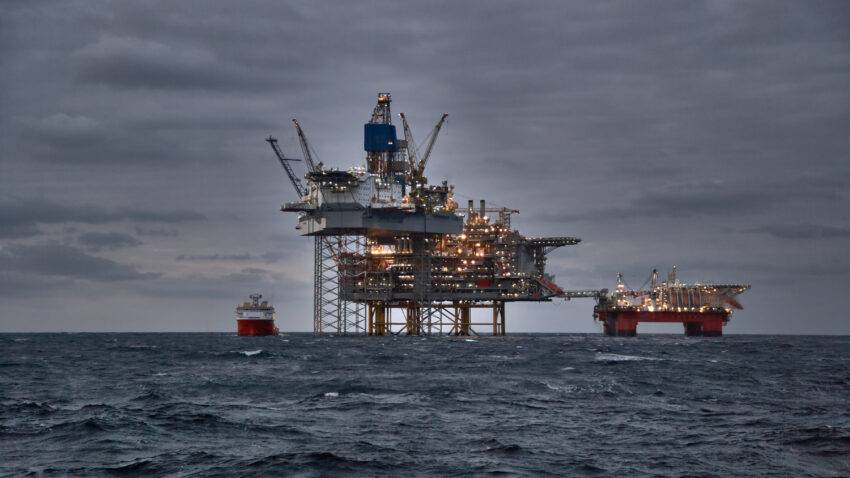
Trump also says he wants Greenland for its vast mineral deposits and potential oil and gas reserves. But there’s a reason Greenland has remained largely untapped: Extracting resources from its inhospitable terrain is difficult and very expensive, making them less competitive than Chinese imports.
Denmark’s envoys say they tried for years to make the case for investment in Greenland, but their European counterparts weren’t receptive — though an EU diplomat familiar with the matter said there are signs that attitude is shifting.
Option 2: Give Greenland a ton of cash
The Trump administration has thrown its weight behind Greenland’s independence movement. The pitch is that if the Arctic territory leaves the Kingdom of Denmark and signs up to a deal with the U.S., it will be flooded with American cash.
While Trump has repeatedly refused to rule out using military force to take Greenland, he has also insisted he wants it to come willingly.
The EU and Denmark are trying to convince Greenlanders that they can give them a better deal.
Brussels is planning to more than double its spending on Greenland from 2028 under long-term budget plans drawn up after Trump started to make claims on the Danish-held territory, according to a draft proposal from the European Commission published in September.
Under the plans, which are subject to further negotiations among member countries, the EU would almost double spending on Greenland to €530 million for a seven-year period starting in 2028.
That comes on top of the money Denmark sends Greenland as part of its agreement with the self-governing territory.
Greenland would also be eligible to apply for an additional €44 million in EU funding for remote territories associated with European countries, per the same document.
Danish and European support currently focuses mainly on welfare, health care, education and the territory’s green transition. Under the new spending plans, that focus would expand to developing the island’s ability to extract mineral resources.
“We have many, many people below the poverty line, and the infrastructure in Greenland is lagging, and our resources are primarily taken out without good profit to Greenland but mostly profit to Danish companies,” said Kuno Fencker, a pro-independence Greenlandic opposition MP.
An attractive offer from Denmark and the EU could be enough to keep Greenlanders out of America’s grasp.
Option 3: Retaliate economically
Since Trump’s first term in office, “there’s been a lot of effort to try and think through how we ensure European security, Nordic security, Arctic security, without the U.S. actively involved,” said Thomas Crosbie, a U.S. military expert at the Royal Danish Defense College, which provides training and education for the Danish defense force.
“That’s hard, but it’s possible. But I don’t know if anyone has seriously contemplated ensuring European security against America. It’s just crazy,” Crosbie said.
The EU does have one strong political tool at its disposal, which it could use to deter Trump: the Anti-Coercion Instrument, the “trade bazooka” created after the first Trump administration, which allows the EU to retaliate against trade discrimination.
The EU threatened to deploy it after Trump slapped tariffs on the bloc but shelved it in July after the two sides reached a deal.
With the U.S. still imposing tariffs on the EU, Brussels could bring the bazooka back out.
“We have exports to the United States a bit above €600 billion, and for around one-third of those goods we have a market share of more than 50 percent and it’s totally clear that this is also the power in our hands,” said Bernd Lange, chair of the European Parliament’s trade committee.
But Trump would have to believe the EU was serious, given that all its tough talk amounted to nothing the last time around.
Option 4: Boots on the ground
If the U.S. does decide to take Greenland by military force, there’s little Europeans could do to prevent it.
“They are not going to preemptively attack Americans before they claim Greenland, because that would be done before an act of war,” said Crosbie, the Danish military educator. “But in terms of responding to the first move, it really depends. If the Americans have a very small group of people, you could try and arrest those people, because there’d be a criminal act.”
It’s a different story if the U.S. goes in hard.
Legally speaking, it’s possible Denmark would be forced to respond militarily. Under a 1952 standing order, troops should “immediately take up the fight without waiting for, or seeking orders” in “the event of an attack on Danish territory.”
European countries should weigh the possibility of deploying troops to Greenland — if Denmark requests it — to increase the potential cost of U.S. military action, an EU diplomat said, echoing suggestions that Berlin and Paris could send forces to deter any incursion.
While those forces are unlikely to be able to withstand a U.S. invasion, they would act as a deterrent.
“You could have a tripwire effect where you have some groups of people who are physically in the way, like a Tiananmen Square-type situation, which would potentially force the [U.S.] military to use violence” or to back down, said Crosbie.
But that strategy comes at a high cost, he said. “This is completely unexplored territory, but it is quite possible that people’s lives will be lost in the attempt to reject the American claim over Greenland.”
Gerardo Fortuna, Clea Caulcutt and Eli Stokols contributed reporting.