













:quality(85):upscale()/2026/03/16/901/n/1922398/7098afdb69b86a52587585.46389067_.jpg)
:quality(85):upscale()/2025/08/14/650/n/1922283/470aeb83689df49cdc1bb6.14084110_.jpg)
:quality(85):upscale()/2023/10/03/668/n/1922283/1f15c8a9651c2d209e5eb5.32783075_.jpg)
:quality(85):upscale()/2025/09/09/891/n/1922283/7222624268c08ccba1c9a3.01436482_.png)
:quality(85):upscale()/2023/09/18/918/n/1922398/a1136b676508baddc752f5.20098216_.jpg)







.jpg?#)


Hungary’s Orbán is selling Christian nationalism. His former pastor isn’t buying it.
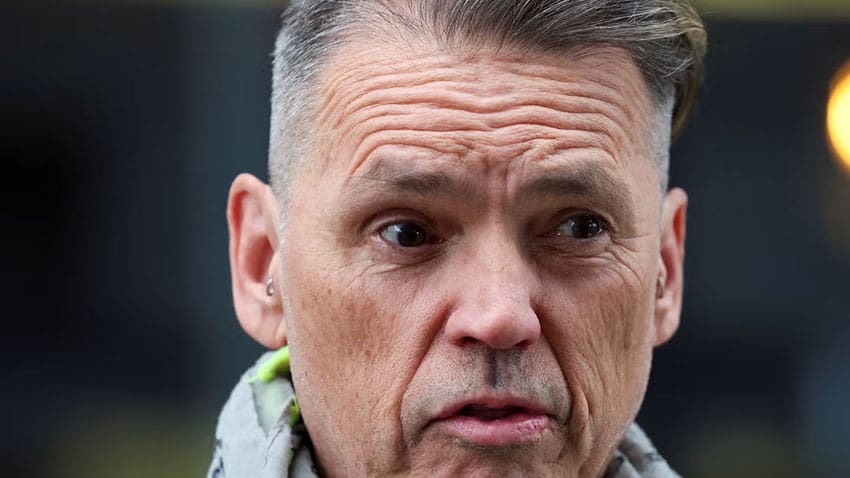
BUDAPEST — Gábor Iványi performed Viktor Orbán’s wedding and later baptized two of his children in the 1990s, little suspecting his friend’s government would one day put him on trial.
Now, the prime minister is seeking to extend his 16-year rule over Hungary in an election on April 12, casting himself as the candidate who will protect traditional Christian values.
But Iványi, a 74-year-old Methodist pastor who has known Orbán since the 1980s, doesn’t buy into the prime minister’s blend of Christianity and nationalism, which he says “has nothing to do with the Bible, with the essence of the Bible.”
Although the two men crossed paths in the same anti-Communist dissident circles during their earlier years, they are now at odds politically. And Iványi is facing trial next month over the activities of his church, in a case that Orbán’s critics — including the nongovernmental organization Human Rights Watch — say is politically motivated.
Still, despite the rupture, the white-bearded pastor hoped there could be a final reconciliation. “The only thing he never asked [of me] is to bury him,” he said in his Budapest office. “But if he would ask, I would do that.”
Pastor in the dock
Iványi, who heads an organization managing homeless shelters, hospitals and schools for the poor, faces a two-year suspended prison term for being part of a group that allegedly committed violence against public officials raiding his congregation’s premises in 2022.
A trial session is set for May 4.
Iványi and members of his congregation had formed a human chain to block the raid, after the authorities accused his church — the Hungarian Evangelical Fellowship — of financial irregularities.
Opposition politicians, including Budapest’s Green Mayor Gergely Karácsony, and international human rights organizations say the allegations are politically motivated, aimed at intimidating an organization that supports homeless people, Roma communities and Ukrainian refugees. The government insists Iványi has been involved in illegal mismanagement of public and church funds.
The church calls those allegations an “absurdity” and has accused the government of “political persecution.”
As Human Rights Watch put it: “The prosecution of Iványi and interference with his church’s work is part of a wider pattern of the Hungarian government targeting human rights defenders working with migrants, asylum seekers, refugees, people experiencing poverty or homelessness, children with disabilities, and lesbian, gay, bisexual, and transgender (LGBT) people.”

Iványi calls the charges laughable, joking that it was hardly plausible he could have fought off the police at his advanced age.
“So, I am charged with violence against authority. It was four years ago when the [police] occupied all the offices. And well, sometimes I wish I had beaten them, because then maybe there will be a case, but of course I didn’t,” he said.
“But I think it’s not me who must be in prison, rather Viktor Orbán and [his] gang.”
POLITICO asked Orbán’s office about Iványi’s comments and the accusations that the trial was politically motivated, but received no immediate response.
The falling out
Iványi and Orbán go back a long way.
They first met in the final years of the Soviet overlordship of Hungary. Iványi was a progressive dissident, active in the democratic opposition, while Orbán was a student involved in a liberal youth movement that would later evolve into the ruling Fidesz party. The two became close, fighting for a more liberal Hungary.
That all seems a world away now. Orbán is drumming up anti-Ukrainian sentiment, while Iványi is increasing help for Ukrainian refugees. The Fidesz government has banned LGBTQ+ protests, while Iványi defends sexual diversity.
“Nobody had thought that he would turn that much from those values to the far right, or even to fascist ideas, and that he loses all the human values he believed in, or seemed to believe in, at that time,” he said.
But Iványi realized he made an enemy being critical of Orbán’s illiberal shift.
“I tried to heal this problem by criticizing him all the time, his political acts, but because I feel responsibility not to get into hell for these things. But he was not too happy about it,” he said.
According to Iványi, it was Orbán’s political maneuvering that drove them apart, as the pastor remained committed to progressive liberal values while Orbán moved to the right to consolidate political support.
The moment their relationship broke down came during Orbán’s second premiership in 2010, when he asked Iványi to publicly endorse him and have their photo taken together. Iványi refused, as he supported an opposition party.
“I was promised extra financial support for that photo,” he said.
And when he refused, “I was told [Orbán] was absolutely offended by that.”
From then on, Iványi’s Hungarian Evangelical Fellowship — a prominent religious dissident movement he founded under Communism — began facing problems.
In 2011, a new church law stripped the congregation of its official church status — a move the congregation is still fighting today, as it helped the authorities stir up financial and legal problems. As a result, the organization now has fewer resources and has had to close some of its schools and shelters.
Iványi recalled when a young Orbán, in 1989, stood in Budapest’s Heroes’ Square, demanding that the Soviets leave Hungary and allow free elections. It’s a moment he contrasted sharply with the prime minister’s current close ties to Russian President Vladimir Putin and news reports suggesting the Kremlin has sent agents to influence the April 12 election schedule.
“I was so grateful that there is a brave man with long hair who told Russians [to go] home, and I never ever thought that he [would] be the one who invites them back,” he said.