











:quality(85):upscale()/2026/04/10/039/n/1922283/cb3481e569d98e495097f0.31125477_.jpg)
:quality(85):upscale()/2026/03/16/901/n/1922398/7098afdb69b86a52587585.46389067_.jpg)
:quality(85):upscale()/2025/08/14/650/n/1922283/470aeb83689df49cdc1bb6.14084110_.jpg)
:quality(85):upscale()/2023/10/03/668/n/1922283/1f15c8a9651c2d209e5eb5.32783075_.jpg)
:quality(85):upscale()/2025/09/09/891/n/1922283/7222624268c08ccba1c9a3.01436482_.png)








Israel’s new strategy: Lean on Trump, pressure Iran, keep the military option
TEL AVIV, Israel — Israel isn’t getting the U.S. backing for an extended war with Iran that it wanted. So the country is switching to a new regional strategy — one that hinges on a fragile mix of military pressure, U.S. diplomacy and, ultimately, the prospect of acting alone.
At the start of the war with Iran nearly six weeks ago, Prime Minister Benjamin Netanyahu said Israel’s goal was to “remove the existential threat” posed by Iran, including by preventing the country from obtaining a nuclear weapon and creating conditions for the Iranian people to rise up against their government. While Israel failed to achieve that, Netanyahu is prioritizing coordination with U.S. President Donald Trump, even if it comes at a cost.
“Since Trump was elected … whenever we can, we coordinate with the Americans,” said Yaakov Amidror, a former national security adviser to Netanyahu who still consults with him. “For example, now, to stop attacking Iran, that was the price. But for us, being with the Americans and paying the price along the way was more important than to do it by ourselves.”
It means that now, Israel is trying to find a way to degrade Tehran without further antagonizing a U.S. administration already angry that it has continued attacks on Lebanon.
Its primary aim is for Washington to reach a deal with Iran that addresses longstanding concerns about its nuclear and missile programs without delivering the kind of sanctions relief Israeli officials fear would entrench Tehran’s hardline leadership, according to six current and former Israeli security officials.
Netanyahu has also agreed to scale back Israeli operations in Lebanon at Trump’s request, Trump told NBC on Thursday. That came after Israel hit 100 targets across Beirut, the Bekaa Valley and southern Lebanon in less than 10 minutes on Wednesday, killing more than 300 people in one of the deadliest single bombing runs in Lebanon’s history.
“I spoke with Bibi and he’s going to low-key it. I just think we have to be sort of a little more low-key,” Trump said.
Netanyahu has not publicly acknowledged making such a commitment but has directed his team to begin negotiations with Lebanon to disarm Hezbollah as soon as possible. Initial consultations among American, Lebanese and Israeli representatives are expected to begin in Washington next week to frame the talks.
Part of the Israeli approach is continuing a certain level of attacks against Lebanon amid discussions.
Israel has continued to reject a ceasefire with Lebanon and was still operating there on Friday, with both sides exchanging fire. Israel’s military was also continuing ground operations in southern Lebanon, including locating and blowing up weapons, the military said.
Israel has for months sought to push Hezbollah back beyond the Litani River, which cuts across southern Lebanon and has long been treated by Israel as a de facto buffer line with the militant group. Netanyahu has promised to continue striking Hezbollah in Lebanon until Israel can restore security for Israelis who live in the country’s north.
Privately, Israeli officials describe their goals more narrowly: deepening a buffer in the north and shaping the battlefield so any future negotiations begin from a more favorable balance of power.
“We’re trying to create the conditions for Hezbollah to be disarmed,” an Israeli military official said, adding that if Israel’s military efforts further degrade the group’s ability to launch rockets from southern Lebanon, “then the idea of an agreement working in the future could be more realistic.” The official, like others, was granted anonymity to speak candidly about Israeli military strategy.
While Iran, Pakistan and others say Lebanon will be part of the ongoing ceasefire negotiations, Netanyahu has insisted they are separate and says Israel will open up discrete talks with Lebanon on disarming Hezbollah and restoring peaceful relations with the country.
Even as Netanyahu has curbed some military options to preserve alignment with Washington, the war may still yield a lasting strategic gain: serious economic damage to Iran, an Israeli military official and two of the former officials said.
Whether Israel and the U.S. can persuade allies and the broader international community that the damage is both severe and long-term will also be a key outcome of the war, they said.
Iran faces direct reconstruction costs between $7 billion and $44 billion, with its missile program accounting for the steepest economic losses, according to a regional intelligence assessment obtained by POLITICO.
With Iran’s annual military budget at about $7.9 billion, even the lower-end reconstruction estimate would absorb almost an entire year of defense outlays, while the upper-end figure of about $44.4 billion would amount to more than five and a half years of military spending, the assessment said.
Those losses are also raising the stakes for the next phase: potential nuclear diplomacy between Washington and Tehran, which Israeli officials fear could ease pressure on Iran before the war’s full costs take hold. Israel wants to make sure it has the ability to influence negotiations, even if it doesn’t have a seat at the table in Islamabad as talks begin on Saturday.
Jacob Nagel, who led the Israeli expert team that worked with the Obama administration while it negotiated the 2015 nuclear deal, said “the Iranians always win” when negotiating with Western countries because their negotiators are highly experienced and know the material in depth.
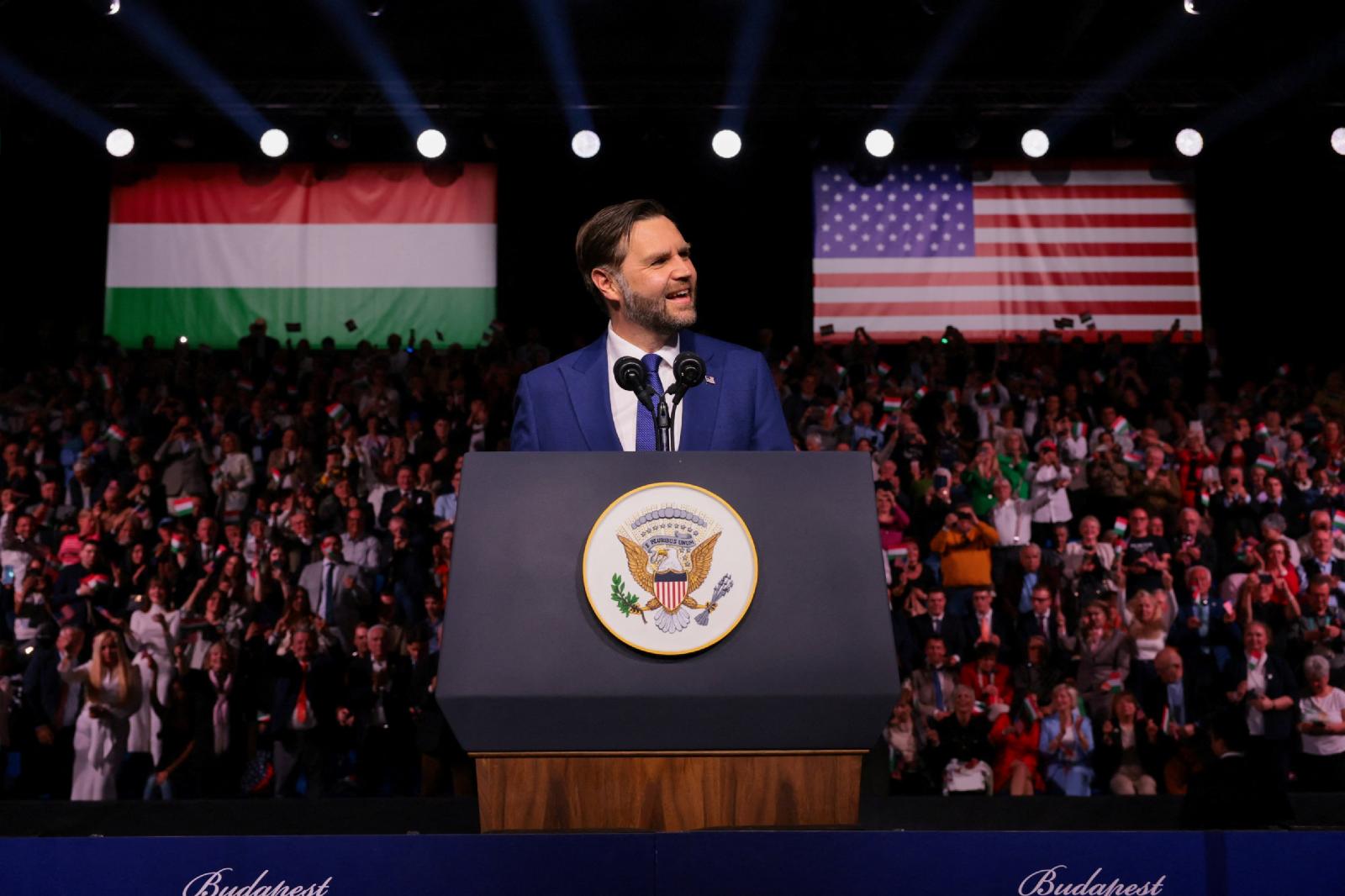
The U.S. negotiators — Vice President JD Vance, along with envoys Steve Witkoff and Jared Kushner — are well-liked in Israel as close Trump confidants but are seen as untested.
“Vance, Witkoff and Kushner are all really great people, but their expertise is not in this area,” said Nagel. The three American officials will represent the U.S. in talks with Iran in Islamabad.
Nagel said he feared a scenario in which the U.S. focuses too narrowly on getting Iran to agree to give up its remaining highly enriched uranium stockpile but leaves intact its infrastructure and other parts of its program that would not fully eliminate the nuclear threat.
“The Iranians can give it, and everyone will say, ‘Wow, we won the war, because the highly enriched uranium is out.’ It’s not enough,” he said.
For Israel, that is the central question hanging over both the war and the diplomacy that may follow: whether this moment produces a fundamentally different outcome, or merely resets the clock until the next round.
Israel and the U.S., officials say, have wagered that this time will be different — that military pressure, paired with diplomacy, can do more than temporarily degrade the threat. If it does not, Israel could be left facing an enduring threat at a mounting military and economic cost.
“Israel will not be able to ‘mow the lawn’ with Iran the way we do elsewhere … because it’s too expensive and we face diminishing returns,” a former senior Israeli official said. “We cannot end this with all the threat and cost with just partial successes.”
While Israel has demonstrated it can act alone, such as in the beginning of the 12-day war in June when it kicked off the campaign without the U.S., the past six weeks have also illustrated why working in tandem with the U.S. is so much more successful, a second former senior Israeli official said.
“Everything is better with the United States. You have bases in the region, a fleet of heavy bombers, air tankers, refueling, intelligence,” the former official said.
“If the Americans are refueling us all around the Middle East, we can take twice as much cargo to every sortie, and the Americans themselves are taking their own actions,” Amidror said.
Whether Israel would consider breaking from its renewed commitment to acting with Washington will depend on how the next few weeks go, he said.
“It very much depends on what will happen in the talks and how the Americans will react,” Amidror said.