









:quality(85):upscale()/2026/03/16/901/n/1922398/7098afdb69b86a52587585.46389067_.jpg)
:quality(85):upscale()/2025/08/14/650/n/1922283/470aeb83689df49cdc1bb6.14084110_.jpg)
:quality(85):upscale()/2023/10/03/668/n/1922283/1f15c8a9651c2d209e5eb5.32783075_.jpg)
:quality(85):upscale()/2025/09/09/891/n/1922283/7222624268c08ccba1c9a3.01436482_.png)
:quality(85):upscale()/2023/09/18/918/n/1922398/a1136b676508baddc752f5.20098216_.jpg)








Pope Leo and Trump head for a clash
The first American pope is on a collision course with U.S. President Donald Trump.
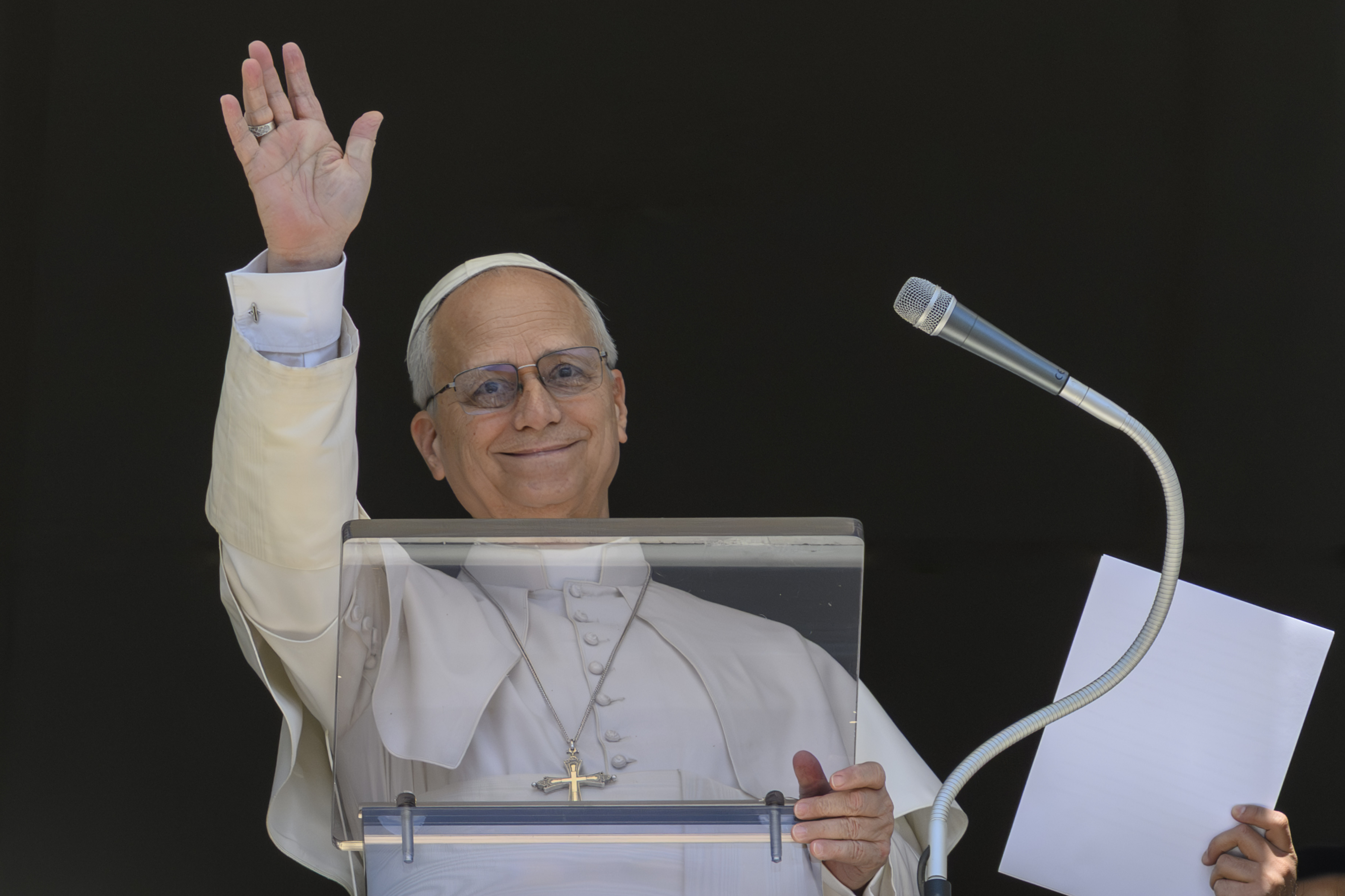
The latest fault line between the Vatican and the White House emerged on Sunday. Shortly after Trump suggested his administration could “run” Venezuela, the Chicago-born Pope Leo XIV appeared at the Angelus window overlooking St. Peter’s Square to deliver an address calling for the safeguarding of the “country’s sovereignty.”
For MAGA-aligned conservatives, this is now part of an unwelcome pattern. While Leo is less combative in tone toward Trump than his predecessor Francis, his priorities are rekindling familiar battles in the culture war with the U.S. administration on topics such as immigration and deportations, LGBTQ+ rights and climate change.
As the leader of a global community of 1.4 billion Catholics, Leo has a rare position of influence to challenge Trump’s policies, and the U.S. president has to tread with uncustomary caution in confronting him. Trump traditionally relishes blasting his critics with invective but has been unusually restrained in response to Leo’s criticism, in part because he counts a large number of Catholics among his core electorate.
“[Leo] is not looking for a fight like Francis, who sometimes enjoyed a fight,” said Chris White, author of “Pope Leo XIV: Inside the Conclave and the Dawn of a New Papacy.”
“But while different in style, he is clearly a continuation of Francis in substance. Initially there was a wait-and-see approach, but for many MAGA Catholics, Leo challenges core beliefs.”
In recent months, migration has become the main combat zone between the liberal pope and U.S. conservatives. Leo called on his senior clergy to speak out on the need to protect vulnerable migrants, and U.S. bishops denounced the “dehumanizing rhetoric and violence” leveled at people targeted by Trump’s deportation policies. Leo later went public with an appeal that migrants in the U.S. be treated “humanely” and “with dignity.”
Leo’s support emboldened Florida bishops to call for a Christmas reprieve from Immigration and Customs Enforcement raids. “Don’t be the Grinch that stole Christmas,” said Archbishop Thomas Wenski of Miami.
As if evidence were needed of America’s polarization on this topic, however, the Department of Homeland Security described their arrests as a “Christmas gift to Americans.”
Leo also conspicuously removed Cardinal Timothy Dolan, Trump’s preferred candidate for pope and a favorite on the conservative Fox News channel, from a key post as archbishop of New York, replacing him with a bishop known for pro-migrant views.
This cuts to the heart of the moral dilemma for a divided U.S. Catholic community. For Trump, Catholics are hardly a sideshow as they constitute 22 percent of his electorate, according to a poll by the Pew Research Center. While the pope appeals to liberal causes, however, many MAGA Catholics take a far stricter line on topics such as migration, sexuality and climate change.
To his critics from the conservative Catholic MAGA camp, such as Trump’s former strategist Steve Bannon, the pope is anathema.

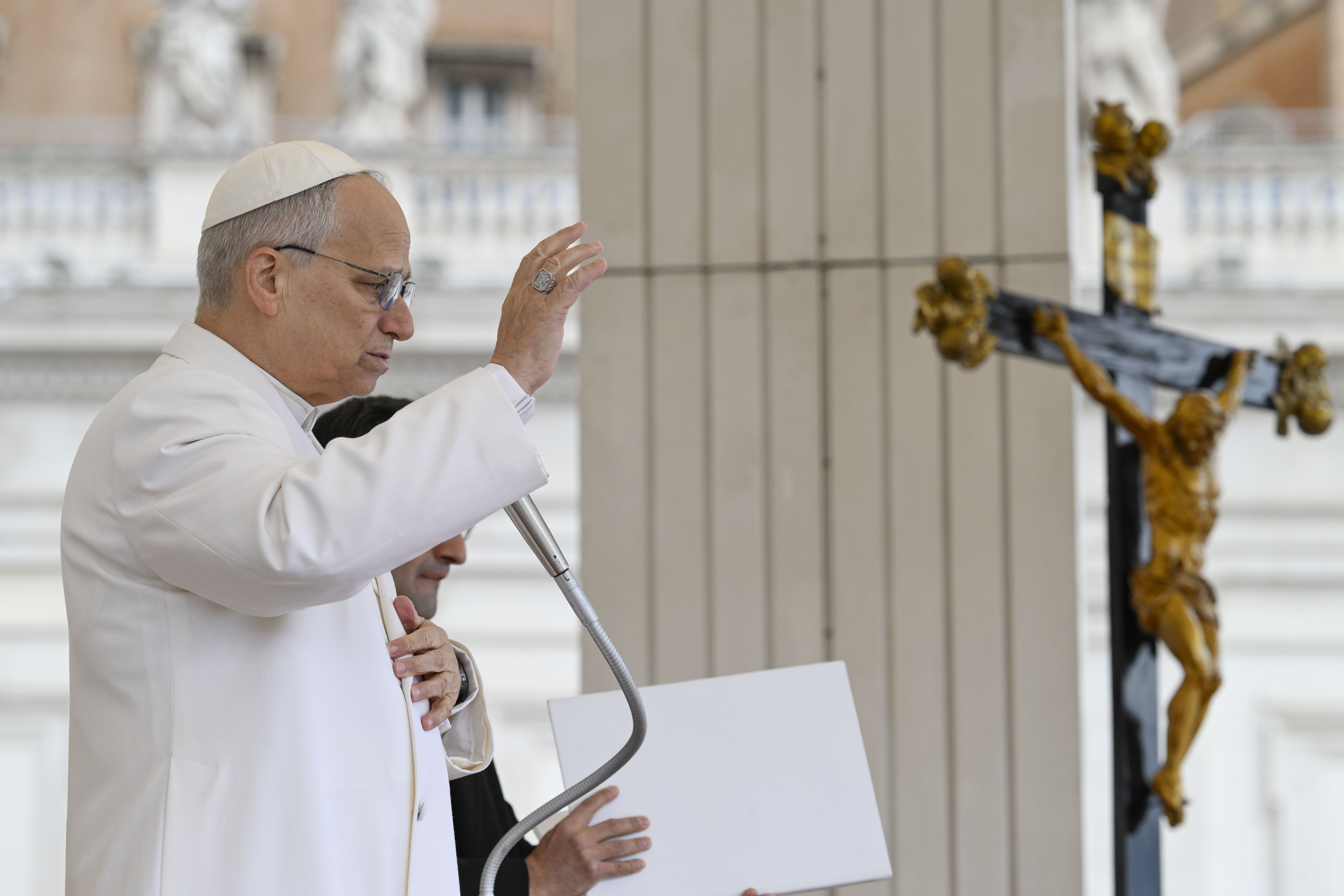
Last year the pope blessed a chunk of ice from Greenland and criticized political leaders who ignore climate change. He said supporters of the death penalty could not credibly claim to be pro-life, and argued that Christians and Muslims could be friends. He has also signaled a more tolerant posture toward LGBTQ+ Catholics, permitting an LGBTQ+ pilgrimage to St Peter’s Basilica.
Small wonder, then, that Trump confidante and conspiracy theorist Laura Loomer branded Leo the “woke Marxist pope.” Trump-aligned Catholic conservatives have denounced him as “secularist,” “globalist” and even “apostate.” Far-right pundit Jack Posobiec has called him “anti-Trump.”
“Some popes are a blessing. Some popes are a penance,” Posobiec wrote on X.
Pontiff from Chicago
There were early hopes that Leo might build bridges with U.S. hardliners. He’s an American, after all: He wears an Apple watch and follows baseball, and American Catholics can hardly dismiss him as as foreign. The Argentine Francis, by contrast, was often portrayed by critics as anti-American and shaped by the politics of poorer nations.
Leo can’t be waved away so easily.
Early in his papacy, Leo also showed signs he was keen to steady the church after years of internal conflict, and threw some bones to conservatives such as allowing a Latin Mass in St. Peter’s Basilica and wearing more ornate papal vestments.
But the traditionalists were not reassured.
Benjamin Harnwell, the Vatican correspondent for the MAGA-aligned War Room podcast, said conservatives were immediately skeptical of Leo. “From day one, we have been telling our base to be wary: Do not be deceived,” he said. Leo, Harnwell added, is “fully signed up to Francis’ agenda … but [is] more strategic and intelligent.”
After the conclave that appointed Leo, former Trump strategist Bannon told POLITICO that Leo’s election was “the worst choice for MAGA Catholics” and “an anti-Trump vote by the globalists of the Curia.”
Trump had a long-running feud with Francis, who condemned the U.S. president’s border wall and criticized his migration policies.
Francis appeared to enjoy that sparring, but Leo is a very different character. More retiring by nature, he shies away from confrontation. But his resolve in defending what he sees as non-negotiable moral principles, particularly the protection of the weak, is increasingly colliding with the core assumptions of Trumpism.
Trump loomed large during the conclave, with an AI-generated video depicting himself as pope. The gesture was seen by some Vatican insiders as a “mafia-style” warning to elect someone who would not criticize him, Vatican-watcher Elisabetta Piqué wrote in a new book “The Election of Pope Leo XIV: The Last Surprise of Pope Francis.”
Not personal
Leo was not chosen expressly as an anti-Trump figure, according to a Vatican official. Rather, his nationality was likely seen by some cardinals as “reassuring,” suggesting he would be accountable and transparent in governance and finances.
But while Leo does not seem to be actively seeking a confrontation with Trump, the world views of the two men seem incompatible.
“He will avoid personalizing,” said the same Vatican official. “He will state church teaching, not in reaction to Trump, but as things he would say anyway.”
Despite the attacks on Leo from his allies, Trump himself has also appeared wary of a direct showdown. When asked about the pope in a POLITICO interview, Trump was more keen to discuss meeting the pontiff’s brother in Florida, whom he described as “serious MAGA.”
When pressed on whether he would meet the pope himself, he finally replied: “Sure, I will. Why not?”
The potential for conflict will come into sharper focus as Leo hosts a summit called an extraordinary consistory this week, the first of its kind since 2014, which is expected to provide a blueprint for the future direction of the church. His first publication on social issues, such as inequality and migration, is also expected in the next few months.
“He will use [the summit] to talk about what he sees as the future,” said a diplomat posted to the Vatican. “It will give his collaborators a sense of where he is going. He could use it as a sounding board, or ask them to suggest solutions.”
It’s safe to assume Leo won’t be unveiling a MAGA-aligned agenda.
The ultimate balance of power may also favor the pope.
Trump must contend with elections and political clocks; Leo, elected for life, does not. At 70, and as a tennis player in good health, Leo appears positioned to shape Catholic politics well after Trump’s moment has passed.
“He is not in a hurry,” the Vatican official said. “Time is on his side.”