











:quality(85):upscale()/2023/09/18/918/n/1922398/a1136b676508baddc752f5.20098216_.jpg)
:quality(85):upscale()/2025/10/09/670/n/1922283/00b944c868e7cf4f7b79b3.95741067_.jpg)
:quality(85):upscale()/2025/10/15/765/n/1922398/29c37a6e68efd84bb02f35.49541188_.jpg)
:quality(85):upscale()/2025/09/09/891/n/1922283/7222624268c08ccba1c9a3.01436482_.png)










Athens goes wild for Kimberly Guilfoyle — but not everyone is cheering
ATHENS — Kimberly Guilfoyle’s arrival in Greece has triggered a level of attention usually reserved for pop stars or prime ministers.
In the month since she exploded onto the scene in Athens, the newly appointed U.S. ambassador has fused tabloid-level fascination with high-stakes geopolitics, championing major U.S.-backed energy projects and touching off a diplomatic confrontation with China over control of one of Greece’s most strategic ports.
A former Fox News host and prosecutor who was once married to California Governor Gavin Newsom and dated Donald Trump, Jr., Guilfoyle has dazzled the Greek capital with flashy television showings and unapologetic diplomatic muscle-flexing.
Guilfoyle’s approach has elicited grumblings from some opposition figures concerned about the extent to which Greek policy appears to be shaped by the American embassy.
Though she was a prominent surrogate for Donald Trump during his presidency and a key fundraiser in his political operation, her appointment as ambassador came as a surprise even within Republican circles. But that hasn’t stopped lifestyle shows from featuring her outfits and her ability to cut Greek dance moves, or politicians and businesspeople from lining up to stand next to her during her diplomatic outings.
For the most part, her description of Greeks, uttered in 2015 when she was a journalist, as “freeloaders” who need to be punished like a dog who “pees on the rug,” is long forgotten.

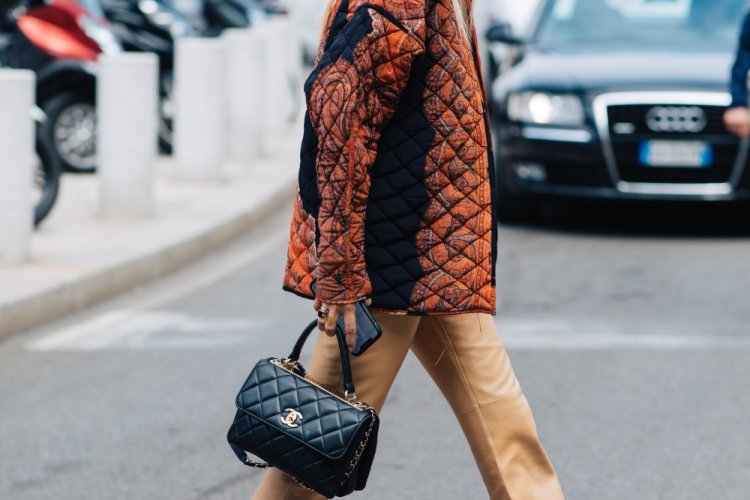
At a Thanksgiving dinner organized by the American-Hellenic Chamber of Commerce, Guilfoyle took the stage last week in a figure-hugging, floor-length lace gown.
“Kalispera,” she told the assembled businesspeople and dignitaries. The crowd cheered her deployment of the Greek greeting.
She left the event through a gauntlet of lifestyle reporters eager to get footage of the departing ambassador.
“Ms. Guilfoyle, your dress is so beautiful,” one of them gushed.
Social blitz
Guilfoyle, who declined to be interviewed for this article, landed in Athens on Nov. 1 in a private jet belonging to Greek businessman Eric Vassilatos and immediately plunged into a week of high-profile appearances.
A day after her arrival — and a formal dinner at a central luxury hotel — her favorite Greek singer, Konstantinos Argyros, staged a special event at the nightclub where he performs to mark her debut. Ministers, bankers and business figures rushed to attend the unusual invitation issued by a pop star.
“I will not disappoint the U.S. and Greece,” she said, dressed in a sparkling silver gown and fur jacket, before linking arms with high-profile guests for traditional Greek folk dances.
Her first official meeting, a credential presentation with Greek President Konstantinos Tassoulas, quickly went viral after she recounted discovering Greece while on honeymoon.
“Honeymoon was fabulous — but the marriage?” Tassoulas quipped.
“We’ll work on getting a new husband,” she replied.
The galas have scarcely paused. Usually accompanied by her son Ronan, her stylist Fancy James or her close associate Cassidy Kofoed, the ambassador has already been presented with a medal by the municipality of Hydra and named honorary president of the Propeller Club Port of Piraeus.
Business groups have organized a steady stream of receptions in her honor while cameras have tracked her from basketball games, where she sat among team owners, to a fashion show.
Deal making
The social blitz has coincided with a burst of activity on substance, with Guilfoyle wielding her ambassadorial power in the service of a series of deals between Washington and Athens.
During her first week in office, Greece signed an agreement with U.S. energy giant ExxonMobil to begin offshore drilling — the country’s first such project in more than 40 years — with U.S. Interior Secretary Doug Burgum and Energy Secretary Chris Wright on hand, a move that sees Athens diverging from EU climate-action plans.
Days later, Athens and Kyiv struck a deal to import U.S. liquefied natural gas to help Ukraine meet its winter needs, making Greece the first EU country to participate directly in Washington’s effort to replace “every last molecule of Russian gas” with American LNG. The deal was sealed during a visit by Ukrainian President Volodymyr Zelenskyy; Guilfoyle attended the signing and stood between Prime Minister Kyriakos Mitsotakis and Zelenskyy for the official photograph — underscoring the U.S. role in the decision.

She made her priorities even clearer at an embassy dinner with political and business leaders: “If you buy LNG from us, I will invite you again. Otherwise … you’re off the guest list.”
She angered China in her first media interview, in which she called China’s ownership of the Port of Piraeus “unfortunate” and floated the idea that it could be “worked out” — suggesting a potential sale.
Beijing blasted the remarks as “malicious slander” and “serious interference in Greek internal affairs.” “The investment is a model of mutual cooperation and not geopolitical influence,” said Chinese Ambassador Fang Qiu.
Shortly after the controversy, Athens accelerated plans for a new U.S.-backed port in Elefsina — a project discussed in a meeting between Guilfoyle and Development Minister Takis Theodorikakos and fast-tracked days later through parliament without a tender.
Opposition parties denounced the move as opaque and politically driven.
“We are not a country where an ambassador announces policies,” said Anna Diamantopoulou, a member of the opposition socialist PASOK party and a former European commissioner. “As a country, shouldn’t we discuss them in parliament?”
The Exxon deal has also attracted criticism.
The Greek prime minister “is bowing to the interests of U.S. companies,” said Sokratis Famellos, leader of the left-wing opposition Syriza party. “We are seeing our country being turned into a gateway for American LNG, because that is in the interests of American companies.”
At times, even the government has bristled at the American enthusiasm for Greek affairs.
In a newspaper interview Sunday, U.S. Ambassador to Turkey Tom Barrack suggested that he and Guilfoyle could lead a rapprochement between Athens and Ankara: “She’s a great friend of mine. We’ve talked about it with our president and said, “Could we be the mortar, somehow, in bringing these two bricks together in a new way, bit by bit?”
This week, in a briefing with journalists, the Greek Foreign Ministry spokesperson Lana Zochiou brushed back the suggestion. “We handle issues with Turkey bilaterally, as required by international law,” she said. “Therefore, no third-party initiative has been undertaken and no such proposal has been submitted to Greece.”
Presidential visit
Guilfoyle’s reception stands in stark contrast to past views of the U.S. in Greece. For decades Washington’s relationship with Athens was marked by distrust — from anger over American support for the 1967–74 junta to street protests in the 1980s against U.S. bases and frustrations over Washington’s neutrality toward Turkey. Former diplomats recall checking under their cars for bombs and receiving little cooperation from Greek authorities during periods of anti-American violence.
Former U.S. Ambassador Geoffrey Pyatt recalled a 2018 visit to Greece by then-U.S. Secretary of Commerce Wilbur Ross that was disrupted by protests against a U.S.-backed agreement with North Macedonia. With tear gas pouring into the basement of the concert hall, Ross and his wife were hustled into an SUV.
“Wilbur Ross’s wife was asking me if this was going to be like ‘Homeland,’” Pyatt said. “And I told her that no, everything was going to be fine, and nobody was going to get hurt. There were just some protesters who wanted to get things off their chest.”
That dynamic shifted after Greece’s long financial crisis. As Europe imposed harsh austerity, Washington took a more sympathetic line and defense ties deepened dramatically. By 2022, Athens had granted the U.S. open-ended access to four key bases, and Pyatt says concerns that once dominated bilateral talks “have now gone away,” replaced by what he calls a “robust defense partnership.”
Guilfoyle has said she would love to see U.S. President Donald Trump visit Athens.
“Well, of course, we would all love that, wouldn’t we?” she said in an interview with Greek television. “Have [Trump] give a speech at the Acropolis. I hope he will come, I’ll ask him to come.”