










:quality(85):upscale()/2026/04/10/039/n/1922283/cb3481e569d98e495097f0.31125477_.jpg)
:quality(85):upscale()/2026/03/16/901/n/1922398/7098afdb69b86a52587585.46389067_.jpg)
:quality(85):upscale()/2025/08/14/650/n/1922283/470aeb83689df49cdc1bb6.14084110_.jpg)
:quality(85):upscale()/2023/10/03/668/n/1922283/1f15c8a9651c2d209e5eb5.32783075_.jpg)
:quality(85):upscale()/2025/09/09/891/n/1922283/7222624268c08ccba1c9a3.01436482_.png)
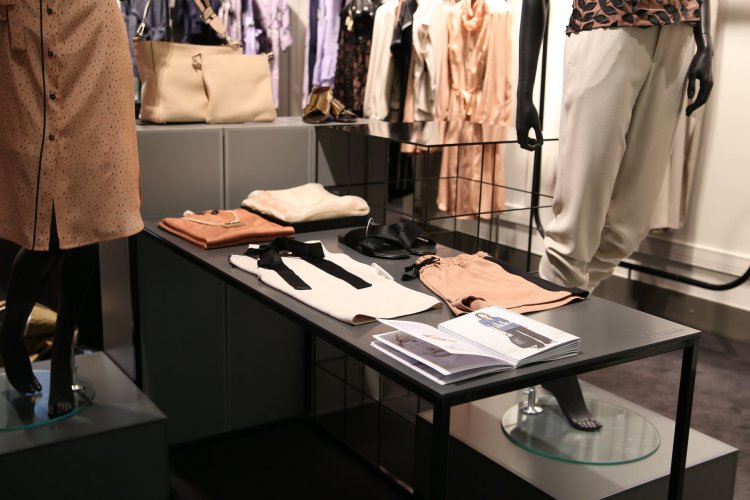








Circular by design: Why textile services matter for Europe
Every day across Europe, millions of citizens wear, sleep on, eat off or rely on rental textiles provided by industrial laundries. From hospital linens and reusable surgical gowns to industrial workwear, hotel bedding, restaurant textiles and hygiene products, textile services operate quietly but indispensably at the heart of Europe’s economy. In many countries, more than 90 percent of hospitals and hotels would be forced to close within days without a continuous supply of hygienically cleaned textiles, while pharmaceutical and food production facilities would halt operations within 24 hours.
Behind this essential service stands a highly organized European industry that combines operational excellence with a circular, service-based business model — washing and keeping textiles in use for longer, reducing waste and lowering environmental impact while safeguarding public health. By relying on reuse, repair and professional maintenance, the system significantly reduces the need for virgin raw materials sourced from outside Europe.
At the same time, these locally anchored service models create skilled jobs, generate tax revenues in the communities where companies operate and drive continuous innovation in circular solutions — supporting new business opportunities and industrial development across the European Union.
In this time of ongoing and challenging geo-political change, it will become crucial to fully recognize the strategic value of circular, service-based business models, which strengthen competitiveness and resilience while delivering on Europe’s sustainability objectives.Hartmut Engler, CEO of CWS Workwear
As several important legislative files move forward in Brussels, it is time to reflect on what textile services need to continue to implement sustainable solutions. Public procurement rules are a great vector to promote and encourage circular business models while delivering on the strategic autonomy ambition of the EU.
Public authorities across the EU spend over €2.6 trillion annually on purchasing services, works and supplies, accounting for around 15 percent of the EU’s GDP. However, too much of this investment is directed toward linear services and disposable goods, slowing down progress toward Europe’s environmental and industrial objectives.
With the revision of the EU public procurement rules, it should be recognized that the EU’s circular economy and environmental aims are greatly advanced by the textile rental industry. Specifically, green public procurement should become mandatory across all EU member states and should also encourage alternatives to direct purchase such as leasing models or product-as-a-service business models.
Public procurement should not be driven solely by value-for-money considerations, but by a holistic lifecycle approach that reflects long-term environmental and social performance. Introducing mandatory lifecycle costing as an award criterion would ensure that sustainability is measured over the full duration of a contract, not just at the point of purchase.
Longevity of product should be the first priority of the upcoming Circular Economy Act. The most sustainable product is ultimately the one that is kept in use the longest, putting durability and repairability at the centre of environmental benefits.Elena Lai, secretary general of the European Textile Services Association
European Textile Services Association (ETSA) members already deliver sustainable business models with product-as-a-service models implementing repair, reuse and extended use. Such business models should be empowered and further supported in legislation, hand in hand with recycling. Extending a product’s useful life delivers far greater climate and resource benefits than breaking products down for recycling after short use cycles. It preserves the embedded energy, water and raw materials already invested.
However, prioritizing longevity does not mean neglecting end-of-life solutions. At the same time, ETSA members are joining forces to invest in a joint recycling pilot project, translating circular ambition into practical industrial solutions. They are developing innovative processes to transform end-of-life textiles into recycled fibers suitable for insulation materials, industrial wipers and other high-value applications — with the long-term vision of advancing closed-loop systems in which recycled fibers can increasingly serve as raw materials for new textile production.
Recycling requires stable markets and long-term policy certainty, and the sector is actively investing in building both. By developing concrete use cases for recycled content, these initiatives help strengthen European recycling value chains while further reducing dependency on third-country suppliers.
Europe does not need to invent circular solutions from scratch. They already exist. The priority now is to put in place policies that support circular, service-based business models. These models are built on durability and extending product lifespans to get more value from the resources we already use.Elena Lai, secretary general of the European Textile Services Association
Textile services are not an emerging concept but a proven, scalable European solution — reducing consumption, anchoring jobs locally, safeguarding public health and lowering emissions. By recognizing and supporting service-based reuse models in forthcoming legislation, the EU can accelerate its sustainability ambitions while strengthening competitiveness and strategic autonomy.
Disclaimer
POLITICAL ADVERTISEMENT
- The sponsor is ETSA – European Textiles Service Association
- The ultimate controlling entity is ETSA – European Textiles Service Association
- This political advertisement advocates for the recognition and support of circular, service-based business models within forthcoming EU legislation; by addressing the Circular Economy Act, the revision of EU Public Procurement rules, Green Public Procurement requirements and lifecycle costing criteria, it seeks to influence policymakers and the public debate on EU sustainability, industrial policy and procurement frameworks, bringing it within the scope of the TTPA.
More information here.


:quality(85):upscale()/2025/10/09/670/n/1922283/00b944c868e7cf4f7b79b3.95741067_.jpg)