









:quality(85):upscale()/2026/03/16/901/n/1922398/7098afdb69b86a52587585.46389067_.jpg)
:quality(85):upscale()/2025/08/14/650/n/1922283/470aeb83689df49cdc1bb6.14084110_.jpg)
:quality(85):upscale()/2023/10/03/668/n/1922283/1f15c8a9651c2d209e5eb5.32783075_.jpg)
:quality(85):upscale()/2025/09/09/891/n/1922283/7222624268c08ccba1c9a3.01436482_.png)
:quality(85):upscale()/2023/09/18/918/n/1922398/a1136b676508baddc752f5.20098216_.jpg)








.jpg?#)


For most of the world, the US is now a malign actor
Laura Thornton is the senior director for democracy programs at the McCain Institute. She spent more than two decades in Asia and the former Soviet Union with the National Democratic Institute.
Earlier this month, I spoke at a conference in Bucharest for Eastern Europe’s democracy activists and leaders.
I was discussing foreign malign influence operations, particularly around elections, highlighting Russia’s hybrid war in Moldova, when a Hungarian participant pointed out that U.S. President Donald Trump had offered Hungary’s illiberal strongman Viktor Orbán a one-year reprieve for complying with U.S. sanctions for using Russian oil and gas. With Hungarian elections around the corner and this respite being a direct relief to Orbán’s economy, “Is that not election interference?” she asked.
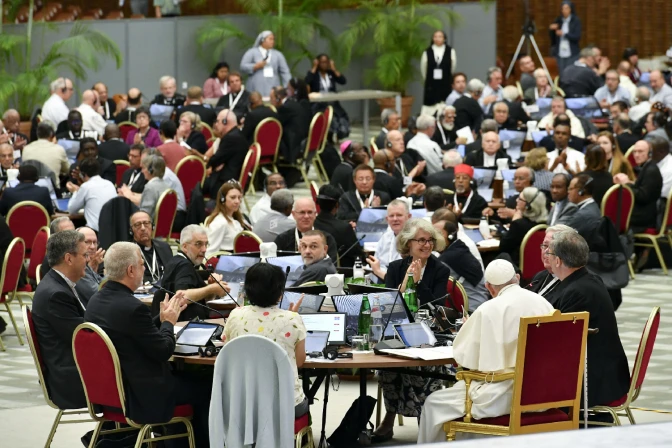
The next day, while at the Moldova Security Forum in Chișinău, a Polish government official expressed his deep concern about sharing intelligence with the current U.S. administration. While he had great respect for the embassy in Warsaw, he noted a lack of trust in some leaders in Washington and his worry that intelligence would get leaked, in the worst case to Russia — as had happened during Trump’s first term.
My week came to an end at a two-day workshop for democracy activists, all who described the catastrophic impact that the U.S. Agency for International Development’s (USAID) elimination had on their work, whether that be protecting free and fair elections, combating disinformation campaigns or supporting independent media. “It’s not just about the money. It’s the loss of the U.S. as a democratic partner,” said one Georgian participant.
Others then described how this withdrawal had been an extraordinary gift to Russia, China and other autocratic regimes, becoming a main focus of their disinformation campaigns. According to one Moldovan participant, “The U.S. has abandoned Moldova” was now a common Russian narrative, while Chinese messaging in the global south was also capitalizing on the end of USAID to paint Washington as an unreliable ally.
Having spent a good deal of my career tracking malign foreign actors who undermine democracy around the world and coming up with strategies to defend against them, this was a rude reality check. I had to ask myself: “Wait, are we the bad guys?”
It would be naive to suggest that the U.S. has always been a good faith actor, defending global democracy throughout its history. After all, America has meddled in many countries’ internal struggles, supporting leaders who didn’t have their people’s well-being or freedom in mind. But while it has fallen short in the past, there was always broad bipartisan agreement over what the U.S. should be: a reliable ally; a country that supports those less fortunate, stands up against tyranny worldwide and is a beacon of freedom for human rights defenders.
America’s values and interests were viewed as intertwined — particularly the belief that a world with more free and open democracies would benefit the U.S. As the late Senator John McCain famously said: “Our interests are our values, and our values are our interests.”

I have proudly seen this born out in my work. I’ve lived in several countries that have had little to offer the U.S. with regards to trade, extractive industries or influence, and yet we supported their health, education and agriculture programs. We also stood up for defenders of democracy and freedom fighters around the world, with little material benefit to ourselves. I’ve worked with hundreds of foreign aid and NGO workers in my life, and I can say not one of them was in it for a “good trade deal” or to colonize resources.
But today’s U.S. foreign policy has broken from this approach. It has abandoned the post-World War II consensus on allies and the value of defending freedom, instead revolving around transactions and deal-making, wielding tariffs to punish or reward, and defining allies based on financial benefit rather than shared democratic values.
There are new ideological connections taking place as well — they’re just not the democratic alliances of the past. At the Munich Security Forum earlier this year, U.S. Vice President JD Vance chose to meet with the far-right Alternative for Germany party rather than then-Chancellor Olaf Scholz. The Conservative Political Action Committee has also served as a transatlantic bridge to connect far-right movements in Europe to those in the U.S., providing a platform to strongmen like Orbán.
The recently released U.S. National Security Strategy explicitly embraces this pivot away from values toward more transactional alliances, as well as a fondness for “patriotic European parties” and a call to “resist” the region’s “current trajectory” — a clear reference to the illiberal, far-right movements in Europe.
Meanwhile, according to Harvard University’s school of public health, USAID’s closure has tragically caused hundreds of thousands of deaths, while simultaneously kneecapping the work of those fighting for freedom, human rights and democracy. And according to Moldovan organizations I’ve spoken with, while the EU and others continue to assist them in their fight against Russia’s hybrid attacks ahead of this year’s September elections, the American withdrawal is de facto helping the Kremlin’s efforts.
It should have come as no surprise to me that our partners are worried and wondering whose side the U.S. is really on. But I also believe that while a country’s foreign policy often reflects the priorities and values of that nation as a whole, Americans can still find a way to shift this perception.
Alliances aren’t only built nation-to-nation — they can take place at the subnational level, creating bonds between democratic cities or states in the U.S. with like-minded local governments elsewhere. Just like Budapest doesn’t reflect its anti-democratic national leadership, we can find connections and share lessons learned.
Moreover, partnerships can be forged at the civil society level too. Many American democracy and civic organizations, journalists and foundations firmly believe in a pro-democracy U.S. foreign policy, and they want to build communities with democratic actors globally.
At a meeting in Prague last month, a former German government official banged their hand on the table, emphatically stating: “The transatlantic relationship is dead!” And I get it.
I understand that the democratic world may well be tempted to cut the U.S. off as an ally and partner. But to them I’d like to say that it’s not our democracy organizations, funding organizations and broader government that abandoned them when national leadership changed. Relationships can take on many shapes, layers and connections, and on both sides of the Atlantic, those in support of democracy must now find new creative avenues of cooperation and support.
I hope our friends don’t give up on us so easily.