








:quality(85):upscale()/2026/04/10/039/n/1922283/cb3481e569d98e495097f0.31125477_.jpg)
:quality(85):upscale()/2026/03/16/901/n/1922398/7098afdb69b86a52587585.46389067_.jpg)
:quality(85):upscale()/2025/08/14/650/n/1922283/470aeb83689df49cdc1bb6.14084110_.jpg)
:quality(85):upscale()/2023/10/03/668/n/1922283/1f15c8a9651c2d209e5eb5.32783075_.jpg)
:quality(85):upscale()/2025/09/09/891/n/1922283/7222624268c08ccba1c9a3.01436482_.png)











King Charles tries to keep Trump’s attention on Ukraine
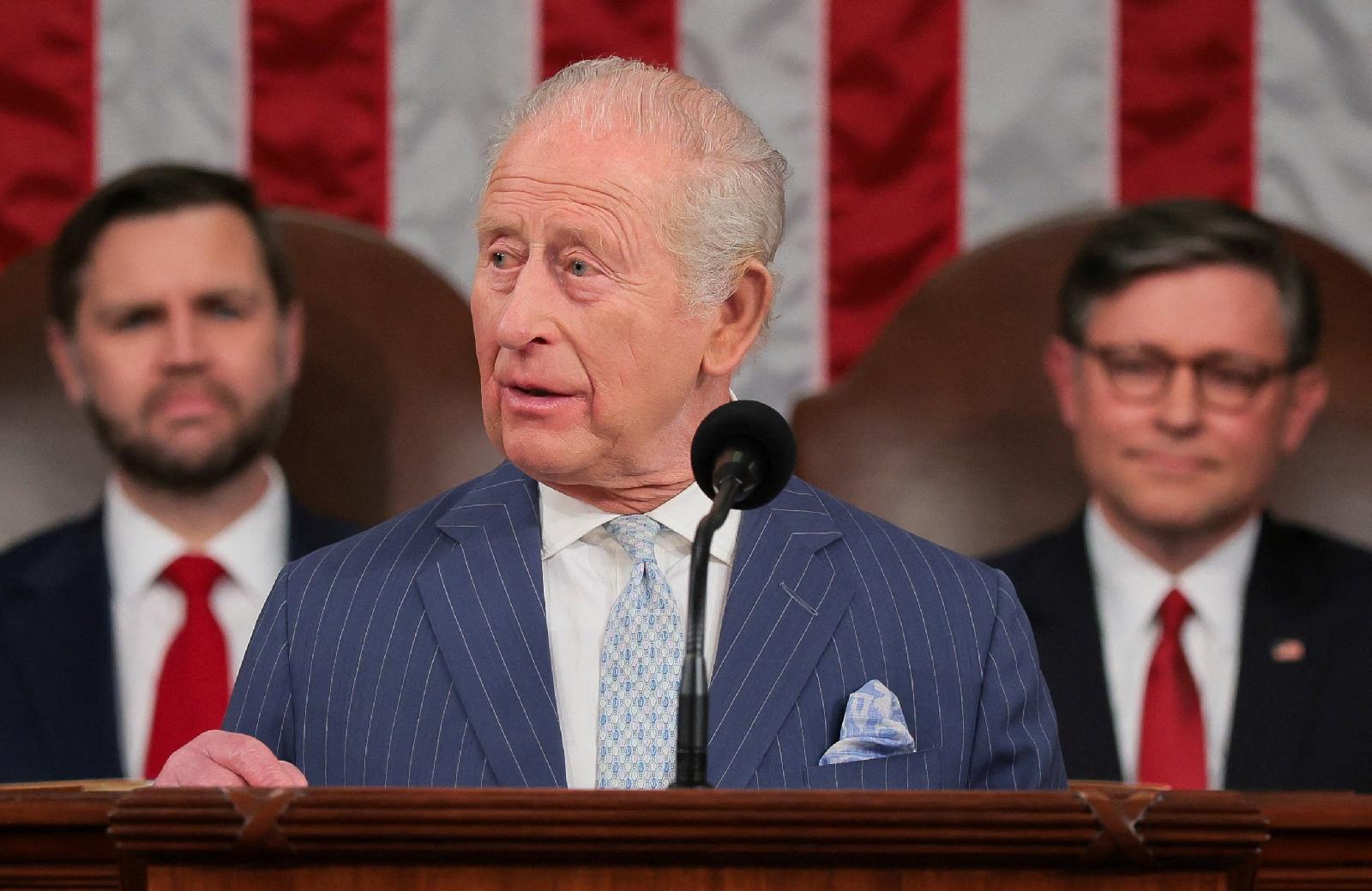
LONDON — King Charles made an open appeal for reconciliation between Britain and the United States on Tuesday, as he tried to revive Keir Starmer’s ability to speak to Donald Trump about the war in Ukraine.
The British monarch used his joint address to Congress Tuesday to speak of how NATO members had “answered the call together” after 9/11, adding: “Today, that same, unyielding resolve is needed for the defense of Ukraine and her most courageous people — in order to secure a truly just and lasting peace.”
The unusually direct remarks for a head of state who must carefully choose his words come at a time when the U.S.-Israel war in Iran has opened a major rift in Trump’s relationship with Starmer, and curbed communications between Downing Street and the White House. Charles’ trip has been seen in London as a high-stakes bid to repair the damage that’s played out in Truth Social jibes and press conference attacks.
Starmer has long tried to keep Trump close to make representations on behalf of Ukraine, as it continues to fend off Russia years after the full-scale invasion.
U.K. National Security Adviser Jonathan Powell — who has played a central role in the strategy and whose U.S. links are well-known — has faced difficulties in speaking to the Trump administration since strikes on Iran began, according to three people with knowledge of the matter. Like others in this piece, they were granted anonymity to discuss topics they weren’t authorized to discuss publicly.
Dialogue between the two administrations has suffered because the White House’s attention is focused elsewhere, and in retaliation for the British stance on Iran, the same people said.
One of the people briefed, a U.K. government official, said that Powell “doesn’t know who to call anymore” since U.S. Special Envoy Steve Witkoff — who had been representing Trump in Ukraine negotiations — is now expending most of his efforts on Iran.
A second individual with close links to the U.S. said that the administration was “being vindictive” because of Britain’s refusal to support the war in Iran. They added that Powell’s efforts to discuss Ukraine were “hurting” him and that his U.S. counterparts are now “icing him out a little bit.”
The third person, a Whitehall official, said Powell’s reach into the White House had “taken a knock” but said the U.S. State Department and British Foreign Office were still working well together.
A No.10 official disputed this characterization, stressing that the intelligence and military relationship is “functioning every day as usual,” and pointing out that Powell was in attendance for a recent meeting between U.S. Vice-President JD Vance, Secretary of State Marco Rubio and U.K. Deputy PM David Lammy.
However, it remains unclear how Trump regards efforts by allies to restart talks aimed at securing a ceasefire in Ukraine.
Inside the U.S. administration, some aides could not recall the last time the topic of Russia-Ukraine peace talks came up. “Iran has definitely become the primary focus,” said a senior White House official.
The president’s top two envoys involved in dialogue with Russia and Ukraine, Witkoff and Jared Kushner, “are working mostly on Iran,” the official continued, although they acknowledged that some communication with Russian and Ukrainian counterparts has continued to take place.
The same White House official also acknowledged that the president’s interest in working with NATO colleagues on Ukraine has diminished due to his very public frustration with European allies over their refusal to join the U.S. war against Iran.
As well as insulting Starmer, Trump upbraided NATO Secretary General Mark Rutte during a White House meeting and presented him with a “naughty and nice” list that split member countries into two categories, based on their level of defense spending and future commitments.
But a second White House official who confirmed that the president remains furious with many European allies cautioned against concluding that he would not re-engage on efforts to broker a peace deal between Russia and Ukraine once the Iran conflict is resolved.
“Just because he’s not focused on it at the moment doesn’t mean it’s not still an important priority,” the second official said.
One European diplomat close to peace talks acknowledged the frosty atmosphere, but denied there were any “serious difficulties” with the U.K. speaking to the U.S. about Ukraine.
Starmer told parliament last month: “No matter what other international events, the U.K.’s support for Ukraine will not waver.”
A government spokesperson said: “We engage regularly with the U.S. at all levels because we share a deep and longstanding partnership on intelligence, defence and security.”


:quality(85):upscale()/2025/10/09/670/n/1922283/00b944c868e7cf4f7b79b3.95741067_.jpg)