What We Pass Along
 Tomas k - Senior News Editor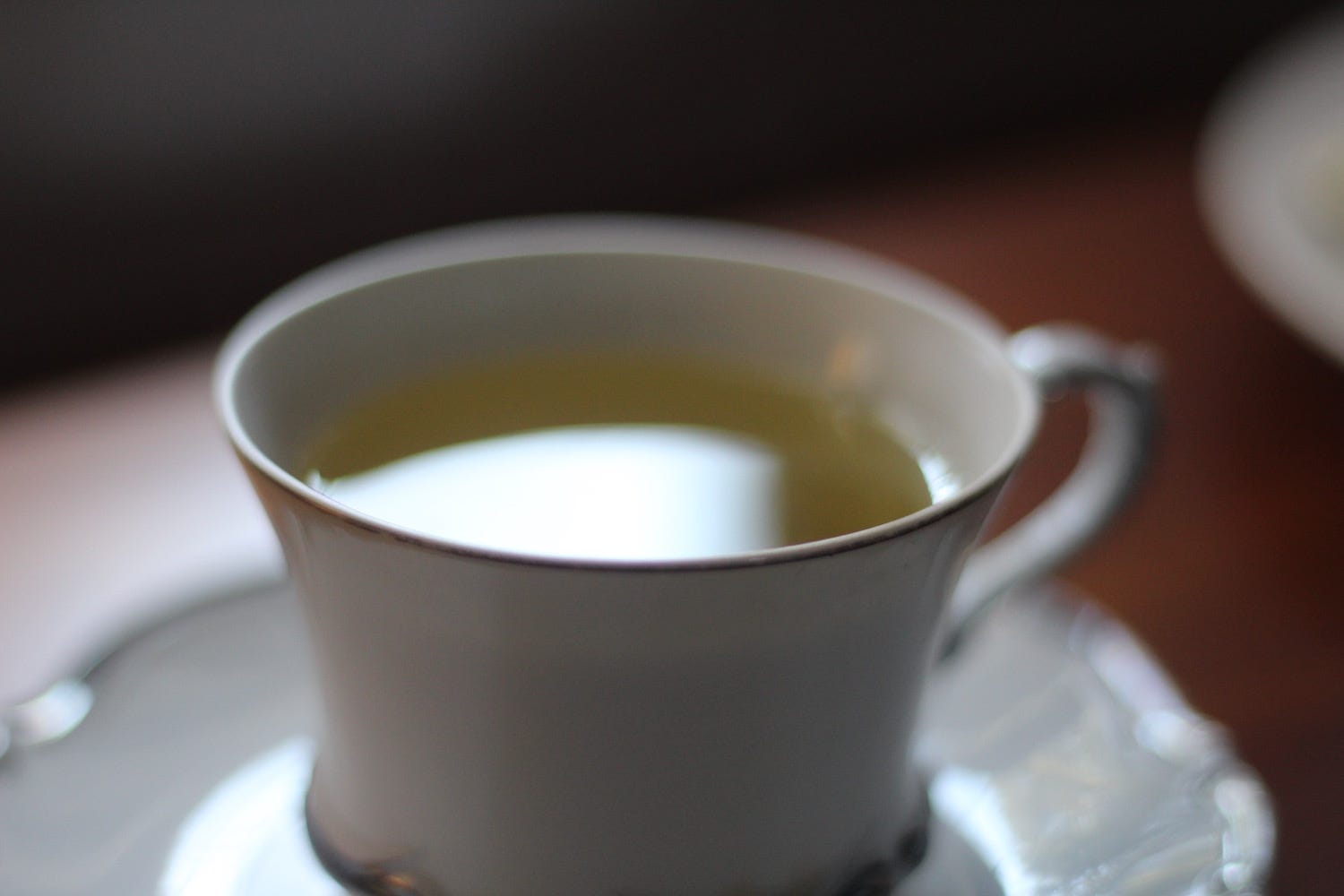
If our own writing doesn’t move us, why do we write?
Yesterday, I shoveled snow again, days after the snow.
But not for my property.
The night before, I’d come home from picking up my daughter from work, and I stepped onto my sidewalk only to see a woman shoveling snow directly onto it. She apparently kept the shovel in her SUV for moments just like this one, to shovel snow anywhere, to help make space for her vehicle.
As I rounded my hedge to come upon this scene, I asked her if she was going to clean the snow off the sidewalk. “Because this isn’t nice,” I said.
She seemed embarrassed (and tired). Apologizing, she hurriedly shoveled the snow off the walk.
As I climbed my stairs, my own writing about leaving roses surfaced in my mind.

In the morning, my arms fatigued after so many days of shoveling snow, I decided to leave this woman (or some other driver) a “rose.”
I shoveled the parking spot as best I could. Considered it exercise for me—and an anonymous gift for whoever found it, even if they didn’t recognize it as such.
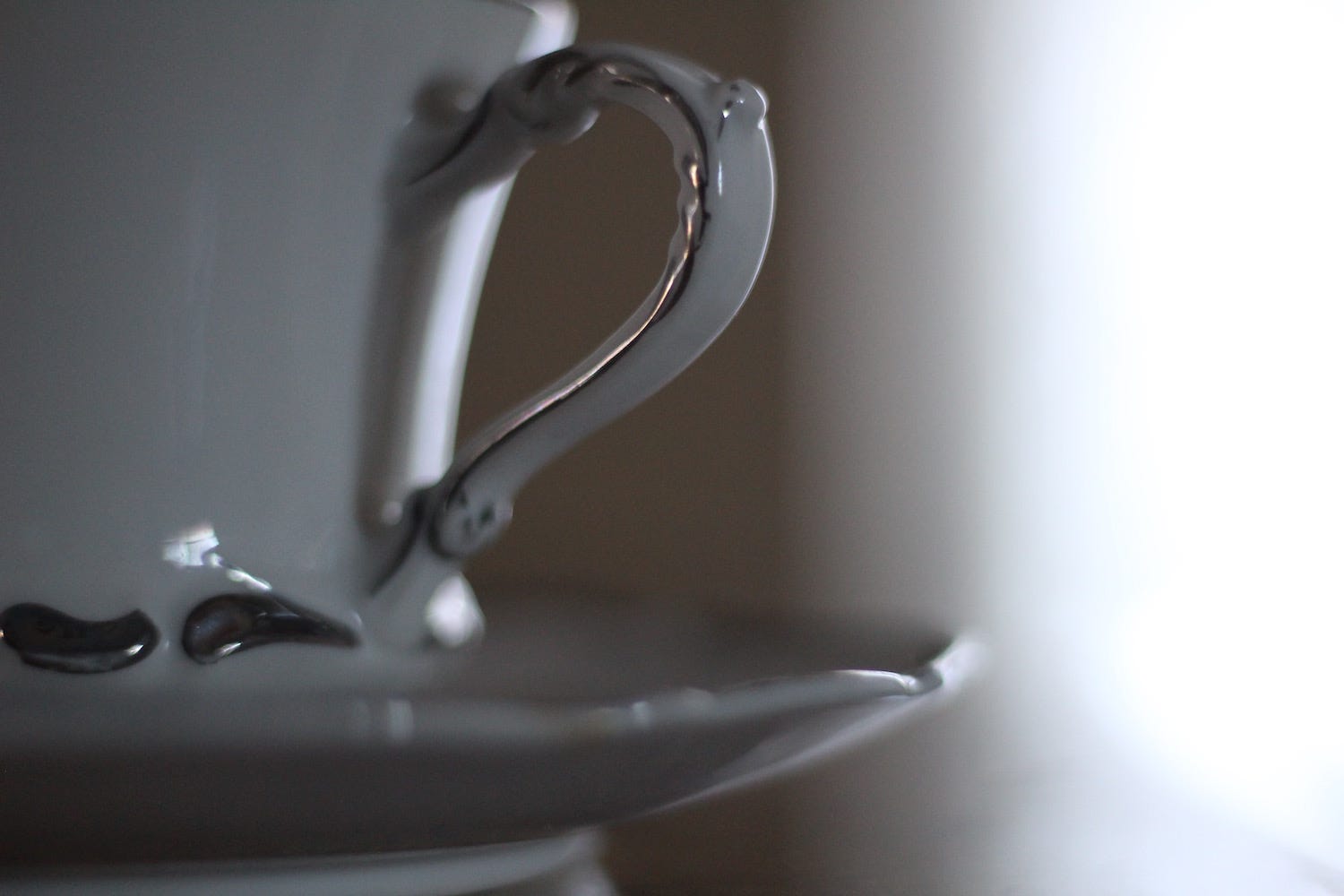
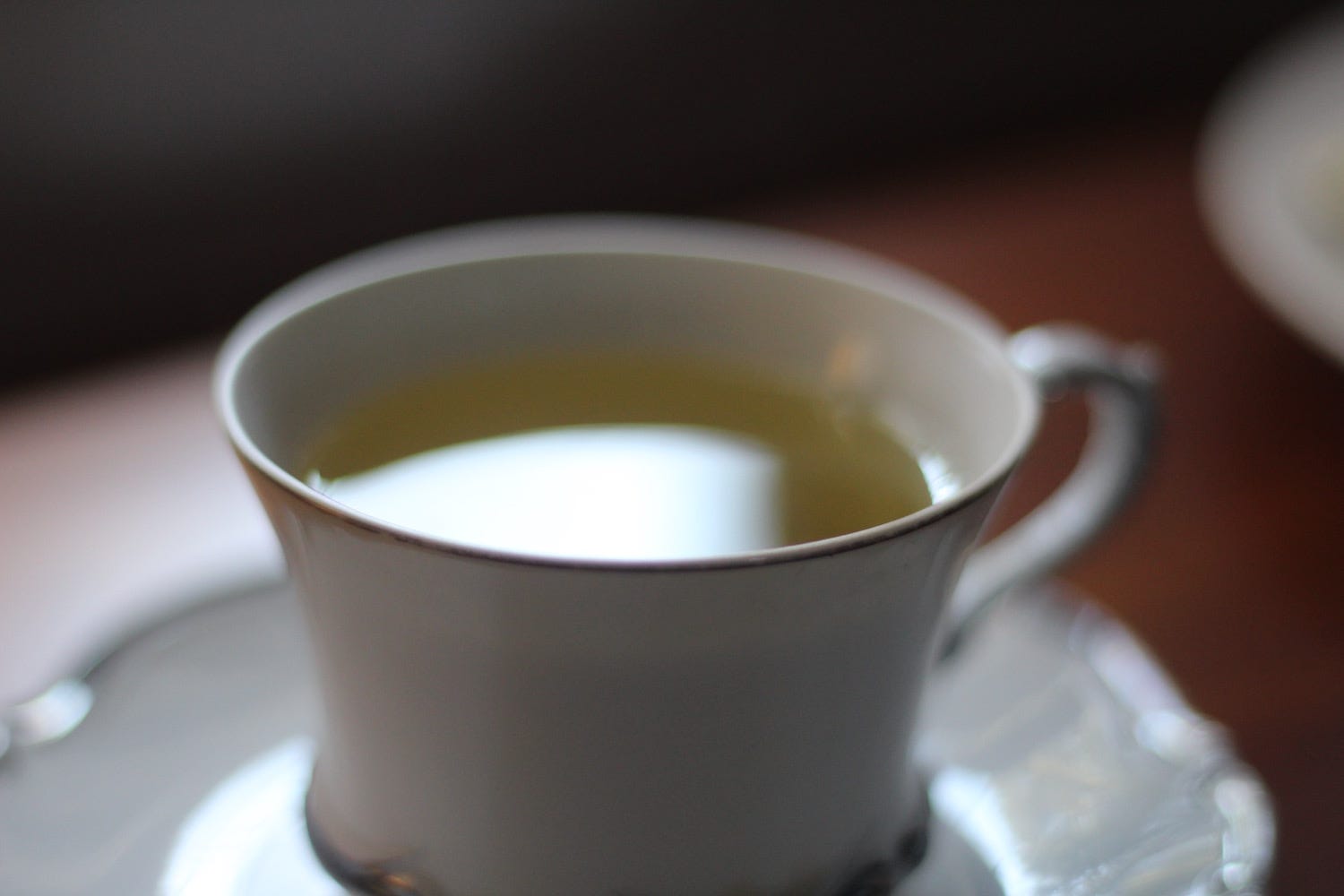
The simple cup featured in this post belonged to my grandmother (ma grand-mère), mother of my father (mon père).
I don’t remember what she drank. Coffee? Tea? She was German, and honestly what I mostly remember were her barrels and barrels of Christmas cookies. And the cherry pies she’d make me for my birthday. Always, she called me liebchen (my little love).
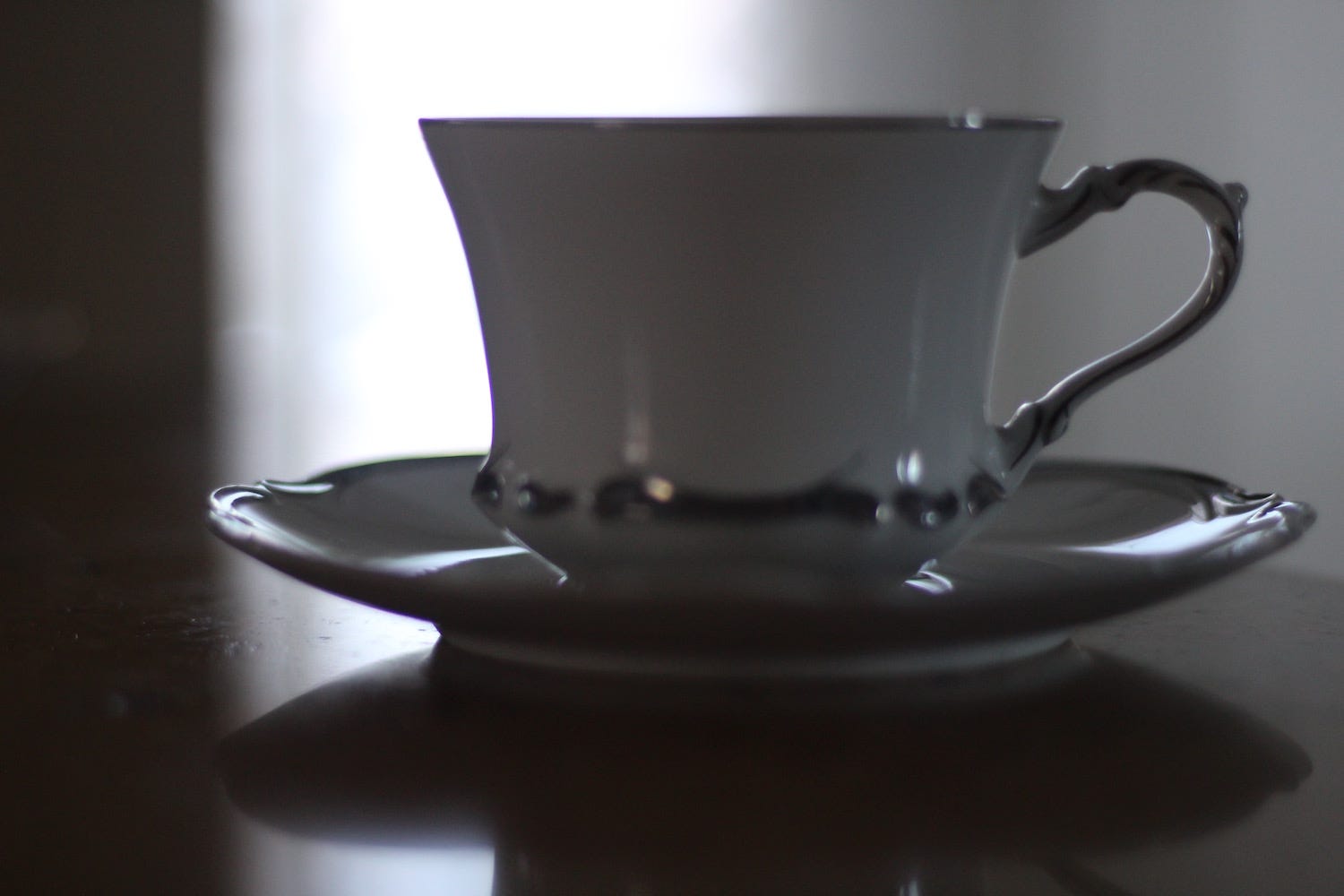
When I hold my grandmother’s cup, I recognize what she left me. A picture of courage. She came here when she was fourteen at the end of WWI, knew not a drop of English, made her way into being a seamstress, then a hair salon owner, and eventually ran a yarn shop and framing business well into her 70s.
Long after we are gone, the question is: what did we leave?
I don’t always get it right. But I want to leave roses. Even when what that means is simply cleaning the street.
(translation: as always, L.L. :)
P.S. A note about the subtitle, which more literally could have said “ce que nous transmettons.” Except the echo word “transmit” just wasn’t soft enough or quite what I was hoping for. So I went for something that isn’t a literal translation and brings in the additional sense of “what perpetuates itself.”
P.P.S. The teacup is Harmony House “Starlight,” hand-painted in Japan. What I really love in this set is the little dessert dishes, too many of which have broken, and each time that happens, I feel like I’ve lost a little piece of my grandmother’s life.
below ↓ the snow at golden hour. it’s beautiful when we let it be.

Stirring your creative life—with French, tea & photography.
Introducing Contributor, L.L.Barkat:
Visit her Contributor Page — Explore more of Laura’s work