What to see and do in Biot, French Riviera
 Tomas k - News Writer and Moderator

The hilltop village of Biot sits between glamorous Cannes and picturesque Cagnes where Renoir lived out his last years, a little off the beaten path, it’s well worth seeking out says Janine Marsh.
The Romans came here in the second century BC, defeating the local tribes who had been there long before them, and making use of the local clay soil which was perfect for making wine and oil jars. Just a few kilometres from Antibes (which the Romans called Antipolis), on the Mediterranean Sea, Biot was then as now, in a covetable location.
After a spell in the middle ages when the village was devastated by plague, taken over by bandits and then repopulated in the 15th century with families from Genoa (a common theme at this time in the area), life settled down and pottery production once again became a main industry. Biot has reinvented itself several times over. When the pottery industry declined, the people turned to wine and horticulture for several decades (Grasse the capital of the perfume industry is close by). Today, Biot is famous for its glass production and arts and crafts and modern artist Ferdinand Leger.
What to see and do in Biot

The Musée National Fernand Leger is the star attraction in Biot, yet there is infinitely more to this lovely ancient, cobbled village. Steep steps and labyrinth-like streets snake up from the base of the hill and all is draped with flowers, climbing plants and wall pots. Tiny gardens are nurtured in every nook and cranny by green fingered villagers creating a fairy tale ambience. Vibrant, colourful art is in abundance here, from the workshops and galleries of local artists to the decorated streets.

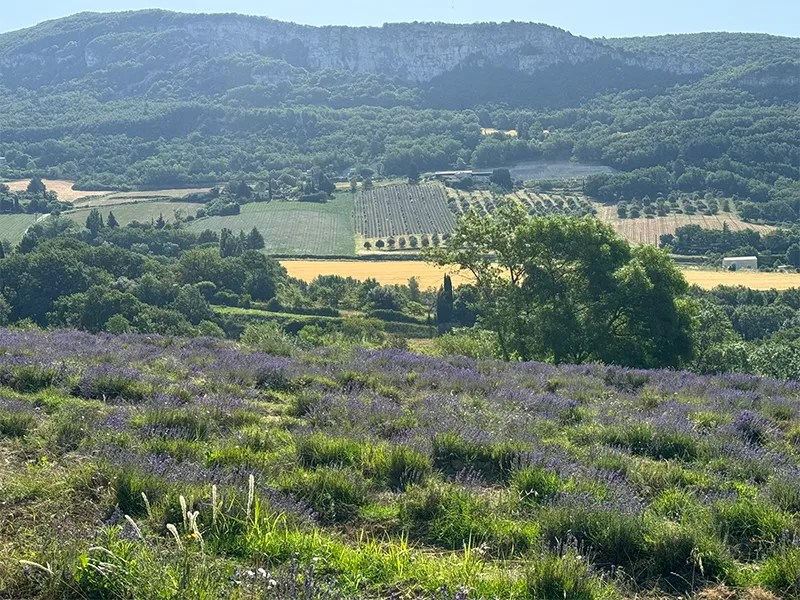
Pop into the historic Sainte Marie-Madeleine Church, rebuilt in the 15th century on the ruins of a 12th century Romanesque church which was likely built on top of a Roman temple. You can reach the beach in just 15 minutes from Biot, there’s a bus service from the village. From spring to autumn there’s a packed programme of events including evening art exhibitions every Thursday (July and August) and fashion shows. There are plenty of bars and restaurants, gourmet food shops (don’t miss the chocolaterie where master chocolate maker Marc Saint-Saëns creates mouth-watering sweet things). And there are several hiking paths around the village which take you through pine forests and oak groves, alongside the Brague River, past waterfalls, old mills, and traces left by the Romans.

I stayed at the Hotel Les Arcades in the Place des Arcades. The 15th century building has the most extraordinary rooms – mine had a 4-poster bed, ancient fireplace and an air of antiquity you only get from the real thing. There’s a lovely little restaurant downstairs, its tables spilling into the street. And in the cellar is a secret that’s revealed to guests.
Many artists and writers have fallen under the spell of Biot. Les Arcades restaurant, once a tabac owned by André Brothier in the early 1950s was sought out by Fernand Leger to accommodate the artists working with him, and Brothier transformed the building into a hotel and restaurant welcoming many artists over years, from Picasso to Chagall – and he collected their art, some in exchange for accommodation and meals, some he purchased. It’s a most extraordinary private collection.
In the town there are numerous artists from painters, including Jean-Philippe Ghiglione, famous for his crimson poppy art (and a very welcoming resident!), ceramicists, jewellers, sculptors, and more. Pop into the little Museum of History and Ceramics to admire a superb collection of jars. It wasn’t just the Romans who made use of the clay here, the town was a centre of jar making from the 1500s to the end of the 19th century. The museum also houses a fabulous collection of ceramic indoor fountains (entertainment before TVs!).
The famous glass manufacturers of Biot

Biot is also famous for its glass-blowing – with four glass factories at the foot of the old village. The oldest of them, the Verrerie de Biot was founded in the 1950s by Eloi Monod, an engineer who mastered the art of glass making and, finding an impurity in a piece of glass, turned it on its head and invented bubble glass. They have a fabulous workshop where you can watch master glass blowers turn balls of glowing glass into delicate goblets and luminous sculptures (it takes at least 10 years to master the art of bubble glass). There are some 200 different models, each individual piece is checked by an expert known as “the eye” to ensure they are perfect.

There’s a fantastic shop full of things you will want to take home, including tableware that glows in the dark and looks as if the sun of southern France has been trapped in the glass! There’s also a fascinating museum of glass, showcasing the evolution of the craft. And there is the International Glass Art Centre where the most amazing glass artworks by the world’s most prominent glass artists, are on display with a new exhibition each year.
Musée National Fernand Léger

It was the arty vibe of Biot that captivated Fernand Leger in the 1950s. Born in Normandy, Leger was a painter, sculptor and film maker; he also founded the Academy of Modern Art in 1924 in Paris. In 1949 he founded a small ceramic workshop in Biot, and a few months before his death in 1955, bought a villa at the foot of the village. His wife Nadia Khodasevich Léger decided to build a museum where the workshop was, as a tribute to Leger. The Musée National Fernand Léger opened during the Cannes Film Festival in 1960 under the patronage of Picasso, Braque and Chagall, the first modern art museum in the French Riviera. Nadia donated the land, the villa next to it and more than 300 artworks to the state which took over the museum. Leger’s artwork has grown more and more popular, and in 2008 one of his paintings sold for almost 40 million dollars.
You can’t miss the museum, the bright colours that Leger is famous for can be seen from far away as the sun glints on the mosaic’d façade – 45,000 pieces of marble and enamel, created from a design by Leger to decorate the entrance of the Hanover Stadium 6 months before his death. Inside are multiple works of art – cubist, ‘tubist’ (his own form of cubism) abstract masterpieces. Even if you’re not a fan of modern art, this place is impressive, and you can trace the evolution of his art from Impressionism through Cubism, vivid abstracts for which he’s best known, machinery and robot-like figures. You’ll find cubes, cogs, machines and mosaics, paintings and sculptures, including some created by his disciples – a dazzling tribute to the artist who wanted to “set colour free.”
Where to eat out in Biot

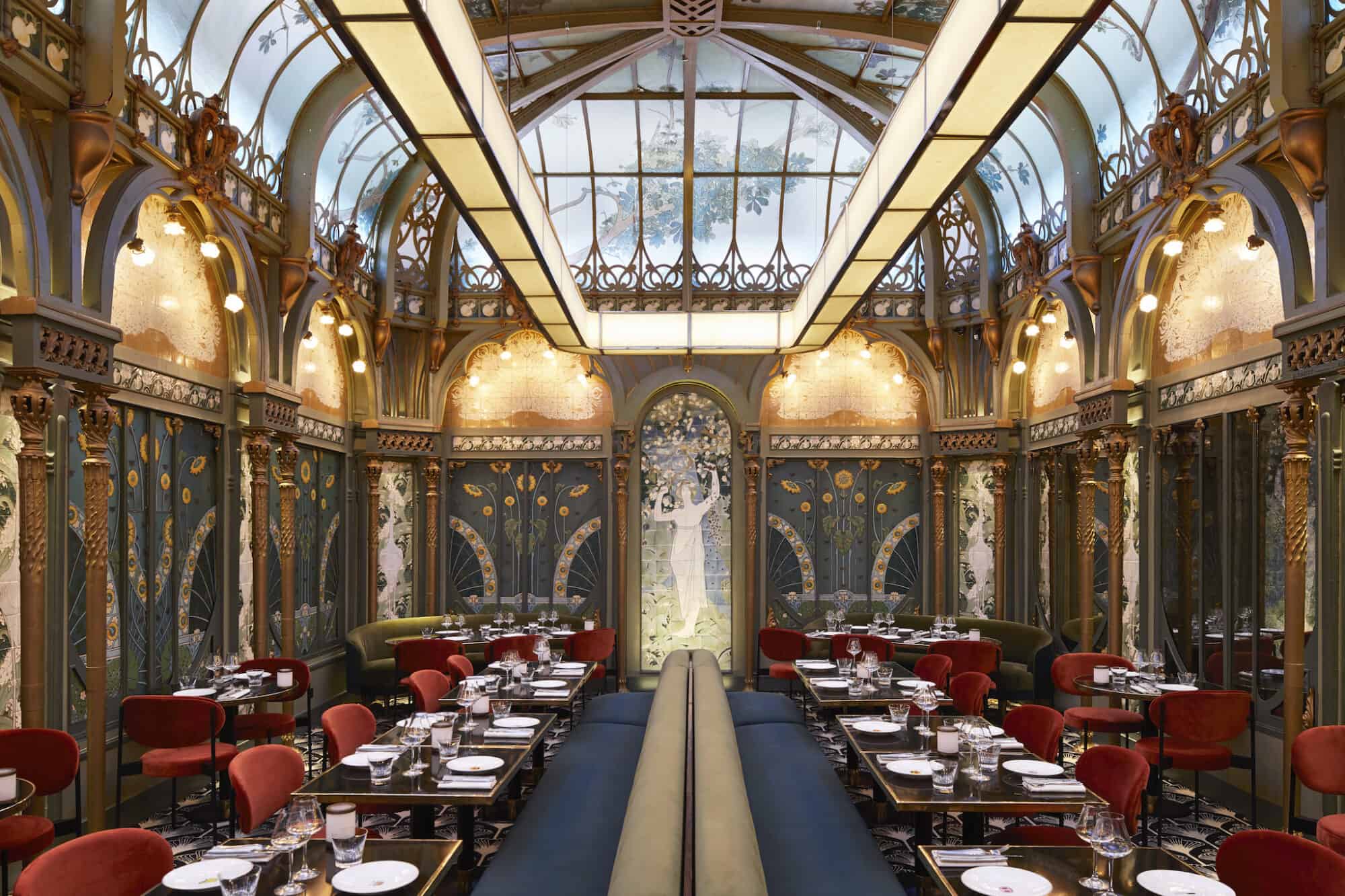
Honestly – you’re spoiled for choice in this village. There are loads of fabulous restaurants. At night the terraces come to life under starry skies and fill the air with the sound of chat and laughter.
Locals love: Café de la Poste which opened in 1880. Fresh, seasonal produce and a fabulous terrace. And Bastide du Roy Golf Club has a superb restaurant, and you can get a round in at the same time on the magnificent almost century old course.
Tourist office: l biot-tourisme.com/en
By Janine Marsh, Editor of The Good Life France magazine and website, author and podcaster.
Want more France?
Discover more fabulous destinations in France with our free magazine The Good Life France
Love France? Have a listen to our podcast – everything you want to know about France and more!
All rights reserved. This article may not be published, broadcast, rewritten (including translated) or redistributed without written permission
The post What to see and do in Biot, French Riviera appeared first on The Good Life France.