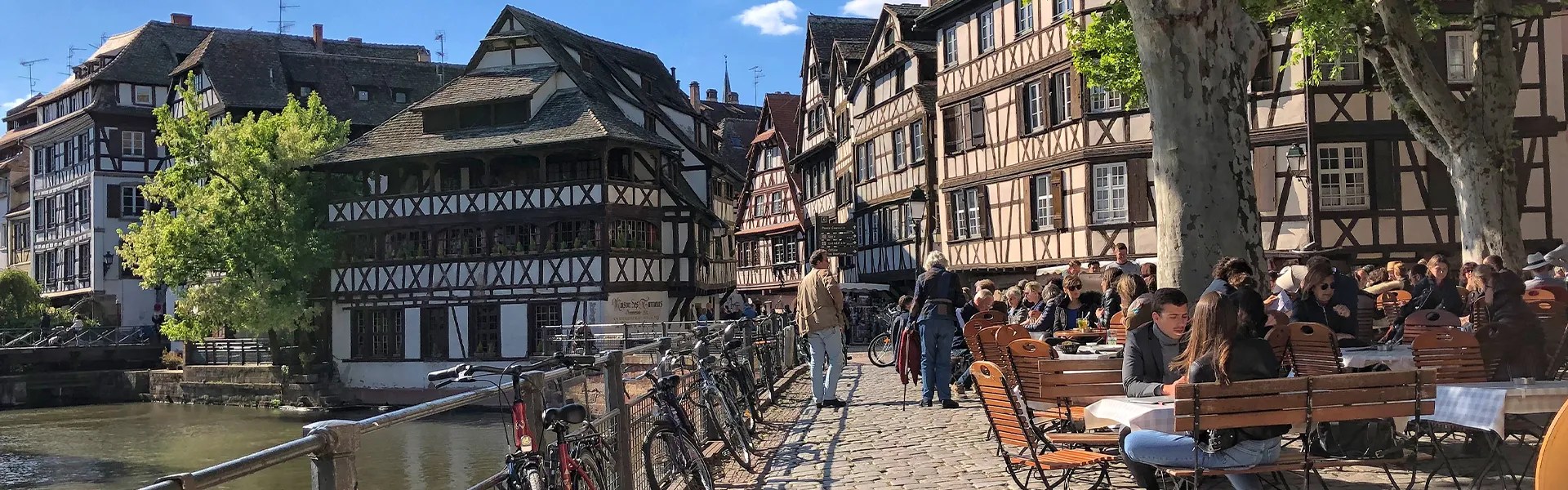
Collège de France
 Tomas k - Senior News Editor
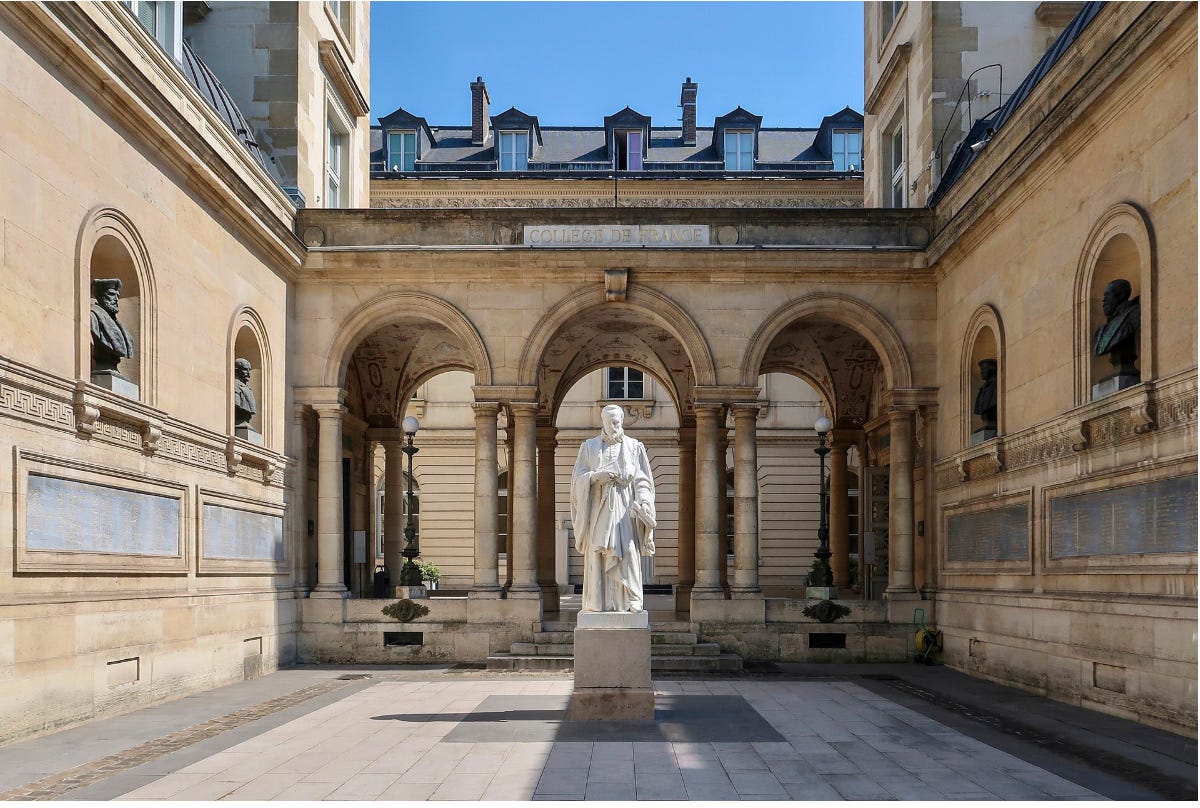
I may have found somewhere I want to revisit in Paris. Not a restaurant. Not an exhibition. Somewhere I was taken to conduct an interview more than a decade ago and had completely forgotten about ever since.
It has been there, in one form or another, since 1530: The Collège de France.
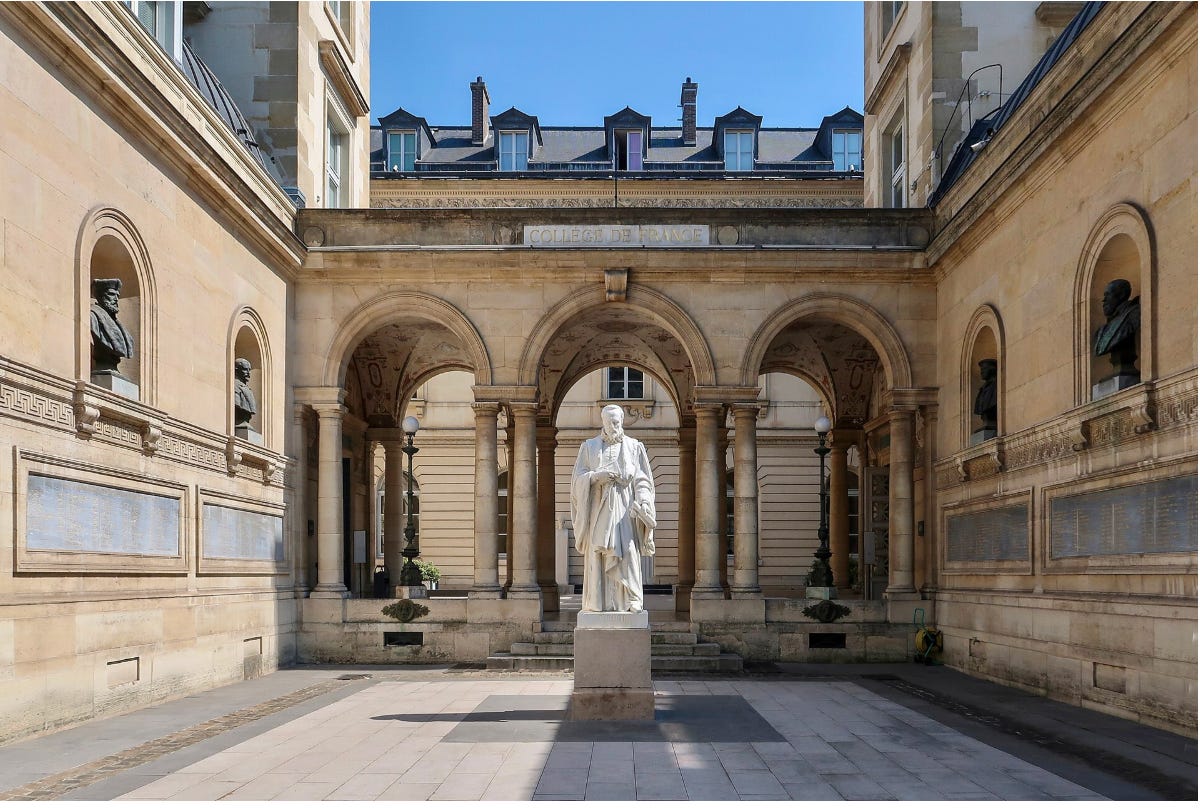
I knew the name, of course. I imagine quite a few of you do too. I knew it was important and old and somewhere around the Latin Quarter. In my mind it belonged vaguely with the Sorbonne and all those other formidable French institutions you know you ought to know more about.
The Collège de France has professors, but very unusually it has no students. No students enrolled in degrees. No fees. If you happen to be in Paris and fancy hearing a lecture, you can turn up at 11 place Marcelin-Berthelot, and wait with everybody else and, assuming you get a seat, you’re in!
I rather love the assumption behind that, don’t you?
These are not public lectures in the usual sense, with everything carefully simplified for a general audience. The professors teach their research as it develops. The Collège has a phrase for it, le savoir en train de se faire. (Knowledge while it is being made.)
I found the story about how it all began rather interesting.
The first six lecteurs royaux (royal readers) were appointed in 1551, following the efforts of the great humanist Guillaume Budé, who wanted France to teach subjects the University of Paris was not providing, including Greek, Hebrew, and even mathematics.
The Renaissance was loosening things. Scholars wanted to read ancient works in their original languages. Hebrew opened the possibility of going back to biblical texts rather than relying upon the accepted Latin versions. There were theological sensitivities all over the place. The University of Paris was not delighted, but François I went ahead anyway.
For years the royal readers borrowed rooms... Plans for a more permanent home took time to materialise, and the lecturers continued making do. Then one of them, the sixteenth-century philosopher and mathematician Petrus Ramus, complained about the conditions. He said their lecture room was less a room and more of a street. People were passing through while lessons were in progress. Porters came and went. Even washerwomen walked through the rooms apparently!
I’m afraid I lost interest in François I at that point. As the overall story got quirkier, I became more curious.
Was this really happening while the men were lecturing? What were the washerwomen carrying? Were they irritated by these scholars talking Greek in their way? Did they slow down to listen? Had they heard it all before?
I have no idea. But for a moment I could see it in my mind.
By the nineteenth century the Collège had proper buildings, but then another problem arose. Sometimes there were too many people wanting to get inside.
After Louis-Napoléon Bonaparte’s coup in 1851, prominent professors including Jules Michelet, Edgar Quinet and Adam Mickiewicz were fired. The political ideas circulating around their lectures, and the crowds who came to hear them, were part of a much larger struggle over what could be taught.
Then there was Ernest Renan. In 1864, Renan gave an inaugural lecture that approached Jesus as a historical figure rather than solely through Catholic doctrine. The reaction was fierce. He was excluded from teaching at the Collège and restored to his position in 1870.
Much later, Michel Foucault arrived to teach there, and people packed the amphitheatre to hear him. Some accounts describe audiences bringing tape recorders to capture his lectures. Yes, I can see that too. You know what I mean? All those little machines because people wanted to capture every word.
And then Roland Barthes’ lectures became so popular that people queued for hours.
I found a story about an elderly woman in his audience which I desperately hope is true because I have become very fond of her.
A lecturer speaking before Barthes noticed that his own audience seemed unexpectedly large all of a sudden and couldn’t work out why. So, he asked one of the women why. She explained, quite cheerfully, that if you wanted a seat for Barthes afterwards, it was better to sit down early, even if it was in someone else's lecture
Huh, poor man. Imagine discovering halfway through your lecture that your audience is actually somebody else’s.
I had been looking at the professors, but I should have been looking at the people sitting down. They were more interesting, it seems, and little was known about them. The Collège recently tried to find out who they are. Around 100,000 people attend its teaching in person each year, and its audience survey revealed something I wasn’t expecting. Nearly two-thirds of those surveyed were over 65. Now I’m even more interested.
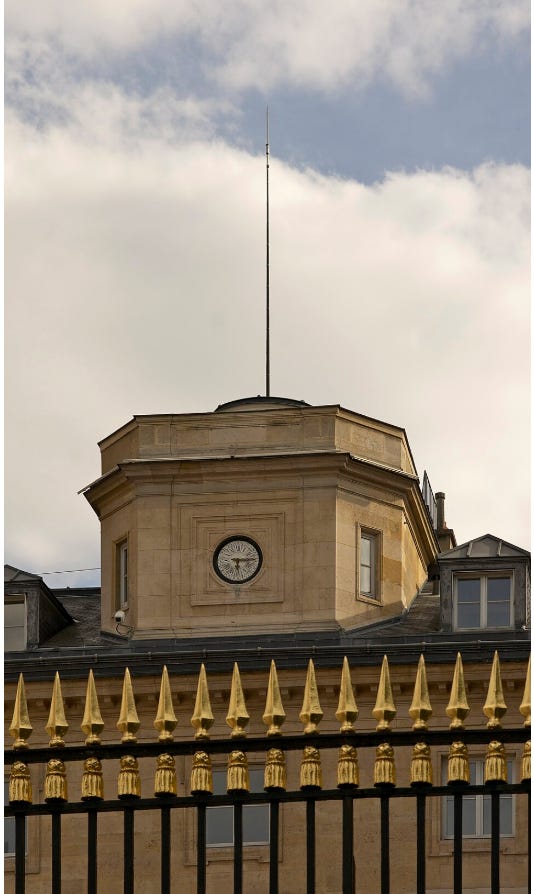
The humanities lectures tend to attract an older audience and more women. Science brings more students and younger researchers. Most of the people in the rooms are highly educated, certainly, so this isn’t quite the great democratic jumble I had begun imagining.
Still, they don’t have to be there. They’re not accumulating credits or working towards a qualification. They’re there because they want to know.
I’ve always been rather autodidactic and, as you know, I follow my curiosity. Something catches my attention, I start asking questions, one thing leads to another, and before I know it, I’ve disappeared down a rabbit hole.
Upgrade to read in full→