Corsica: France, but not France
 Tomas k - Senior News Editor
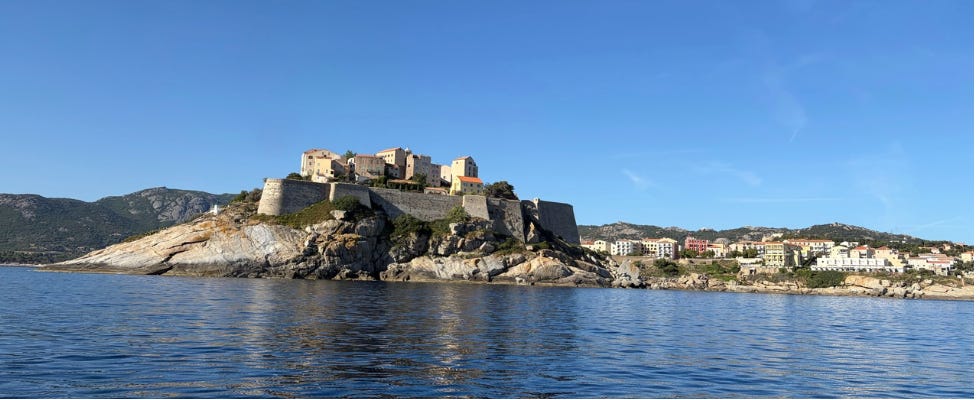
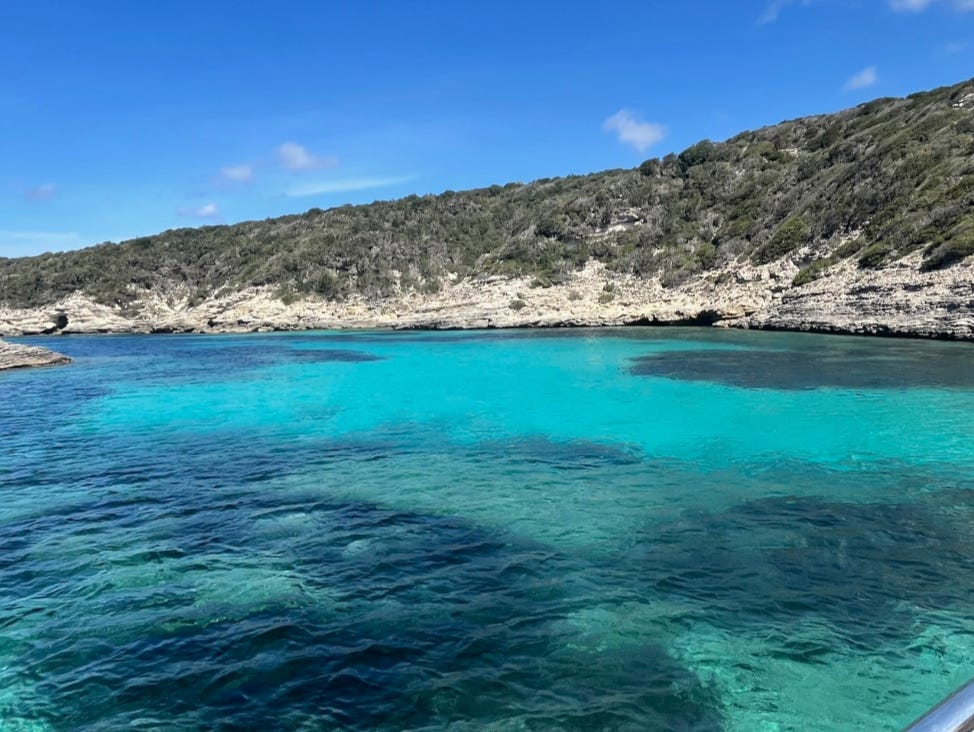
Corsica is called The Island of Beauty for good reason—no matter where you go, it’s beautiful. Do you like vivid blue waters, dramatic mountain landscapes, towns perched atop seaside cliffs? Corsica has all that, and more.
Like many islands, Corsica has a long history of foreign domination. It has been conquered at various times by the Phoenicians, Etruscans, and Romans, then by Charlemagne. For many centuries it was controlled by the city-states of Pisa and Genoa. France annexed Corsica in 1769, just in time for Napoleon Bonaparte’s birth.
This history, particularly the centuries of rule by Italians, gives it a different flavor than the rest of France. It feels kind of like Italy, kind of like France, but it’s not really either.
It’s its own place, a place apart, where fellow French from the mainland are referred to as “continentals.” The Corsican language is still commonly spoken, and an independence movement sometimes erupts in violence.
But while Corsicans’ ire is directed at Paris, foreign tourists are warmly welcomed. My wife Val and I have been there twice recently, each time for a week, and can’t wait to go back.
Corsica has four commercial airports, with connections to multiple cities in France and Europe. For those who wish to bring their car, a regular ferry service runs from Marseille, Toulon, Nice, and a number of Italian cities.
The Southern Coast
On our first trip, Val and I stayed in Bonifacio, on the southern tip of the island. It’s just ten miles from Italy’s island of Sardinia, which we could see from our hotel.
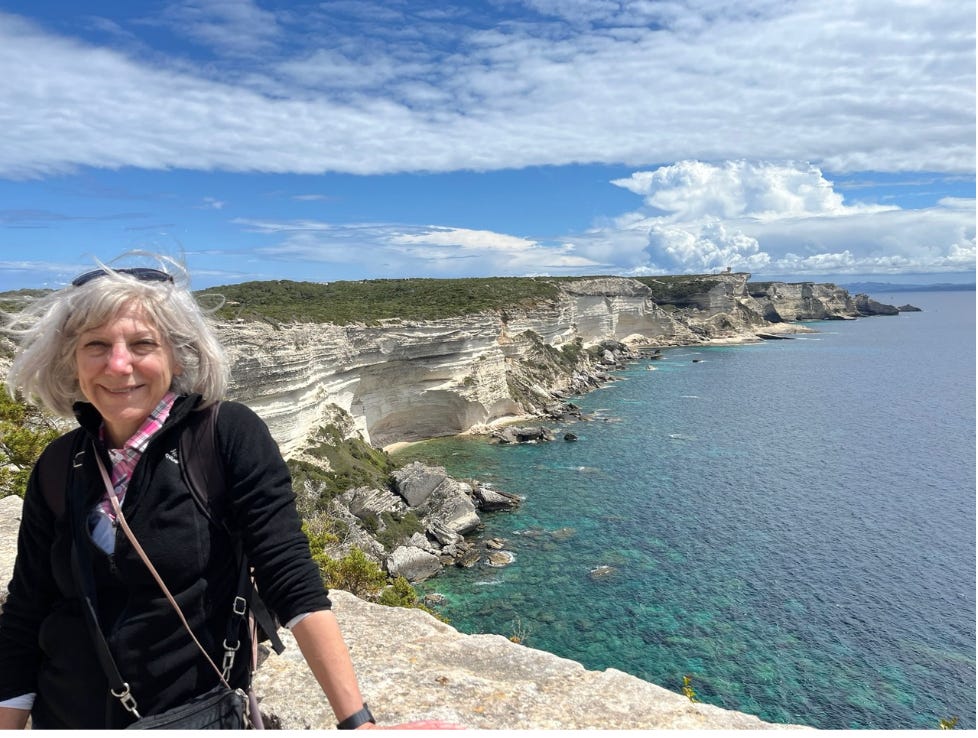
The town is perched along a high cliff facing the sea, a spectacular setting. There is a long staircase cut into the cliff that you can take all the way down to the water.
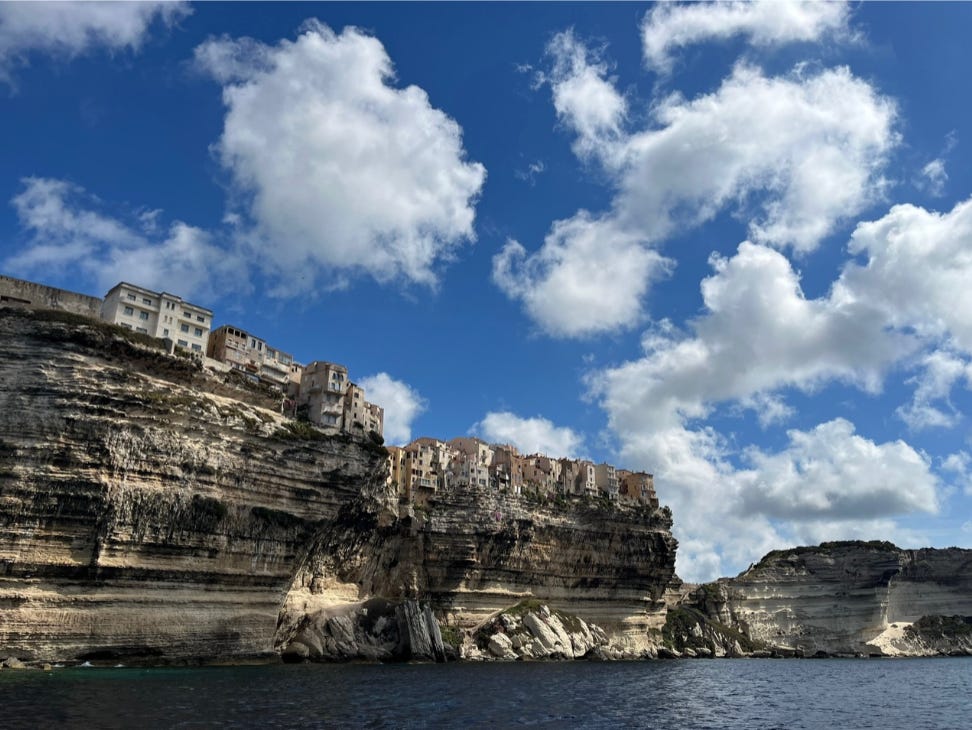
Beyond the town, the cliff stretches for miles.
Bonifacio is built on a peninsula, so one side of town faces the sea, and the other faces an inlet with a cute little port. This side is protected by a fortress with the highest walls in France.
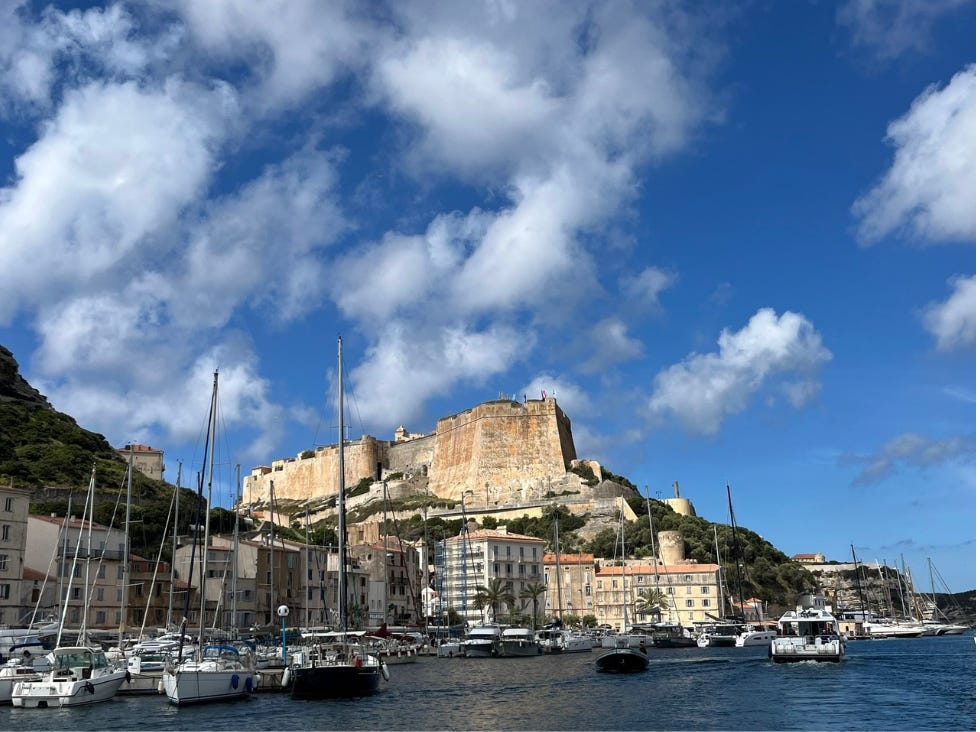
You can take boat tours from here, out of the port and along the waters below the cliffs. It is striking to look up, up, up at the cliffs to see buildings right along the edge.
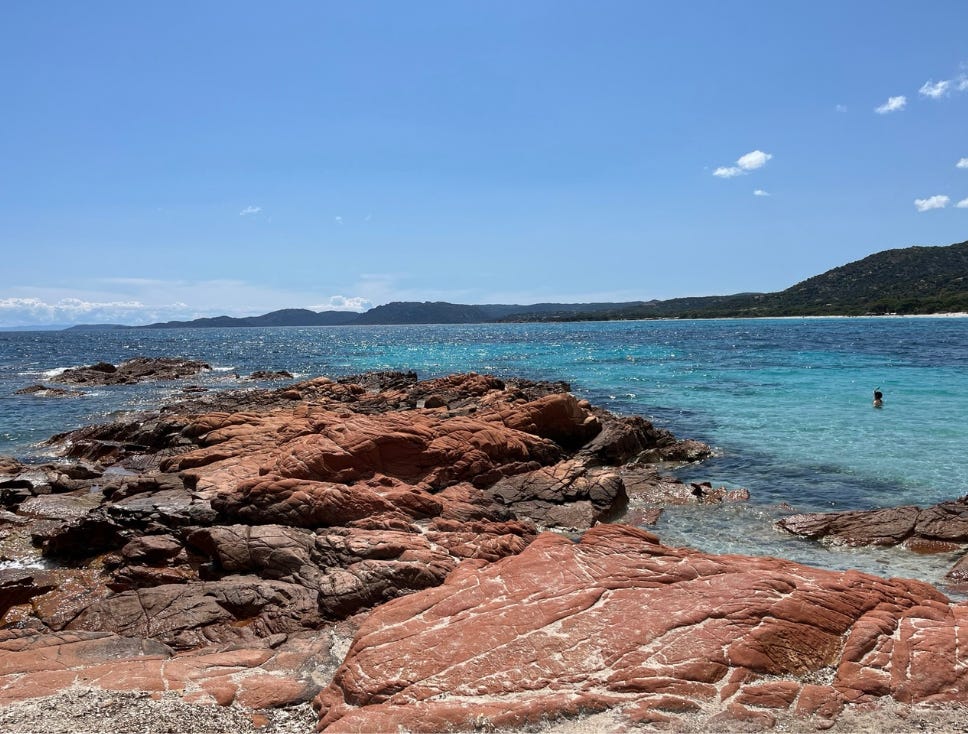
At one end of Bonifacio is a famous marine cemetery. Its tombs reflect the town’s Genoan past, as nearly all the names are Italian. A short drive from Bonifacio is Porto-Vecchio, a popular tourist spot, and between the towns are rugged beaches with beautiful blue water.
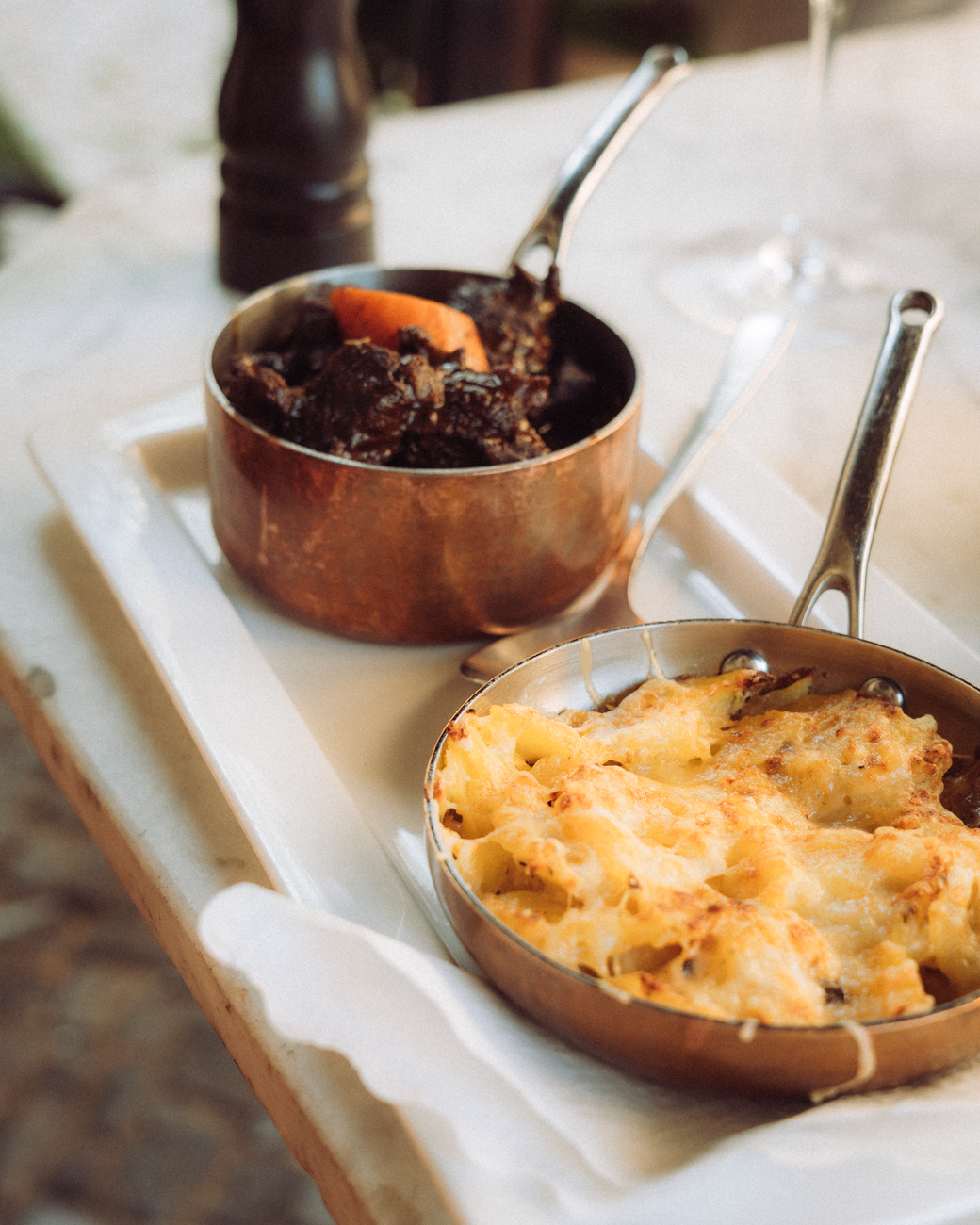
We enjoyed excellent meals everywhere we went, heavy on seafood (of course) and quite a bit of lamb. I have celiac disease but had no problem finding gluten-free things to eat.
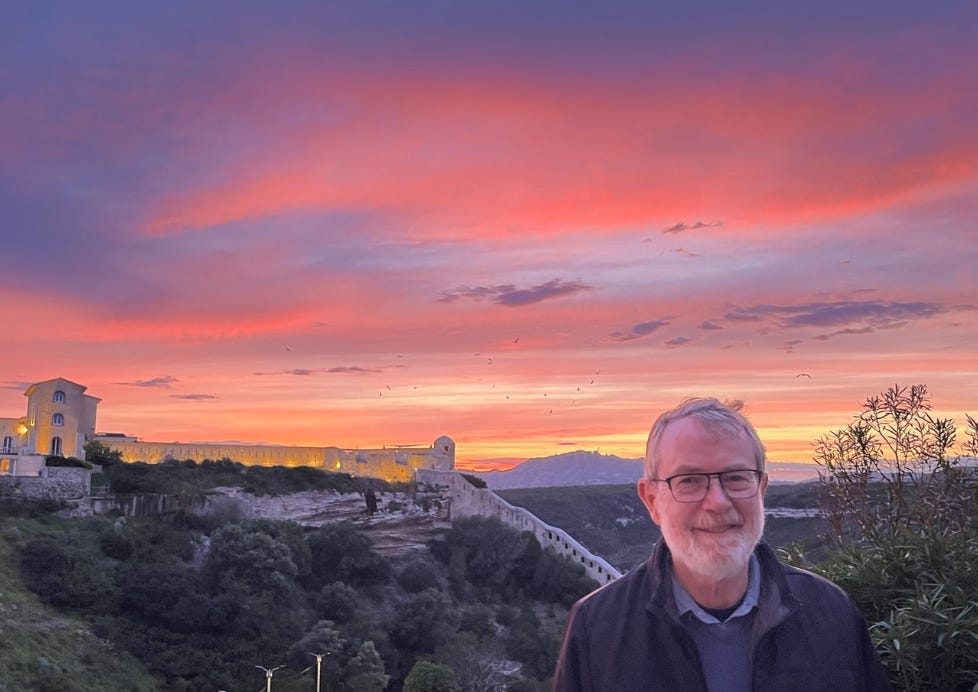
The sunsets were brilliant, and we enjoyed them every night.
The Northern Coast
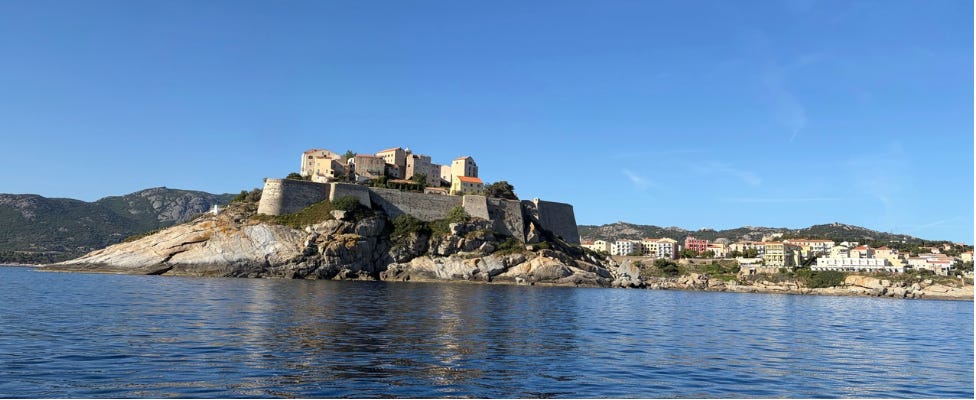
Our second visit started in Calvi, in the northwest corner of the island. It claims to be the birthplace of Christopher Columbus, and there’s a large statue of him in town. Calvi is dominated by a citadel built by the Genovese, and has miles of sandy beaches just outside of town.
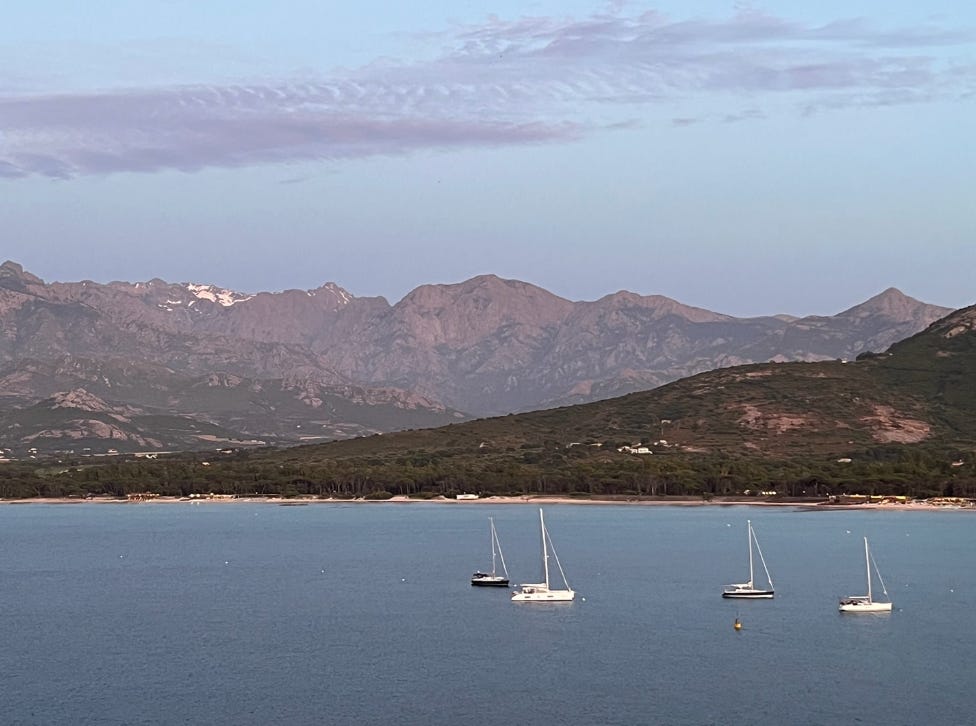
It was striking to see mountains with snow on them, just a few miles inland. It’s a reflection of how the island seems to jut straight out of the sea.
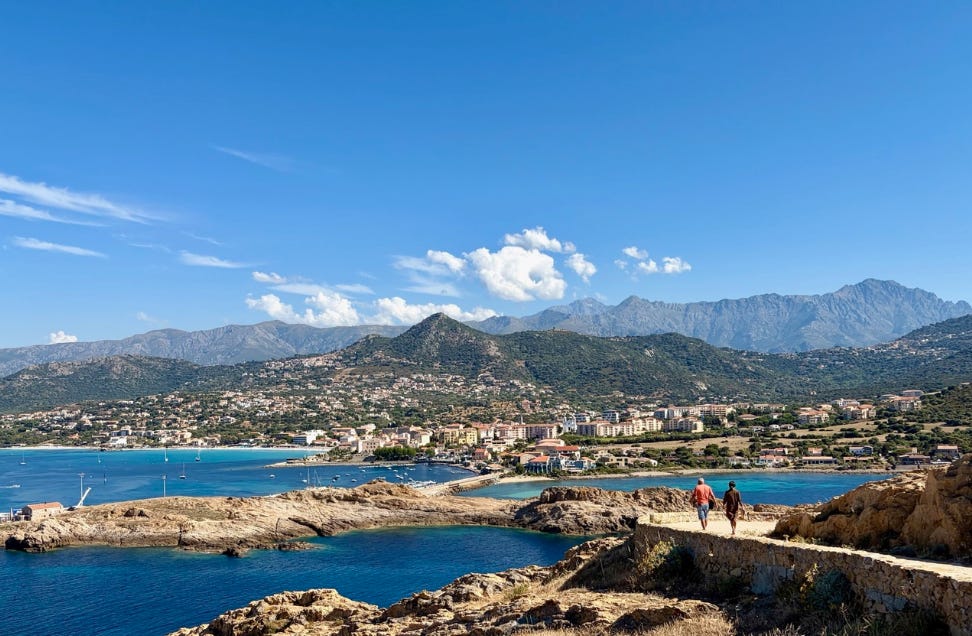
Behind Calvi is the Balagne region, a scenic hill country filled with historic fortified villages. We joined a full-day tour of the area, and it was well worth the time spent.
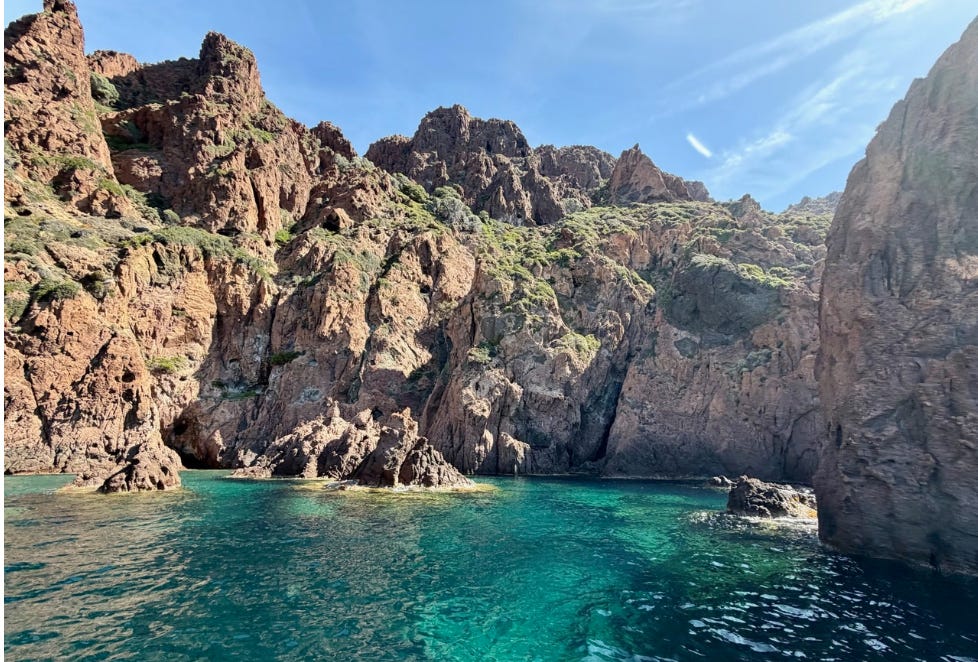
A highlight of a visit to Calvi is a boat trip to the Scandola nature reserve. This is an area that has been protected since the 1970s and is accessible only by boat or footpath.
Red volcanic rock comes down to the sea and is home to some protected species like osprey.
There is a small port town within the reserve, served only by sea (though the postman used to walk two hours each way to deliver mail). The boat trip stops there for lunch.
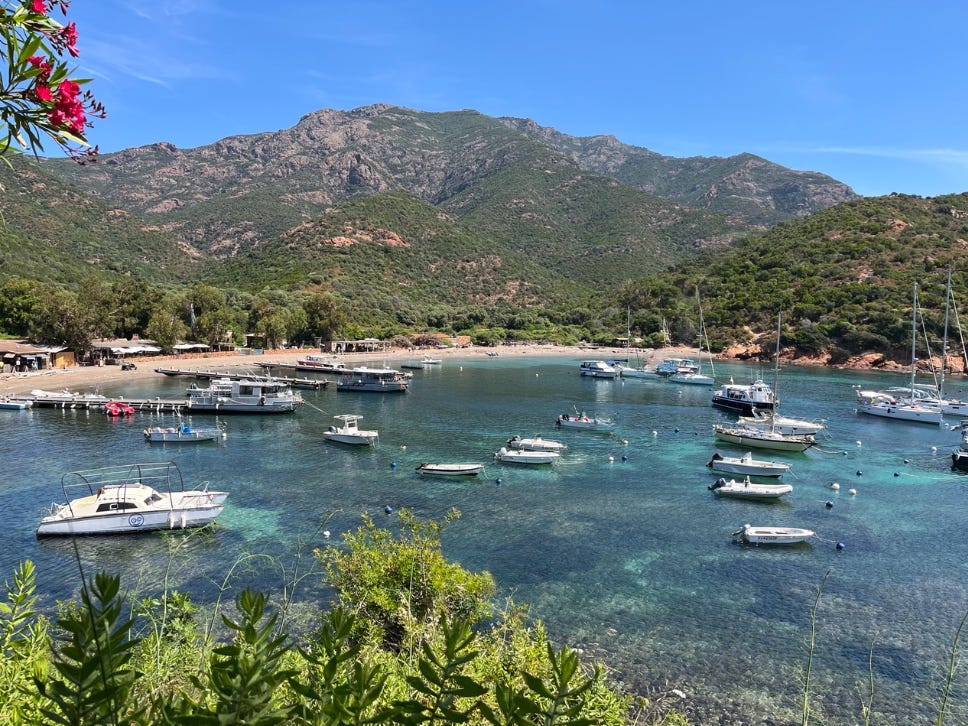
After Calvi we went to Bastia, at the base of the Cap Corse—a peninsula that juts out into the sea. There is a road that snakes along its perimeter, with terrifying, sheer drops, so we hired an experienced local to drive us.
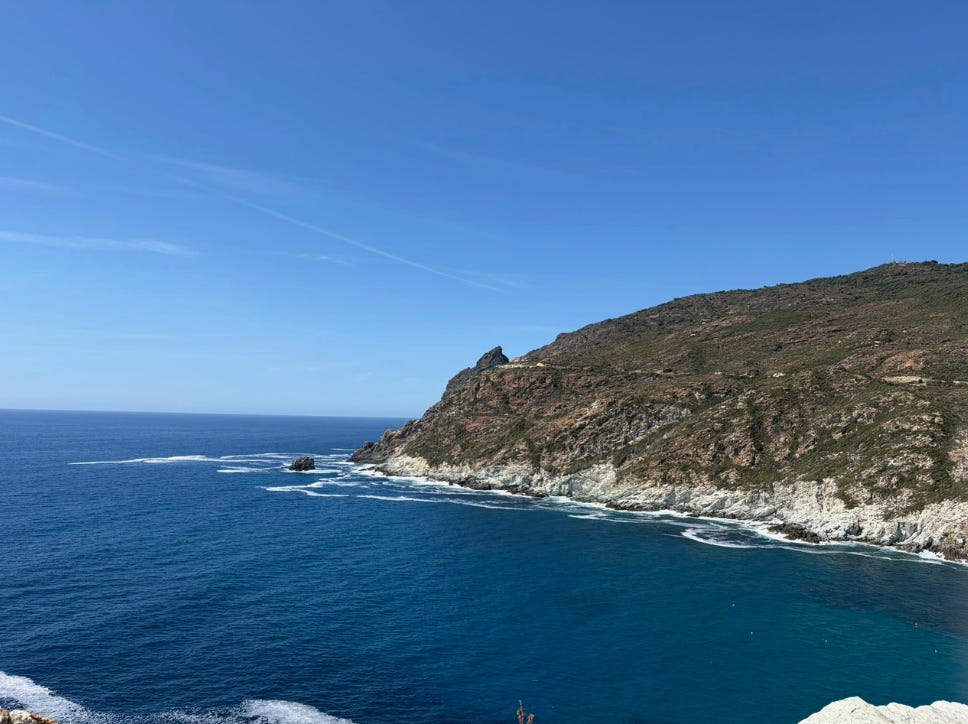
One of the advantages of hiring a local is that she knew the best places to eat. We had lunch at a restaurant along the water, reached by an unmarked road, where we enjoyed the freshest fish ever.
The Real Corsica
At the end of our trip around the Cap Corse, our driver informed us that while what we have seen is nice, we haven’t yet really visited Corsica. “To see the real Corsica,” she explained, “you have to go inland. It’s full of high mountains, rivers, waterfalls—the most beautiful place on earth.”
We are already planning our next trip.
Have you been to Corsica? Which part is your favourite?
Introducing Contributor Keith Van Sickle
Immerse yourself in all of Keith’s articles on his Contributor page.