The books were still there. Except they weren’t.
 Tomas k - Senior News Editor
I was researching French libraries and found myself up to my armpits in Pushkin. Hordes of extremely valuable books were missing, and a bunch of rather clever men worked out something about trust.
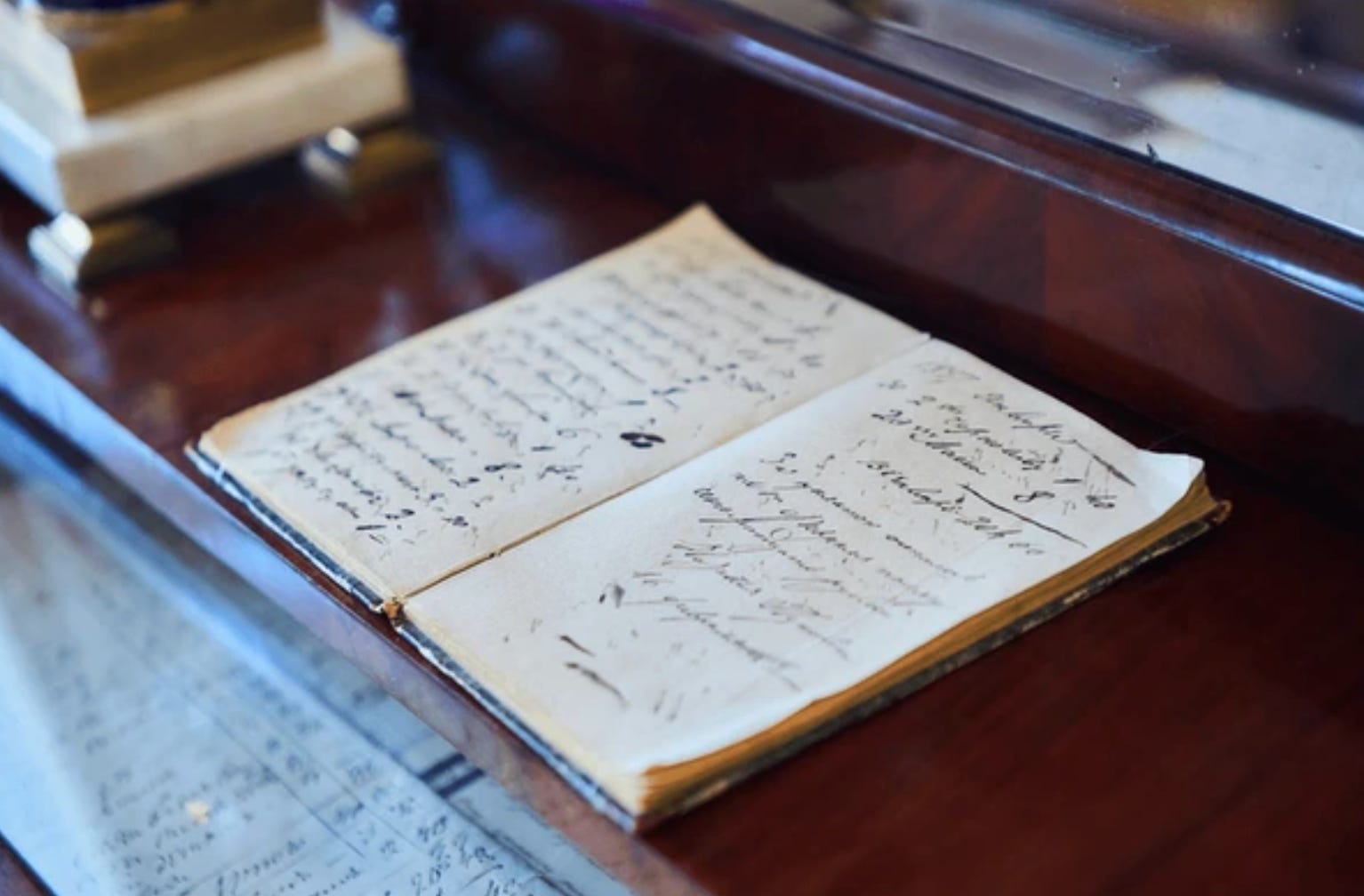
Once again, my friends, I seem to have fallen into a rabbit hole, and this time it’s about French libraries. You’ll read more about them soon… as it looks as if this is going to become a whole series of its own. Let’s see where we end up!
I wasn’t looking for weird library stories. I was researching something else, and then I found a story that happened to take me into a library. I followed that and found another one… and you can probably guess what happened next… yes, it seems to be a recurrent theme around here, doesn’t it? The unexpected places my curiosity and research lead me.
So, there I am… digging.
And goodness, I’ve discovered there really is some weird stuff in there. By in there, I mean the archives! French libraries seem to have quite an extraordinary history ;) Who’d have known ;)
And the weirdness is not just wonderful old books, but about people and scandals and things that have gone missing… sometimes for years. There are families whose private lives have somehow become tangled up with the libraries themselves. There’s been theft. There’ve been love affairs, and even poison, believe it or not. And wait for it… even Napoleon was found to be helping himself to other people’s collections. And I’ve now found myself staring at a reference to 30,000 missing books and wondering how you lose 30,000 of anything without somebody noticing. Extraordinary really, isn’t it?
I’m still trying to work that one out.
Anyway, I now have a rather untidy pile of all these stories spread all over my desk, and I think we could explore them together because I don’t want to turn this into a formal series. That would probably spoil it. I’d much rather keep poking around and, when I find something irresistible, bring it to you.
And that brings me to Pushkin.
I was reading about some valuable nineteenth-century books stolen from the Bibliothèque nationale de France (BnF) when I came across a detail that I thought I was misreading.
For a while, the library didn’t know the books were gone. By “they”, I mean the books, but the books were still there. Except they weren’t. Ha!
Someone had stolen the original books and left excellent facsimiles in their place.
Wow, really? Now I was really hooked!
Really, how do you steal Pushkin from the BnF and leave the BnF believing it still has Pushkin? So naturally, I went looking. Are you coming with me? Because this is where things became wonderfully strange.
A man walks into a library
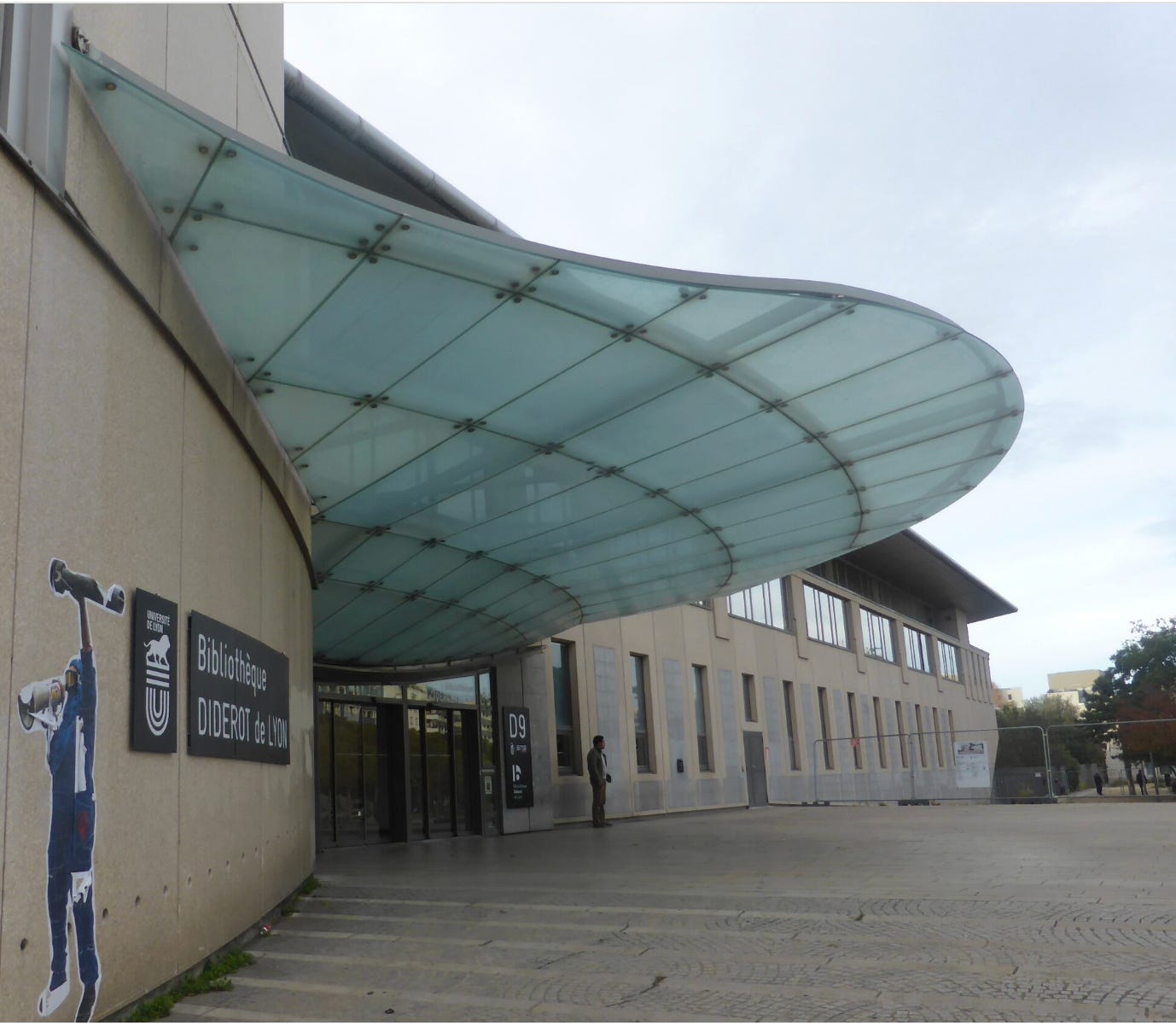
On 11 October 2023, a 56-year-old Georgian secondhand bookseller named Valérian Rajoevi arrived at the Bibliothèque Diderot in Lyon. He spoke Russian, so his sister translated by phone. He said he was working on a doctoral project about Alexander Pushkin and asked to see editions published before 1894.
There was nothing terribly alarming in that. The people come to research libraries to research, and fourteen rare books were brought out for him.
But he wasn’t simply reading them. He photographed them from every angle, measured the covers and bindings, took notes and made numerous telephone calls.
Then he left.
And a couple of weeks later he appeared in Paris, at the Bibliothèque nationale de France’s Arsenal site, and did much the same thing.
By then, Marie de Laubier, a former BnF curator, had become suspicious enough to start checking the collection.
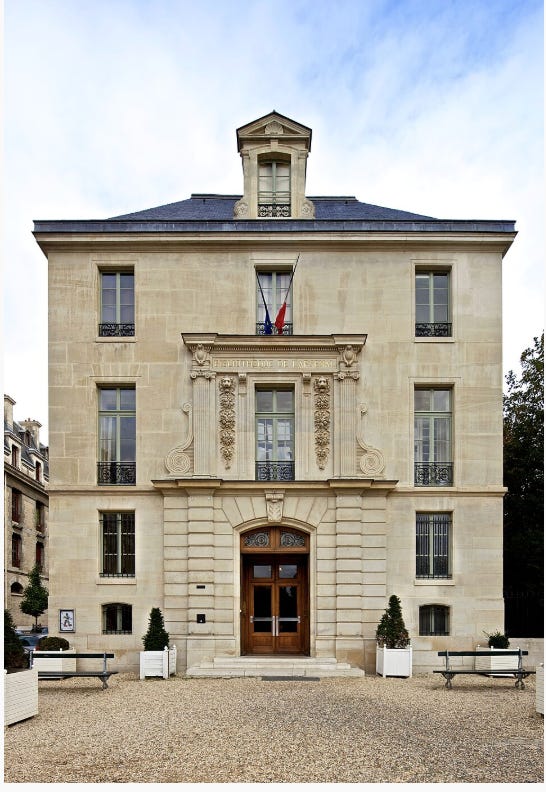
On 16 November 2023, she found something extraordinary. Nine valuable nineteenth-century Russian books were missing. Six volumes of Pushkin, which were published between 1825 and 1828, two first editions by Mikhail Lermontov, and a work by Yevgeny Baratynsky had disappeared.
Nobody had noticed because there was nothing missing in the library. You know what I mean; there were still books where the books were supposed to be. The originals had been replaced with copies, complete with fake aging and all.
Gosh, just think about what’s needed to achieve that.
You’d have to get access to the originals before anything else. Then you’d need to know its dimensions and what its binding looks like. Next you’d probably photograph it, measure it, reproduce it, then age the copy enough to make it plausible, and then somehow get back into the library, take the real book and leave yours behind.
And as if this isn’t enough, then you’d have to walk out as if nothing has happened and to not attract attention.
It seems that at least some of the facsimiles were very good, and Europol later described the counterfeits as being of “outstanding quality”. Not all of them, apparently. It seems that elsewhere in Europe some of the substitutes weren’t as good.
But in Paris they had worked.
For a while.
Then the librarians started talking to each other
This hadn’t begun in France… yet. Many rare nineteenth-century Russian books had disappeared from libraries across Europe since 2022: Czechia, Estonia, Finland, Germany, Latvia, Lithuania, Poland and Switzerland. Eventually, France sent their information to Europol, and other countries began recognising the same patterns in their libraries.
What looked like missing books in individual collections suddenly became one very, very large story.
It seemed that at least 170 books, worth about €2.5 million, had been stolen. Pushkin was a favourite, although Gogol and other Russian writers were targeted too, and it became clear that they knew which books they wanted.
Why Pushkin?
I knew Pushkin mattered enormously in Russia. I don’t think I’d quite understood how much… well, honestly, I actually had no idea.
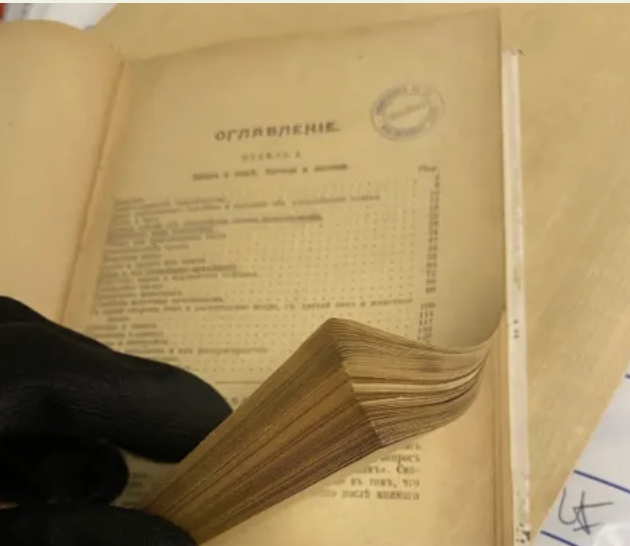
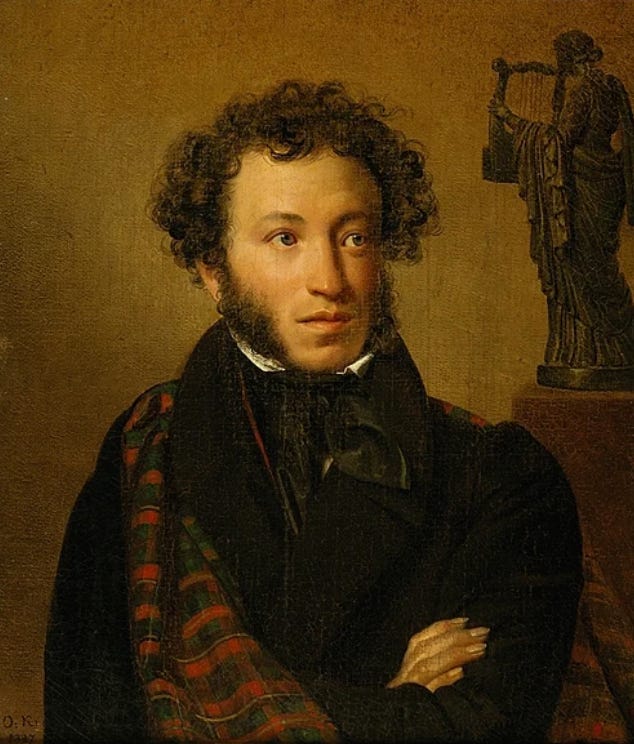
Pushkin’s work is woven into the Russian language and into the country’s idea of itself, and rare early editions published during his lifetime are particularly sought after in Russia and across the former Soviet world.
Pushkin, who died at 37 after a 1837 duel, had helped shape modern Russian literature. Russian.
Here’s a lovely everyday example that the French translator André Markowicz gave Le Monde:
“If somebody in Russia leaves a restaurant without paying, the waiter might ask who is going to pay for them: Pushkin?”
Everybody understands… He has simply always been there, which makes the timing of these thefts interesting, so I dug further.
The thefts began in 2022, the year Russia launched its full-scale invasion of Ukraine. And at that time arguments about Russian culture, language, monuments and identity became newly charged, particularly in countries that had once been part of the Soviet sphere.
Was that connected? Who knows?
There’s been speculation that these books were being returned to Russia, maybe for reasons involving cultural nationalism. But, again, who knows? Later, apparently evidence showed that at least some of the stolen books did reach the Russian market. Europol says that historical works were sold through auction houses in Moscow and St Petersburg.
But this is where I want to be particularly careful. There have been suspicions about Russian state involvement, but that has not been proved. And we don’t need to turn a peculiar story into a conspiracy to make it interesting.
And this is where I thought I understood the story. I didn’t.