The French Art of the Welcome
 Tomas k - Senior News Editor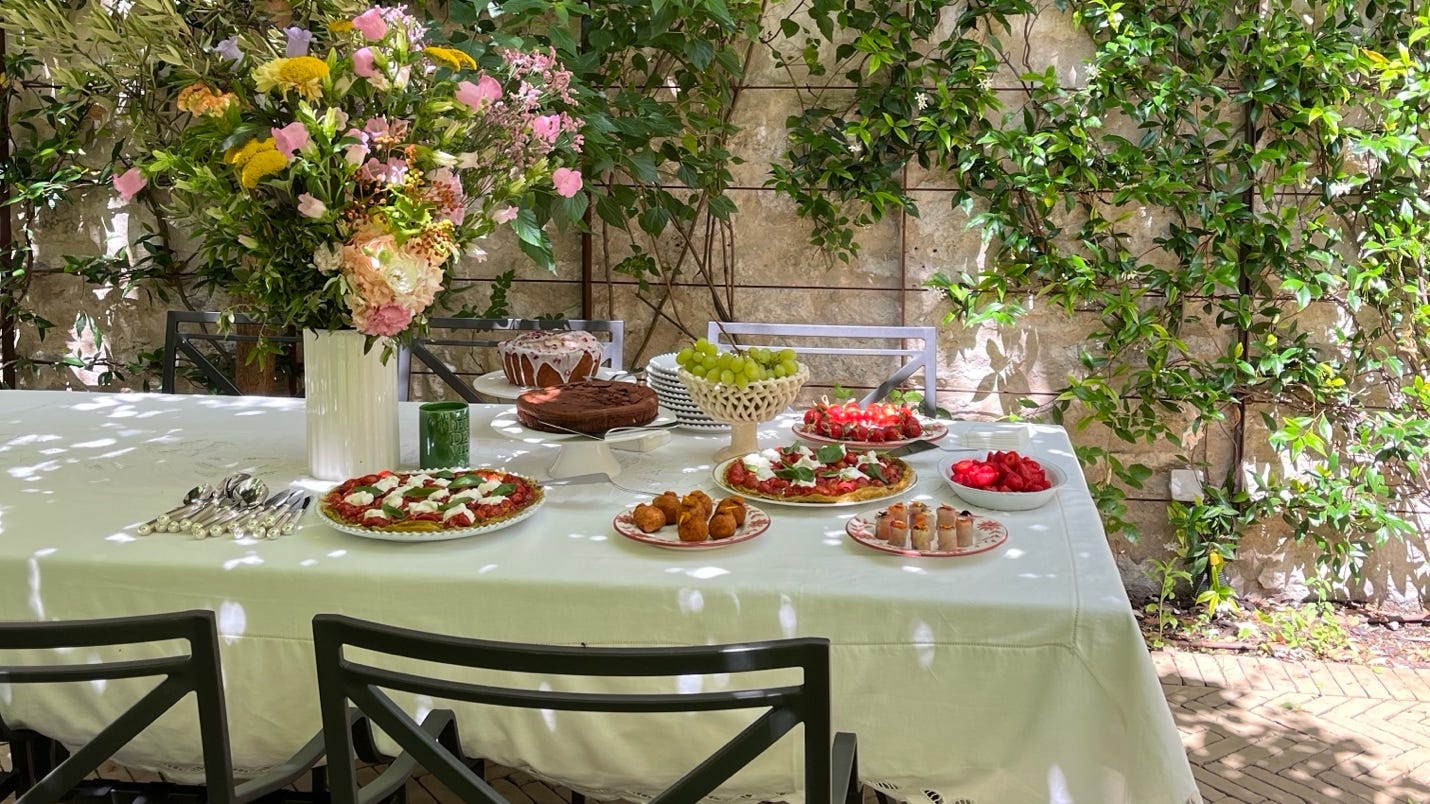
Before we moved to rural France, I did what any reasonable person does before making an irreversible life decision: I consulted the internet, asked people who had done something vaguely similar, and watched a lot of movies set in Europe.
The picture I assembled was consistent. The French, I was told, are reserved. Private. Polite in the formal sense, warm only once you’ve earned it, and earning it takes years. There would be a wall, and the wall would be thick, and I should be patient about the wall and not take the wall personally and perhaps bring something nice to leave at the base of the wall while I waited.
I had made my peace with the wall.
There was no wall.
I should back up.
My name is Kamille. Two years ago, my husband Sean and I moved our family from Los Angeles to rural France, where we now live in a three-hundred-year-old château with a kitchen garden, a bluebell forest, a chapel, and a rooster named Mr. Darcy who has a large lung capacity.
This is about one of the things France did that I wasn’t expecting.
What I thought I was walking into
In Los Angeles, I had friends. Good ones. People I loved, people I still love, people I would drop things for without hesitation.
None of them were my neighbors.
My neighbors were people I coexisted with in close proximity while taking careful steps to minimize actual contact. I’m not proud of this. I was a new mother; I was working a lot, I was tired in the way that a person is tired when the life they’re living requires more than they currently have to give it. When I saw someone from my building approaching in the parking lot, I would develop a sudden, urgent interest in my phone. I once sat in my parked car for six minutes waiting for a neighbor to go inside so I could walk to my door in peace.
I had rationalized this entirely. This is just how cities work, I told myself. This is just Los Angeles. Nobody knows their neighbors in Los Angeles - or in New York, or in any dense urban place where everyone is busy and slightly overwhelmed, and the social contract has been renegotiated down to a nod in the elevator, if that.
And honestly, I think that’s partially true. I don’t think Los Angeles is uniquely cold. I think there are neighborhoods everywhere with people who bring each other soup and trade vegetables over fences. But there is something about the rhythm of city life - the pace, the transience, the sheer number of people brushing past you every day - that makes genuine community feel optional in a way that it maybe isn’t meant to be.
I had been opting out for years without really realizing it.
The movie I had in my head
I also had a very specific cultural reference point for what French neighborliness would look like.
There’s a scene in Under the Tuscan Sun - yes, Tuscany, not France, work with me - where the main character, an American woman, waves to an older local gentleman from her window, day after day, and he never waves back. For months. And then one day, finally, he waves. And it’s played as this hard-won victory, this proof that she has begun to belong.
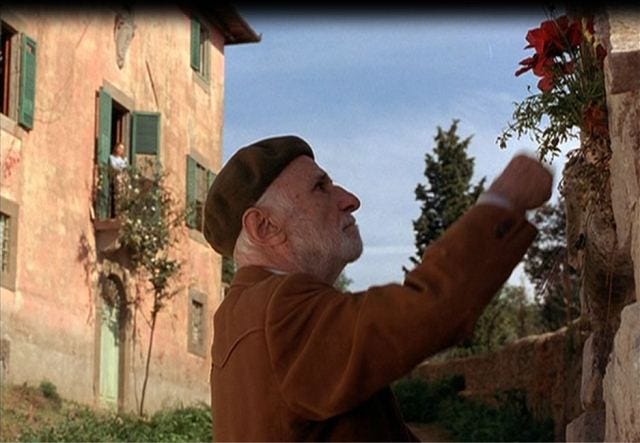
I thought France would be like that. I thought I would be waving into the void for a good long time, and that patience was the only currency that would eventually buy me a wave back.
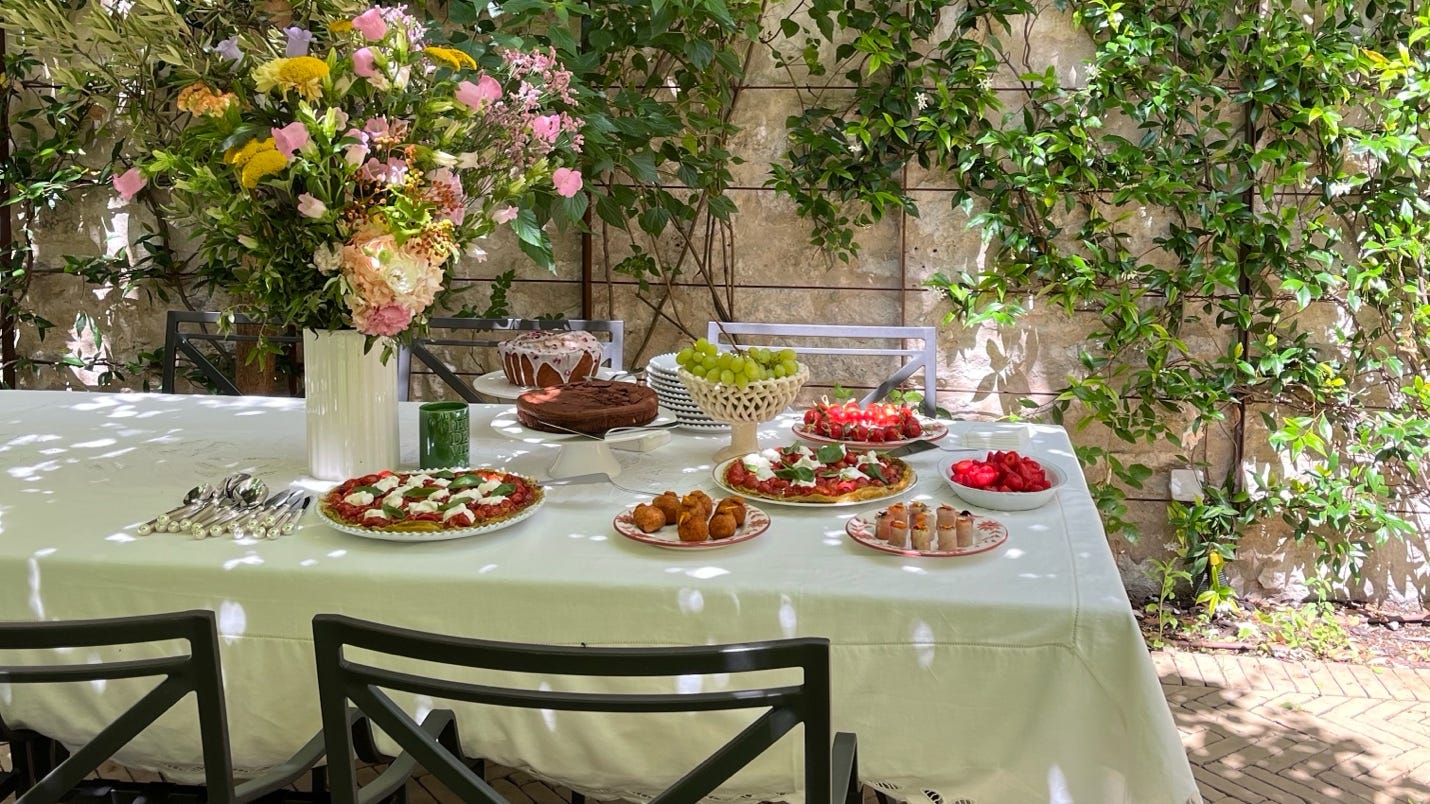
What actually happened was that within weeks of our arrival, a neighbor we had never met - a woman from the village - organized a dinner. Not for a birthday, not for a holiday, not for any occasion at all. Specifically, deliberately, to introduce us to the community.
Ten people came to welcome two strangers.
Ten people rearranged their evening, made food, opened wine, and showed up, for us because we were new, because that is apparently something people here do.
I didn’t know that was possible, and I had not known to hope for it.
What the evening actually looked like
I want to be careful not to turn this into a fairy tale, because it wasn’t seamless. It was warm and slightly chaotic and punctuated by the absurd comedy of two people attempting to participate in a dinner party in a language they do not yet speak fluently.
Our French at that point was what I charitably call “baby French.” We had the basics. Pleasantries. Numbers. The ability to order things, apologize, and say that something was very good, which we deployed constantly because it was almost always true. What we did not have was the ability to follow rapid conversation between ten people who had known each other for years, which meant a lot of nodding and smiling and hoping we were nodding and smiling at the appropriate moments.
They were very patient with us, and it was genuinely moving. They slowed down and repeated things. They mimed cheerfully when words failed entirely. Nobody made us feel like a burden or an interruption. We were - and I want to be precise about this, because it’s not a small thing - made to feel expected.
Not tolerated. Expected. As if our being there was the natural conclusion of us having arrived.
The thing I had wrong about the French
I had absorbed, somewhere along the way, the idea that the French don’t particularly like Americans. That there is a cultural coolness toward us - toward our loudness, our informality, our habit of treating strangers like friends before the friendship has been established.
I think this reputation comes, in large part, from Paris. And more specifically, from Parisian waiters. And even more specifically, from Parisian waiters in August.
Here is what I have come to understand about that: Paris is one city in a very large country. And if you were a waiter who had served approximately ten thousand tourists in ninety-eight-degree heat, at least half of whom had requested oat milk in some form and confidently mispronounced salade niçoise directly to your face, you might also be a little terse. This does not make you a representative of an entire nation. This makes you a person who is hot and tired and doing their job without the incentive structure that makes American service so relentlessly, performatively warm.
Which, actually, is something I’ve come to appreciate. In the US, you are always faintly aware that your waiter is being nice to you for reasons that are at least partially financial. There’s nothing wrong with that - it’s the system, and it produces a certain reliable cheerfulness - but there’s also something slightly uncomfortable about it, an unspoken transaction underneath every refilled water glass. In France, if your waiter is pleasant, they’re pleasant because that’s just how they are today. It’s not a performance. It’s not angled at anything. And it’s oddly relaxing.
Anyway. The French don’t hate Americans. Or at least, rural France does not hate this particular American family. What I found was not hostility or even reserve. What I found was a different set of social rules, applied consistently and without malice. The French are formal until they’re not. There’s a threshold, and once you’re past it, you’re past it for good.
The threshold, it turns out, is not as high as I thought. Or maybe it lowers when you show up having left everything familiar and tried, visibly, to do things the right way. Maybe earnestness counts for more here than I expected.
Our neighbors have been kind. Specifically, concretely, show-up-with-things kind. Someone brought us something from their garden. Someone else shared their favorite French music with us. We have shared several apéro. Our children are known by name in the village. Not as “the American kids” - by name.
I think about the six minutes I spent in my car in Los Angeles, waiting.
What I think is actually happening here
I’ve been trying to understand what’s different, structurally, about community in a small French village versus community in a large American city. The easy answer is scale - of course you know your neighbors when there are only so many of them; of course community forms naturally when the village is small enough that everyone passes through the same boulangerie, the same market, the same school pickup.
But I think it’s more than that. I think there’s something here about continuity - about the fact that these people’s families have lived in this place for generations, that the social fabric is old and layered and has been repaired and maintained across decades. Nobody is passing through. Nobody is here temporarily while they figure out the next thing. When you arrive, you are arriving into something that already exists and has existed for a long time, and the community treats your arrival accordingly - as a permanent addition, worth the investment of a dinner.
In Los Angeles, I was surrounded by people who were also, in some sense, passing through. Not because Los Angeles is transient (though it is, somewhat) but because we were all in the middle of something - careers, ambitions, the perpetual project of becoming whoever we were going to turn out to be. The city was a backdrop to a story that was happening elsewhere, in the future, once things settled down.
Things don’t settle down. That was the lesson.
The community was always going to be the thing. I just had to move to a small French village to figure that out.
What I would tell myself
I would tell the version of me who sat in that parking lot for six minutes: You are not actually protecting yourself from anything. You are just practicing being alone.
I would tell her that the wall she was so prepared for wasn’t on the other side at all.
À bientôt
Kamille
Have you experienced unexpected warmth from strangers in France - or anywhere else? Tell me in the comments.
Introducing Contributor Kamille Longstreet
Visit her Contributor Page — Explore more of Kamille’s work→
Thanks for reading MyFrenchLife™ – MaVieFrançaise®! This fabulous article by Kamille Longstreet is public, and we encourage you to share it.
MyFrenchLife™ – MaVieFrançaise® is a reader-supported publication. To receive new posts and support my work, consider becoming a free or paid subscriber.