The Paris department stores you didn’t know about
 Tomas k - Senior News Editor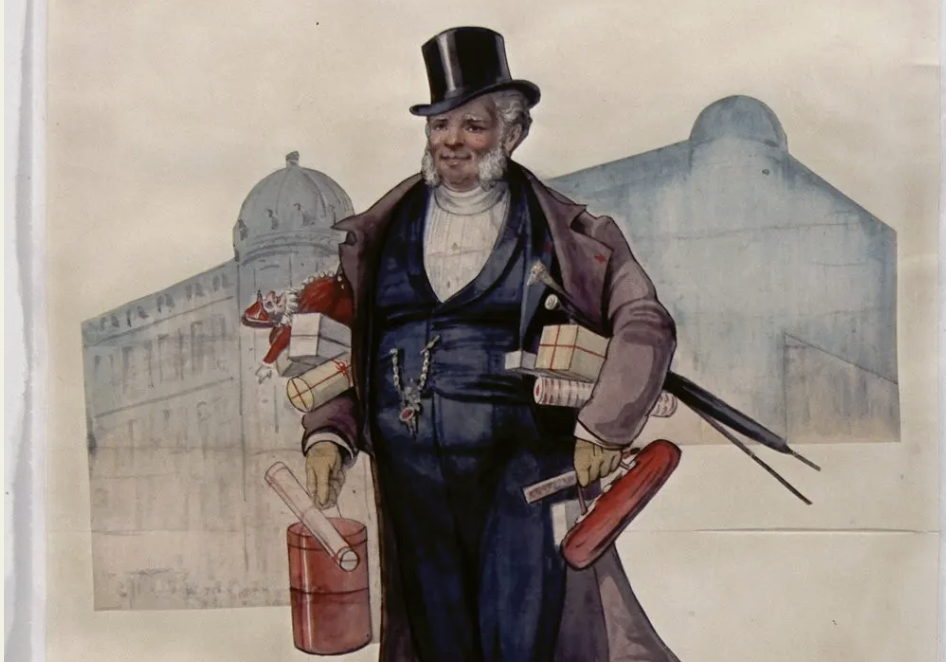
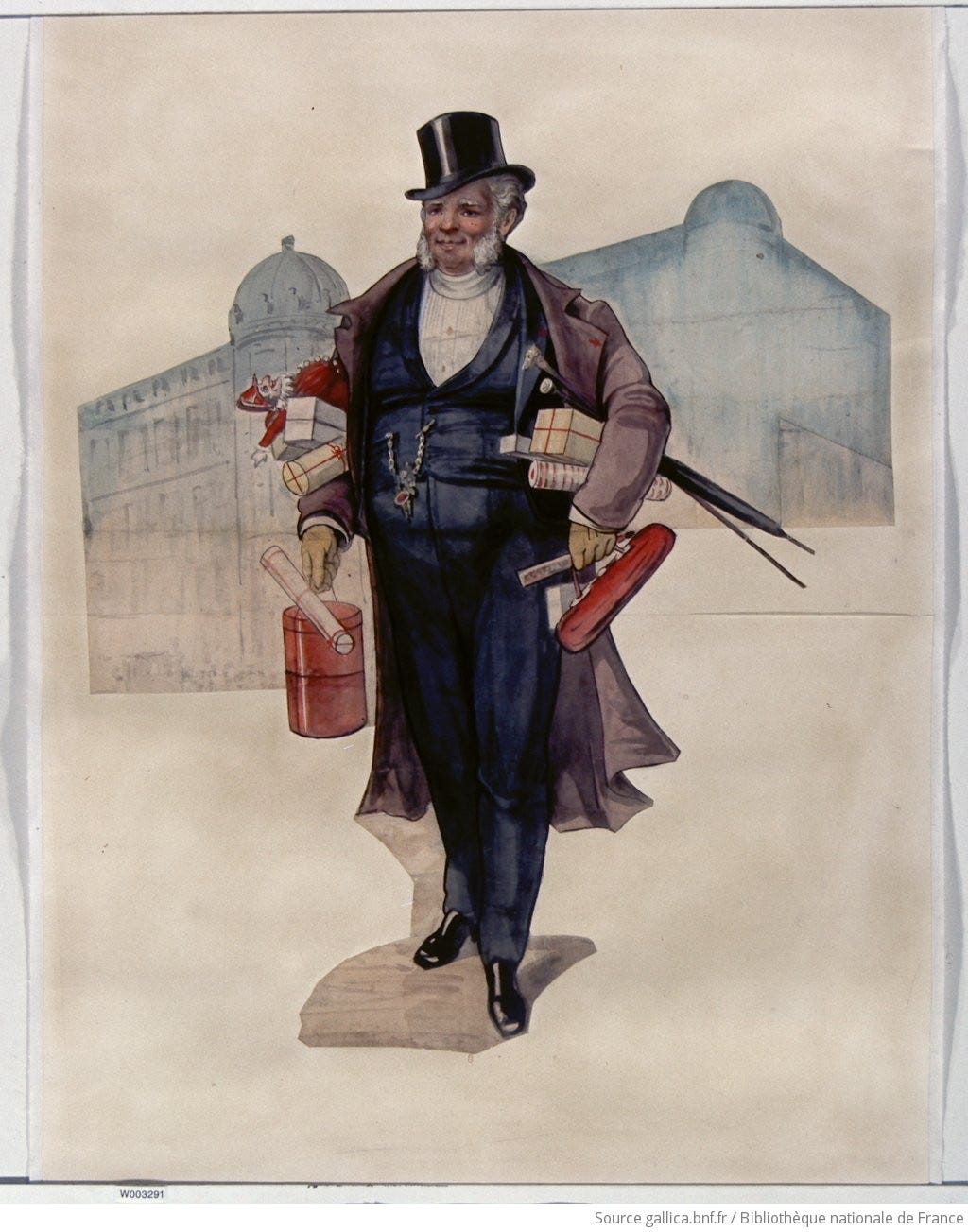
J’adore 19th-century Paris
If you’ve been reading my Substack for a while, you may have discovered that I am obsessed with 19th-century Paris.
A LOT happened during that period. The city was completely overhauled. Decaying Medieval architecture gave way to wide boulevards, improved water and sewage systems, and sidewalks where many outdoor cafés thrived. (Thankfully, the City of Paris kept photographic records of the old stuff that was destroyed — a great many photos are in the archives today.)
This ‘new and improved’ Paris of the 19th century was met with the ire of some well-known writers and poets. They hated seeing the old city become uniform and homogenous. Alas, progress is progress, and the city was changing.
Along with this was a demographic shift in Parisian society. No longer were the rich the only ones who could enjoy a little luxury — the middle class expanded and people had more money to spend.
This trend coincided with the building of department stores that changed the way people shopped. Instead of having to haggle at individual stalls for food, fabric, or clothing, a department store offered a one-stop-shop experience.
Here’s the really interesting part…
But what I didn’t know was that during the 19th century, department stores and bazars were popping up all over the city. I discovered this when I was researching the chromo-cartes, clever little illustrated cards used to promote different stores.
(Just to be clear, a grand magasin, or department store, sells goods in a clearly organized manner. A bazar is a homogenized retail space where people can find bargains in a more busy (chaotic?) layout. But the lines can be blurred between the two depending on the store.)
I wanted to learn more, so I went down the rabbit hole again.
Let’s take a little tour:
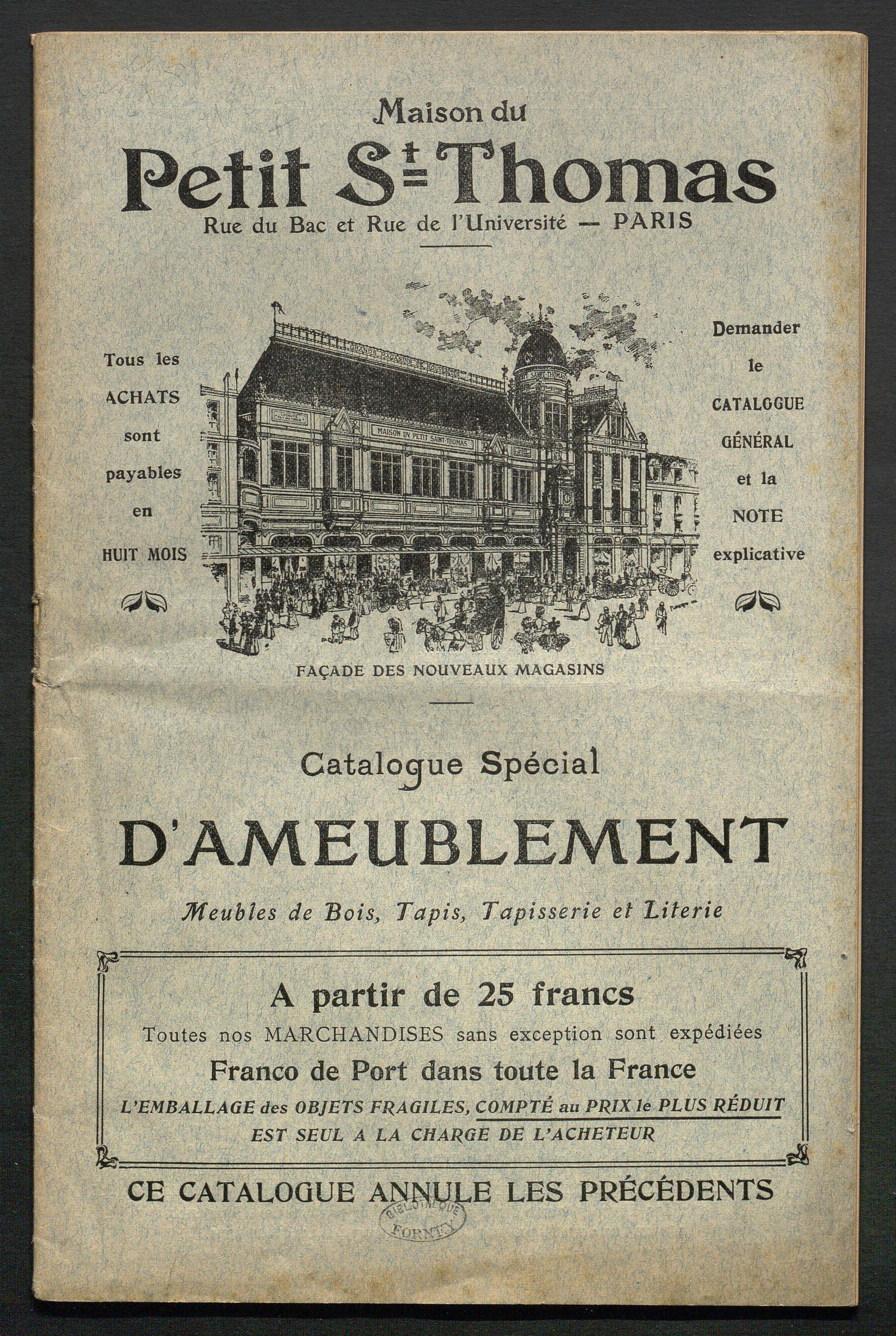
Au Petit Saint-Thomas
Let’s start with Au Petit Saint-Thomas, built in 1830 and located in the terrific area of Rue du Bac and Rue de l’Université on the Left Bank. This may have been the very first retail store of its kind in Paris. It offered items at fixed prices that meant shoppers didn’t have to haggle with sales staff.
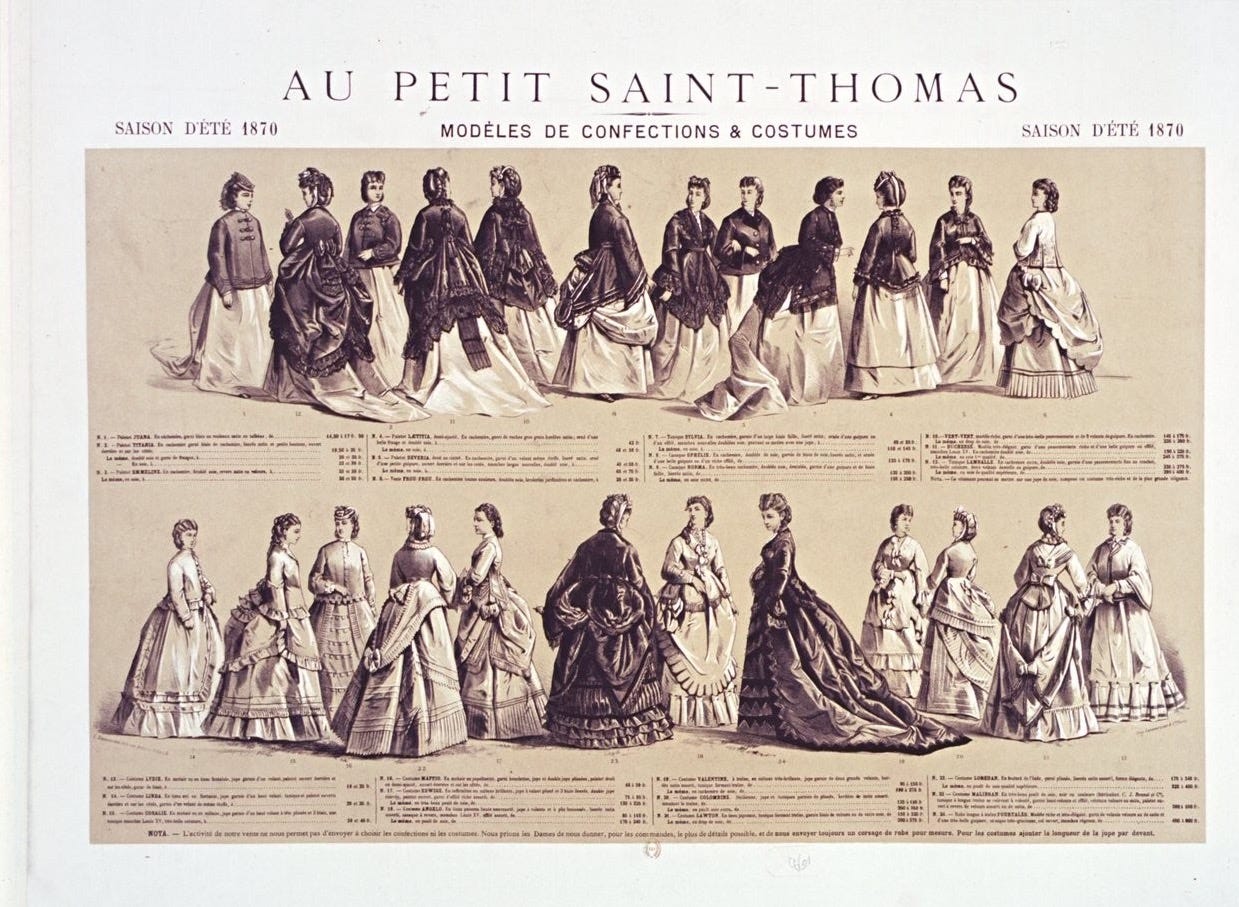
It served a wealthier clientele and was mostly frequented by women, offering ready-made clothing and novelties such as ribbons, lace, gloves, parasols, and toys.
Interestingly, the man who would go on to open Le Bon Marché — a very prominent department store that still exists today — worked at Au Petit Saint-Thomas and that’s how he learned the ins and outs of this new retail concept.
Au Pauvre Jacques
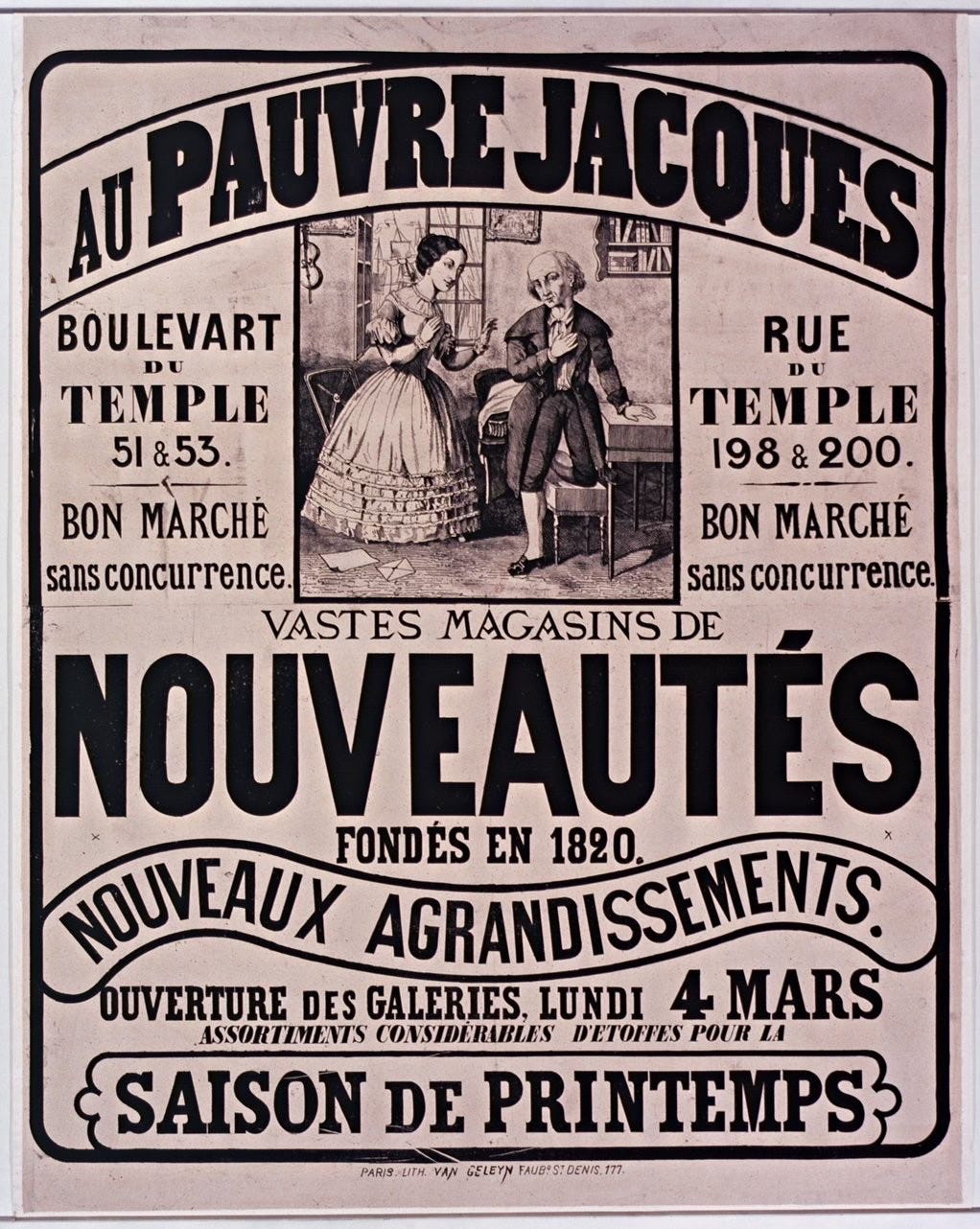
This is my winner for the best store title — Au Pauvre Jacques, or “For Poor Jacques”. Founded in 1820, this was more of a bazar than a big department store. Its prices attracted shoppers with less money in their pockets looking for a good deal. The main clientele included artisans, workers and their families. It offered affordable, ready-made clothing, textiles and other goods for everyday consumption.
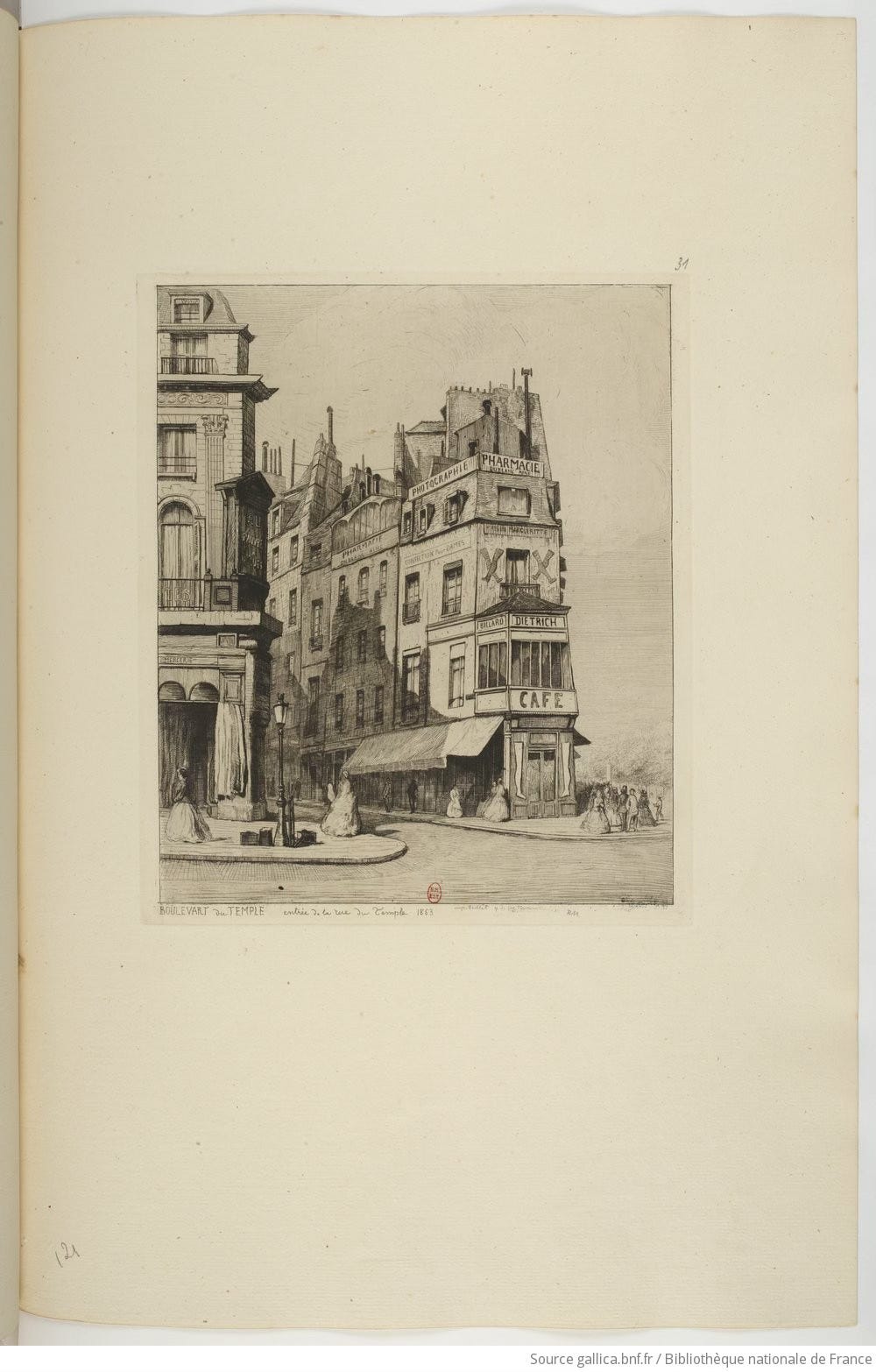
The store’s name was a bit tongue-in-cheek. Jacques is an ‘everyman’ name in France and even though pauvre means poor, it cheekily is making reference to lower prices. By all accounts it had a chaotic atmosphere, but it was an exciting vibe, not a tiring or annoying one.
Grands Magasins du Louvre
With its very central location, this store opened in 1855, coinciding with the Universal Exposition in Paris to attract rich clientele as well as visitors and tourists flocking to the city.
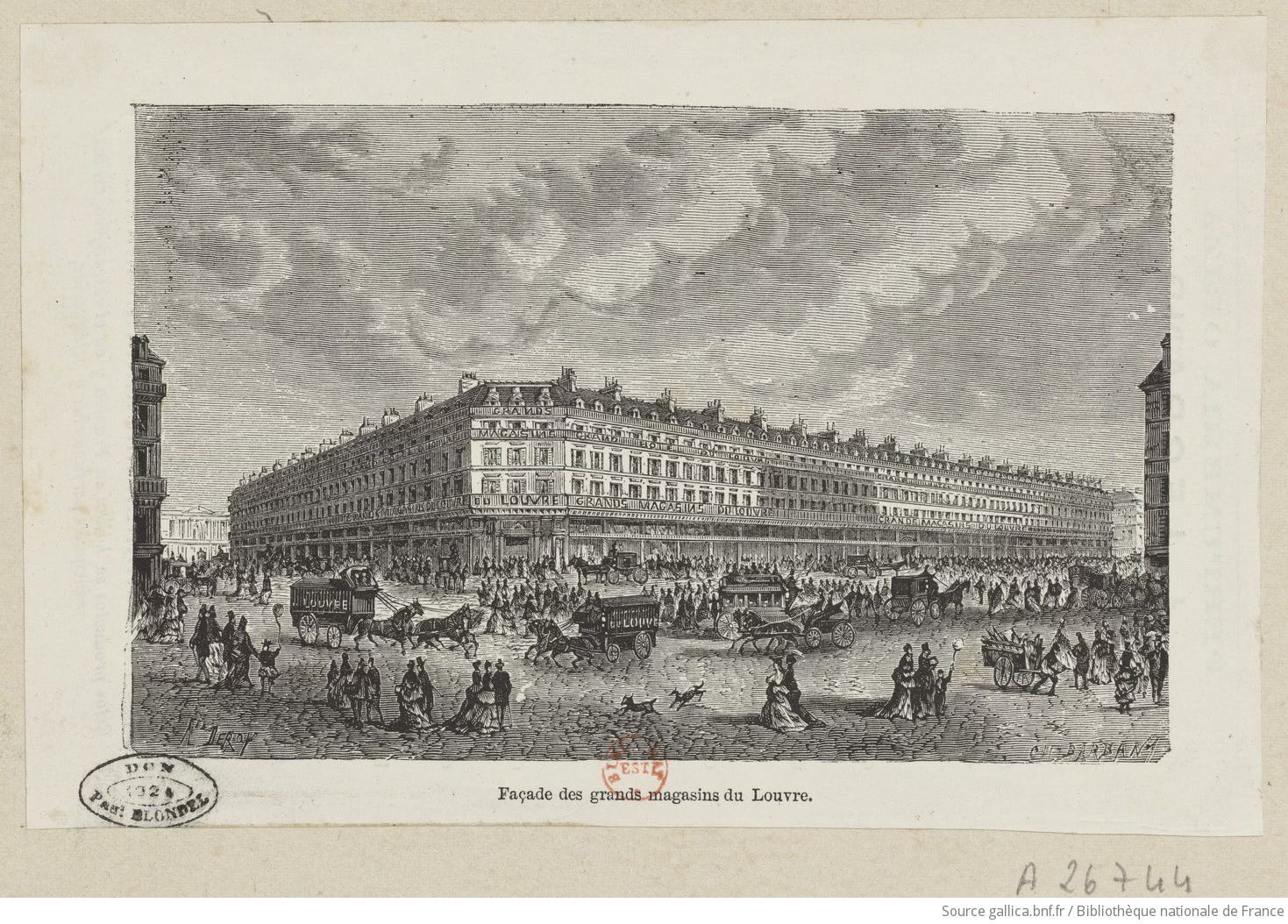
It offered a luxury shopping experience, with ready-made clothing, furniture, textiles and accessories. With the prestigious address, it was a show-off kind of store that made the pages of many Paris guide books. It closed permanently in 1974.
À la Place Clichy
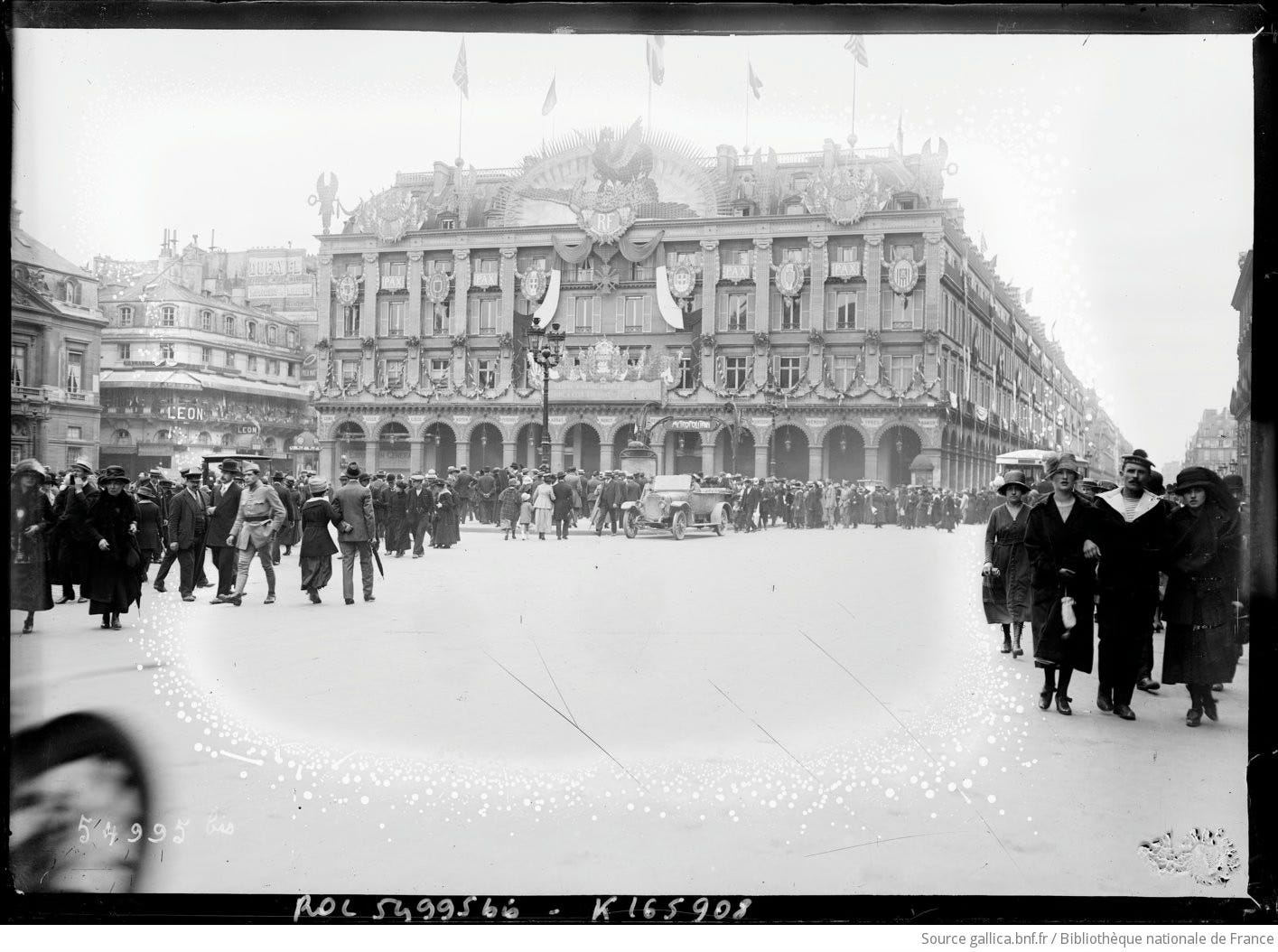
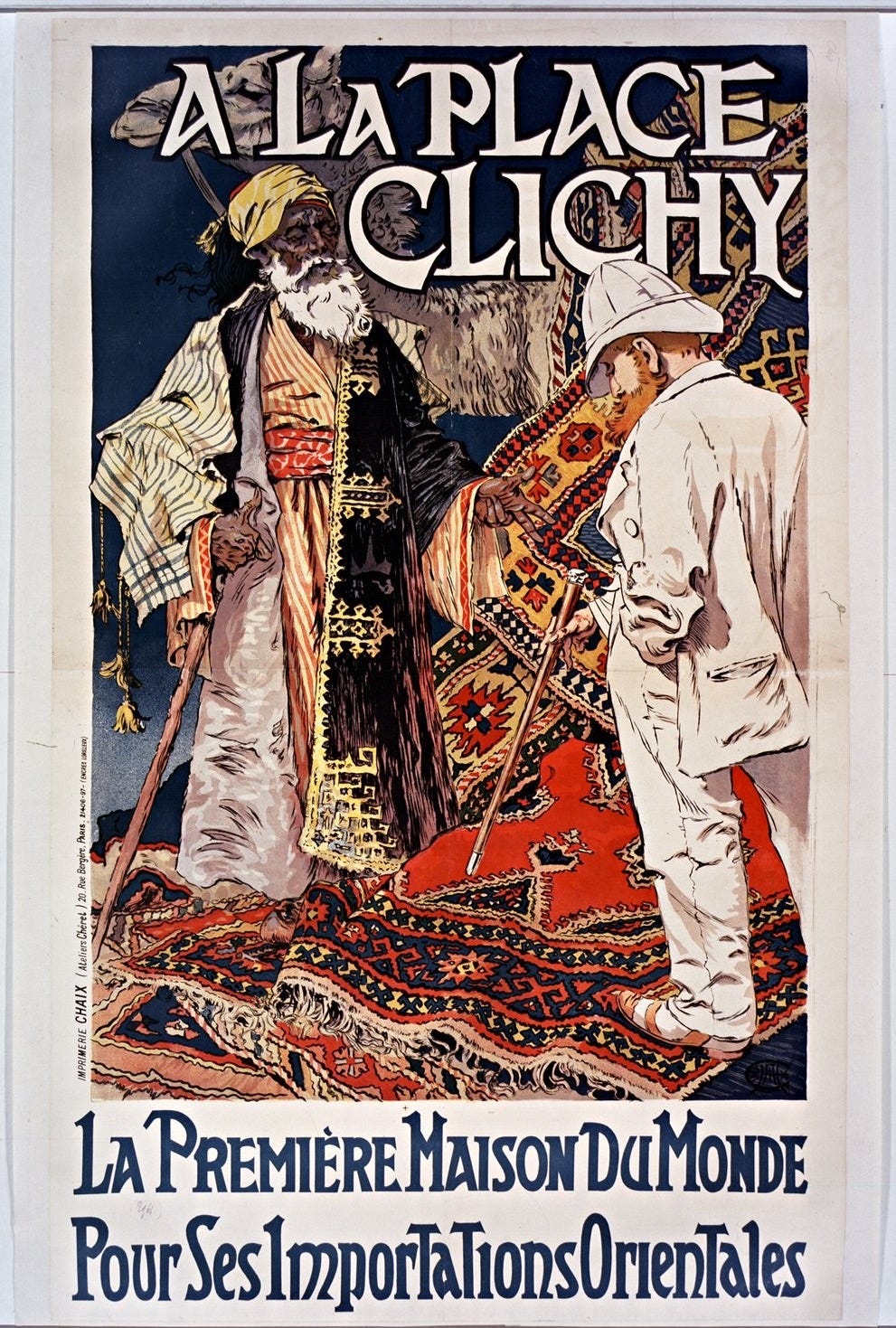
Built in the second half of the 19th century, À la Place Clichy was located in a main artery of Paris just south of Place Clichy on rue d’Amsterdam. This was prime real estate because the neighborhood housed a lot of popular theaters, cafes and restaurants. Like Au Pauvre Jacques, it catered to lower- and middle-class Parisians.
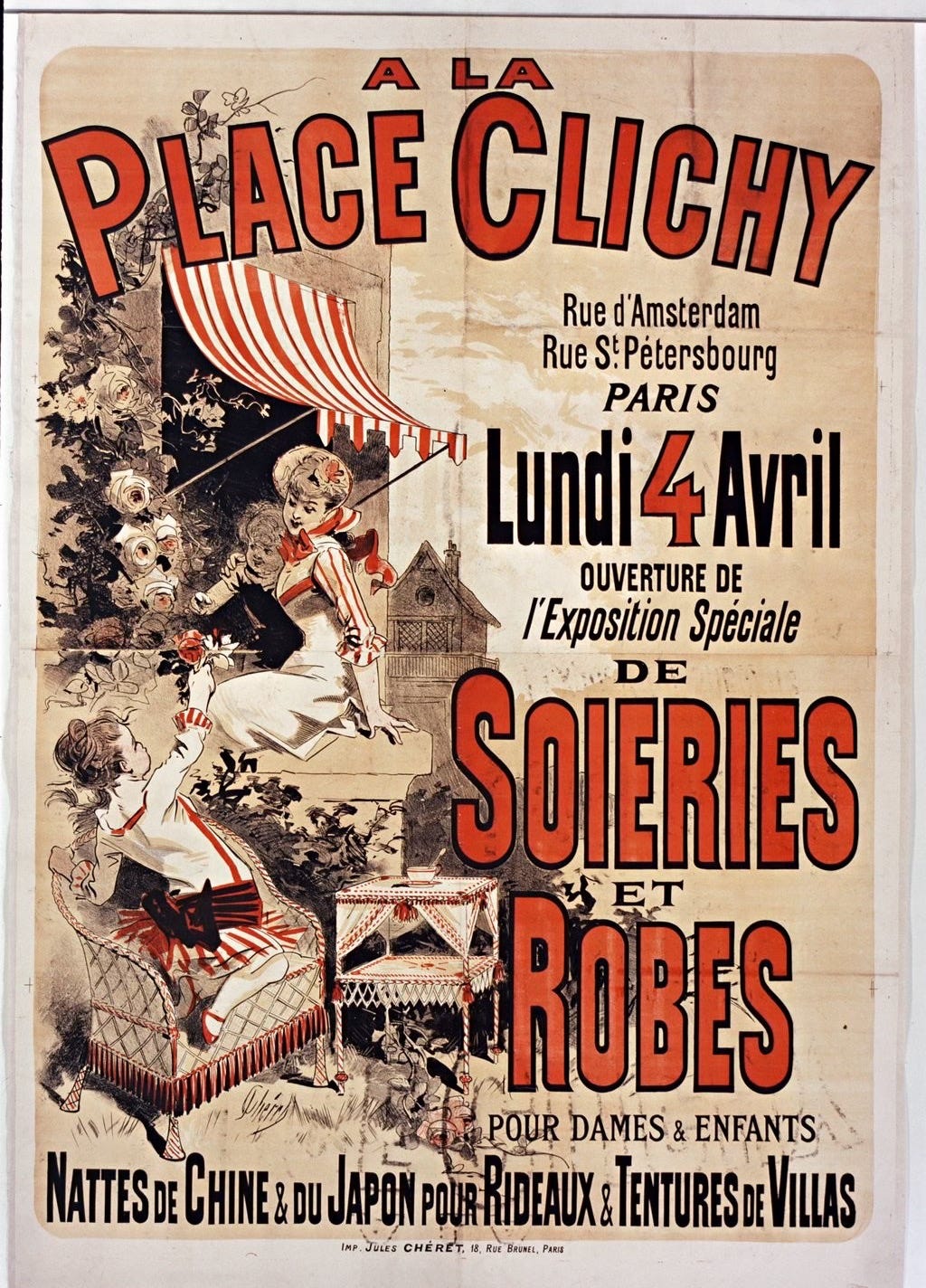
The store’s founder, Paul Argand, was a frequent traveler to Central Asia and the Middle East, where he’d acquire carpets, textiles and other delightful items to sell (see above). These exotic offerings distinguished it from other grands magasins. I was curious as to how a more modest, less luxurious store was targeting the masses with important rugs and finery — but I think the whole point was even exotic rugs could be sold to the non-wealthy.
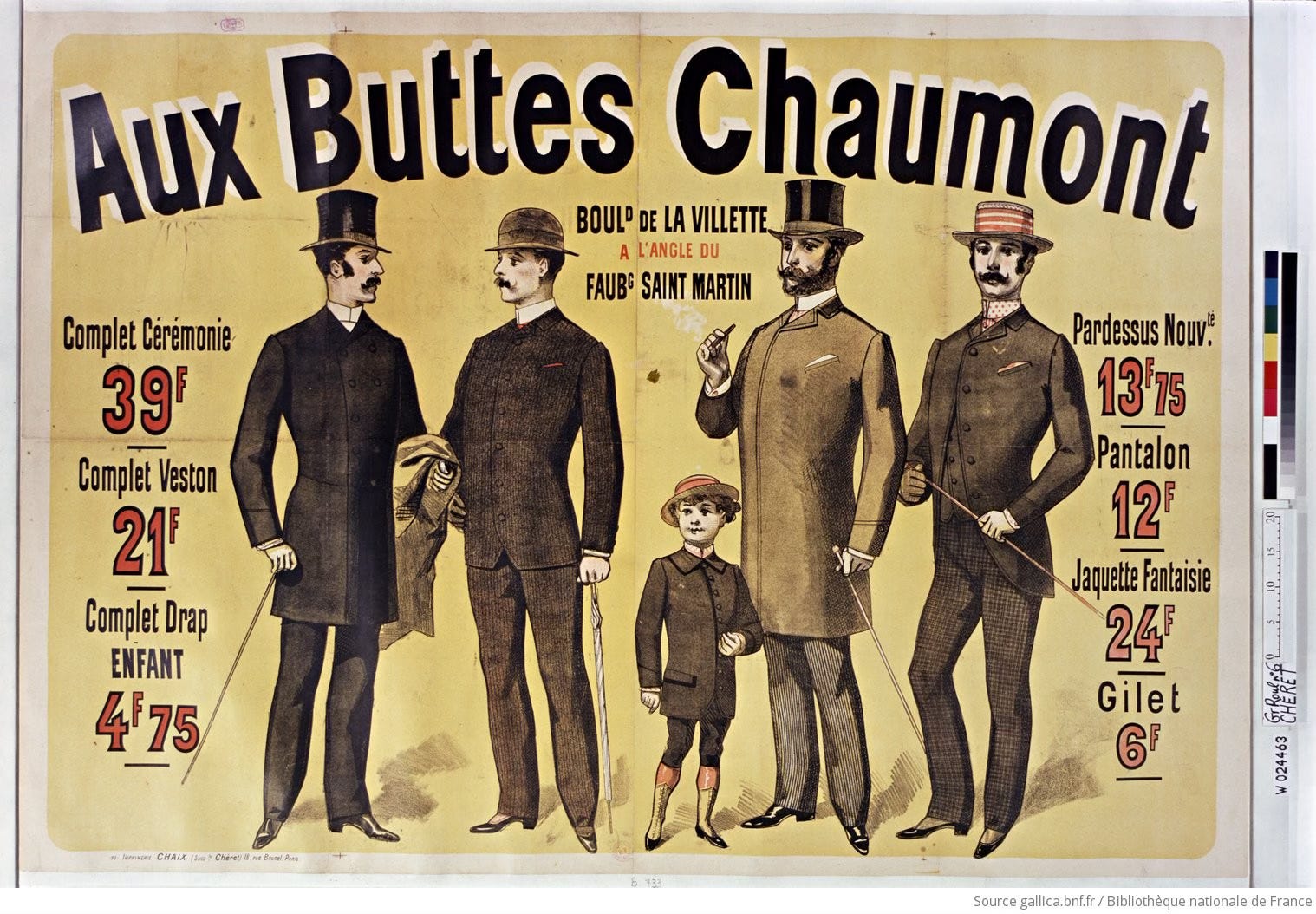
Aux Buttes Chaumont
For anyone who isn’t too familiar with Paris, Buttes-Chaumont is the name of a famous park opened in 1857 in northeastern Paris (butte means hill). This store was located near the park — a wise strategic location because it was a newly-developing area with a lot of residents and pedestrians visiting the park. It didn’t have the prestige of the more luxurious stores; it appealed to workers, artisans and families.
Many, many other stores were frequented by Parisians during the 19th century: À la Parisienne, Au Grand Turenne, Grands Magasins de la Paix, À Voltaire, À la Ville de Londres — you catch my drift? There were so many! Some of the early ones are still thriving today: Au Printemps, Le Bon Marché, Galeries Lafayette, and Bazar de l’Hôtel de Ville (BHV).
It might be doing a part deux Substack with a continuation if this one generates enough interest. Let me know what you think:
Sources:
Listing of some stores from Paris patrimonial libraries
Fun reference for Grands Magazines du Louvre including old catalogues
Wikipedia: Grands magasins de la Place Clichy
Introducing Contributor, Jenn Bragg
Immerse yourself in all of Jenn’s articles on her Contributor page.
MyFrenchLife™ – MaVieFrançaise® is a reader-supported publication. To receive new posts and support my work, consider becoming a free or paid subscriber.