The Pulse of the Twelfth: Finding the Real Paris at Marché d’Aligre
 Tomas k - Senior News Editor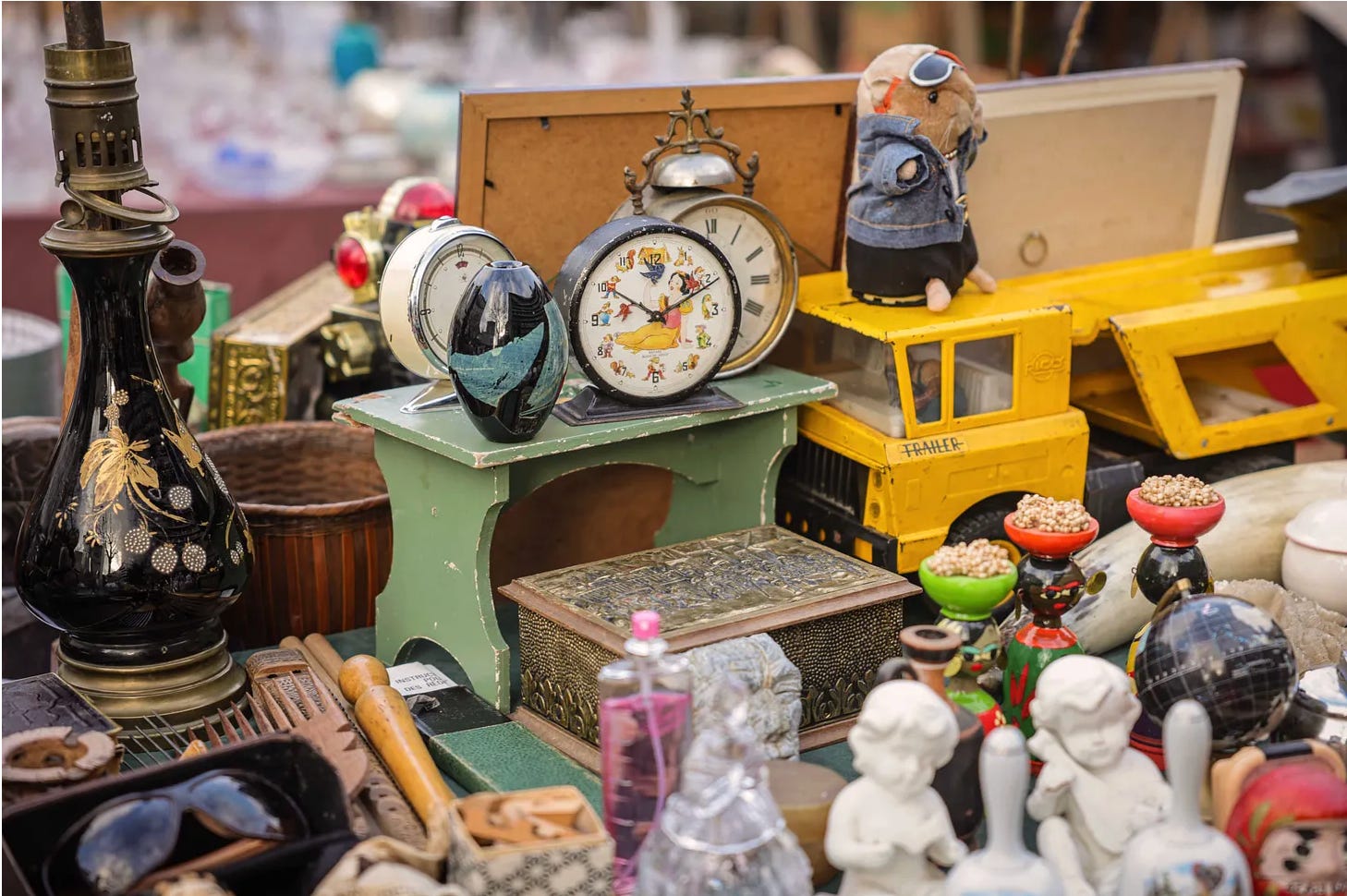
Far from the postcard-perfect Paris lies a secret sanctuary—a place with street vendors and dusty treasures—where I love to wander whenever I want to experience a typical Parisian morning.
I was born and raised in Reims, a city aptly nicknamed ‘Sleeping Beauty’; it is close to Paris, yet its exact opposite when it comes to buzz and energy. In contrast, I spent my teenage summers in a far more arid landscape: the New Mexico desert, where part of my family lives.
This experience fostered an observant eye for both cultures. When I visit Paris—roughly once or twice a month—I feel a bit like my family back in New Mexico: a tourist, forever filled with wonder and never jaded. Yet, over time, I’ve come to love stepping away from the polished perfection of Haussmann facades to feel the city’s true pulse—the real Paris of the Parisians—and, in my view, the Aligre neighborhood embodies this spirit best. Here, you leave the ‘museum’ behind for something authentic and unvarnished, alive with its own distinct sounds and scents.
The heart of the neighborhood: a market with a triple identity
What I love about this neighborhood is that it satisfies both my taste buds and my passion for objects that carry a story—all within a lively atmosphere that invites conversation, price haggling, and debates over which wine pairs best with a particular cheese. The market’s unique feature is its triple identity, comprising three distinct areas: Rue d’Aligre, with its open-air fruit and vegetable stalls, represents the market’s ‘beating heart.’ Here, the atmosphere is set to the rhythm of the vendors’ calls—a melody of sales pitches: “One euro a kilo! Get it while you can, ladies!” The stars of the stalls shift with the seasons: white asparagus from Les Landes in April, followed by mountains of Reinette apples in October.
However, stepping into the Halle Beauvau feels like entering a cathedral, given the much calmer atmosphere. Built in 1843, its magnificent wooden framework evokes the hull of an overturned ship. Inside, the mood shifts; it is far more serious—the realm of fine gastronomy.
People come here to find exquisite products that will dazzle the palate, such as aged Comté, Bordier butter, or artisanal honey. Then, in the center of the square, the atmosphere changes once more to make way for the flea market. There is no "upscale" antique hunting here; this is a genuine flea market—an open-air Aladdin’s cave. Here, amidst a hodgepodge of stalls, you might unearth a stack of vintage 1960s French ‘Vogue’ issues, still-life paintings, or porcelain tableware.
Standing at the Counter of Tradition
To experience Aligre like a true Parisian, you need to know how to combine quality products with a friendly atmosphere. It all begins at Café Aouba, a legendary local coffee roaster established in 1938. There, you choose your coffee from 17 premium varieties sourced from Cuba, Cameroon, and Mexico—roasted weekly and ground to order—an olfactory experience that awakens the senses first thing in the morning.
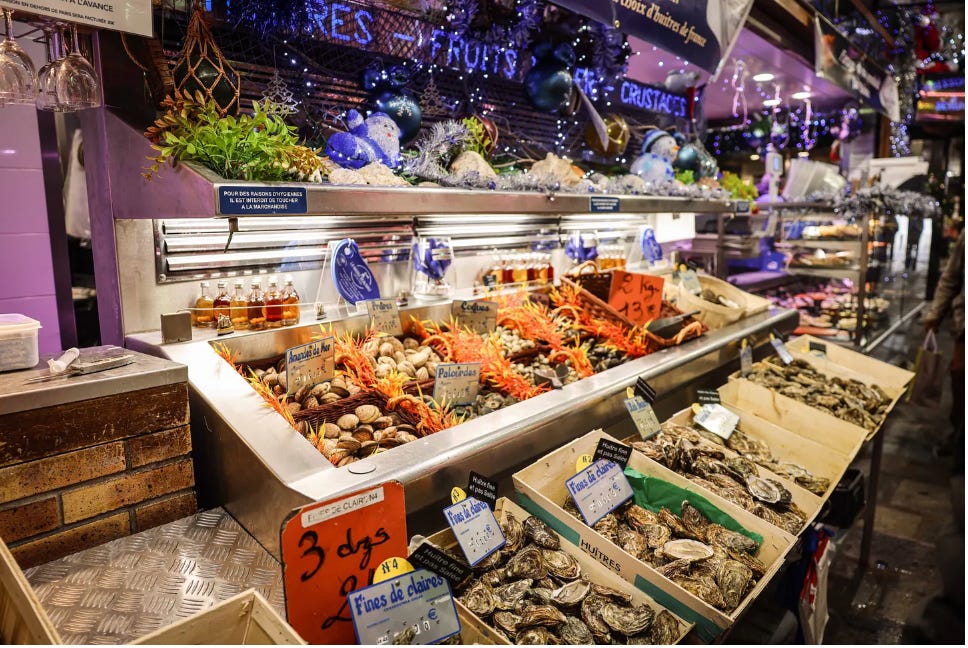
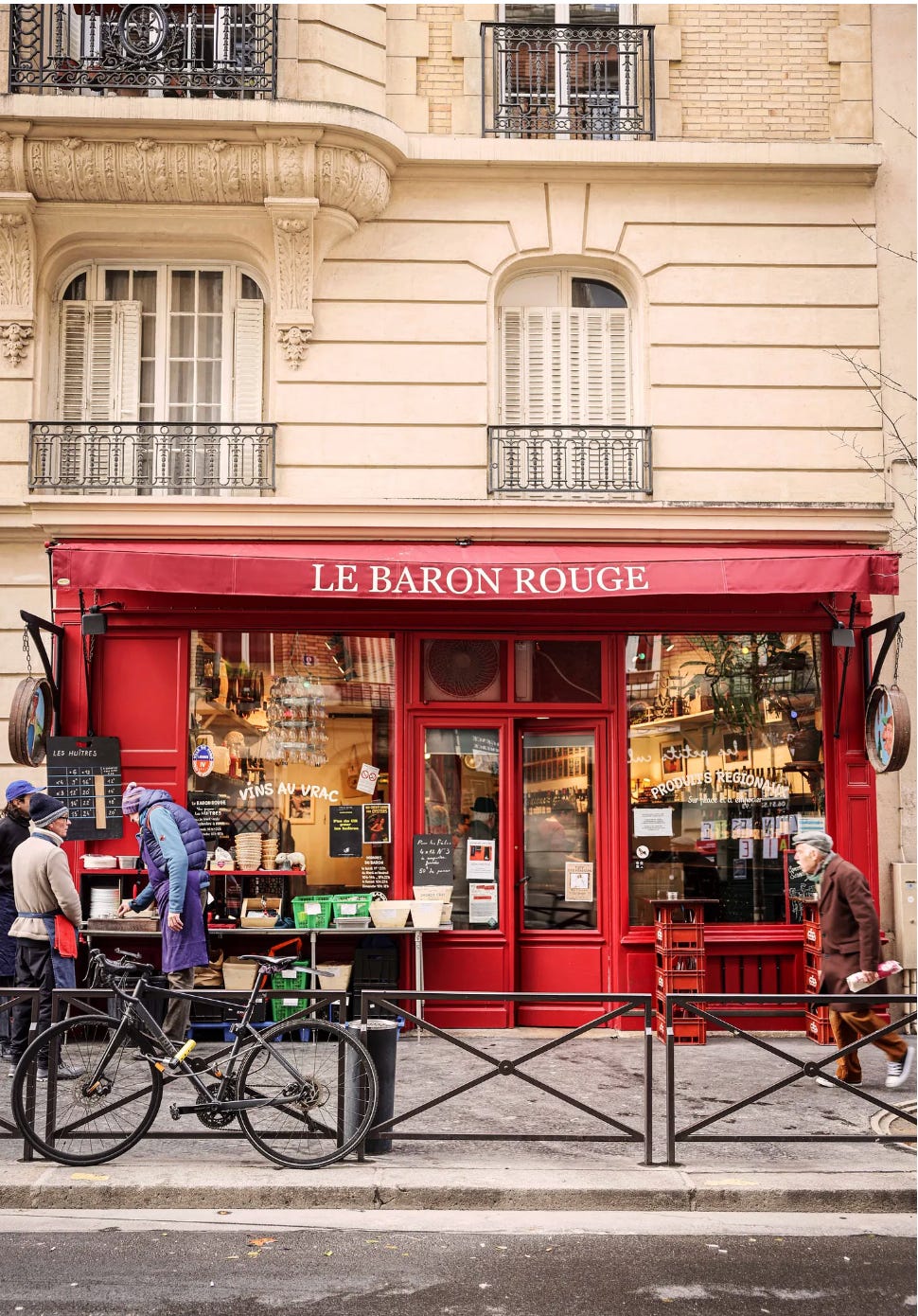
Later, after shopping at the market, it’s time for a break at Le Baron Rouge—a wine bar and true neighborhood institution—where you can drink a glass of Muscadet while standing at a wine barrel serving as a table, accompanied by a plate of oysters or charcuterie depending on the season; it is the Parisian art of living at its most convivial.
I often see regulars bringing their own empty glass bottles to have them filled straight from the tap—just as was done in France in the old days—and putting the world to rights over a glass of wine. All of this gives the neighborhood a soul—cosmopolitan, eclectic, and traditional all at once—embodying the very charm of the real Paris.
The Art of Shopping at the Market Like a Parisian
To fully enjoy your market experience, there are a few rules to follow. First, the essential “bonjour.” Second, since the market is a place for interaction, chat with the vendors about where their products come from and how best to prepare them; this is part of the Parisian market experience—and, beyond the quality of the produce, it is what gives markets their edge over supermarkets. You might be tempted to squeeze the juicy peaches or sniff the melons to revel in their aroma, but at a French market, I advise against it; you risk a disapproving look from the vendor. Let them bag the produce for you.
For me, the market is the perfect place for a lesson in French sociology. You encounter people of all ages and social backgrounds—from the grandmother passionately discussing the price and quality of her leeks to the young IT specialist, headphones on, waiting his turn to buy a bottle of organic cider. In that moment, the gap between generations and social classes vanishes. These two Parisians are united by a shared desire to taste the very best the land has to offer.
Do you have a favourite market in Paris — or anywhere in France — that feels like the real city to you? Tell me in the comments.
Marché d’Aligre
When to go:
The market runs every morning except Monday, from 7:30 AM to 1:30 PM. For the best atmosphere, aim for 11:00 AM on a weekday.
The stops:
Café Aouba: 30 Rue d’Aligre. Stand at the bar for the authentic experience.
Le Baron Rouge: 1 Rue Théophile Roussel. Essential for oysters and wine by the barrel.
Halle Beauvau: The covered market for high-end cheese, charcuterie, and poultry.
The Brocante: Held daily on the Place d’Aligre.
Etiquette tip:
Always bring your own tote bag (cabas). In Aligre, a rolling basket is a badge of honour, not a sign of age.
Introducing Contributor, Elisabeth Perotin
Immerse yourself in her work on her Contributor Page here→
Thanks for reading MyFrenchLife™ – MaVieFrançaise®! This post is public, so feel free to share it.
MyFrenchLife™ – MaVieFrançaise® is a reader-supported publication. To receive new posts and support my work, consider becoming a free or paid subscriber.