Château de Pierrefonds & Paris’s Green Escape
 Tomas k - Senior News Editor

Coucou,
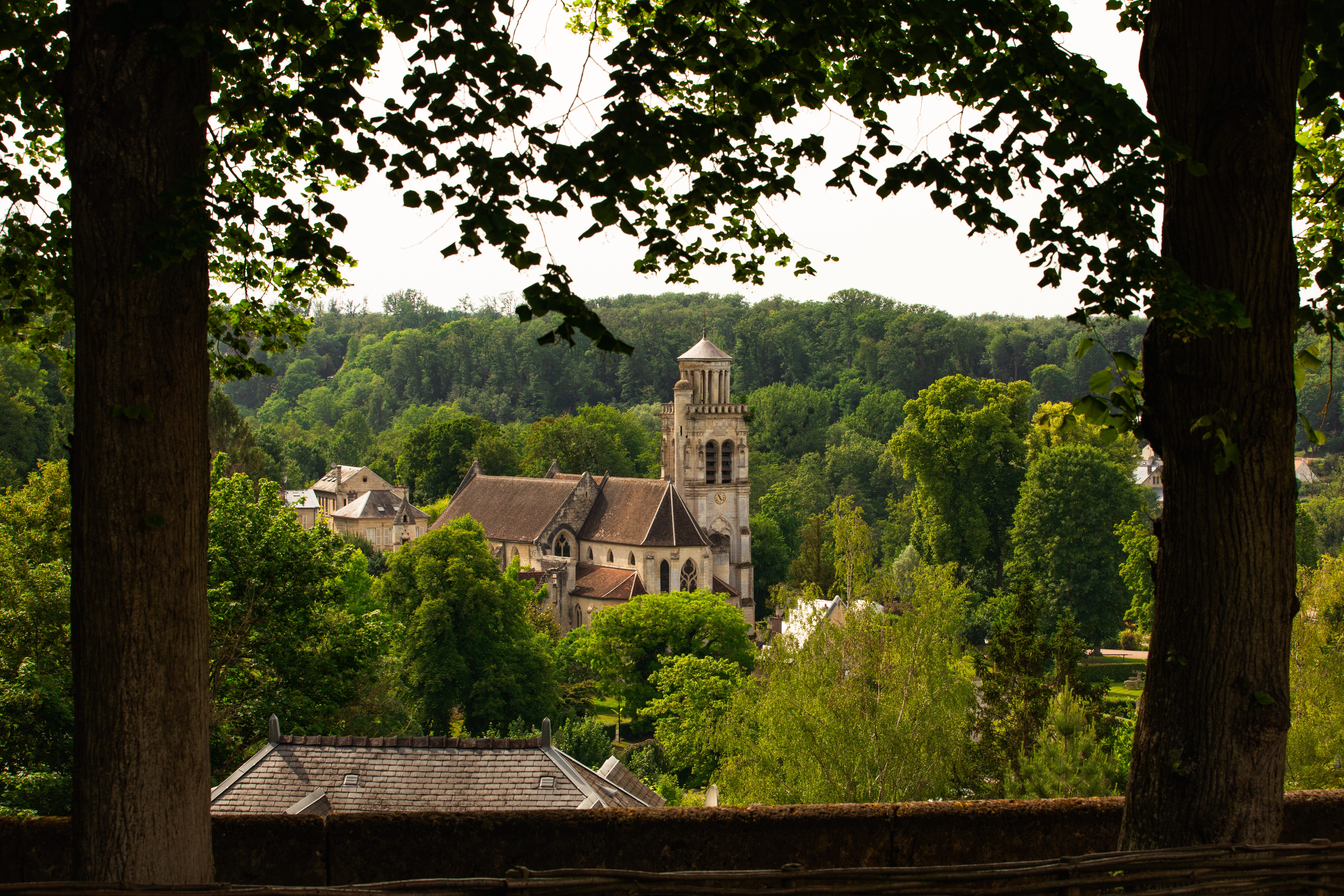
“This really is picture-book France,” my boyfriend says, clearly impressed.
Important context: he is French himself, and a little harder to impress than I am. We have just arrived in Pierrefonds, where we are about to surprise my father for his birthday on the terrace of an ice cream parlour. We drove in from Paris, but my parents worked much harder to reach this village on the edge of the Forêt de Compiègne: they cycled all the way from the Netherlands.
We are in Picardy, the region north of Paris that stretches from the Baie de Somme in the west to almost as far as the Champagne city of Reims in the east. We are using my father’s birthday as an excuse to see one tiny corner of it: Pierrefonds and its impressive château, and the little village of Saint-Jean-aux-Bois, which has a distinctly Beatrix Potter feel. Think small houses, stone walls, roses flowering against the façades and lush gardens. That evening, we have dinner at the village’s only restaurant (spoiler: you will want to do the same if you come here) and spend the night at a charming chambres d’hôtes in the middle of the forest.
In this newsletter, I’ll tell you about this short trip to a green escape just an hour and a half’s drive from Paris. You can also take the train from Paris to Compiègne (1 hour) and rent an (electric) bike there to visit Pierrefonds and Saint-Jean-aux-Bois.

Château de Pierrefonds
After we had jumped out from behind a bush and sung “Happy Birthday”, followed by the obligatory birthday ice cream, we headed for the Château de Pierrefonds. Pierrefonds lies beside the Forêt de Compiègne, for centuries a favourite hunting ground of the French kings and later of Napoleon I and Napoleon III. So it's no surprise that a castle has stood here since the fourteenth century. And when you arrive in the village, there is no missing the imposing Château de Pierrefonds. The impressive castle was built between 1393 and 1407 for the brother of King Charles VI, but by 1617 it had already been largely dismantled. For almost two hundred years, then, there was little more than a ruin to visit here. With the rise of Romanticism, however, visiting ruins suddenly became fashionable, and the remains of Pierrefonds began to attract not only artists and travellers, but also Napoleon III. Louis-Napoléon Bonaparte was the nephew of Napoleon Bonaparte. He became president of France in 1848, staged a coup d’état in 1851, and crowned himself emperor a year later. During his reign, France underwent a series of major modernisations, including Baron Haussmann’s projects in Paris.
In 1857, Emperor Napoleon III commissioned Eugène Viollet-le-Duc to restore the castle. Viollet-le-Duc was the most famous restoration architect of his time. He also worked on Notre-Dame de Paris, as well as celebrated buildings in Carcassonne and Vézelay. His restoration philosophy was controversial, as he often added elements that had never existed, at least not exactly, in historical terms. Pierrefonds is one of the best-known examples of this approach. At first glance, it looks like a magnificent late medieval castle, but parts of it are, in fact, a nineteenth-century fantasy.
Today, the castle is often used as a setting for films and television series, but at the beginning of the twentieth century, the château briefly became part of a very real battlefield. During the First World War, the front lay very close to the castle, around fifteen kilometres away, and Pierrefonds was completely absorbed into the war effort. From the autumn of 1914 until the armistice, the castle served as a barracks, with room for 1,500 soldiers a night. When they left, some of the soldiers left drawings on the walls, which still bear witness to that intense period.
Château de Pierrefonds.
Admission: €9 for visitors aged 18 and over. Open daily from 9.30 am to 6 pm during the summer season.


The Belle Époque Spa Resort
Today, the Château de Pierrefonds is the village’s main attraction, but that was not always the case. In the second half of the nineteenth century, the village was at least as well known as a spa resort. The Parisian bourgeoisie came here for the sulphurous springs, believed to have healing properties, and turned the village into a holiday destination. When Napoleon III decided to restore the castle, Pierrefonds became increasingly well known, and with the arrival of new railway connections, the area also became much easier to reach from Paris. Around the Lac de Pierrefonds, grand hotels, guesthouses and private villas began to appear, alongside cafés, restaurants, a casino and promenades made for strolling. Many of those beautiful Belle Époque buildings, with their little towers and intricate woodwork, can still be admired today.


Saint-Jean-aux-Bois
Just ten minutes from Pierrefonds lies Saint-Jean-aux-Bois. My parents, however, still have to pedal their way there while we shamelessly hop into the car. Hidden deep within the vast Forêt de Compiègne, Saint-Jean-aux-Bois grew up around the abbey founded here in the Middle Ages. If the dictionary needed a picture to illustrate the word picturesque, this village would surely be it. Goodness, it is beautiful.
The abbey at the heart of Saint-Jean-aux-Bois was founded in 1152 by Adelaide of Savoy, the widow of King Louis VI and one of the most powerful women of her time. Far from the towns and surrounded by ancient oak forests, the nuns were expected to lead a life of prayer and seclusion here. In the seventeenth century, however, they decided it was no longer safe to remain so isolated and moved closer to Compiègne. After their departure, the abbey was taken over by a community of Augustinian canons, who began renting out houses around the abbey to laypeople. Gradually, homes for craftsmen and tenant farmers appeared along the abbey walls, marking the beginning of the village of Saint-Jean-aux-Bois.
The Gothic abbey church and the monumental gate are calling, but first things first: we are hungry. Right opposite the abbey church, in the heart of Saint-Jean-aux-Bois, is La Fontaine Saint Jean by Juju. Our chambres d’hôtes had advised us to book ahead, and thankfully we did, because the place is packed this evening. Housed in a historic building on the village square, the restaurant has a lovely terrace. Its current owner, Julien “Juju” Marécaux, breathed new life into the address a few years ago. It is a proper village bistro, serving refined starters, excellent meat and a wine list that does not disappoint. The kind of place you want to linger over dinner, then come back to the next day.
And just when we think it cannot get any more idyllic, we stumble across another wonderfully French scene after dinner: on the lawn beside the abbey church, long tables have been laid beneath strings of lights hanging from the trees. It turns out to be the Fête des Voisins, we are told, so tonight the whole neighbourhood is having dinner together outdoors. Trop mignon!

Le Jardin de Saint-Jean
That evening, we stayed at Le Jardin de Saint-Jean, a charming chambres d’hôtes within walking distance of the village, surrounded by the greenery of the Forêt de Compiègne. Our host, Eric, gives us a warm welcome and enthusiastically tells us about both the guesthouse and the building itself. Long before he and his wife Juana transformed it into a chambres d’hôtes, it served as a small concert venue where many well-known French artists performed over the years. Looking around today, though, it is hard to imagine that rock-and-roll past. The setting is simply too peaceful and idyllic. Eric is a landscape designer, something that is immediately obvious from the spacious, beautifully planted garden, while Juana is the one who spoils guests at breakfast with, among other things, several kinds of homemade jam.
Le Jardin de Saint Jean, 12 Route du Parquet. Rooms from €95 per night, lejardindesaintjean.fr.


À bientôt
Suzanne
Introducing Contributor Suzanne Rietmeijer
Visit her Contributor Page — Explore more of Suzanne’s work
MyFrenchLife™ – MaVieFrançaise® is a reader-supported publication. To receive new posts and support my work, consider becoming a free or paid subscriber.