The often overlooked ‘zoniers’ of Paris
 Tomas k - Senior News Editor
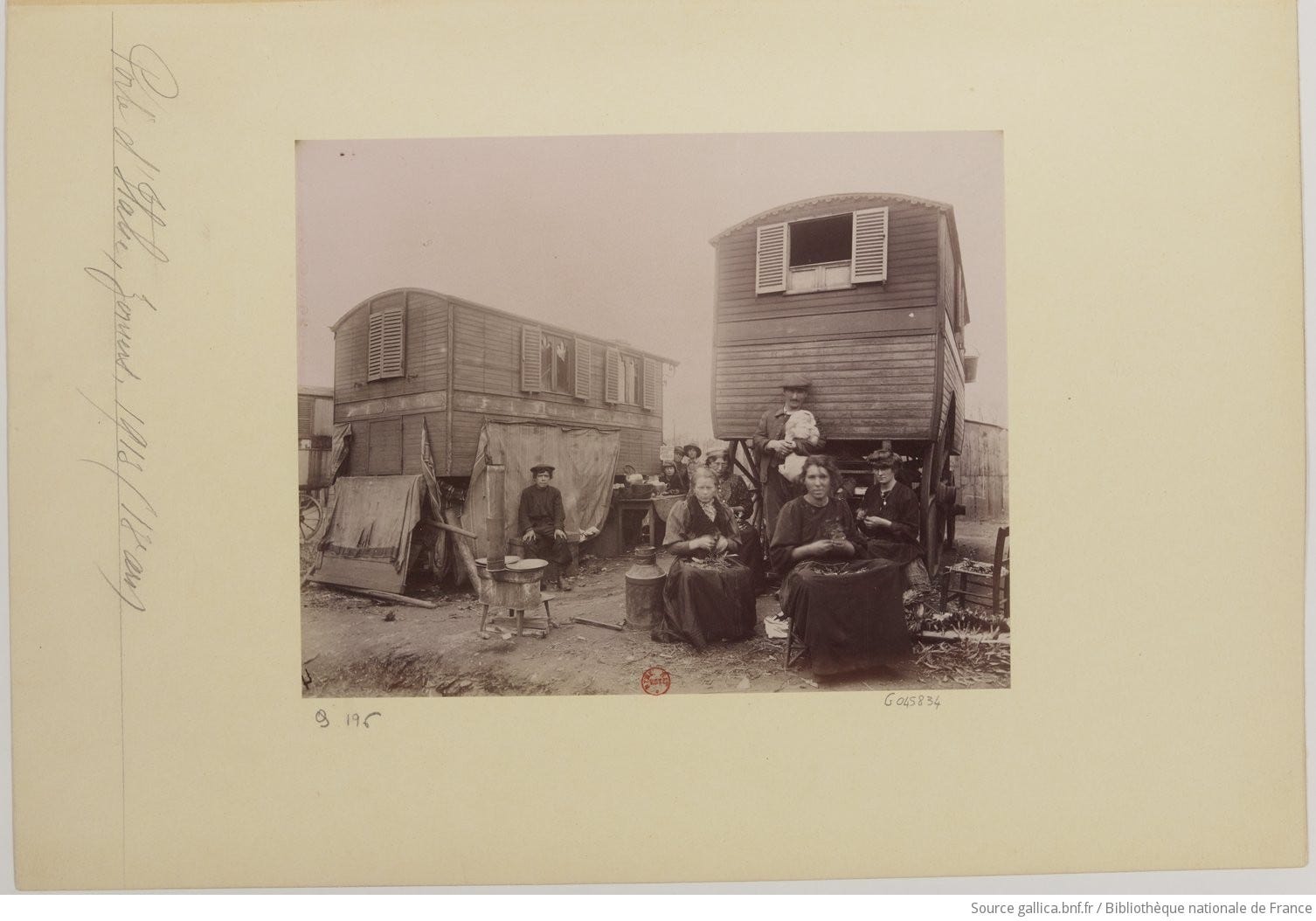

I want to tell you about a group of people who lived on the sidelines in Paris (literally) back in the 19th and early 20th centuries.
They were known as les zoniers.
Creating la zone
In the early 1800s, a barrier was built around Paris. It was called l‘enceinte de Thiers, or ‘the Thiers belt’ — named after the man who approved its construction. The objective was to fortify the city by creating a ‘belt’ around it to ward off possible attacks by foreign forces. (The famed Battle of Paris happened in 1814 during the Napoleonic Wars — French leaders didn’t want it repeated.)
The areas beyond the ‘belt’ were thereafter referred to as la zone.
Tell your dad, tell your cat, tell your plants about For Love of France!
By the middle of the 19th century, Napoleon III (not that Napoleon) tipped Georges-Eugène Haussmann to redesign and reconstruct the city to make it airier, with more space and better infrastructure. (See my previous newsletter about Haussmann’s work here.)
As a result, Paris became more expensive, so the poor moved out to the edges of the city. (I also wonder if they were displaced, too, because of ongoing construction.) These people became known as the zoniers.

Dirty living conditions
The land where they lived on the outskirts of Paris was really nothing more than an empty wasteland, completely undeveloped. Their homes were ramshackle huts or covered carts on wheels known as roulottes. Heat, running water, and sanitation were nowhere to be found, and they were mostly nourished by the city’s scraps and leftovers.
Look at the photo below, from 1913. The man pictured on the right is barefoot (I imagine he had at most one pair of shoes for work), the child on the far left is wearing dirty clothes and her skin appears dirty, too. I imagine conditions for bathing were not easy.

The words bidonville (slum) and insalubre (unsanitary) were often associated with la zone.

Contributing to the economy
Here’s the thing. The zoniers might have been on the fringes of Paris society, but they became very important to it.
Let me explain.
Many of them worked as chiffoniers, or rag-and-bone men (and women). They went into Paris in the early mornings to scavenge through the city’s garbage, then they’d bring their finds back home (on foot!) to either sell for recycling or as a fixed-up item someone would want to buy — or to use themselves.
The zoniers had an entire system of garbage collection and in some cases, they went to work in recycling factories that sorted and separated garbage to burn, recycle, or use for energy/power production. Their contributions were not insignificant to Paris’ economy.

I found an excellent silent black-and-white film by George Lacombe from 1928 that shows the daily life of the zoniers. They had a pretty elaborate system for collecting, sorting and recycling or reusing their finds. Spare a few minutes to watch it and you’ll appreciate their hard work:
Documenting a fringe society
Here I need to give enormous credit to the French photographer Eugène Atget and at least French news photo agencies for capturing images of la zone. Without them, we wouldn’t have this documentary evidence of the zoniers’ existence.
Paris has many portes, or gates, outside of l’enceinte de Thiers. Many of Atget’s photos were taken in Porte d’Ivry, Poterne des Peupliers, and Porte d’Italie in the south and Porte de Montreuil in the east. He traveled from the 5th arrondissement to these far-reaching areas (at the time) to capture life there. (How did he do it with his equipment?!)
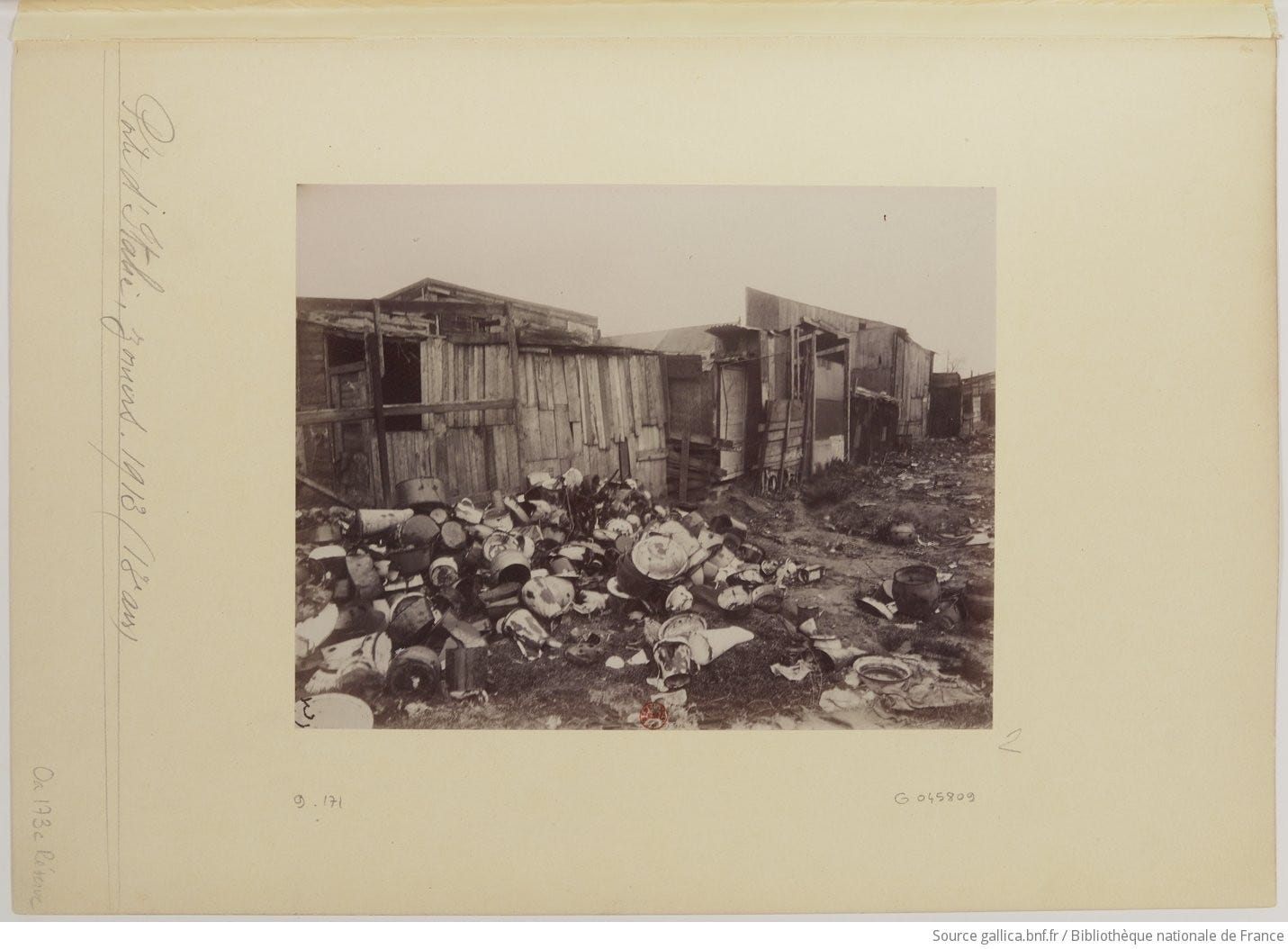
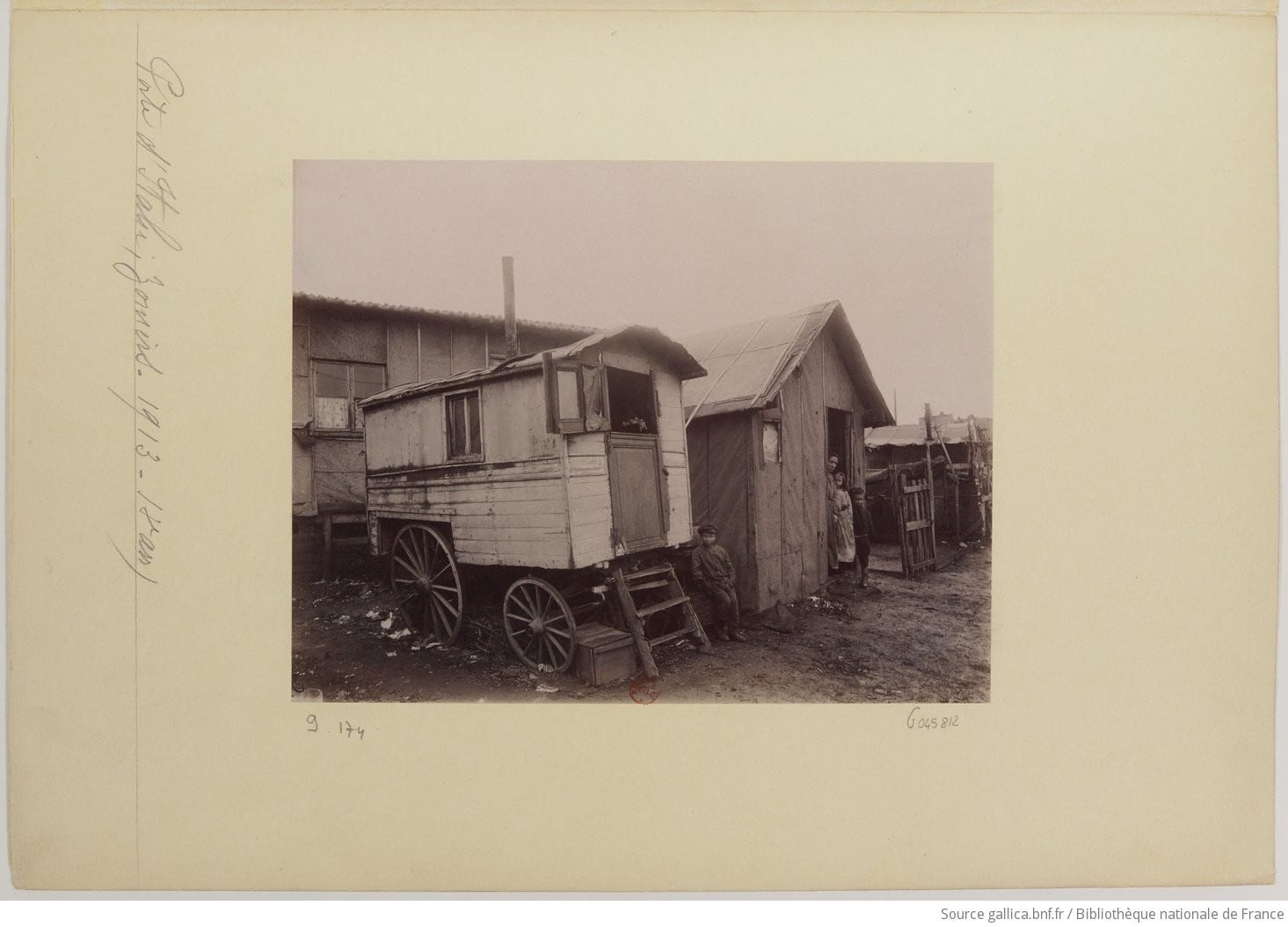
Zonier homes in Porte d’Italie, 1913 - Eugène Atget
End of an era
In 1919, Paris ‘annexed’ the area that made up la zone. Local authorities tried to kick the zoniers out of the area, but many refused to leave. For these residents, even a ramshackle home was their home and they weren’t going to give it up. They formed a sort of alliance and managed to stave off the inevitable for many years, demanding government compensation if they were going to be forced out.
In the end, of course, Paris developed these outlying areas and la zone vanished.

Drawing parallels
When I see these photos, I immediately think of photos by American photographer Dorothea Lange, who captured images of poor U.S. migrant farmers during the Great Depression. I was happy to see this parallel drawn in an Atget highlight by the French National Library, cited in the last link below.
Also, I once lived in China and traveled to the outskirts of Beijing (which is a huge city geographically). There I saw a similar spirit in the people who lived on the margins. Somehow, they made it work, and seeing the film by Georges Lacombe reminds me of the resilience and fortitude of those who don’t have very much, even today.
Kind of interesting, non?
Jenn
Sources:
Cultea article about Les Zoniers (in French)
Les Zoniers, Eugène Atget, 1912 – SUD (in French)
Grand Paris Metropole - La Zone (includes the film I mentioned) (in French)
BnF Gallica explainer of Atget’s album featuring the zoniers (in French with pictures!)
Introducing Contributor, Jenn Bragg
Immerse yourself in all of Jenn’s articles on her Contributor page.