A morning in the Potager du Roi
 Tomas k - Senior News Editor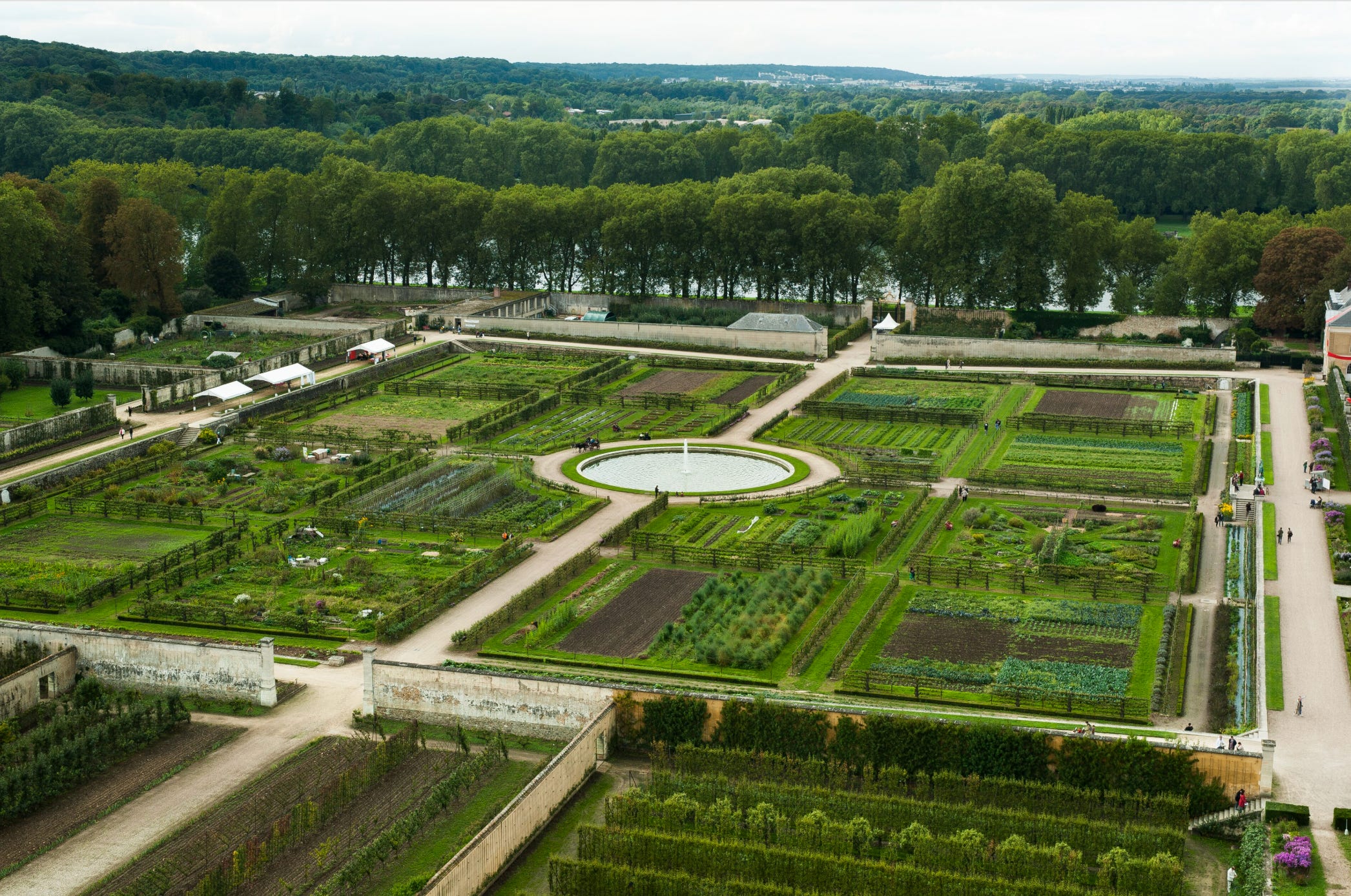
A good gardener must have passion for new discoveries
~Jean-Baptiste de La Quintinie, Instructions pour les jardins fruitiers et potagers, 1690
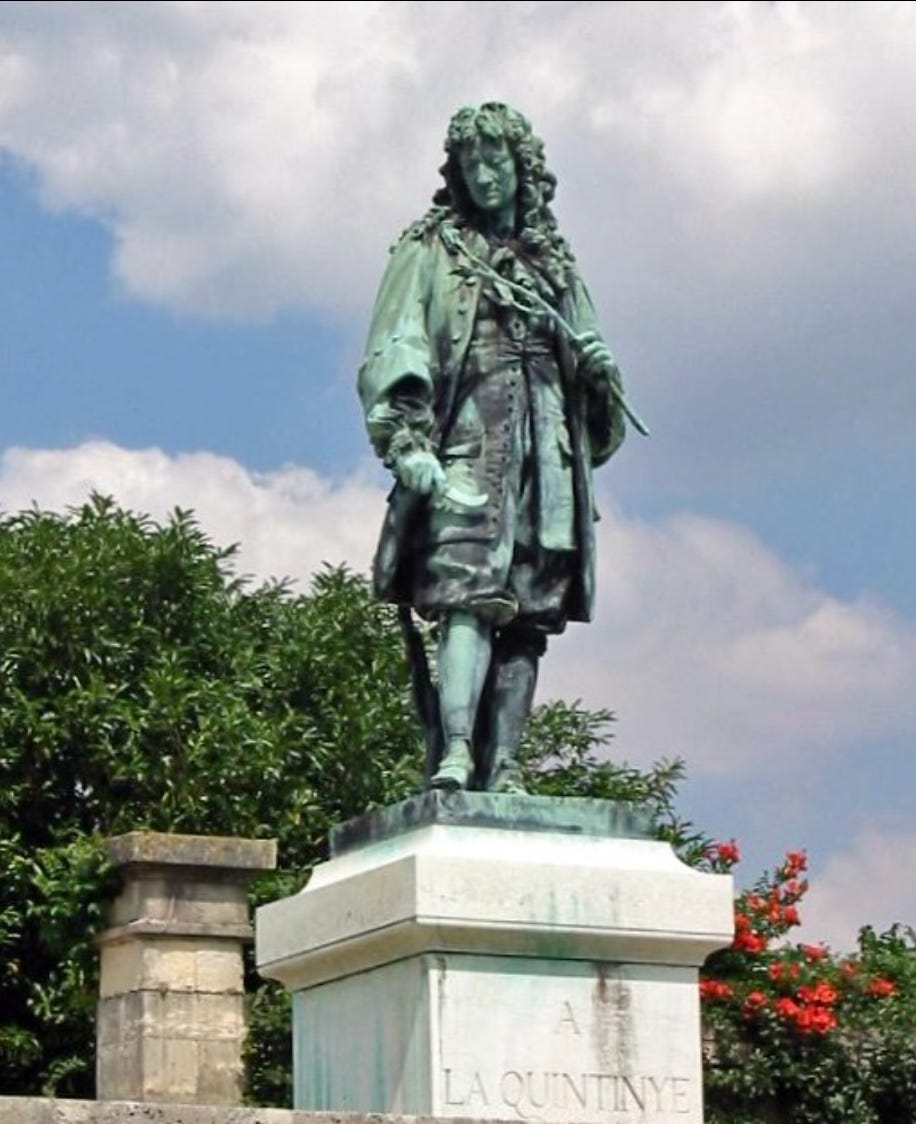
Kathy and I stepped off the RER C at Versailles and walked up the elegant street that leads to the Versailles Palace. But we weren’t going to the palace; we were visiting a kitchen garden, the Potager du Roi, designed by La Quintinie, born 400 years ago this year, to serve the appetites of Louis XIV.
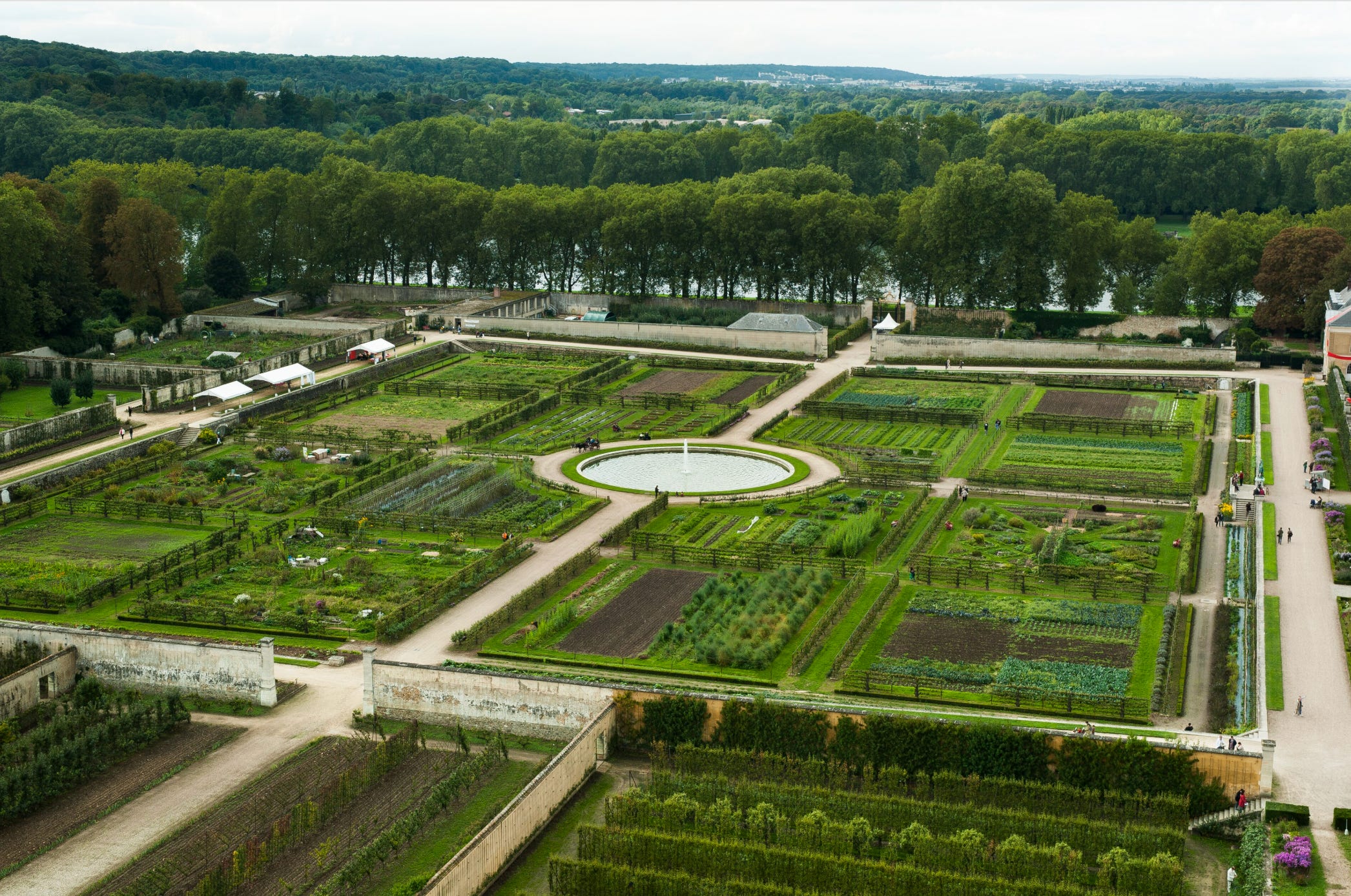
We were early for our appointment but were able to get into the garden before meeting with Antoine Jacobsohn, the head of the Potager du Roi. A fine mist rose from small mounds of black earth. We walked down the military-style straight rows that stretched out from the pebbled pathway. Three young gardeners were digging with trowels into the narrow ditch, preparing the soil. M. Jacobsohn would tell us later that they were planting asparagus, a favorite of the king’s. The gardeners seem oblivious to the Palace of Versailles in the background. Just like their counterparts before them, who worked for the King, their focus was on nurturing the plants, not the crowds swirling around the château.
As we continued our walk around the garden, we were a bit baffled by the trees that we saw “nailed” to the wall and the other ones that were trimmed very short and seemed to be shaped like large goblets. Neither one of us was ( or is) an accomplished gardener, but we had come to learn.
M. Jacobsohn joined us, and our first question was about the trees on the walls. He explained how the garden was built to keep in the warmth of the sun. High walls and the sheltered squares create a microclimate that let La Quintinie deliver fruits and vegetables to the king’s table two to three months ahead of nature. The trees were ‘espaliered’ to the stone walls, he said, so that the stored heat would ripen the pears early. The goblets turned out to be apple trees, pruned that way for easier picking.
Louis wanted his kitchen garden close enough to the château, so he could walk to it. We can imagine La Quintinie explaining how the garden cheated the seasons, giving him his favorite fruits and vegetables before others. Strawberries were delivered at the end of March. Peas in April and cherries in May. Asparagus, according to M. Jacobsohn, would be delivered in December, thanks to the hotbed of fermenting manure they were grown in.
And of course, the figs, the favorite of the Kings, would be delivered by June. We did not see them while we were visiting. The fig trees, 700 during Louis XIV’s time, were still being coddled in figuerie.
We finished our tour in the small room that at that time served as a market. As we looked at what was available, it made us smile a bit. We were buying from the garden that had fed the king and his courtiers. Like many of his other artisans who created and showed the world the luxuries of France, the gardeners here showed the world the fruits and vegetables of the King - before most people could taste them. We picked up a couple of bottles of pear juice, clinked santé, and started on our walk back to the train.
Millions of people visit the Palace of Versailles, but few take a side step into the Potager du Roi, the restored Kitchen Garden of the King, hidden adjacent to the palace. Its walls and squares are still the ones that La Quintinie laid out more than three centuries ago.
What detour have you taken in France and learned something completely new?
À bientôt
Debra
Introducing Contributor, Debra Fioritto:
Visit her Contributor Page — Explore more of Debra’s work