The soul of Montorgueil: butter, oysters and art of living in the heart of Paris
 Tomas k - Senior News Editor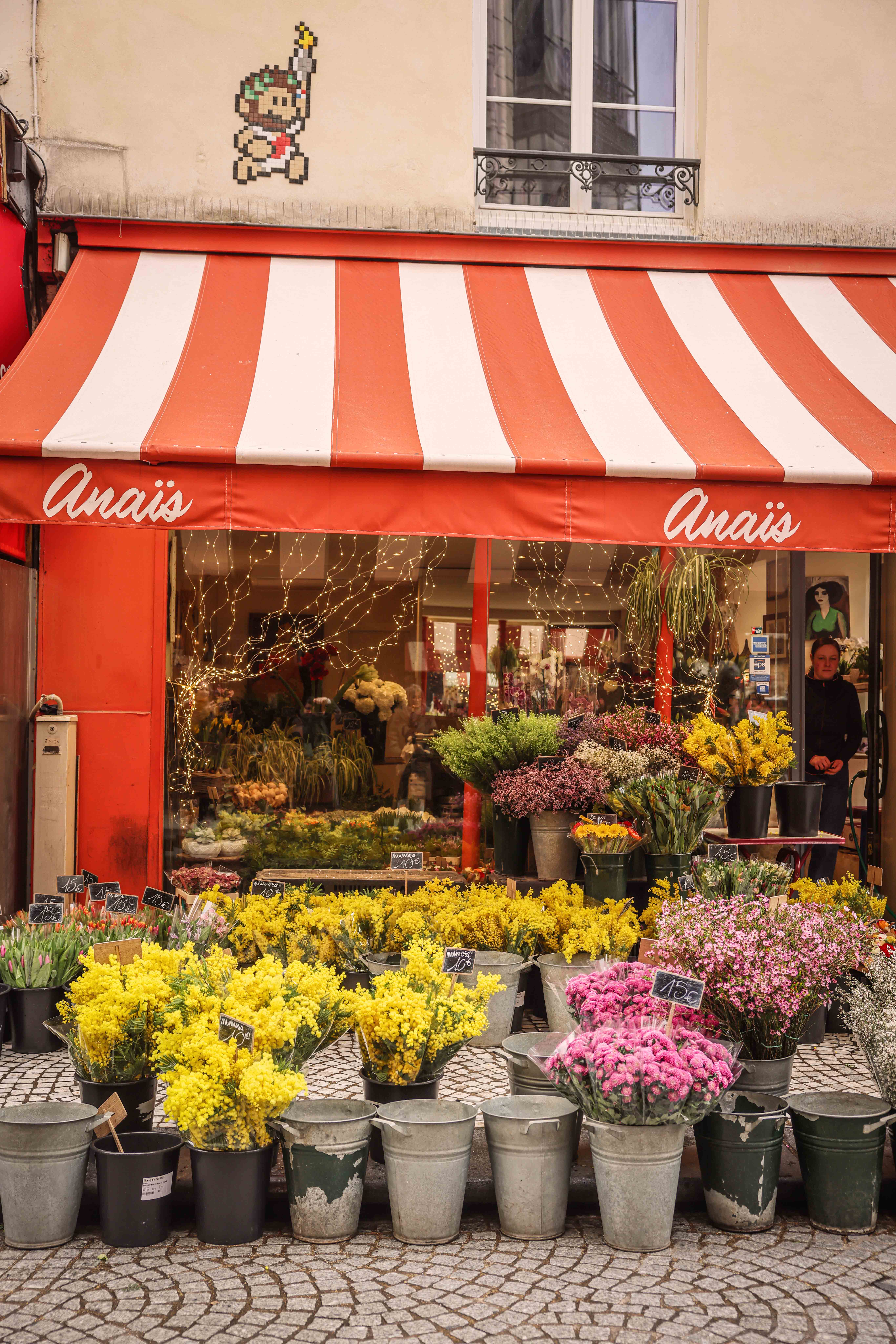
A morning flânerie in Paris is enough to awaken all my senses: the intoxicating aroma of fresh bread just out of the oven, and that of the fruits from the primeur, the sound of footsteps on the cobblestones, and the noise of the metal curtain of the cheese factory... One of the places where this symphony resonates most brilliantly is rue Montorgueil. If the neighboring district of Le Marais is a temple of fashion and Saint-Germain-des-Prés, that of literature, the Montorgueil district is an undisputed paradise for the taste buds. Here, we can still feel the pulse of the “belly of Paris”, a nickname Émile Zola gave the Halles district, where the capital's best fresh products were once sold.
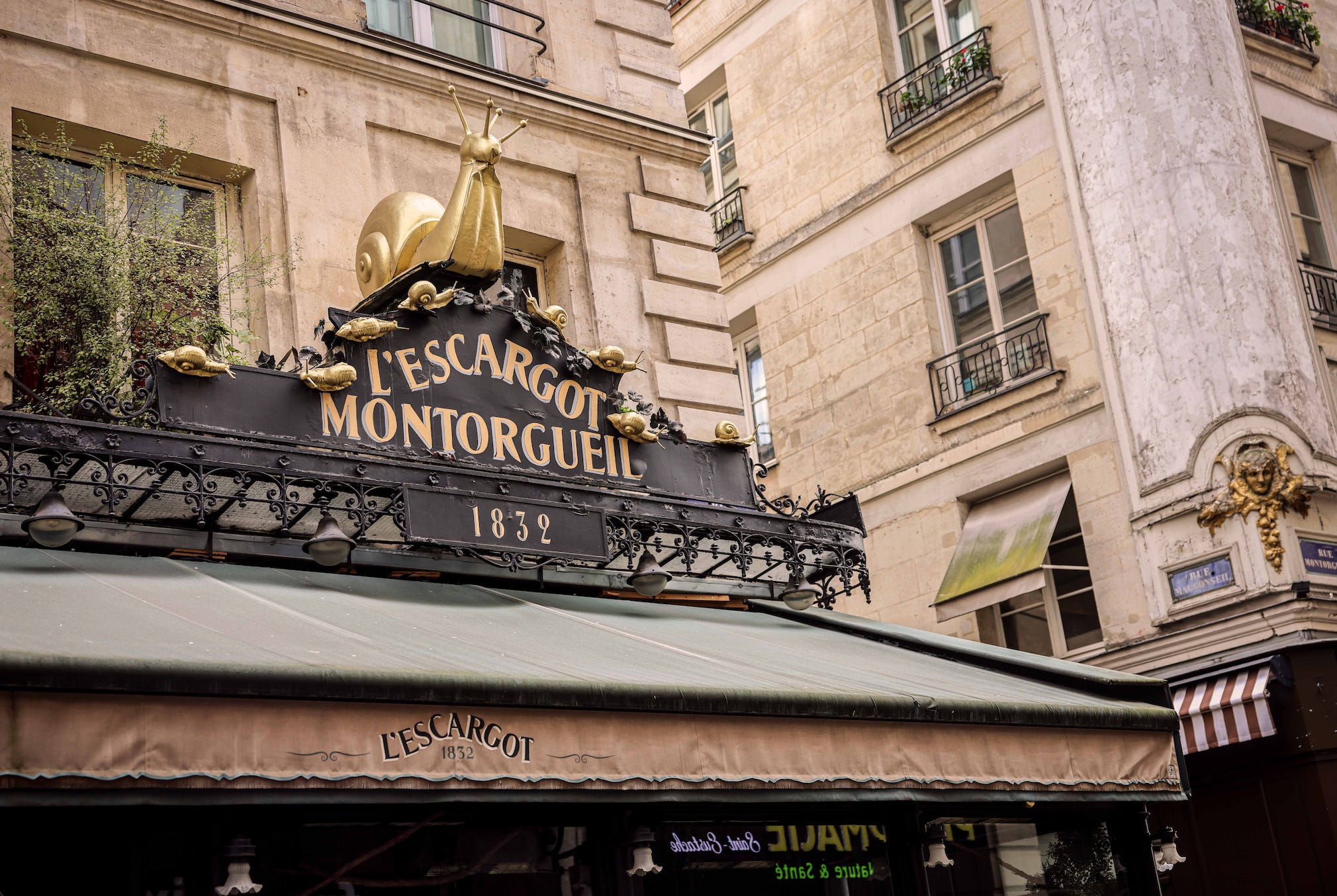
As a photographer, I find the light here perfect; throughout the day, it plays hide-and-seek between buildings, casting golden reflections on the giant snail adorning the facade of L’Escargot Montorgueil, a legendary institution established here in 1832. A little further on, the light illuminates the neo-Renaissance facade of the Rocher de Cancale, highlighting its pastel blue hues. In the 19th century, the cream of Parisian society would flock here to enjoy oysters after opera. Balzac himself was a regular; he observed, with a keen eye, the ambitious young people there to nourish the inspiration of his fictional characters. Today, contemplating this gem of sapphire-tinted ashlar, I imagine elegant banquet tables filled with the aromas of dishes prepared by chefs; this mythical restaurant embodies the culinary heritage of the neighborhood.
Strolling on rue Montorgueil is like walking in the footsteps of royalty.
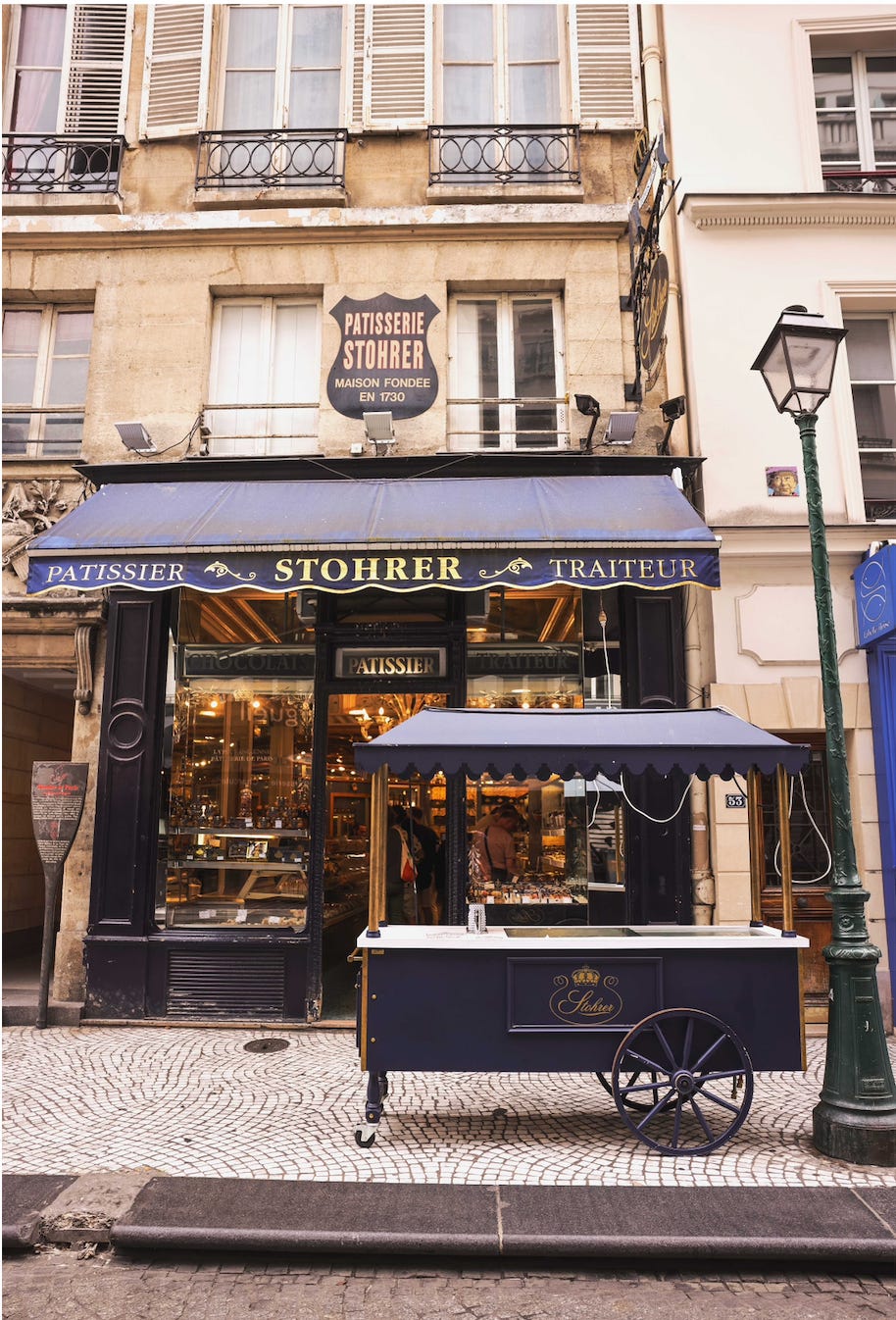
At number 51, to enter Stohrer’s house is to cross the threshold of the oldest pastry shop in Paris, founded in 1730 by the personal pastry chef of Queen Marie Leszczynska, wife of Louis XV. The interior decor, created by Paul Baudry—also the artist behind the sets of the Opéra Garnier—takes my breath away with each visit. While waiting in line, I observe a grandmother carefully inspecting her “Puit d’Amour” pastry; a young man wearing headphones patiently waiting for his rum baba; a heterogeneous clientele, like the city itself.
A neighborhood that is reinventing itself
Yet, the neighborhood is not frozen in the past; a new generation of culinary talents has made its place there.
Jeffrey Cagnes opened a shop there, keeping his original storefront. Inside, he reinvents, deconstructs, and modernizes the classics of French pastry with an absolute delicacy: his lemon meringue pie takes the form of a flower in the heart of lime; a pure delight! Pastry lovers also flock to Fou de Pâtisserie, a unique concept bringing together under one roof the iconic creations of today’s greatest pastry chefs. And to delight all my senses, a stop at Anaïs Fleurs is essential for the pleasure of the eyes; I love to admire their floral compositions that compete with the neighboring fruit and vegetable stalls, sharing the same vibrant colors and offering scents that enrich our olfactory palette. As I choose my Époisses at La Fermette from hundreds of cheeses from all over the world, and admire the timeless charm of Parisian bistro La Grille Montorgueil, with its leather benches and Thonet chairs, I tell myself that this neighborhood embodies a precious art of living: a street that resembles a village, filled with merchants who invite us to slow down, to cultivate our curiosity and indulge our love of fine food.
Montorgueil Address Book
• Stohrer (No. 51): The birthplace of the “baba au rhum”. Look up to admire the ceiling frescoes before placing your order.
• L’Escargot Montorgueil (No. 38): A Second Empire treasure. Even if you don’t care for snails, the interior décor is a marvel of 19th-century opulence.
• Le Rocher de Cancale (No. 78): A Neo-Renaissance gem. The perfect spot to enjoy a glass of wine in the late afternoon while people-watching.
• Jeffrey Cagnes: For an authentic, generous, and contemporary take on traditional pastry.
• Fou de Pâtisserie: A curated selection of the finest creations by Parisian chefs, all gathered in one shop.
• La Fermette: Cheeses aged to perfection by true enthusiasts. Don’t hesitate to ask for the seasonal gems.
• Anaïs Fleurs: For rustic, poetic, country-style bouquets that capture the spirit of every season.
À bientôt
Elisabeth
Introducing Contributor Elisabeth Perotin
Immerse yourself in her work on her Contributor Page here→