Issy-les-Moulineax: my home, my heart, my place to play
 Tomas k - Senior News Editor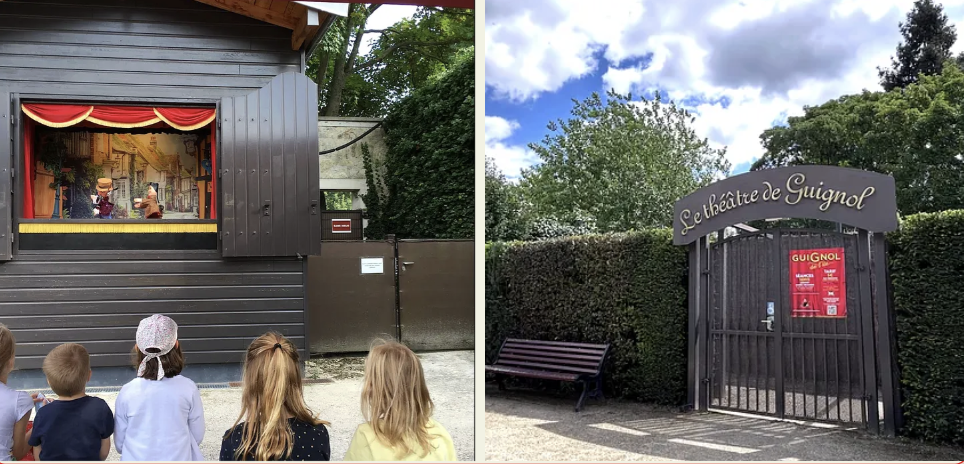
If you follow the Seine along its course through Paris, you’ll eventually cross an invisible border into Issy-les-Moulineaux. The banks of the river will be a little more natural, the surrounding street traffic will be a little quieter, and there will be many, many more strollers.
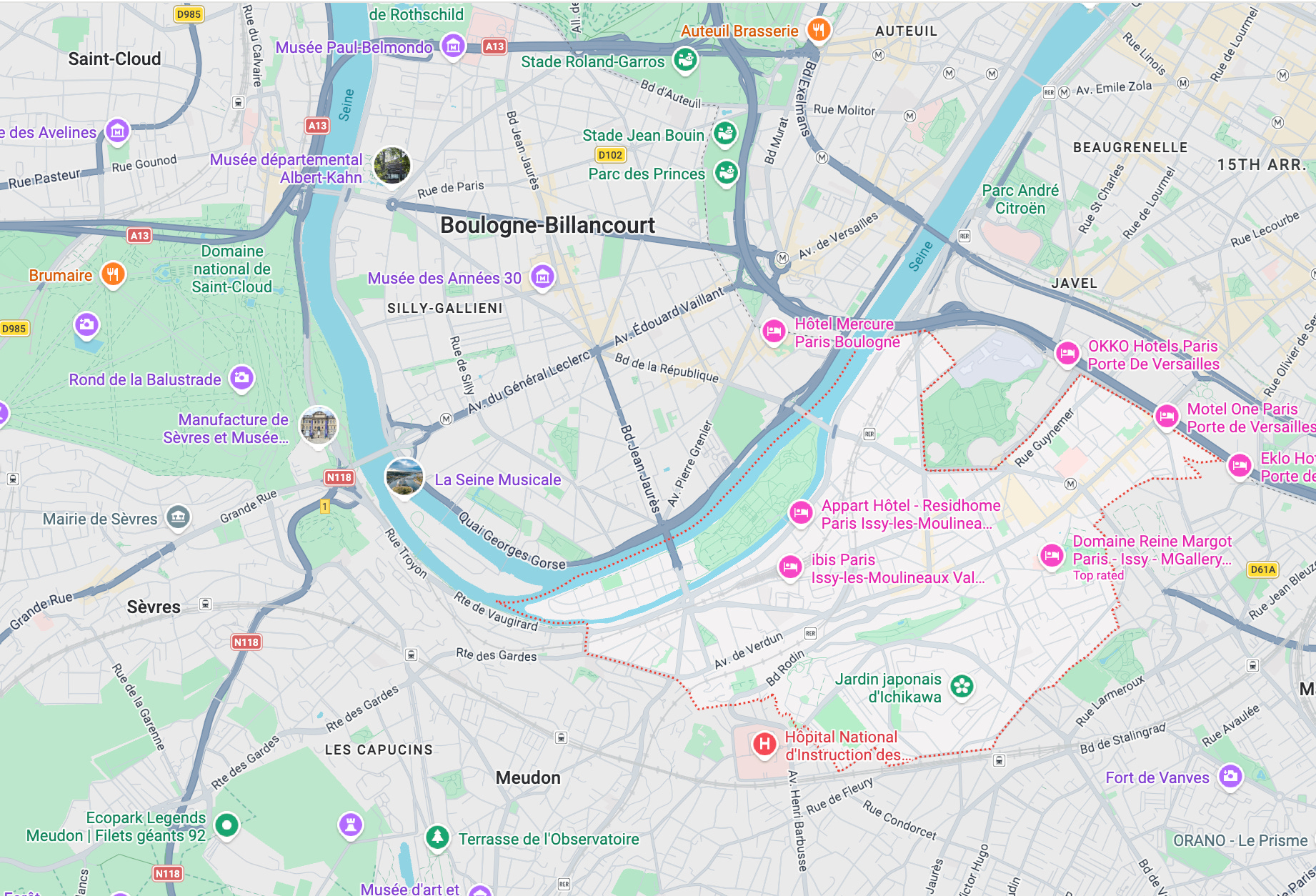
This is a place where television studios rub elbows with family activity centers, a city that touches Paris and has a metro, bus, and tramway, yet feels a little greener and calmer and more modern than her attention-grabbing neighbor. This is a place that wins people over, to the point where business owners and coaches and families dedicate themselves. I know, because I’ve lived here for more than a decade, and though I thought I’d be disappointed not to live within Paris’s city limits, before the first week was out, she had my heart.
Issy-les-Moulineaux didn’t obtain its character by luck or accident. In the 1970s, it was a city in crisis. What had once been “the farm” to Paris, with fields that provided grapes for winemaking, fermenting grains for beer, and forage for livestock, became its factory when Haussmann and Napoleon pushed all the noxious and noisy industries out of Paris and into its suburbs at the end of the Second Empire (1). One hundred years later, those industries were shuttered, leaving behind dirtied water, air, and land. This was what André Santini inherited when he became mayor in 1980 (2).
This man had a vision and a work ethic that would stretch across forty-six years and make him the longest-serving mayor in French history. First, he recruited businesses—Canal+, Microsoft, Orange Telecom—then he took the tax dollars earned on those companies and invested them back into the city (2). He inaugurated an annual Santa Claus run (3), expanded the library and opened new branches (4, 5), created a ludothèque (a game library) (5, 6), and a network of cultural spaces (7). Through Santini’s leadership, Issy-les-Moulineaux was transformed into a city of thriving businesses and plentiful green spaces that attracted dynamic citizens. In 2022, it claimed the title of Best Place to Live in the Hauts-de-Seine (8).
I didn’t know any of that when my family and I were deciding where in the Paris area to move from the rural outskirts of Limoges, but we didn’t end up in the city by accident, either. Choosing a Paris suburb was overwhelming, and I, a Californian who’d lived in rural Limoges for three years, couldn’t parse one neighborhood from the other. My father-in-law suggested we focus on Issy-les-Moulineaux because it was a good place for families, and I took him at his word.

He was quickly proven right. When we visited the apartment we eventually purchased, the owner fanned out a collection of shiny cards on the kitchen table. “These are from the city’s cultural centers,” she told me. “They host free events for children.” I studied the backs of the six cards; they listed theater and music performances for different age ranges: zero-to-three, two-to-five, 5-and-up. There was something every weekend from October through March.
After we moved in, we spent a lot of time hanging out in the parks around our new home. There were so many—everything from a park fitted in between apartment towers to the sprawling green space that covers half of Île Saint Germain. One afternoon in late August, we were at the park nearest our house when we witnessed a sweet reunion of friends who were returning from summer vacation. They cheered when they saw each other, then the three-year-olds ran to hug their friends while the adults kissed cheeks.
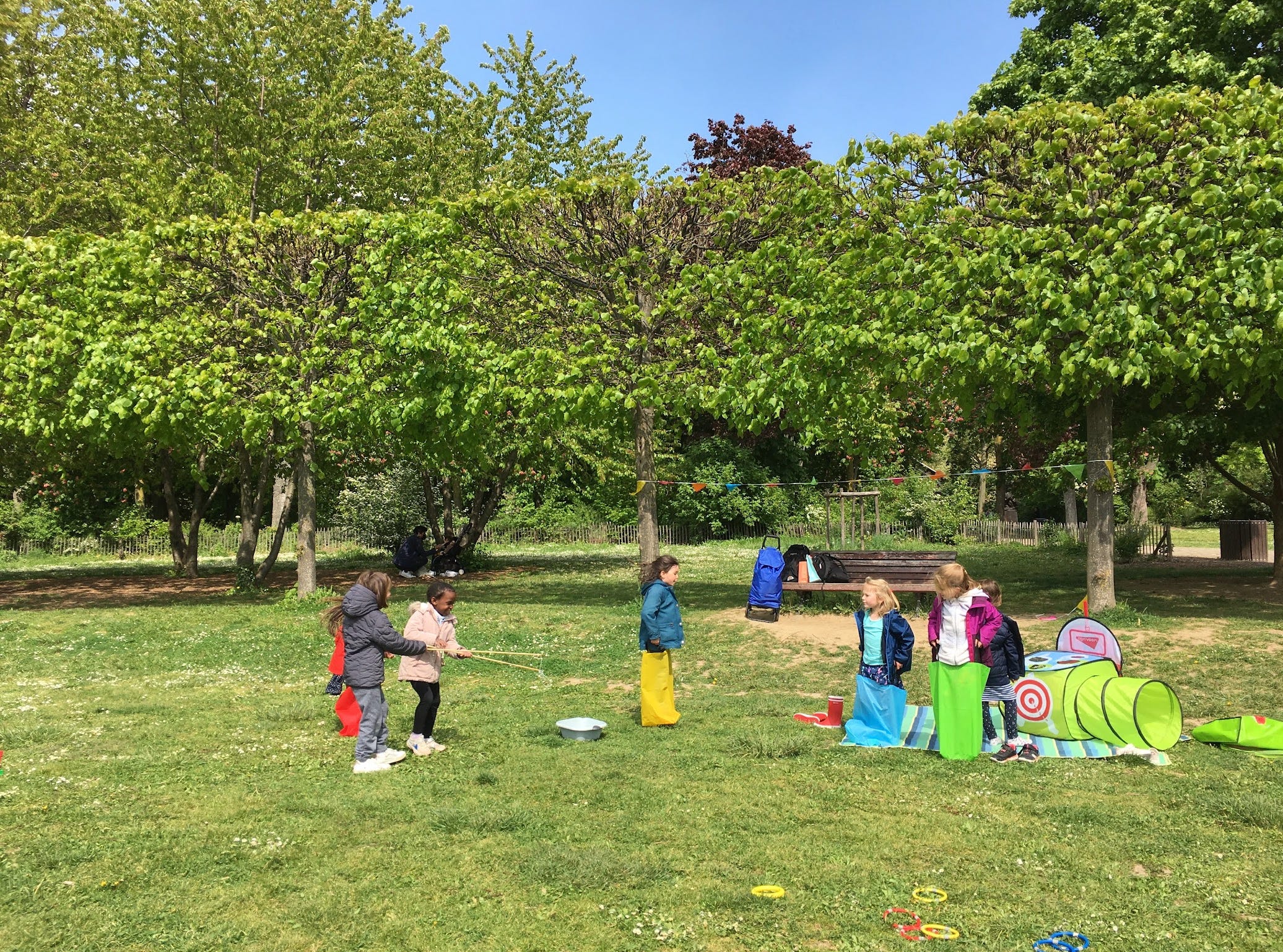
“I want that!” I thought. A few weeks later, I was already on my way: our older daughter started her first year of preschool, and I chatted with any parents or nannies who would put up with my mediocre French. One mom asked how I was finding Issy-les-Moulineaux. I told her people tended to be gentil, nice. She said yes, people here are chaleureux, warm, proving her point while slyly elevating my vocabulary.
By the time we moved to Issy from Limoges, I’d given up on trying to be a cool, reserved, French-looking person, and just totally embraced my American friendliness. Meaning, I grinned at anyone within fifty feet of the school or a playground. This probably felt maniacal to many, but some returned my smile in kind.
When we took our kids to a local “Games in the Street” block party hosted by the city’s culture association, we took a spot next to another family to play an oversized board game, and I realized I knew the mom on a smiling-at-drop-off basis.
“Oh, hi, it’s you!” she said to me. My husband, a little surprised, asked, “You know each other?” No, we said, almost in unison, then explained that we said hello to each other at school in the mornings. We didn’t have kids in the same class, but because of that block party, we were able to meet in a casual, low-pressure space where we could exchange names and a little about our lives.
I know this seems like a small thing, but really, it’s a big thing.
Because it was compounded over many events over many years across all areas of the city.
We would run into people we knew from school or work at the annual Santa Claus run, or at the library, or the ludothèque, or the giant, collective yard sale, and this reinforced the connections we had to each other. And if we wanted to plan something fun with friends, these events and spaces gave us something to do together.
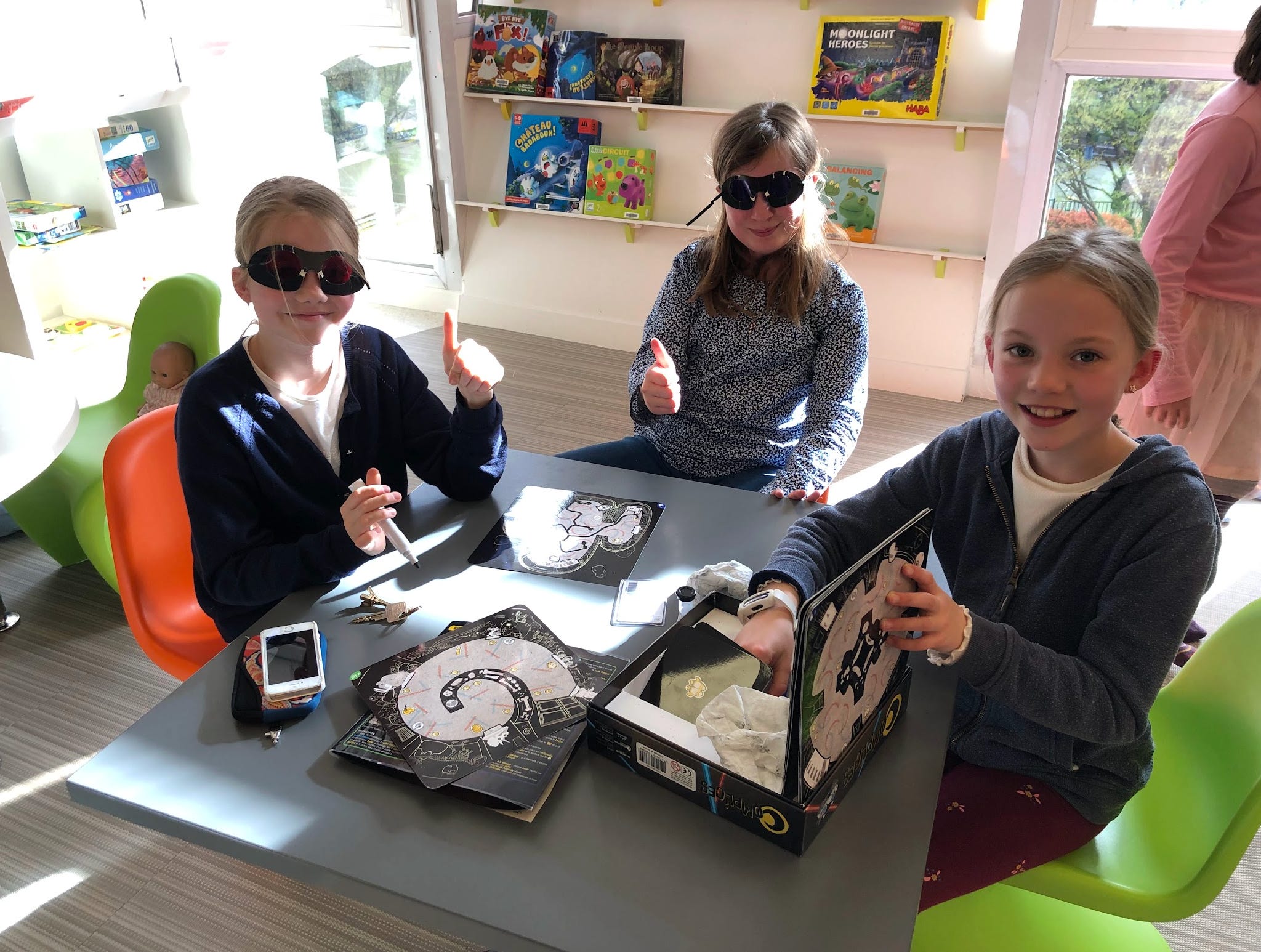
Now that my kids are older, I love that they have fun, safe places to meet up with friends sans parents. They know the librarians and are comfortable asking for help to find a book or learning how to play a new game. I also love that they get to try tons of new games without bankrupting us—I’m looking at you Titanic Lego and Nintendo Switch—and that if they want to play video games, they have to pile on the couch or crowd around a computer with a bunch of other kids while someone tells them what buttons to push.
The best part is that my kids take this kind of community for granted: first they stood on the sidelines of the Santa run giving out high fives and candy. Then they did the short course with us, and now they run their own race, going to and from on their own, and soon they’ll be old enough for the full 10k, where they can outrun me in their Santa costumes, just like everyone else.
I don’t take any of this for granted. Limoges had few city-wide events. There weren’t many parks or playgrounds, and the ones that did existed were run-down and dangerous. And the handful of parents who brought their kids to the playground were not friendly or warm. My daughter broke her leg at a playground when she was eighteen months old, and the other parents stayed glued to their benches while she cried, silently judging me for letting her climb on a structure she was probably too young for.
When we moved to Issy-les-Moulineaux, I was immediately grateful to have landed in a remarkable, green, fun place to live, where there is always more to do than you have time for (There’s so much I haven’t covered here, from the annual book festival to the artisanal Christmas market to the Tour aux Figures).
But it took years and years of living here before I became profoundly grateful that the city’s character developed this way at all. It could have been an industrial wasteland. It could have been a place rich in business but poor in quality of life. Or, it could be a bland, anyplace place.
Instead, it’s a forward-looking city that fosters community, which in turn attracts community-minded people, creating its own virtuous cycle.
André Santini died a few months ago, in June 2026. His legacy is enormous, and it reminds me of the impact one person can have. It makes me think about my own responsibility to this place, to my neighborhood. Rather than getting too comfortable, I’ve been trying to extend myself and to say yes as much as possible.
In that spirit, I recently accepted an invitation to do a workout with a friend of a friend who is getting into personal coaching. Turns out the coach is also our pharmacist—I’d just seen her a few days earlier, when we were getting our vaccines, and I asked about her summer vacation. The workout was great, but better was the joy of that connection.
What makes a place is a little of everything: its location, its government, and, probably most importantly, its citizens. I consider myself lucky to be counted among them.
À bientôt
Elizabeth
Citations:
Becchia, Alain, 1977. Formation d’une Banlieue (1850-1901), Issy-les-Moulineaux: Histoire d’une commune suburbaine de Paris. Published by the author, Issy-les-Moulineaux.
Rousselet-Blanc, Vincent. 2026, June. Un maire bâtisseur. Point d’Appui, édition spécial, p. 4. https://www.calameo.com/read/0007627954a0cde34202a
Pham, Pascal. 2025, July 24. André Santini veut ouvrir un casino à Issy-les-Moulineaux: Un pari fou à deux pas de Paris? Sortir à Paris. https://www.sortiraparis.com/actualites/a-paris/articles/330492-interview-maire-issy-les-moulineaux-92-andre-santini
Rousselet-Blanc, Vincent. 2026, June. Repères chronologique. Point d’Appui, édition spécial, p. 14. https://www.calameo.com/read/0007627954a0cde34202a
https://www.issy.com/equipements-et-services/les-equipements-municipaux/culturels/ludotheque
(clavim) Rousselet-Blanc, Vincent. 2026, June. Une confiance précoce et durable dans la jeunesse. Point d’Appui, édition spécial, p. 6.
Carcenac, paul. 2022, October 18. Hauts-de-Seine: notre classement 2022 des villes où il fait bon vivre. Le Figaro. https://www.lefigaro.fr/actualite-france/hauts-de-seine-notre-classement-2022-des-villes-ou-il-fait-bon-vivre-20221018
Introducing Contributor Elizabeth Joubert
Visit her Contributor Page — Explore more of Elizabeth’s work→