Brasserie des 2 Caps
 Tomas k - Senior News Editor
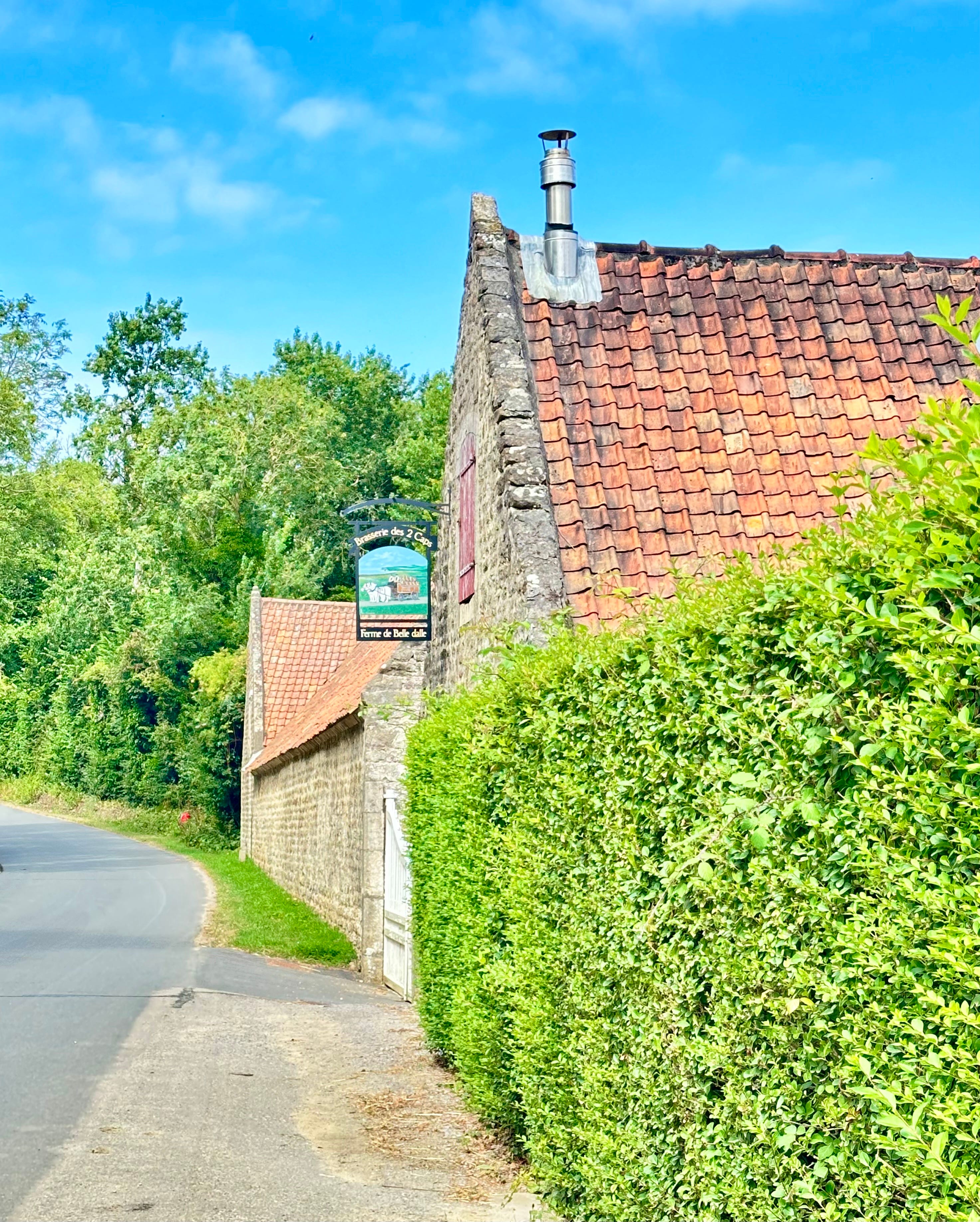
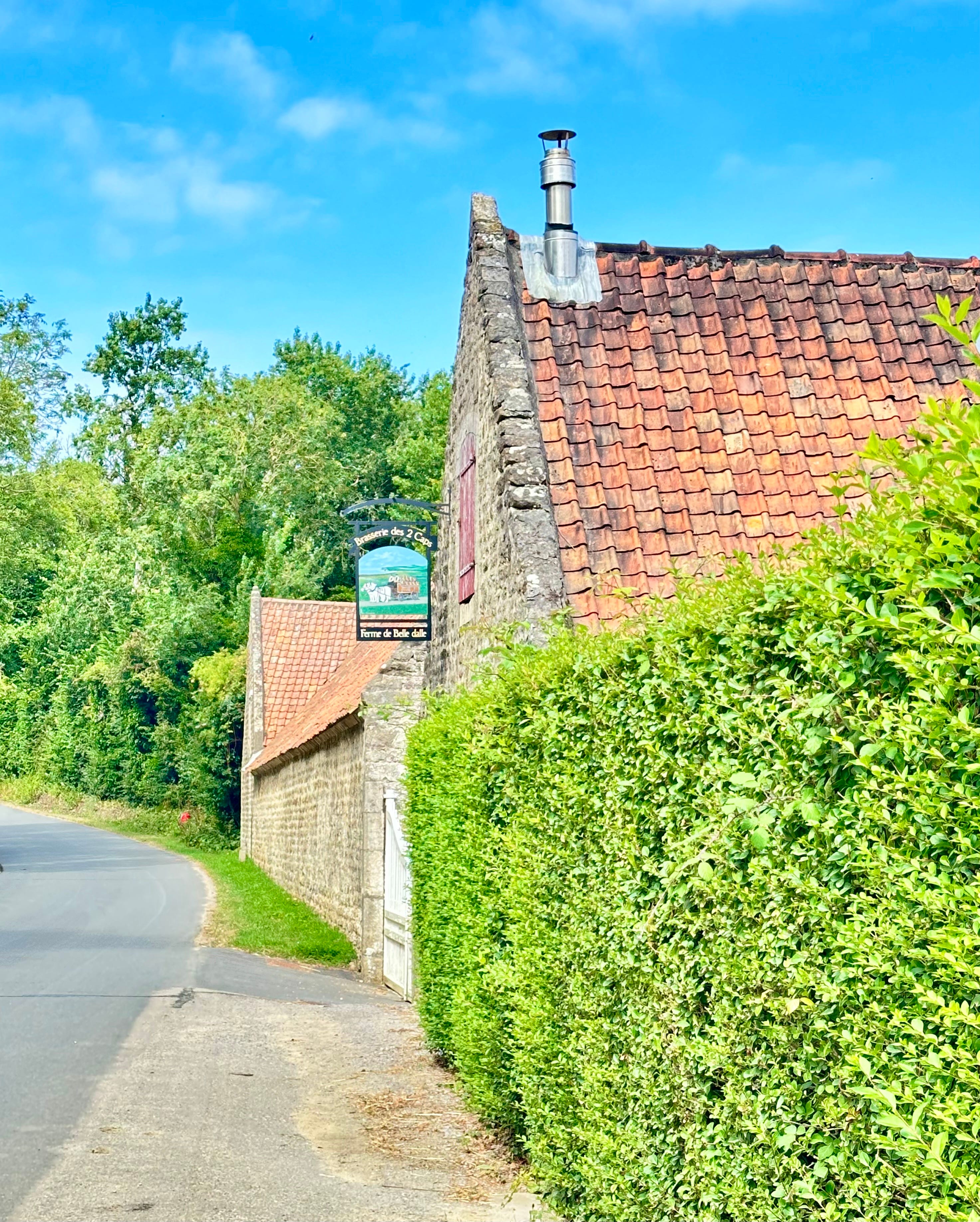
Photo: author
Introduction:
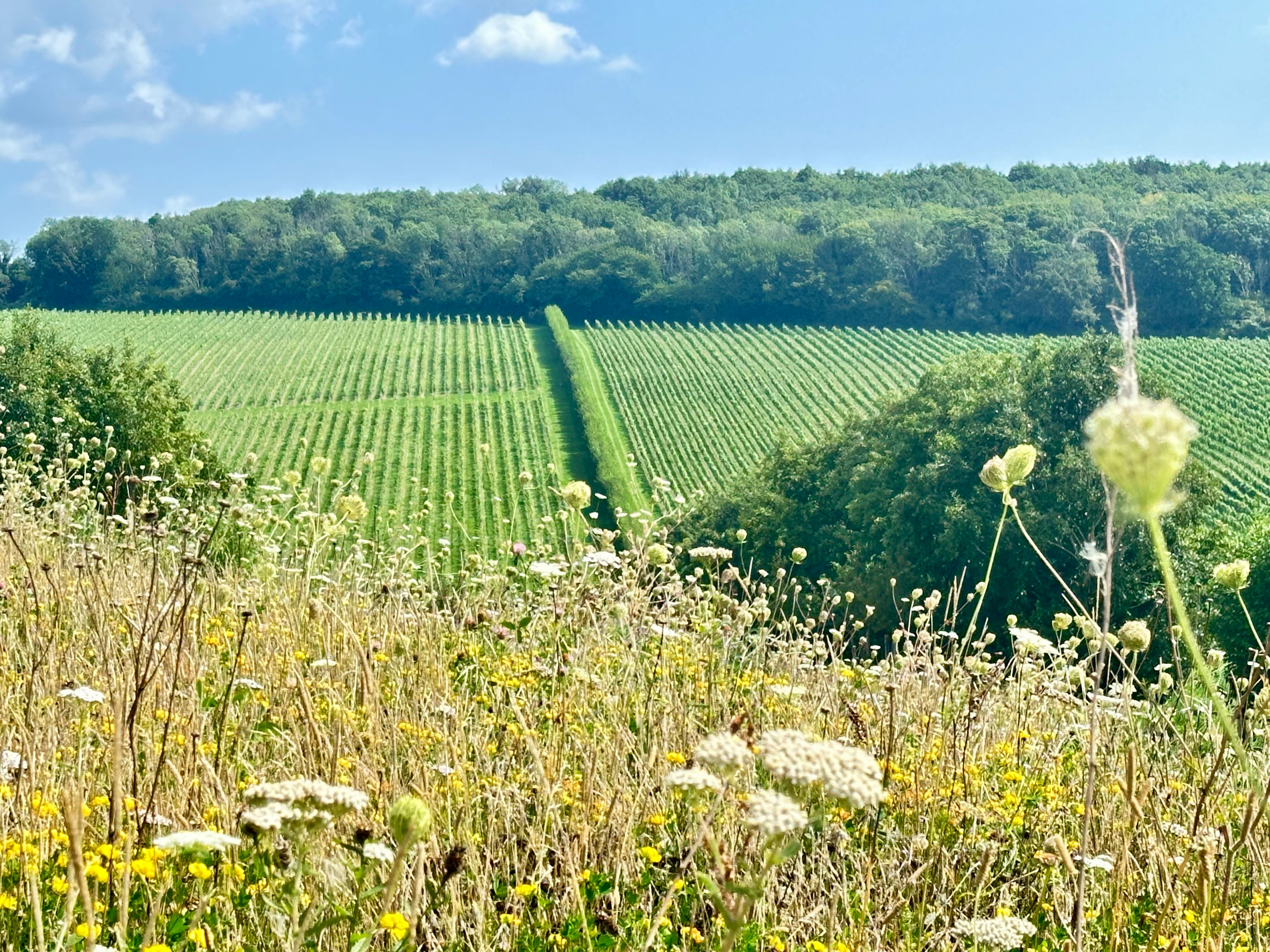
As we journey further into October, Harvesting before the Winter continues in Kent, France and further afield. Whilst I recently enjoyed ten days of blue skies and sunshine before Storm Amy at our house in Wissant in the Hauts de France region, the grapes were harvested earlier than usual at Domaine Évremond, Chilham, Kent, after a bumper crop. You can read more about Taittinger’s English wine estate here:
Domaine Évremond
Introduction:
The annual Oktoberfest Beer festival has just recently finished in Munich, Germany. Whilst in Wissant, I decided to visit Brasserie Artisanale des 2 Caps, on the coast, a few kilometres south on the D940 from Wissant, in the direction of Boulogne.
You may recall from my previous article:-
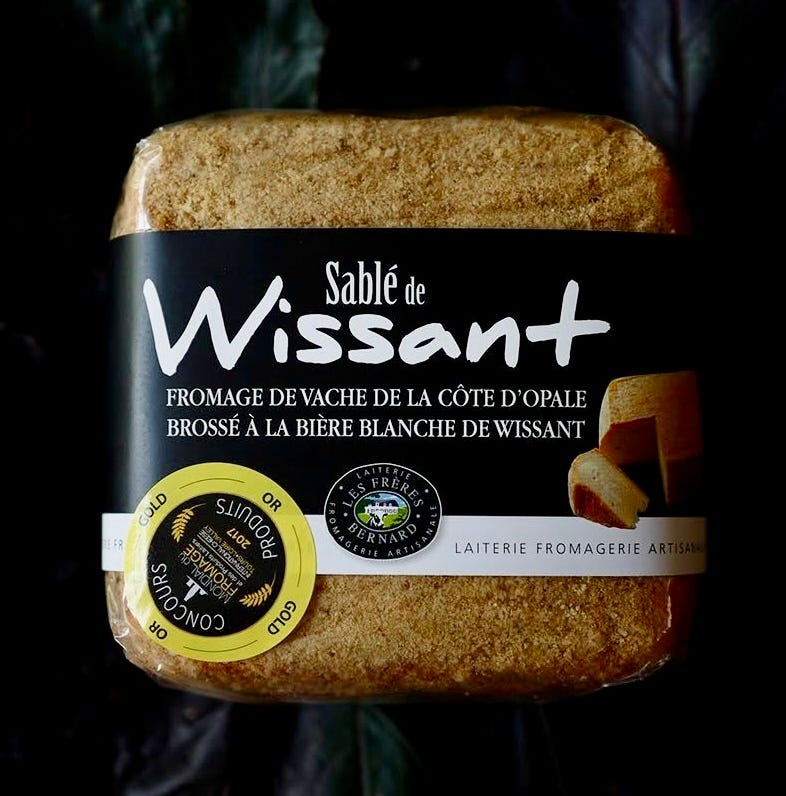
La Ferme du Vert and Fromagerie les Frères Bernard
1 June 2025
Introduction:
that Les Frères Bernard, who make a range of delicious cheeses at Ferme du Vert in Wierre Effroy, have a cousin in Tardinghen, who brews a range of artisanal beers, some of which are used in their cheese-making.
Brasserie Artisanale des 2 Caps:
At the heart of the Grand Site des 2 Caps, in the village of Tardinghen, La Brasserie des 2 Caps produces quality beers. The brewery is located within a traditional 18 th century farmhouse built from Boulonnais stone: La Ferme de Belle Dalle.
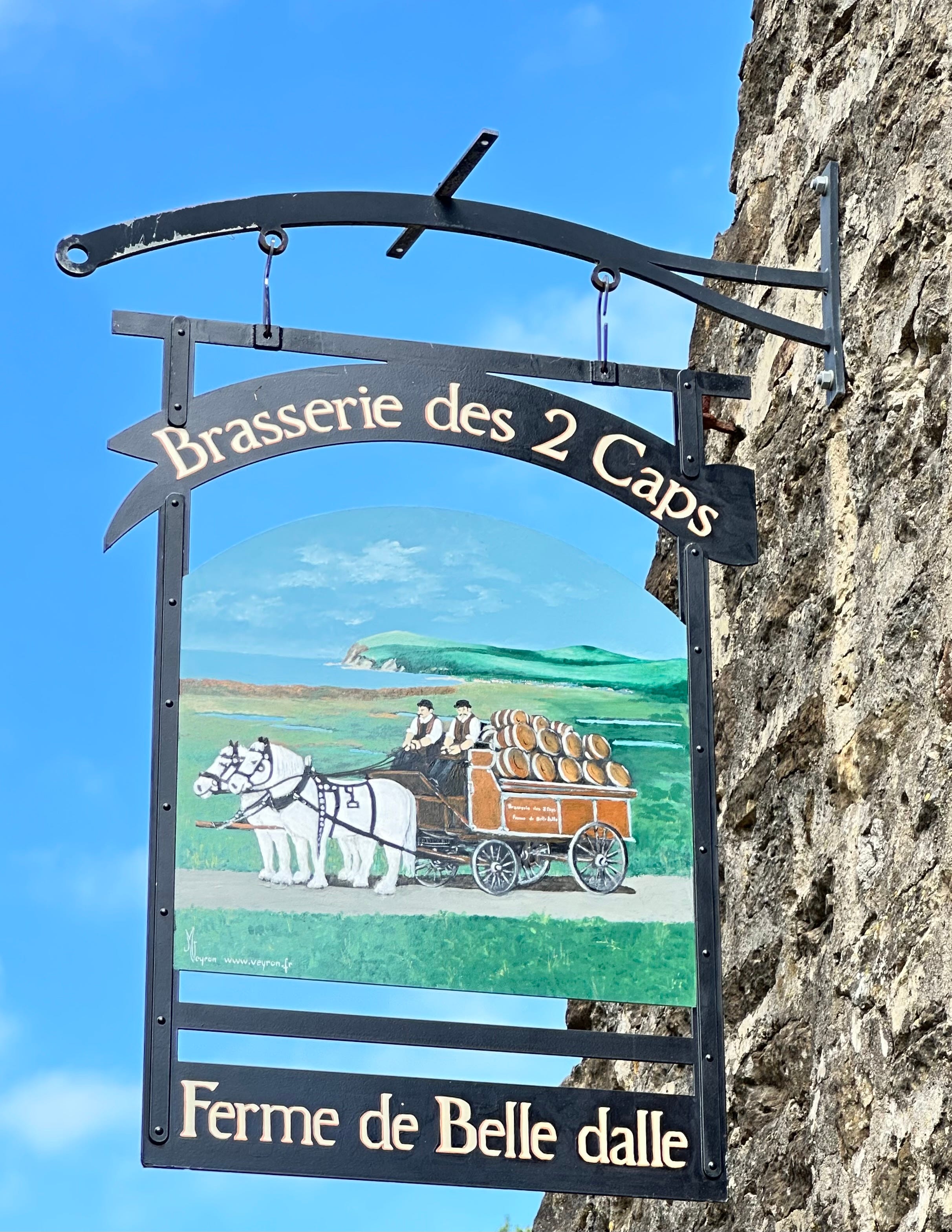
Photo: author
Ferme de Belle Dalle is one of the last remaining ancient farms in Boulonnais still standing. In fact, during the First and Second World Wars, the farm was heavily damaged and a lot of local heritage was lost.
The farm has been owned by Monsieur Noyon’s family since 1953, At that time his grandfather was a farmer, followed by his father. Christophe Noyon was born in this farm house 61 years ago.
Initially, Christophe Noyon was not a farmer. Rather, he was an engineer specialising in agricultural biochemistry (ISA Lille). At the time, Christophe Noyon was living in Paris with his wife Alexia and their three children. When his father decided to retire, he returned from Paris, eager to revive a viable economic project at La Ferme de Belle Dalle.
In a similar fashion to his uncle and aunt, Joseph and Annie Bernard, several decades earlier at La Ferme du Vert in Wierre-Effroy, a few kilometres away on the far side of Marquise, Christophe Noyon shares “I was 37 years old and I wanted to change my life”.
At first, Christophe Noyon focused on cider and apple juice production. However, the problem was that neighbouring competitors in Normandy had a strong, well established reputation as cider and apple juice producers. In addition, the Opal Coast is further north than Normandy and the maritime weather can be a little more inclement in winter. That infamous “Le Vent du Nord” as caricatured in the 2008 French film Bienvenue Chez Les Ch’tis.
The question quickly arose: “how could we keep the business alive?”, recalls the trained agricultural engineer. Being close to Flanders in Belgium, there is a historical, well established tradition of brewing beer. This is when the idea of a brewery took root.
So in 2002 Christophe Noyon decided to resume his studies. He completed a Master’s degree, specialising in brewing beer in Louvain-la-Neuve, Belgium. During his 2 years of study, whenever he had any free time during his weekends and vacations, Christophe Noyon would visit different brewers to get an idea of what he was going to do.
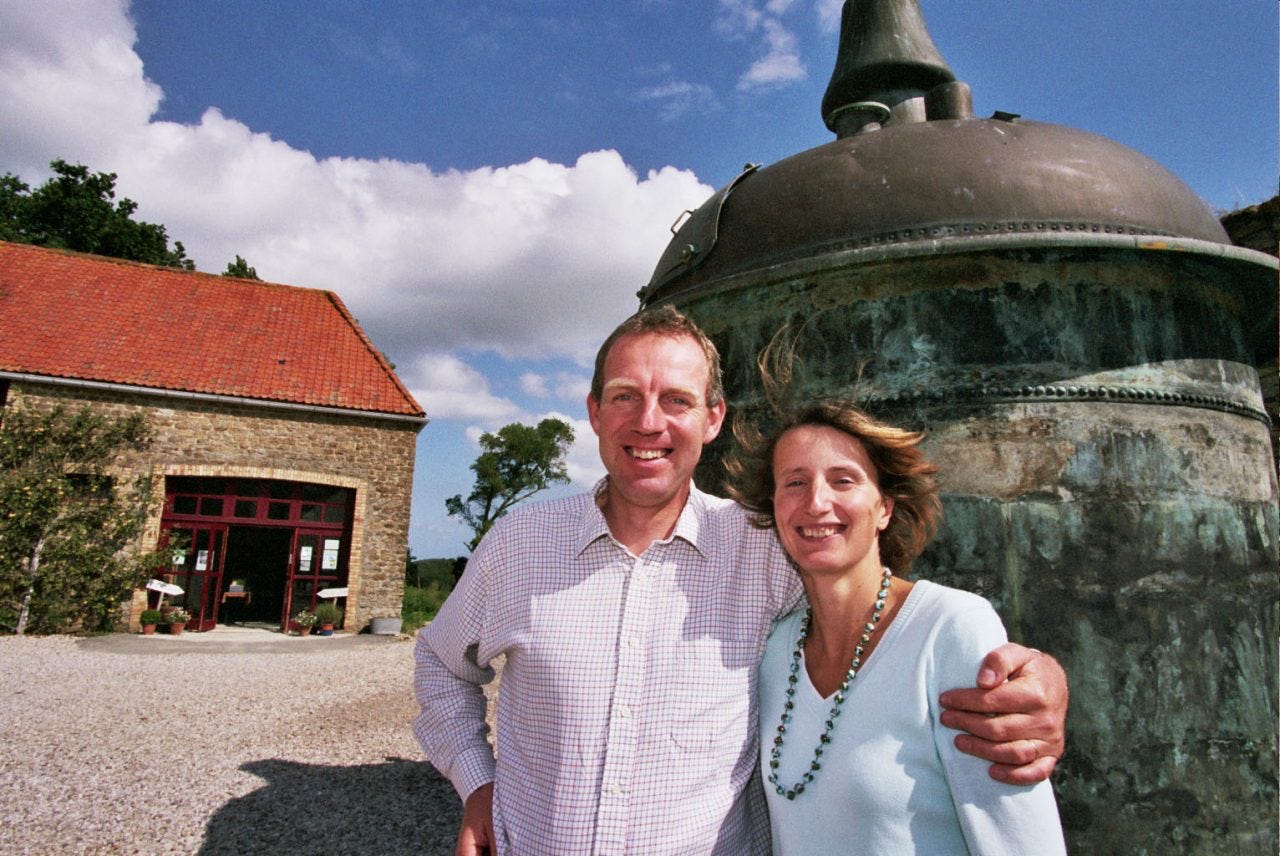
Photo: Brasserie des 2 Caps
Founded in 2003 by Christophe and his wife Alexia Noyon, herself a graduate of the Ecole Supérieure de Commerce d’Angers (ESCA), the Brasserie Artisanale des 2 Caps had a dual purpose when it was first launched: firstly, to develop a new pioneering economic dimension for the small 65 hectare family cereal farm to secure its long-term viability and secondly to preserve the architectural heritage of the Ferme de Belle Dalle.
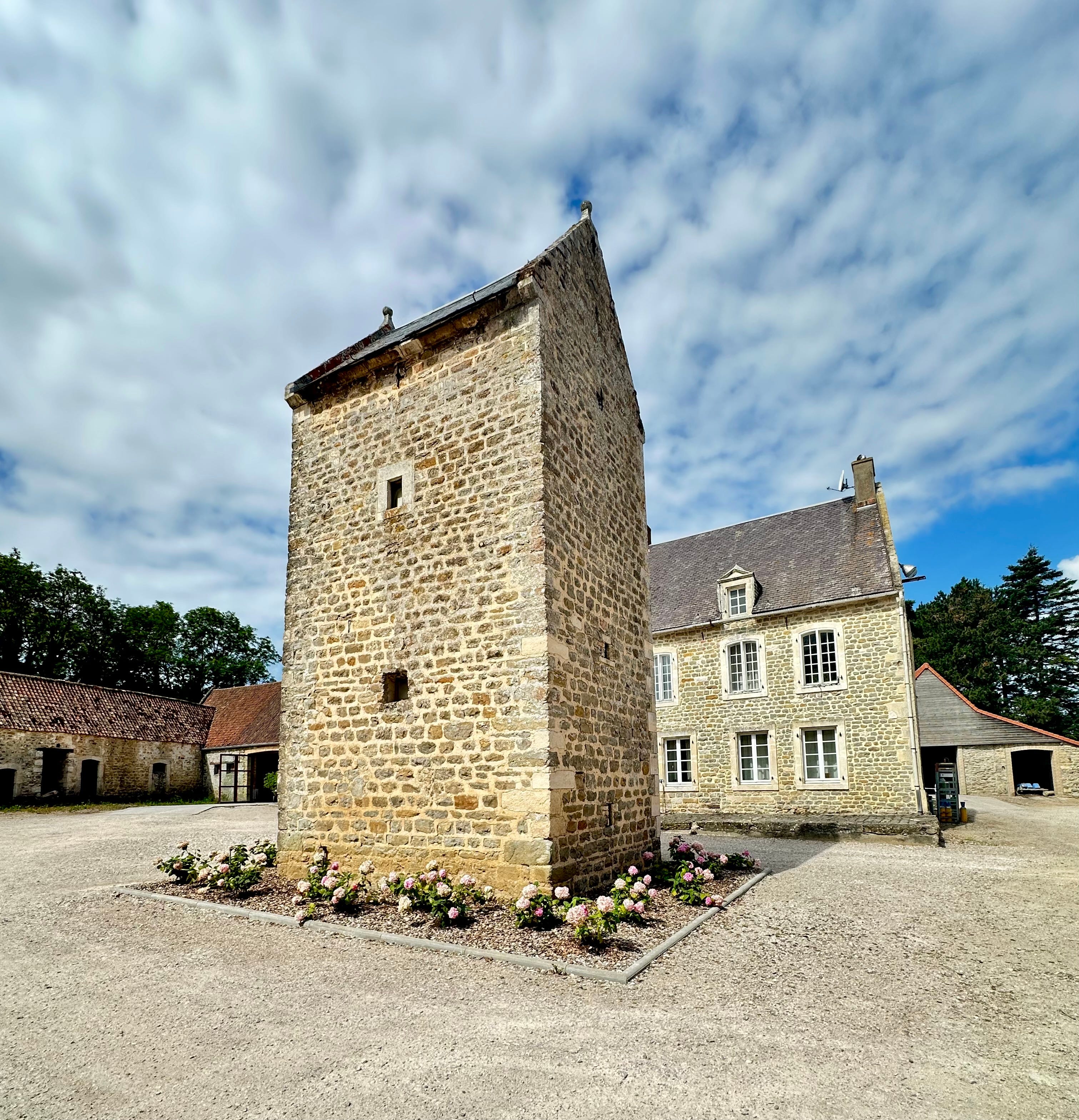
Photo: author, La Ferme de Belle Dalle and the splendid, renovated dovecote
For the first two years, beer production was subcontracted, then in 2005, Christophe acquired brewing equipment in Slovakia and began production on site.
Christophe discovered and experimented with different types of beer. “I chose six varieties of hops,” explains the brewer. “We wanted to meet different needs.” In the very early days, Christophe created 3 different blonde beers. He toured the local markets in and around Boulogne and through market research found that it was La 2 Caps beer as we know it today that was most appreciated by the public.
The family run micro brewery has two unique selling points:
Most years, two thirds to three quarters (in a good season) of the barley is grown, harvested and brewed on the family farm.
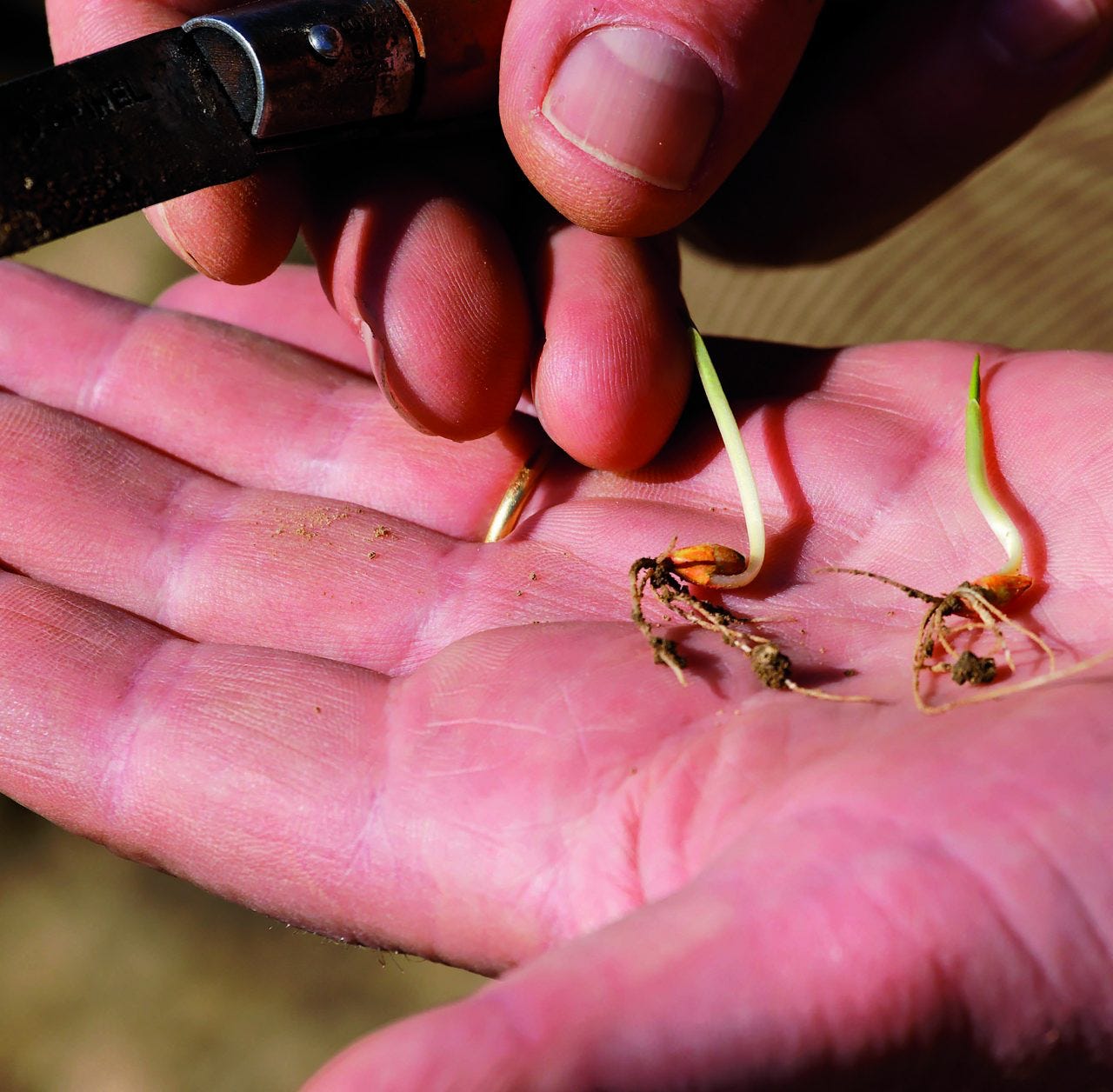
Photo: Brasserie des 2 Caps
The marketing identity of the 2 Caps highlights the landscapes of la Côte d’Opale. The names and the labels on the beers reference Les Deux Caps (Cap Blanc-Nez and Cap Gris-Nez).
To clearly distinguish the family business from the big commercial names in beer, Christophe and Alexia made a conscious decision to link the beers to the surrounding maritime landscape. Christophe Noyon explains: “We are at the heart of a major area of outstanding beauty in France, Grand Site des 2 Caps. We’ve designed labels highlighting different areas.”
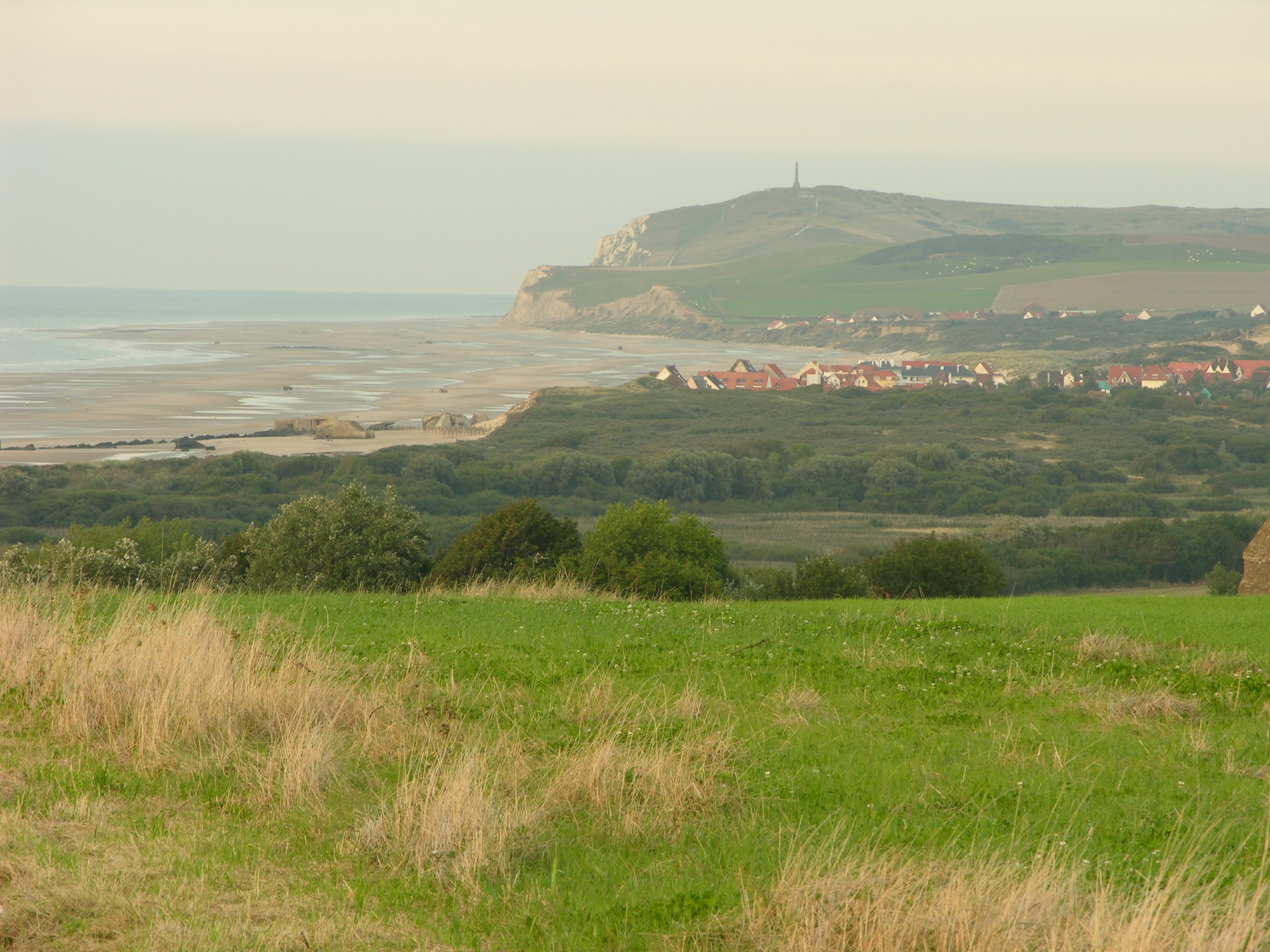
Photo: Stephen Halpin, From Tardinghen, looking towards la Baie de Wissant at low tide with Cap Blanc-Nez in the distance,
Originally designated in March 2011, this is the third-largest Grand Site de France; 7500 hectares; a 23 kilometre coastline; 8 communes; 17,000 inhabitants and a vast, wild coastal nature reserve with a rich and diverse flora and fauna.
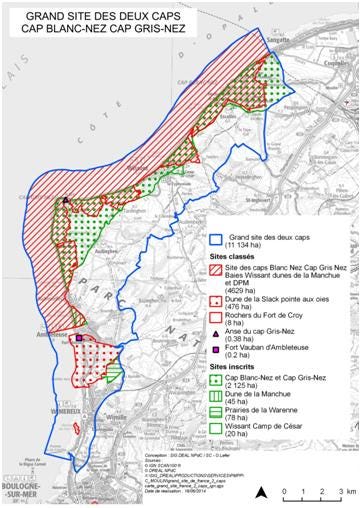
The Slack estuary (a coastal river that flows near Ambleteuse and Wimereux), Wissant, Blanc-Nez and Gris-Nez, all these places are displayed on the brewery’s bottles. Christophe and Alexia gave their beers names that refer to the Opal Coast: La Blanche de Wissant, la 2 Caps, la Houle du Blanc-Nez…This was a clever marketing move and together, Christophe and Alexia have successfully built a name for themselves in this highly competitive market.
The Brewing Process:
The family run brewery is based in former farm stable sheds. The beers are brewed from carefully selected raw materials.
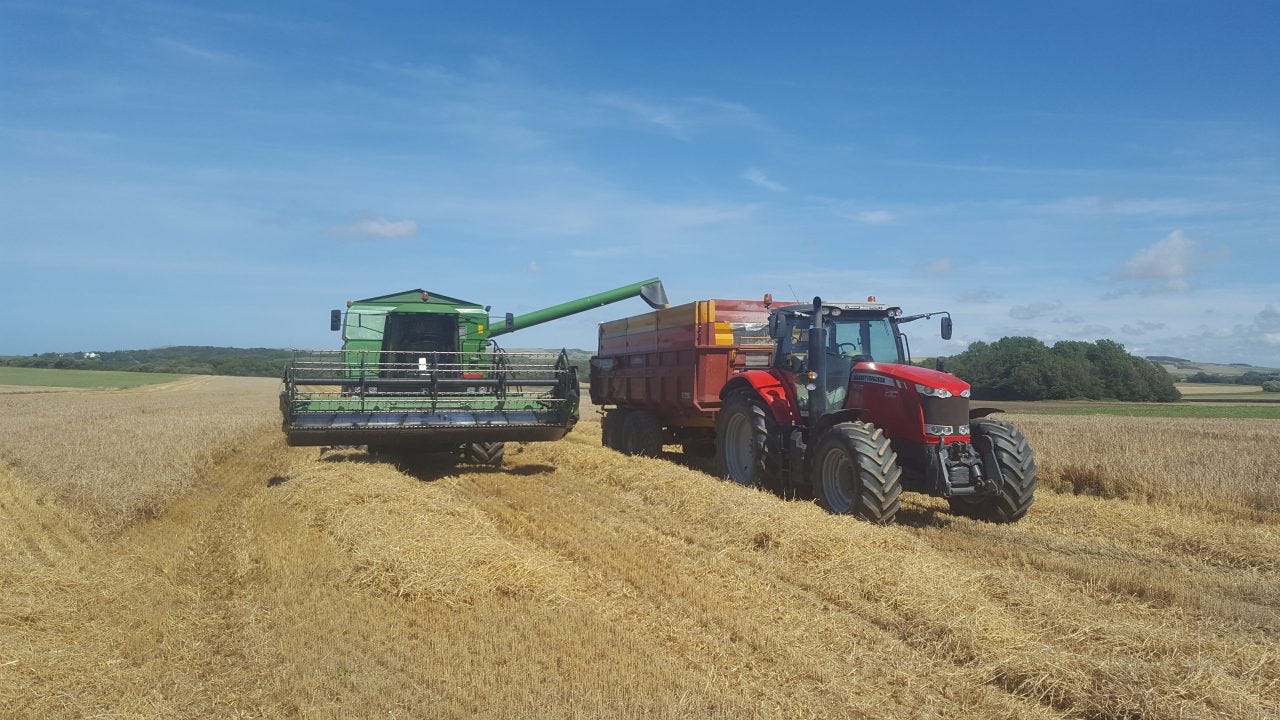
Photo: Brasserie des 2 Caps
The barley used is mainly produced on the property. It is stored in a barn while the barley is dormant, then sent to a small family malthouse located in Belgian Flanders, where it is transformed into malted barley. Each batch of malted barley corresponds to a specific plot of harvested barley. This batch-working technique ‘by plot’ allows Christophe Noyon to obtain high-quality malts.
The family produces only haute fermentation beers, as they were made in previous centuries.
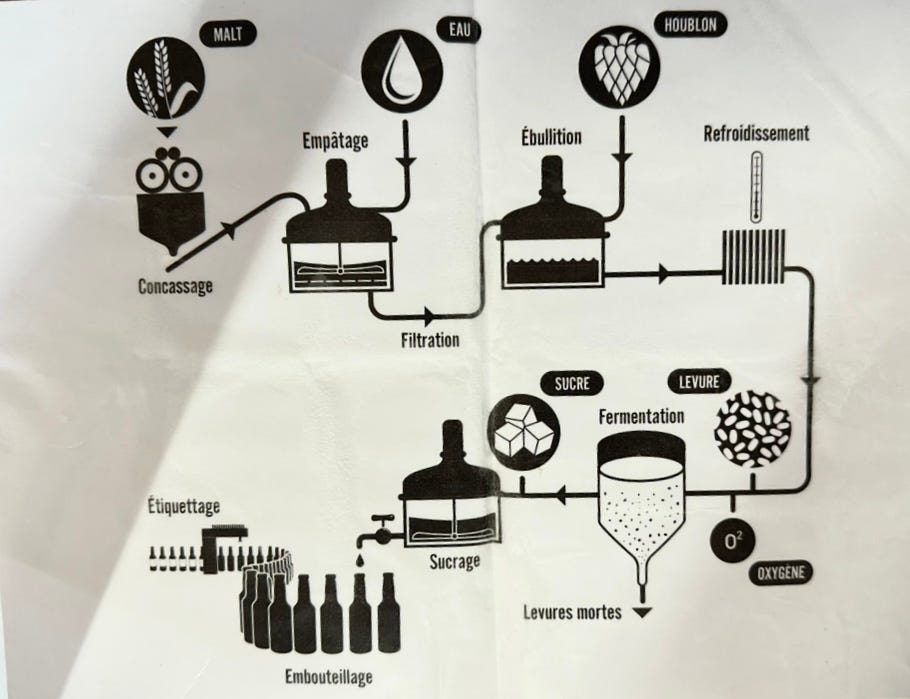
Photo: author
Stage 1 Malting:
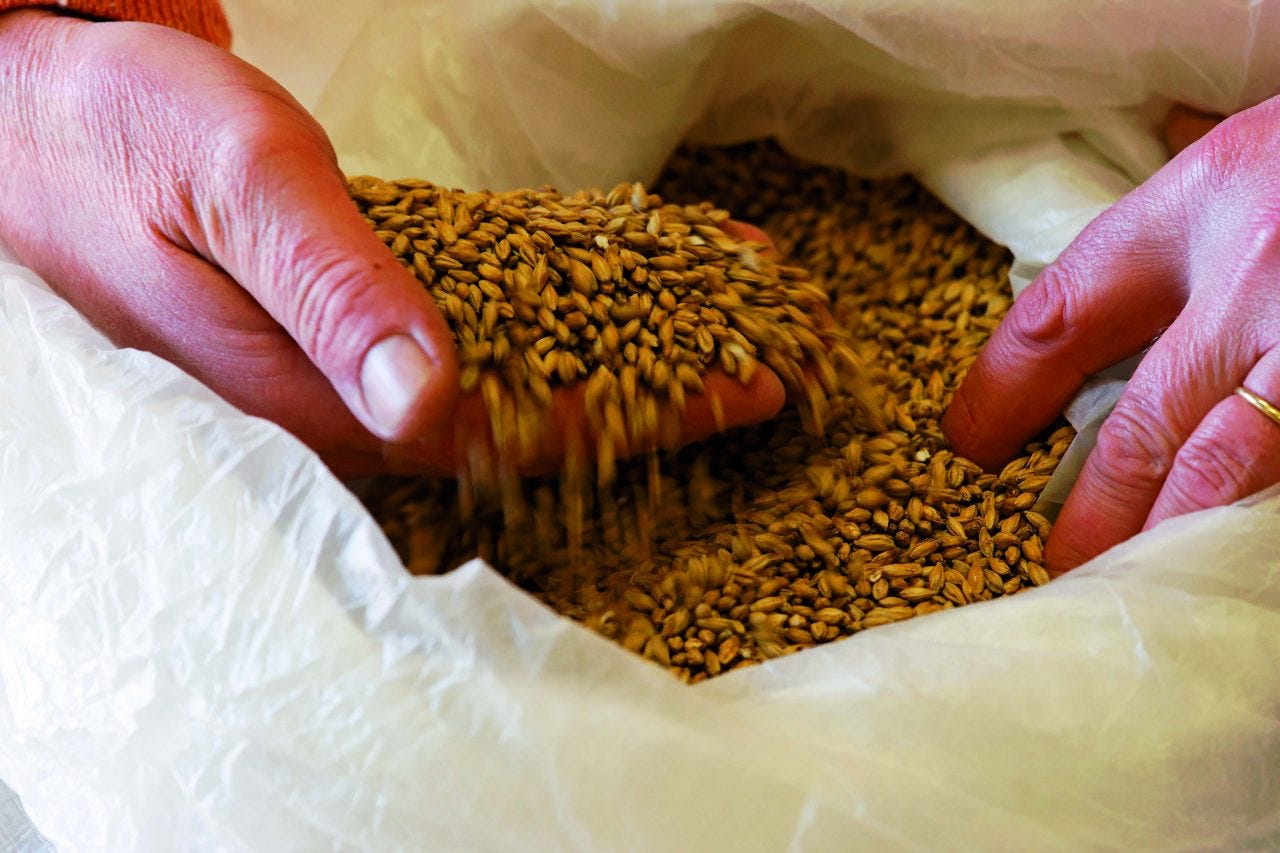
Photo: Brasserie des 2 Caps
Barley is the primary grain for most beers. The barley needs to be malted before it can be used to create beer. The malting process will enable the easier recovery of sugar at the later fermentation stage. The barley is steeped in large vats of water, stirred, allowed to germinate and then kiln dried. This will make the grains much more crumbly. There is a classic barley malt and also a roasted barley malt that has a strong aroma of coffee. The malting stage affects the beer’s colour and flavour, with darker malts producing richer, roasted notes.
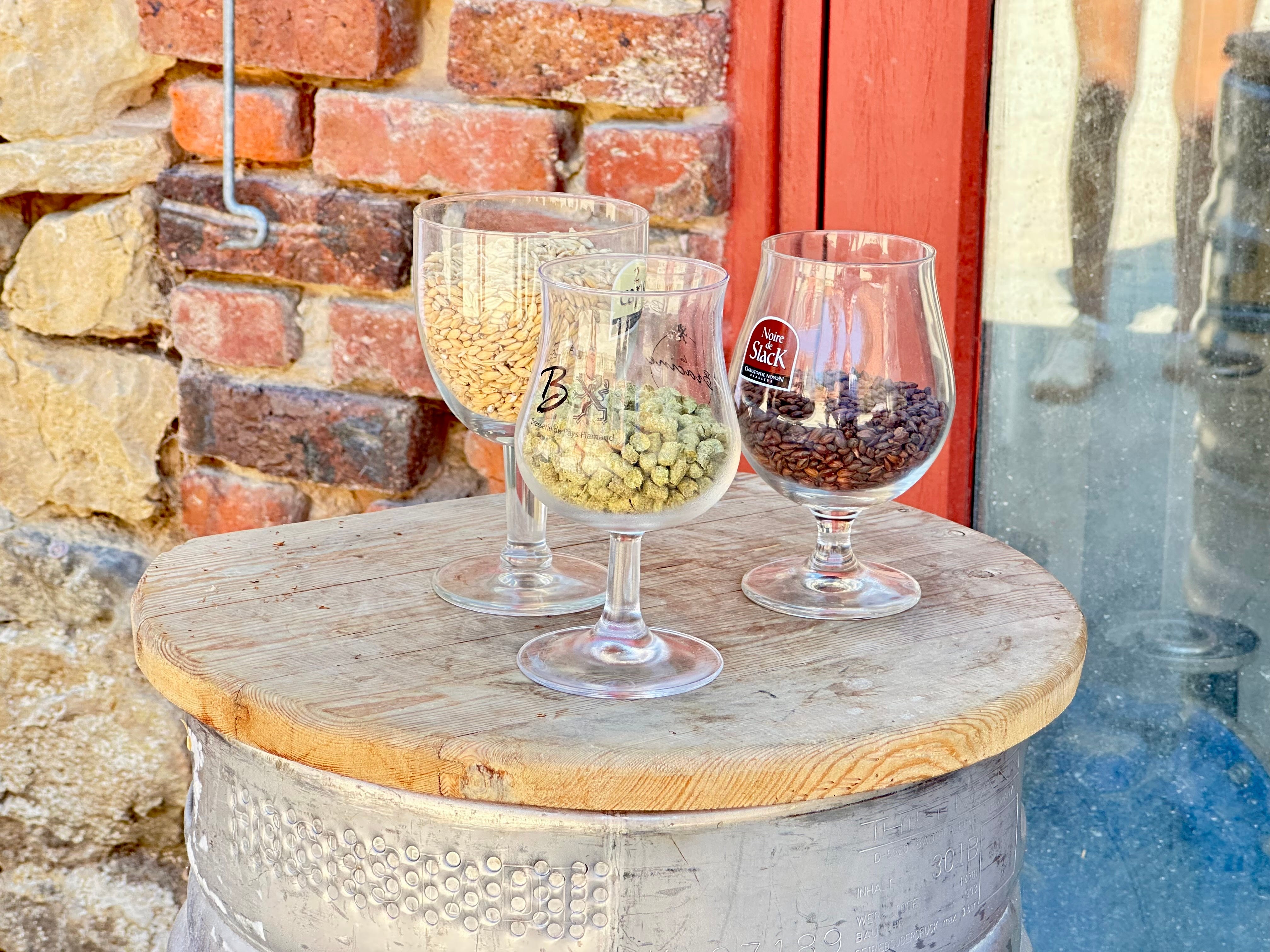
Photo: author, Barley, Malted Barley and Hops
Stage 2 Concassage - Milling:
The malted barley is crushed between rollers.
Stage 3 Empâtage - Mashing:
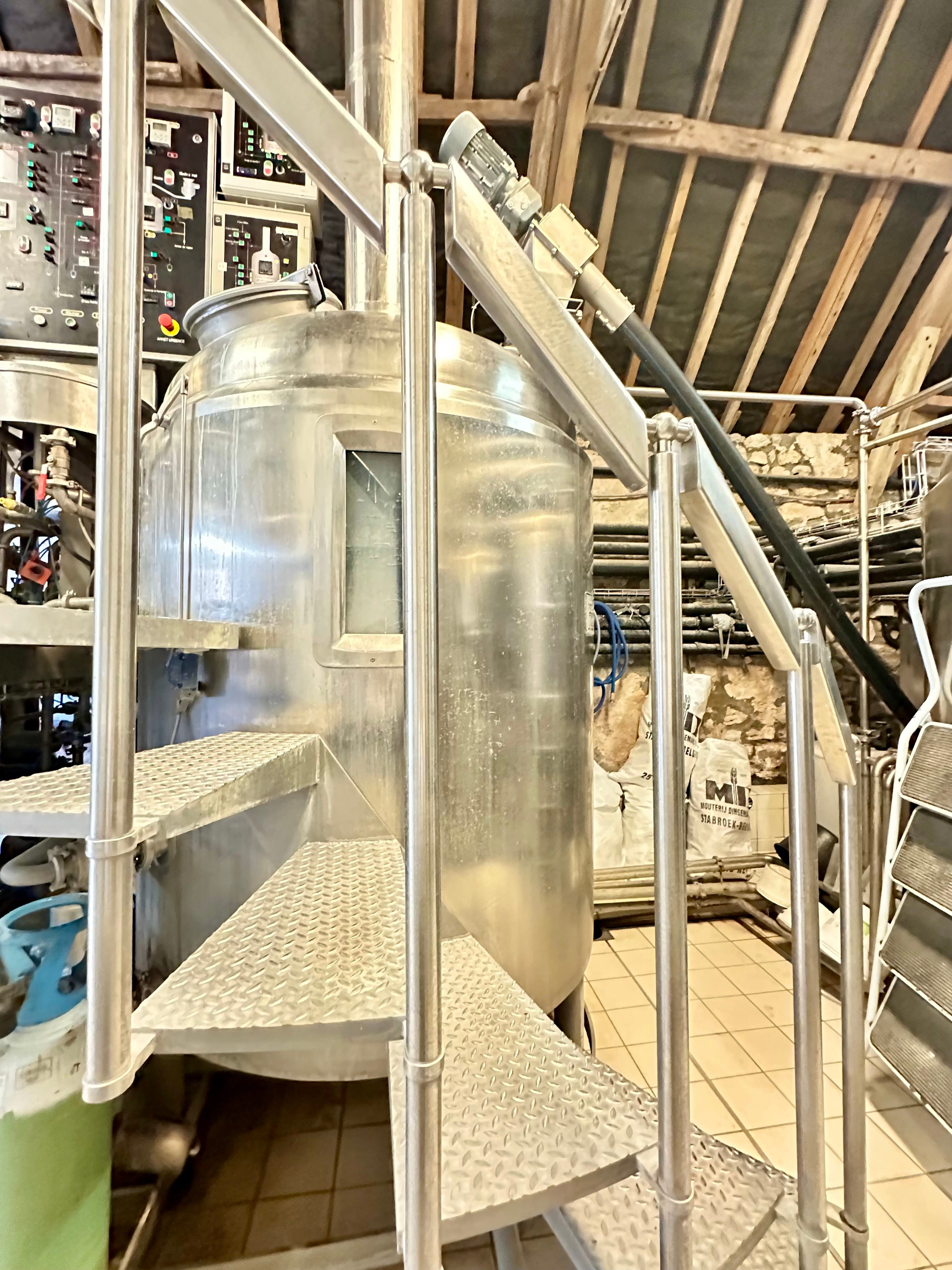
Photo: author
The milled, malted barley is added to the mash tun. Hot water activates enzymes which convert malt starches into fermentable sugars. The liquid that results from mashing is called the wort.
Ninety per cent of the final beer produced is made of water. When I visited the brasserie, the brewer explained that there is an issue with using water from the local network because it doesn’t have a consistent composition. The water composition varies depending on the time of year. However the brasserie needs to have the same quality of beer all year round. To produce a consistent water supply, they filter the water by running it through an incubator and a reverse osmosis system.
Stage 4 Filtration:
The liquid wort is drained, while the remaining solids (spent grains) are filtered and removed.
Stage 5 Ébullition - Boiling:
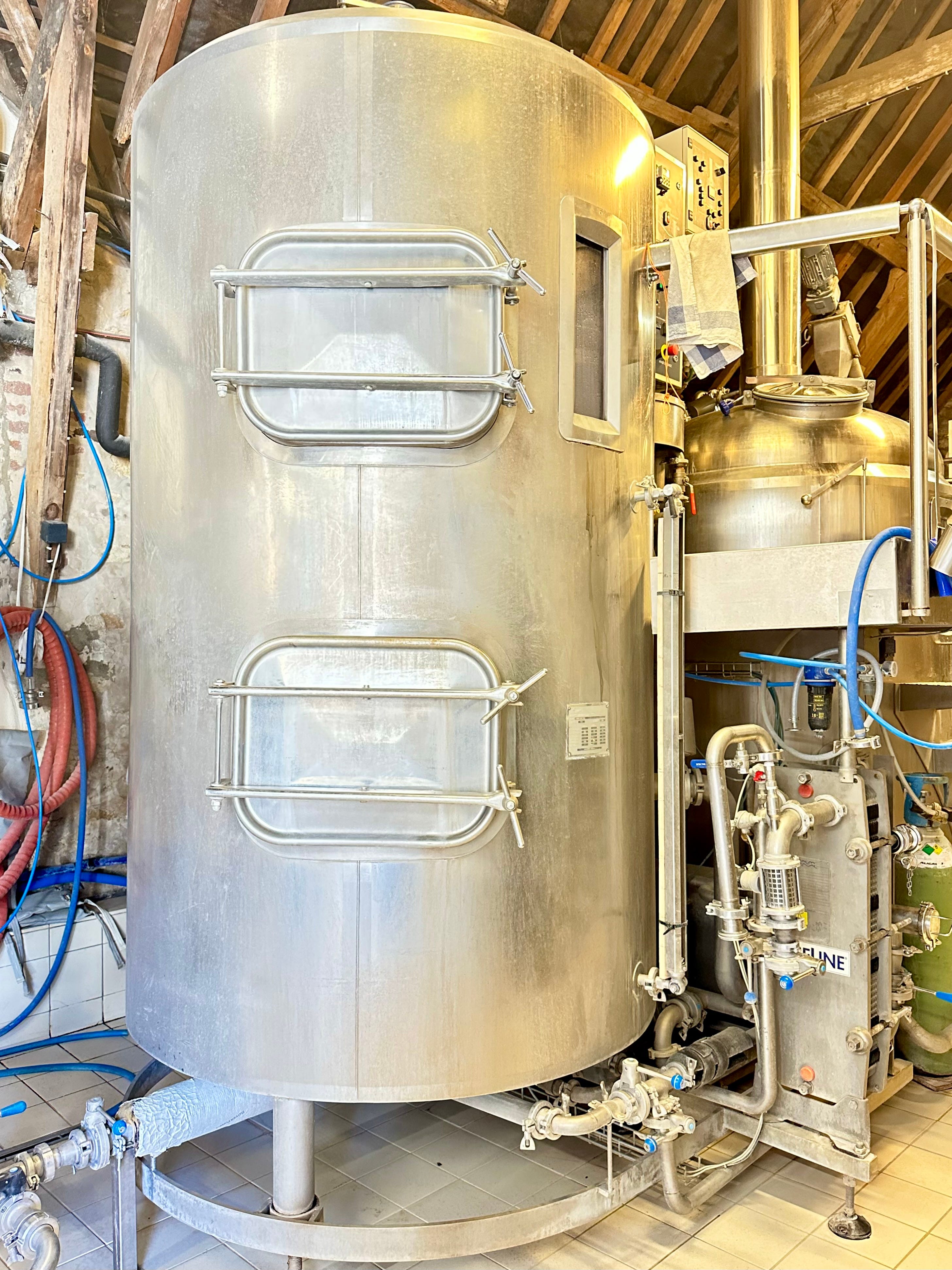
Photo: author
Hops (houblon) are now added and the wort is boiled. This sterilises the liquid and allows the hops to release their flavours and aromas. Brasserie des 2 Caps purchases its hops from Alsace in France, Kent in England, Slovenia and the U.S.
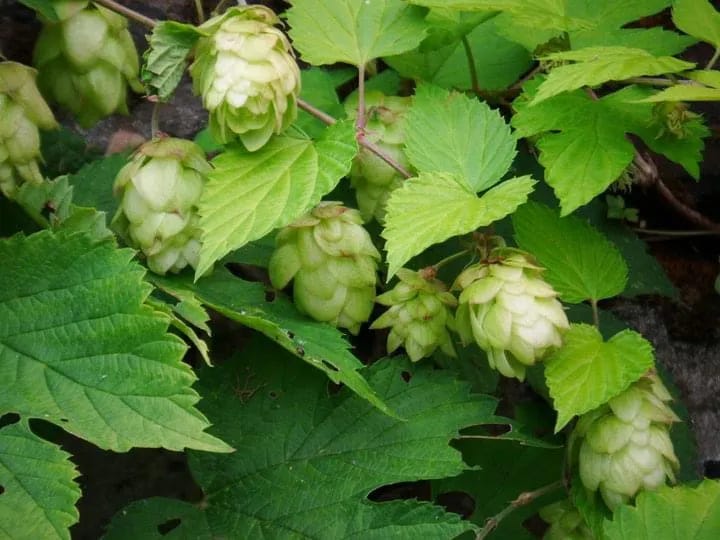
Photo: author, hops growing in my garden in Kent
Hops contribute bitterness, aroma and flavour to the beer. In addition, hops act as a natural preservative, extending the shelf life of the resultant beer.
Stage 6 Cooling:
The hot wort is now cooled to a temperature suitable for fermentation, preventing contamination.
Stage 7 Fermentation:
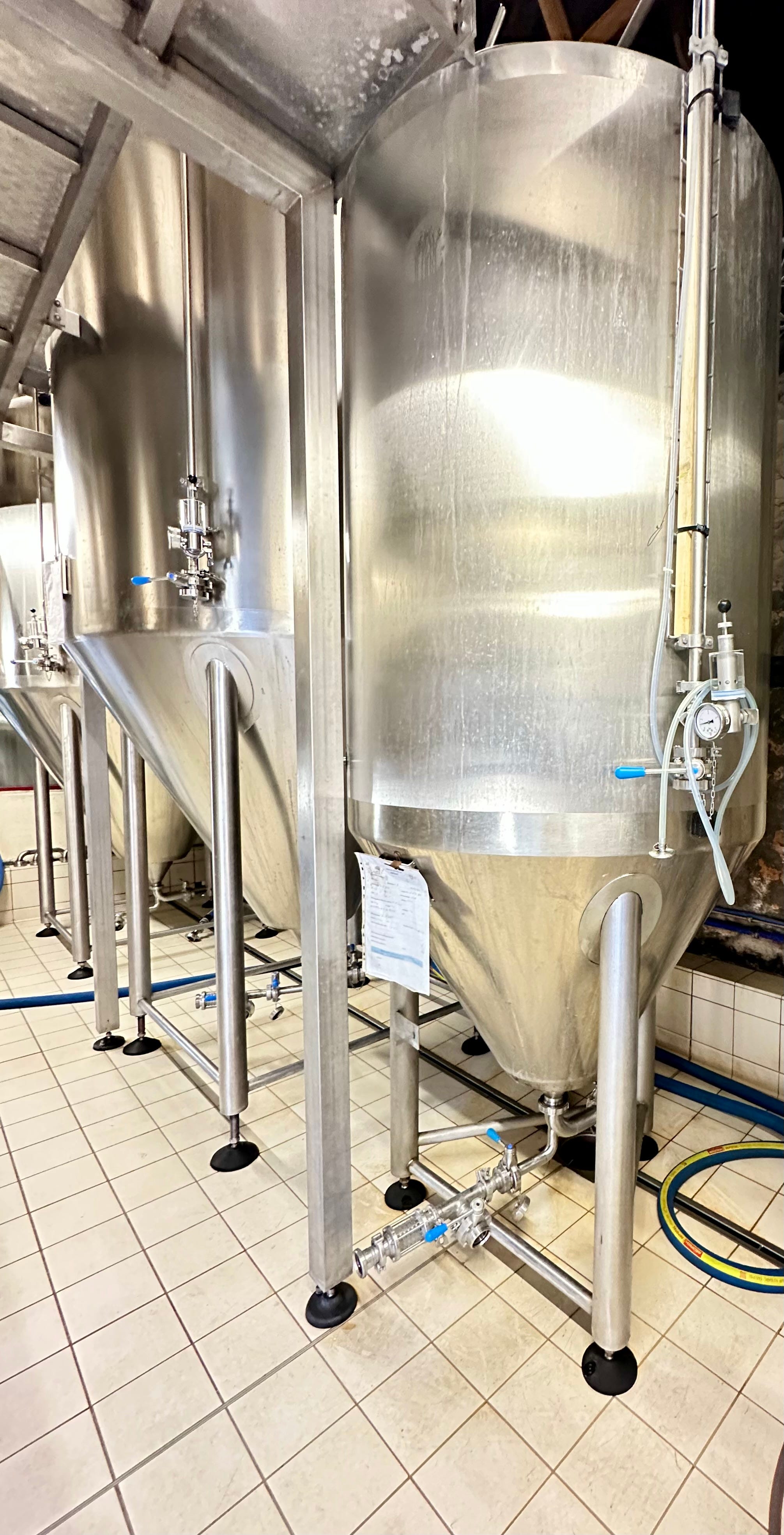
Photo: author
Yeast and oxygen are added to the liquid before haute fermentation (Top-fermented) begins.
All the beers are top-fermented and bottled with yeast. This yeast, a true antioxidant, slows the aging process and eliminates the need for preservatives.
Saccharomyces cerevisiae (a top-fermenting yeast) causes a metabolic reaction, producing alcohol and carbon dioxide. Haute fermentation occurs at a higher temperature (15°C and 24°C) than bottom fermented beer. In the process, the yeast rises to the top of the liquid.
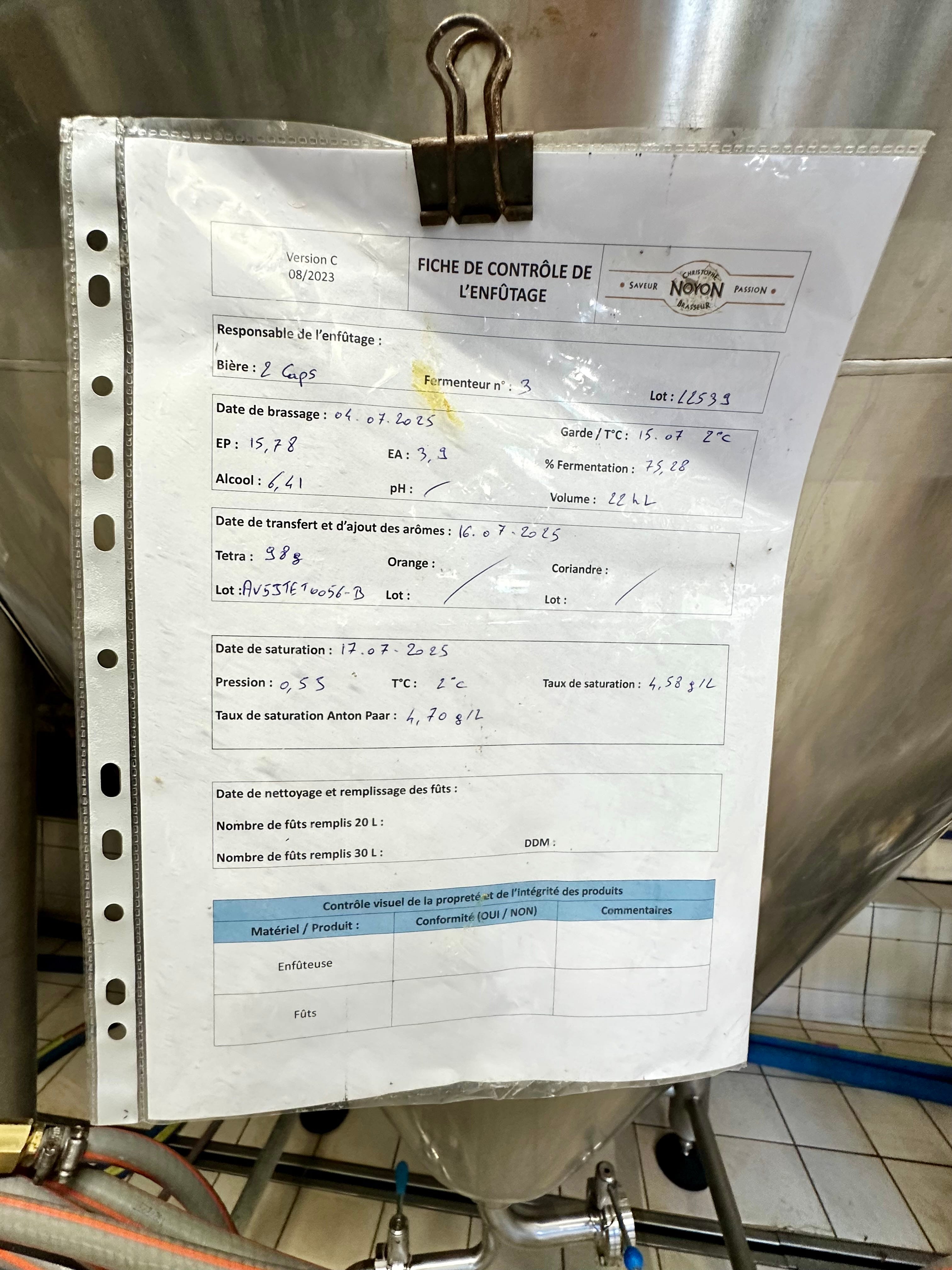
Photo: author
The warmer fermentation temperatures associated with haute fermentation lead to a faster fermentation process. This produces a beer with a quicker turnaround time, usually ready to drink in a matter of weeks.
The higher fermentation temperature also results in a wider range of flavours and aromas, including fruity esters and spicy phenols, which contribute to a more complex and diverse flavour profile.
At the end of the fermentation process, the dead yeast cells are filtered and decanted through the bottom of the container. This improves the clarity, stability and shelf life of the beer.
Stage 8 Sucrage:
Adding a small amount of sugar before bottling allows trapped CO2 to naturally carbonate the beer.
Stage 9 Embouteillage et Étiquetage:
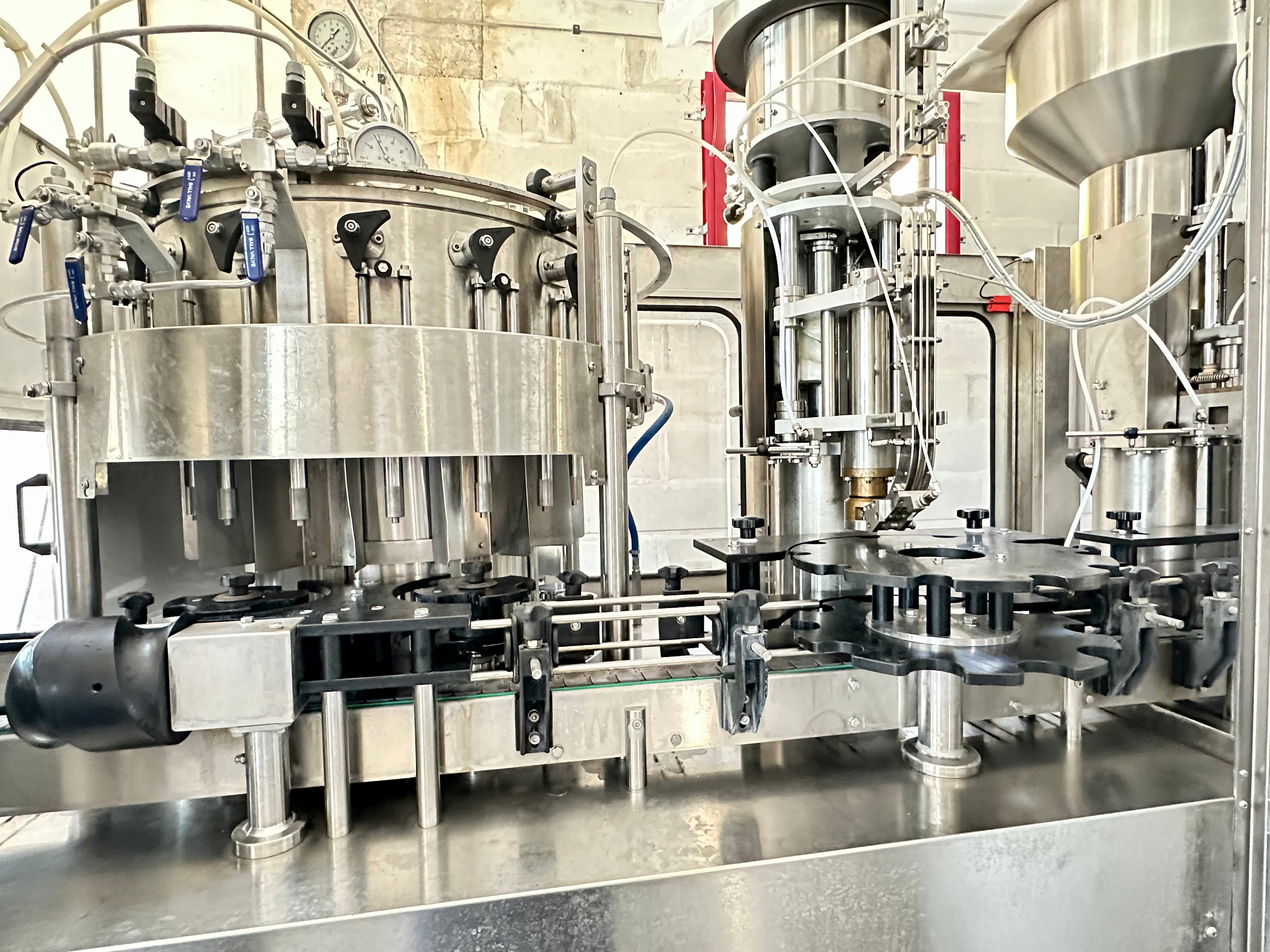
Photo: author
The beer is then bottled and secured with caps.
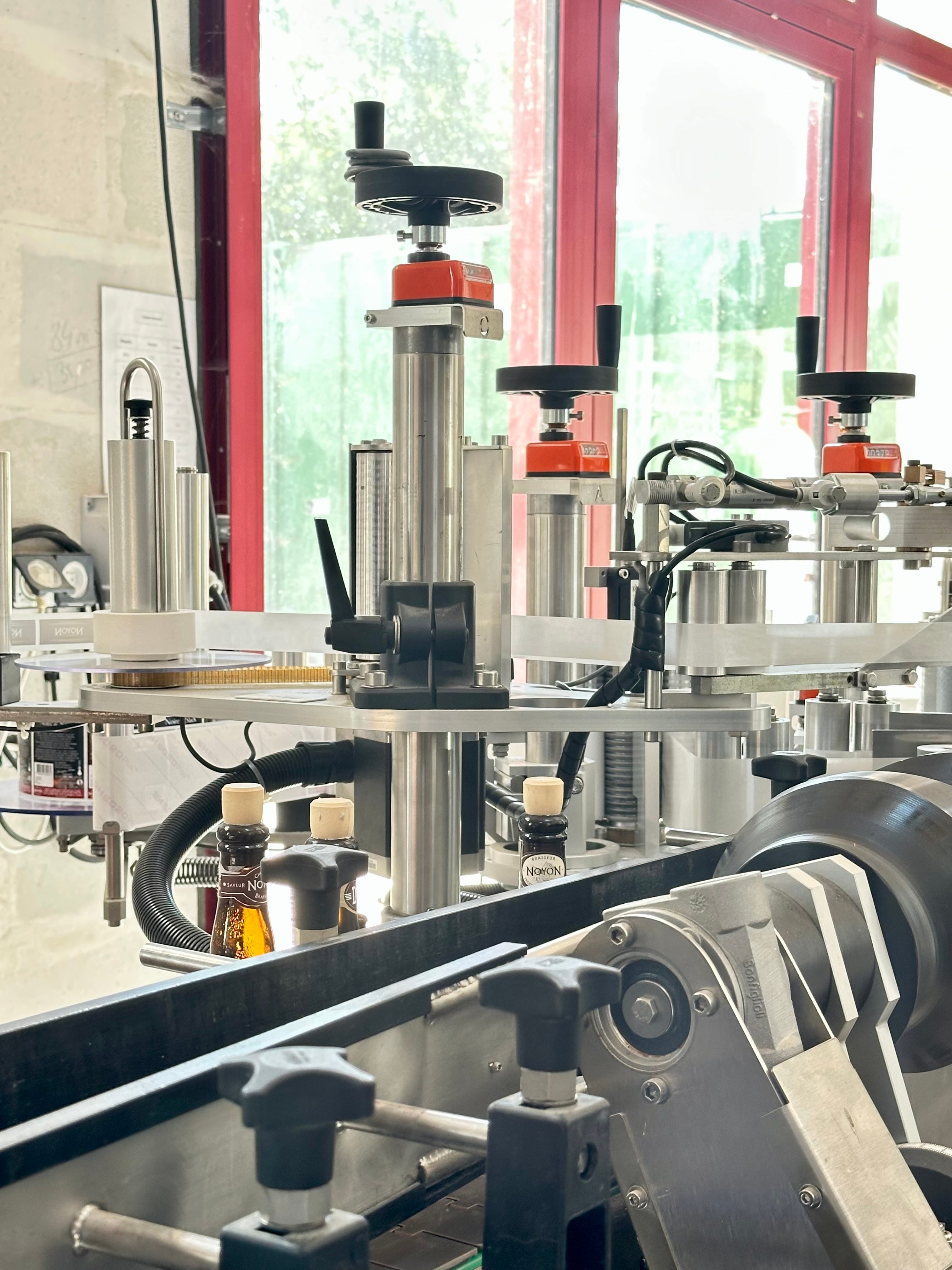
Photo: author
The Artisanal Beers:
After touring the brewery, there was a wonderful opportunity to sample the range of beers created by Brasserie des 2 Caps. After observing; swirling; smelling and tasting each of the beers, I ensured I made full use of the spittoon provided, as I was driving.
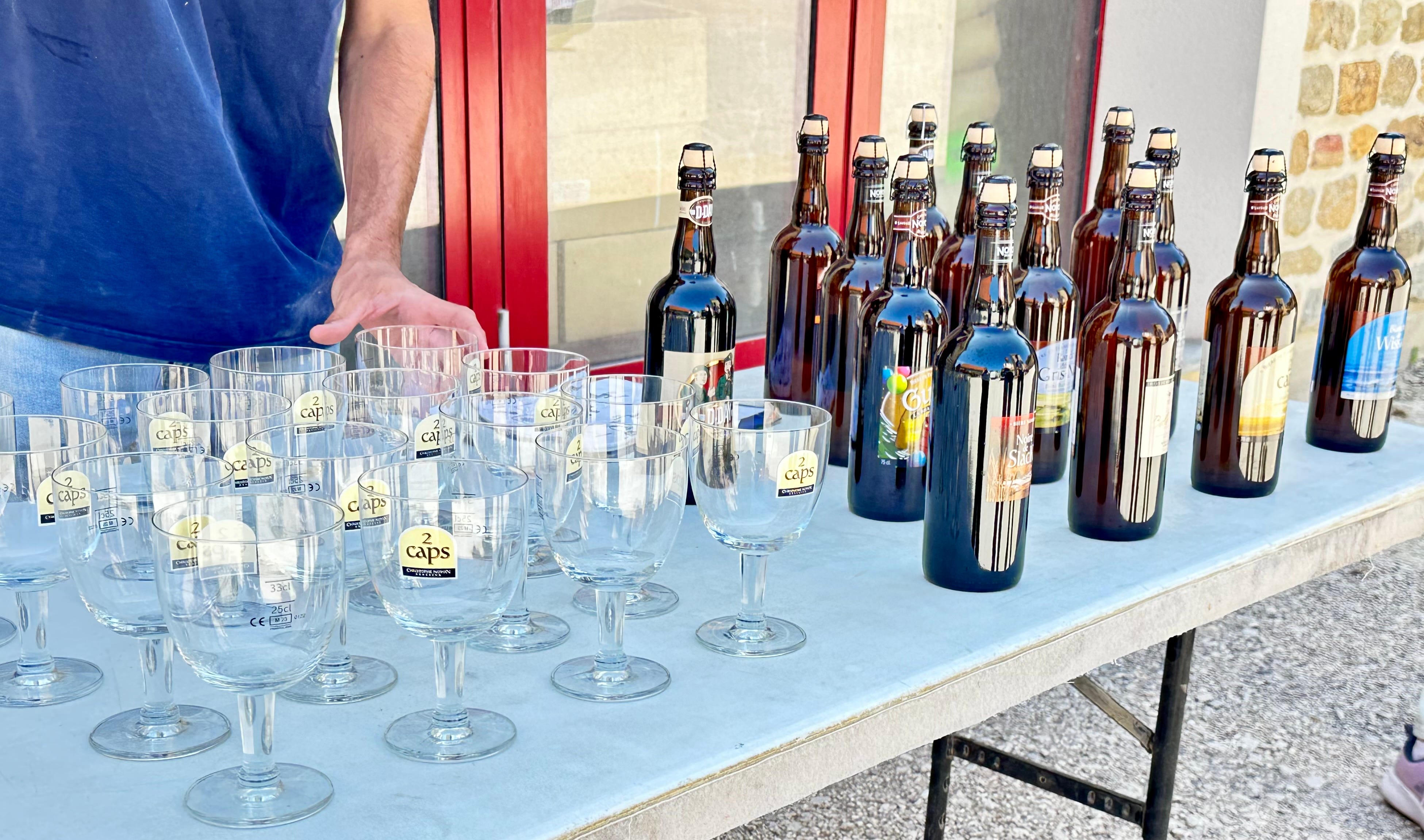
Photo: author
The “Côte d’Opale” range was created to promote the local region, the Grand Site des 2 Caps. It comes in a variety of delicious recipes, satisfying a wide range of palates: 2 Caps, Blanche de Wissant, Noire de Slack, Houle du Blanc-Nez, Rando du Gris-Nez and Guénel.
2 Caps:
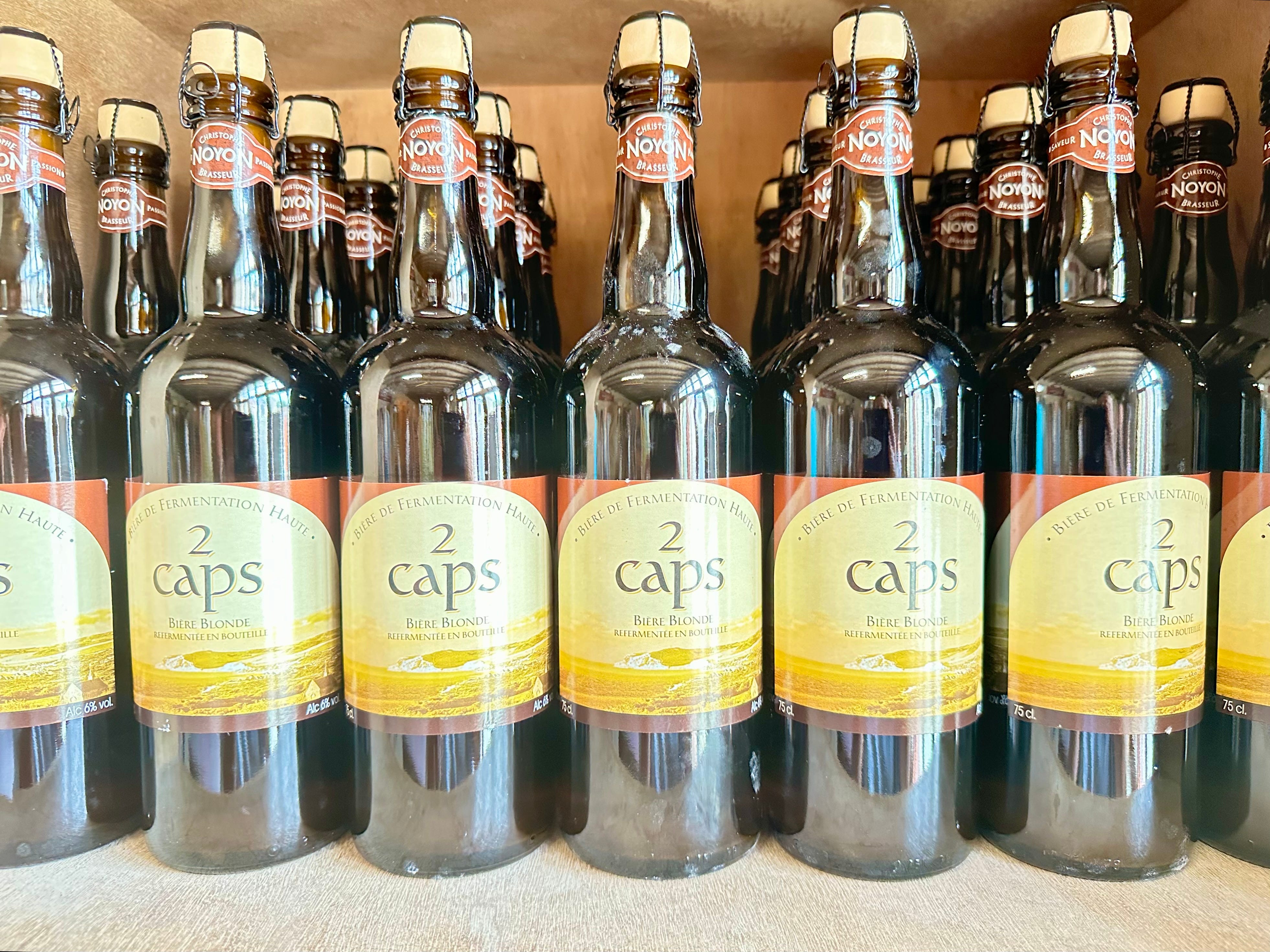
Photo: author
2 Caps was the first beer commercially sold by Christophe Noyon. He explains:
Marin Noyon, born in 1623 in Calais, was sailing the waves in the wake of his Normandy ancestors. It is in his memory and in tribute to my father, who was a farmer, that I created 2 Caps, an ale of character, taste and conviviality, resembling the friendly people of this terre et mer. Bonne dégustation !
2 Caps is a full-bodied, flavourful blonde beer with a fine fruity nose. It would be perfect as an aperitif or with local cuisine such as mussels and chips, herring, kippers, poultry or stews. In cooking, it’s ideal for making Welsh Rarebit or deglazing roast chicken.
Alcohol content: 6%
Nose: aromatic, spicy, herbaceous (hay)
Palate: sweet and fruity, white peach, apricot
Finish: liquorice, clove
Serving temperature: between 5° and 8°C
1. Blanche de Wissant:
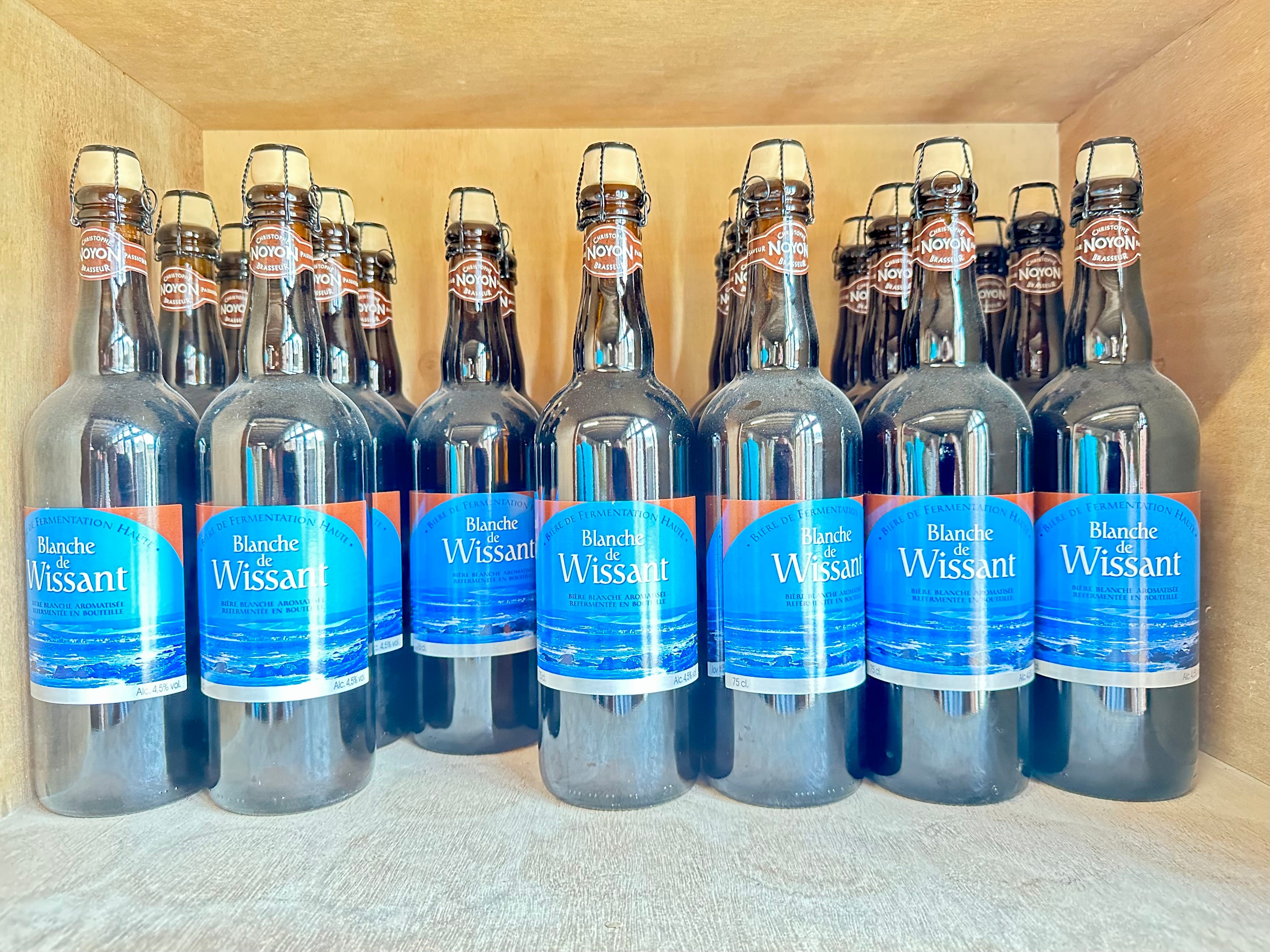
Photo: author
Blanche de Wissant is thirst-quenching white beer, with a fresh taste and delicate aromas of citrus and coriander. It is ideal as an aperitif or as an accompaniment to fish and seafood dishes.
Alcohol content: 4.5%
Nose: Floral
Palate: Sweet, with a citrus aroma of orange blossom and mandarin.
Finish: Clove
Serving temperature: 2°C to 8°C
2. Noire de Slack:
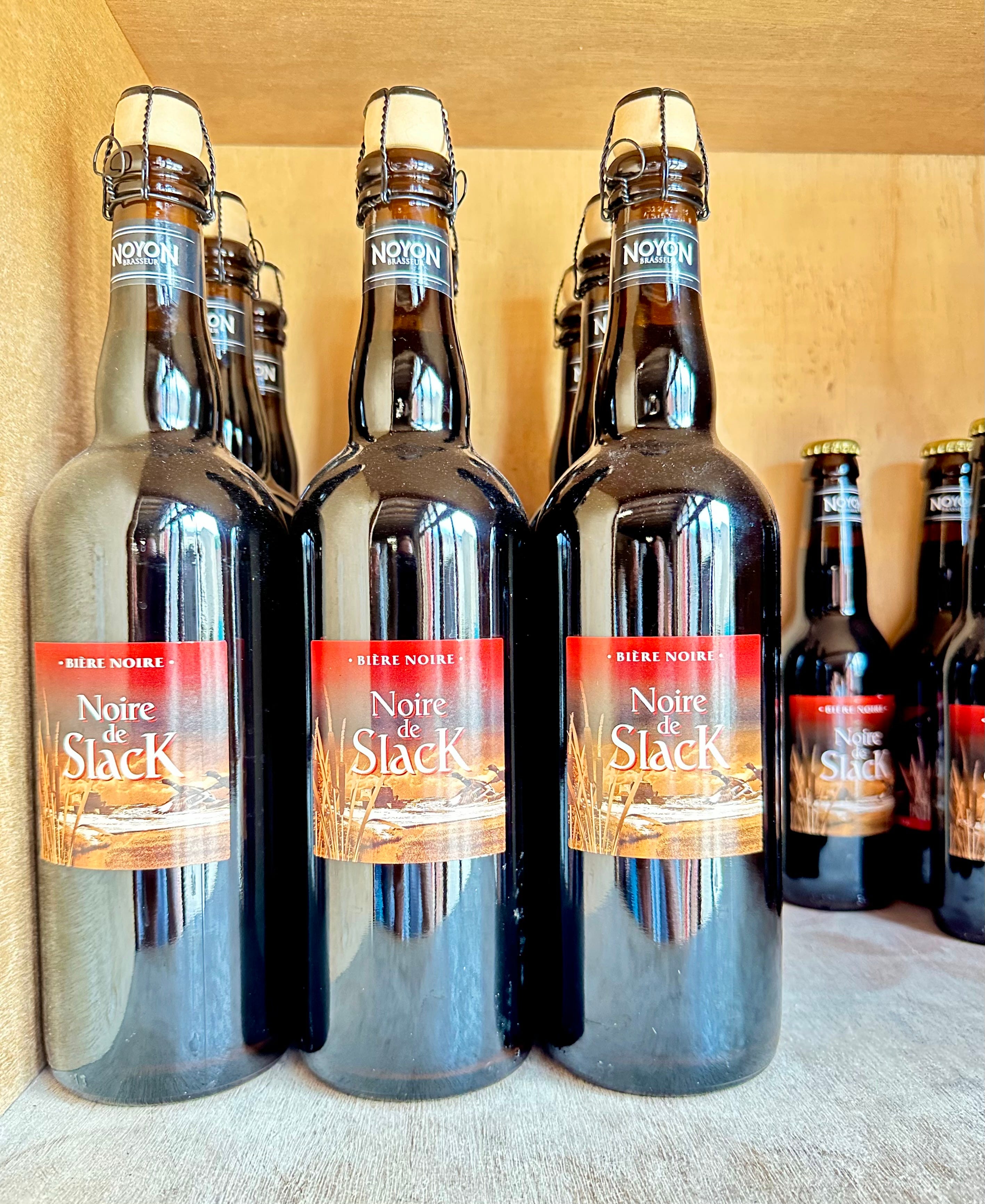
Photo: author
Slack, or “Sea Lake,” simply means “Lake on the Sea.” The river, which flows from Marquise to the Ambleteuse estuary, takes its name from the old Saxon language.
As a young boy, Christophe Noyon discovered wild birds - sandpipers, snipe, mallards, teals - in the heart of the Slack dunes and marshes. He remembers playing there with his cousins and childhood friends. Christophe Noyon shares:
That’s why I named my beer “Noire de Slack”, in memory of these special moments. Black as peat, invigorating and bracing, Noire de Slack is brewed with roasted barley. Selected hops give it a light, virile bitterness.
Noire de Slack is a dark, stout like beer. It pairs well with cured and smoked fish and meat, oysters and even dark chocolate.
Alcohol content: 5.4%
Nose: Oaky, coffee
Palate: Toasted, bitter chocolate
Finish: Liquorice
Serving temperature: 5 to 8°C
3. Houle du Blanc-Nez:
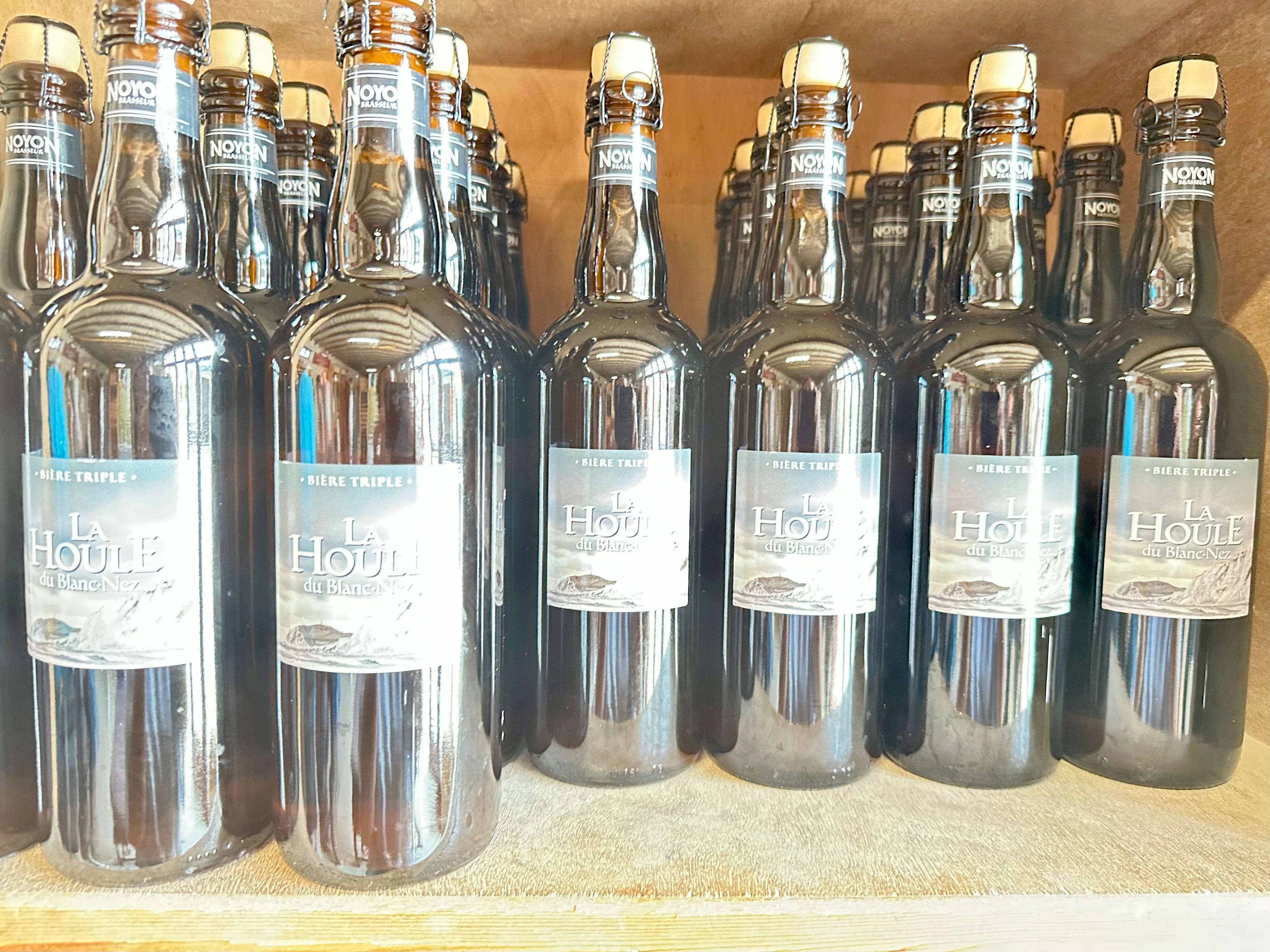
Photo: author
At 134 metres above sea level, Cap Blanc-Nez watches over the Straits of Dover, the meeting point of the English Channel and the North Sea, just south of the Wale lighthouse,
In good weather, from this strategic location, one can easily contemplate the cliffs of Dover. Offshore, ships often have to brave the swell, caused by the waves of the English Channel rushing into the gully formed by the Dérot. The sandbanks and powerful currents make it a place known for being difficult to navigate.
Houle du Blanc-Nez is a full-bodied blonde beer that’s enjoyable to drink as an aperitif or with soft or washed-rind cheeses (Fruité du Cap Gris-Nez, Vieux Boulogne, Maroilles).
This “Triple” beer, with its high density, reflecting the sensations provoked by this sea, the strong swell of the Blanc Nez, is a tribute to the sailors from all over the world who have braved it.
Alcohol content: 9.5%
Nose: Malty, it packs an alcohol punch.
Palate: White peach
Finish: well ripened plums, hard boiled sweets
Serving temperature: between 5° and 8°C
4. Rando du Gris-Nez:
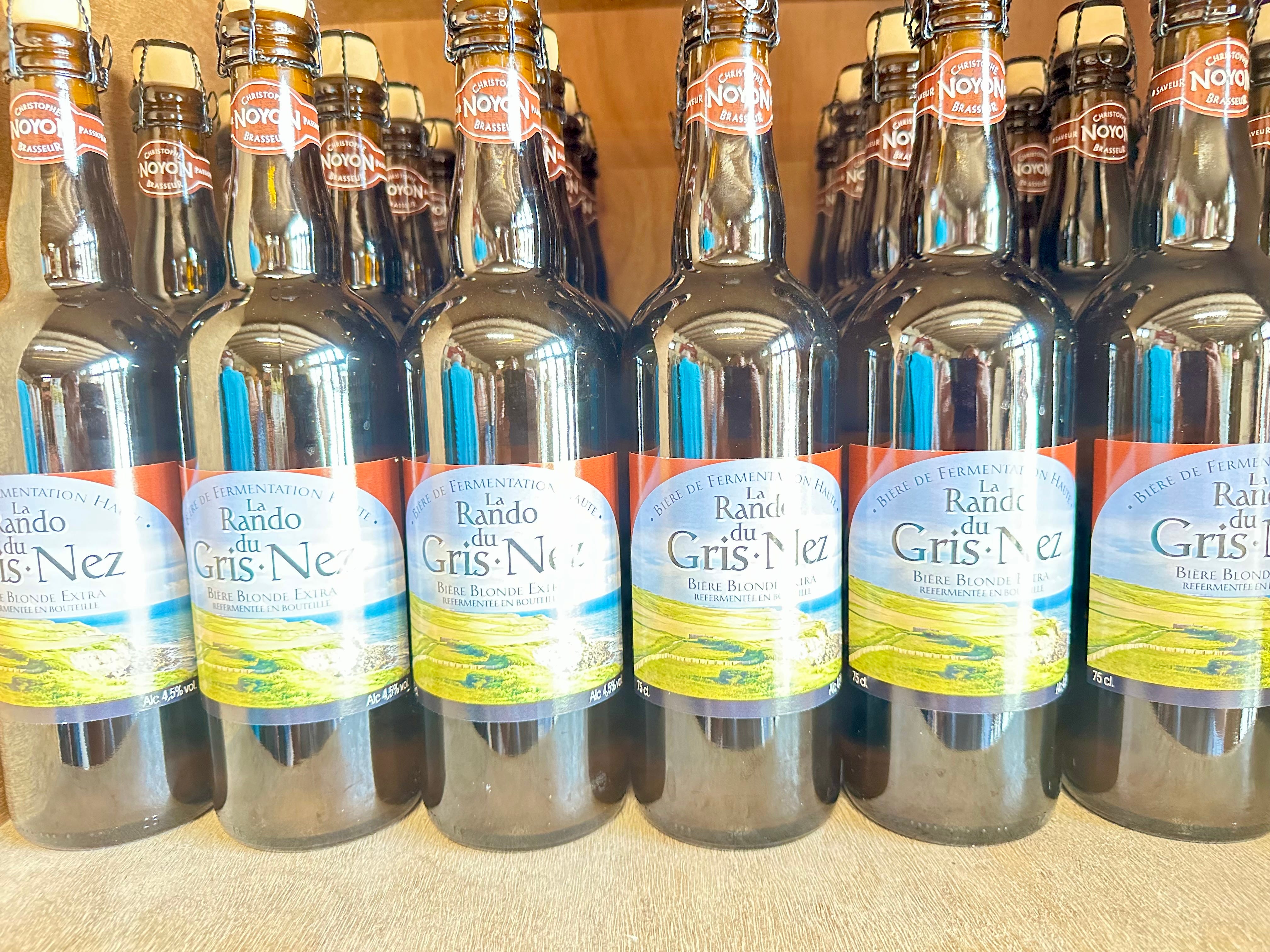
Photo: author
At an elevation of 45 metres above sea level, Cap Gris-Nez is, at 30.3 km, the closest point from the French coast to the English coast.
Cap Gris-Nez is a long-time scene of fighting. In the 16th century, King Henry VIII of England built a strategic Tudor fortress here - the remains of which still exist today.
85 years ago on 25 May 1940, Frigate Captain Gabriel Ducuing, whilst commanding a coastal D.C.A. (défense contre aéronefs, or anti-aircraft group) battery, died for France at Cap Gris-Nez, when he was shot down by a German automatic weapon burst from 200m away, whilst hoisting the French colours for the last time, after having evacuated all of his men.
The traces of WW2 are clearly visible even today through the many bomb craters and blockhouses of the Nazi Todt battery that mark its landscape.
Thanks to the hard work of its farmers, who rehabilitated the war torn land, Cap Gris-Nez today is the pride of its inhabitants and the joy of thousands of hikers and cyclists.
A superb lager, its spring freshness evokes the extraordinary palette of colours and scents discovered along the hiking trails around the Gris-Nez. The beer is a tribute to the farmers who shape the local landscapes throughout the seasons.
Rando du Gris-Nez is a refreshing and thirst-quenching blonde beer, perfect as an aperitif. Rando du Gris-Nez pairs wonderfully with shellfish and fish dishes.
Alcohol content: 4.5%
Nose: Floral
Palate: Elderflower
Finish: Clove
Serving temperature: 6°C to 8°C
5. O’Guénel:
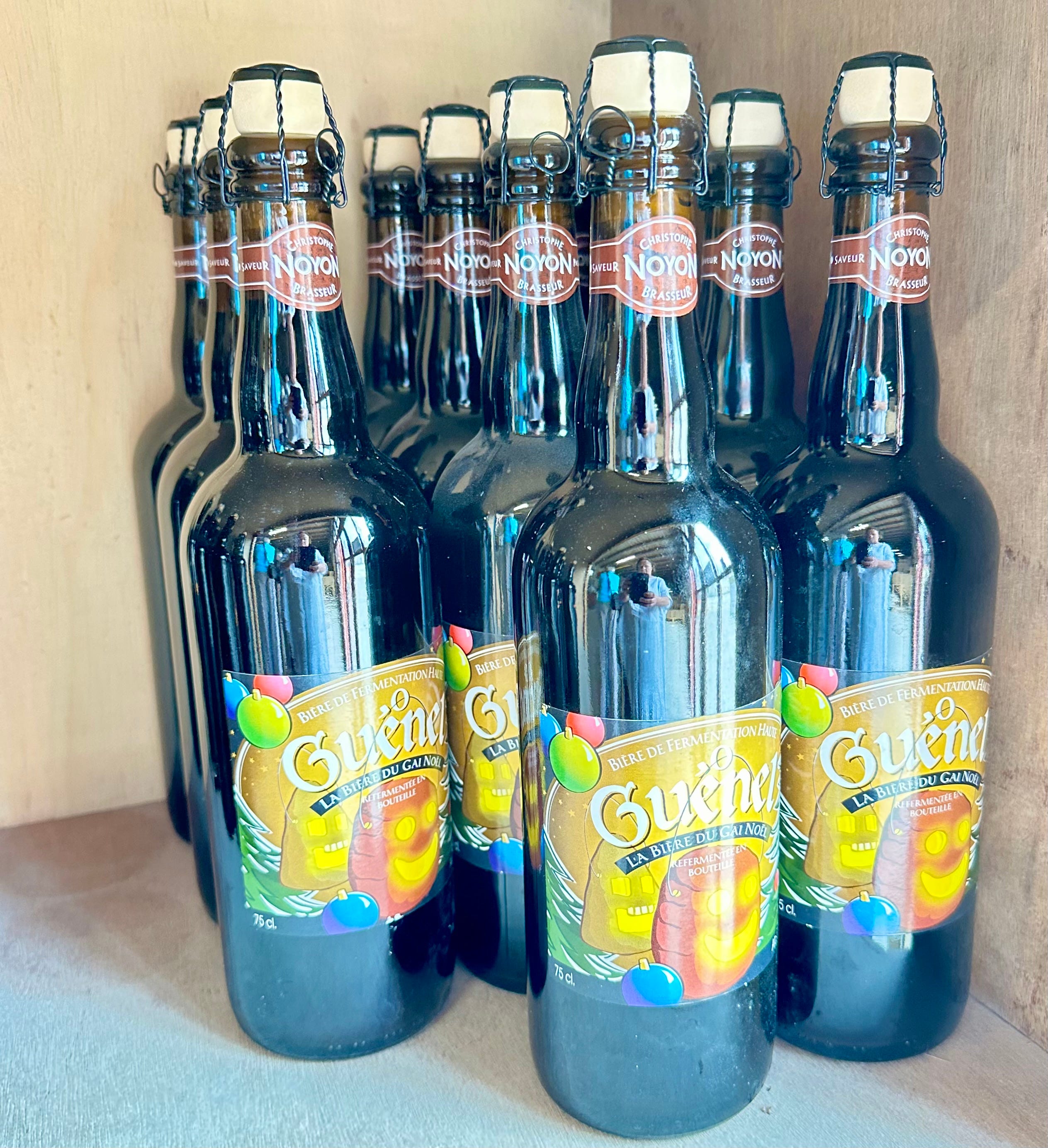
Photo: author
A Guénel is a carved sugar beet, which is a Boulonnais tradition.
Sugar beet (Beta vulgaris) is traditionally used as a feed for cattle during the winter months. In autumn, you will often see large mounds of sugar beets at the edge of fields, sometimes covered with tarpaulin during wet weather, as farmers prepare for the winter months.
Historically, during the Napoleonic Wars, Napoleon Bonaparte promoted sugar beet production in France to become independent of transatlantic sugar cane deliveries.
In the Boulonnais region, it is traditional to celebrate the “Guénels” or Halloween or the day before La Toussaint (All Saints Day) by carving sugar beets in which a candle is lit and singing this traditional song - Ô Guénels:
Guénel, Guénelle, Tout petion petiou
Lavez vos écuelles, Et léquez vos plats.
Si vos fil’ sont belles, On les mariera,
Si ell’ sont pont belles, On les laiss’ra là, et tralala.
El Bondiu pass’ra par là, Y dira “Quo qu’te fais là ?”
Ej cueille des violettes pour les p’tites fillettes
Ej joue du violon, pour les p’tits garchons.
In a similar Halloween (All Hallows Eve) tradition, swedes are carved and hollowed out in Ireland and pumpkins in the U.S., before placing a lit candle inside.
You can read more about these traditions here:
Halloween or An Samhain (in gaeilge)
Caroline McCormick-Clarke???✍️ - 31 October 2024
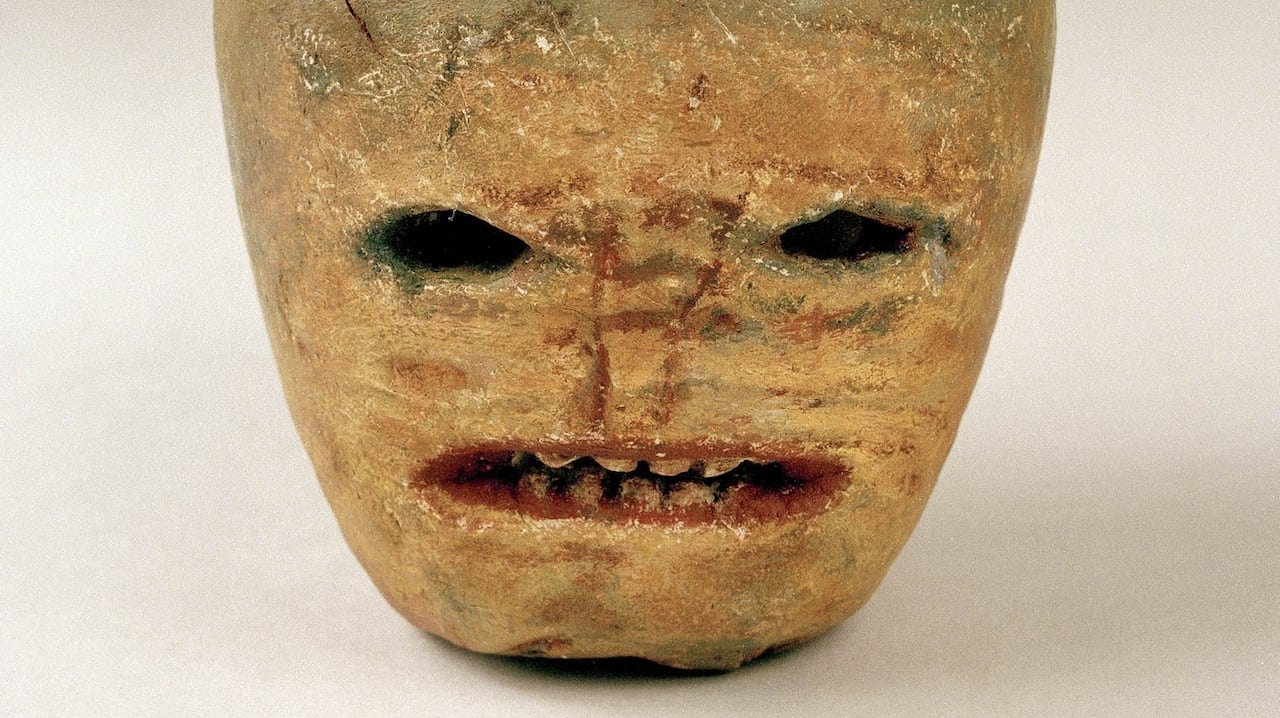
Origin and History of Halloween:
O’Guénel is an amber beer with a powerful, well-flavoured taste. In addition to malted barley, hops, water and yeast, cassonade sugar (used in that quintessential French dessert Crème Brûlée) is added.
O’Guénel is made in the style and tradition of Bière de Noel. As such, it’s the perfect accompaniment to the end of year winter festivities, whether Halloween or Christmas.
Alcohol content: 7.5%
Nose: Spicy
Palate: Apricot, vanilla, caramel
Finish: Malty
Serving temperature: between 5° and 8°C
Next is a unique Harvest Beer, which is the result of a different philosophy, where Christophe Noyon as the farmer, harvester and brewer, prioritises “terroir above standards”, brewing a unique beer based solely on what his land provides that particular year.
Belle Dalle’s harvest beers, which are produced exclusively with barley from the Belle Dalle farm, are available in several vintages, depending on the year and the estate’s plots: Le Bois de Belle Dalle, Le Jardin de Belle Dalle, Le Chemin de Wissant and Le Gros Chêne.
7. Belle Dalle:
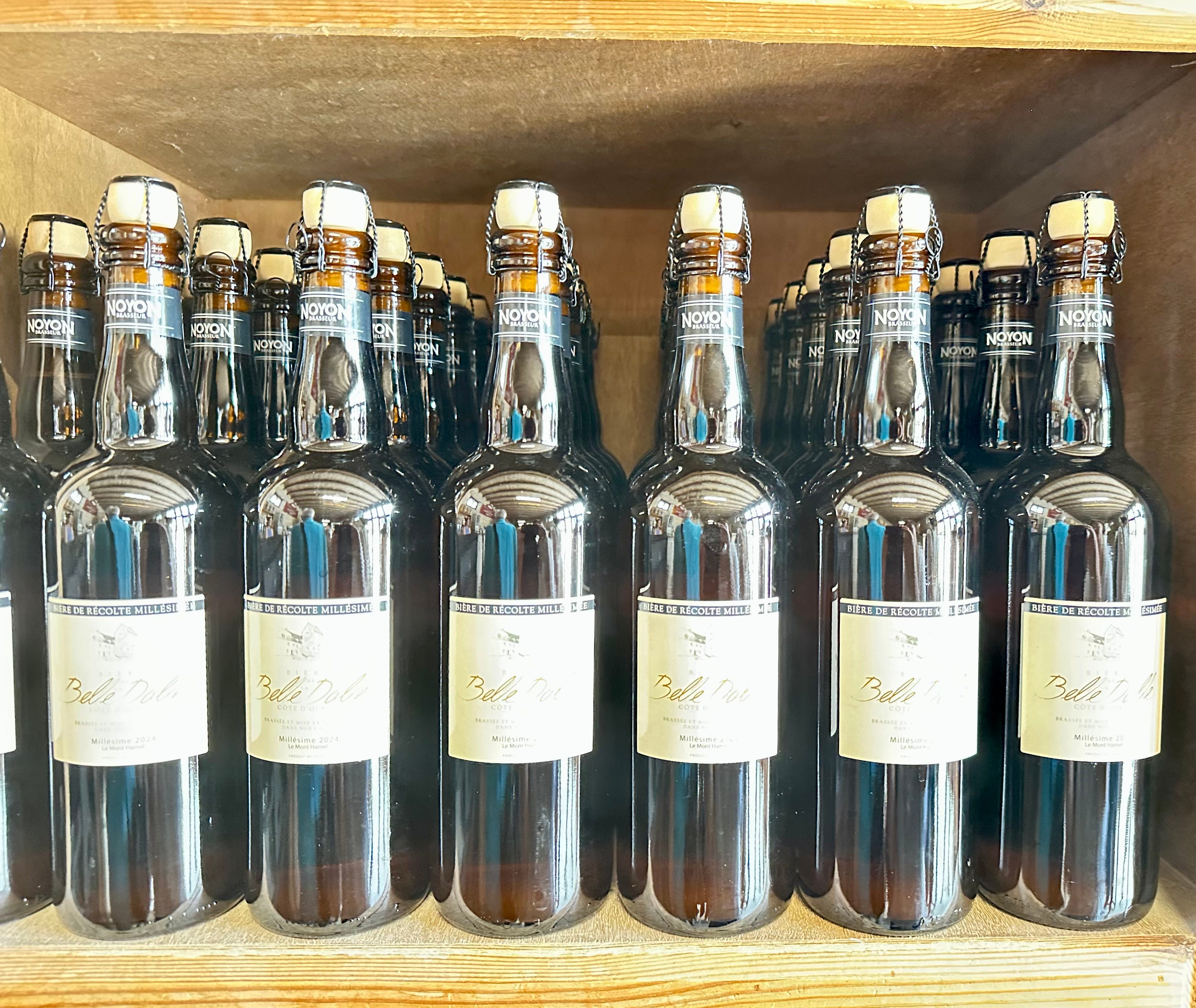
Photo: author
Belle Dalle is a vintage harvest blonde beer (bière de récolte) from a single plot.
Christophe Noyon explains:
We created what we called a Vintage Harvest Beer (La Belle Dalle), like a wine. Every year, we produce it with a plot of barley from our farm. It has a different taste every time.
This beer pairs naturally with cheeses from its terroir such as Mimolette from the Opal Coast, especially Belle Dalle, a pressed cheese with a washed rind made with Belle Dalle beer.
Alcohol content: 7.5%
Nose: malty, fruity
Palate: stone fruit, apricot, peach, plum
Finish: aged plum
Serving temperature: between 8° and 10°C
The “D-Day” range was designed as a tribute to the courage and sacrifice of the Canadian, American and British Allies, who landed in Normandy to liberate France during WW2. This range, inspired by Christophe and Alexia’s earlier five year residence in Normandy, was launched in June 2013. Similarly, this range is available in different recipes, delighting both beginners and beer lovers: Blonde, Blanche, Noir and IPA.
8. D-Day Blonde:
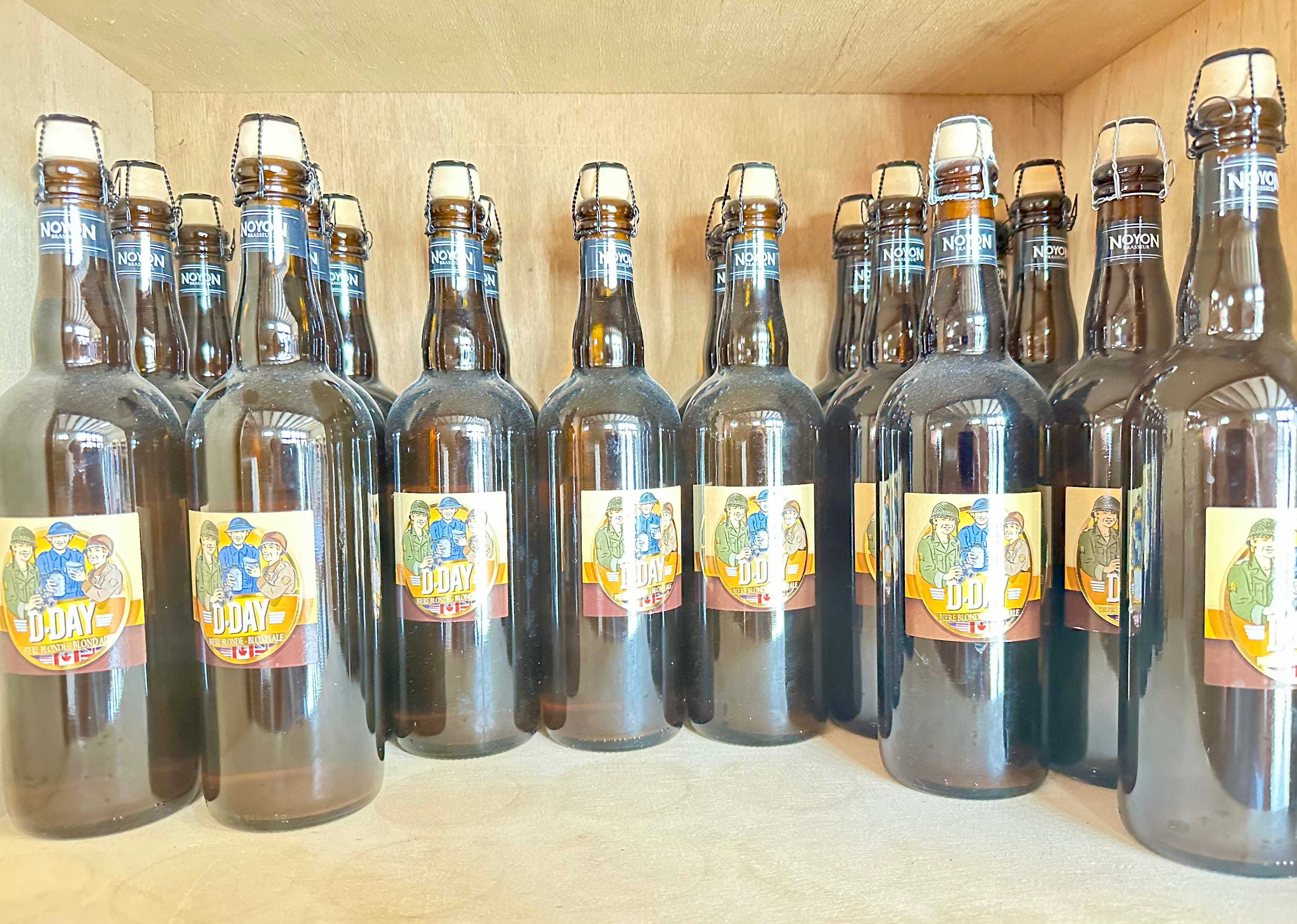
Photo: author
D-Day Blonde is round and flavourful, with a fruity nose. It’s a pleasure to drink as an aperitif or with dishes made with sautéed or braised white meats (poultry, tripe, etc.) or soft, washed-rind cheeses (Livarot, Pont l’Evêque).
Alcohol content: 6.5%
Nose: Aromatic, spicy, herbaceous (hay?)
Palate: Sweet and fruity, yellow peach, apricot
Finish: Dried apricot, liquorice
Serving temperature: between 5° and 8°C
9. D-Day Pomme:
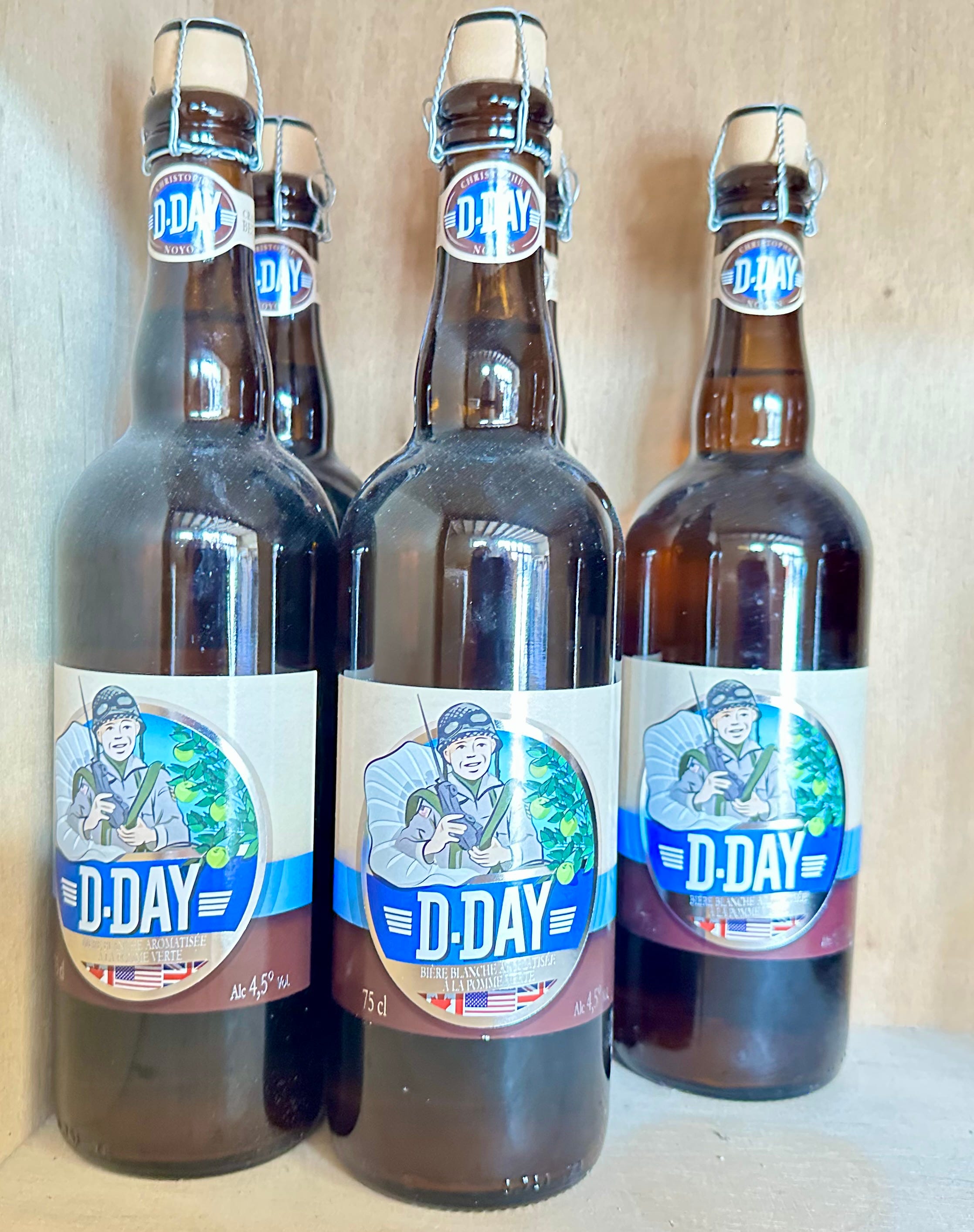
Photo: author
D-Day Pomme is a fresh and thirst-quenching Blanche (white) beer, with green apple aromas, perfect with sorbets or strawberries with sugar.
Alcohol content: 4.5%
Nose: Green apple
Palate: boiled sweets
Finish: Tangy
Serving temperature: Between 2° and 8°C
10. D-Day Noire:
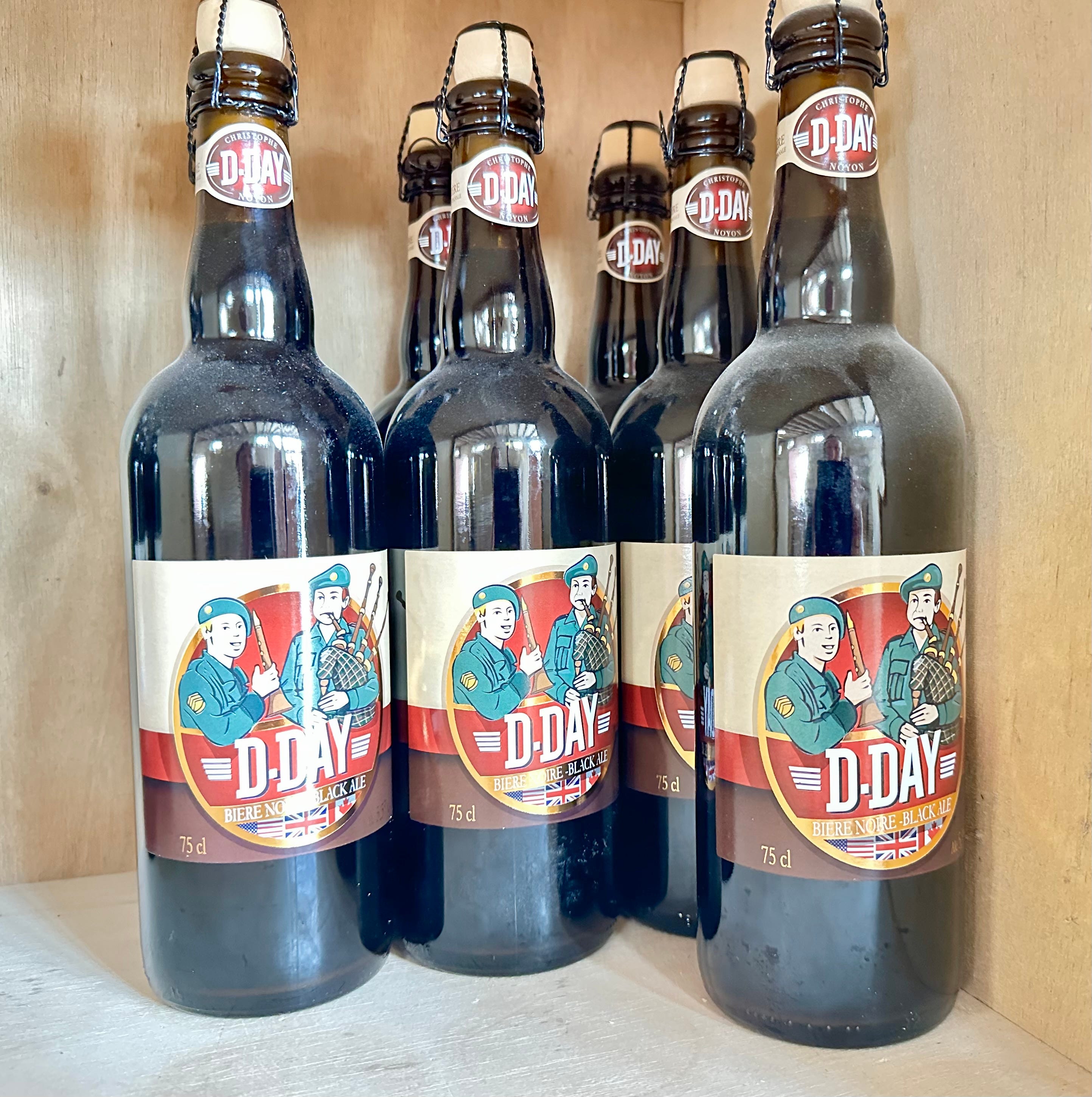
Photo: author
D-Day Noire is a black ale. It pairs well with chocolate-based desserts. I am told it also works well as a digestif, accompanied by a good cigar (if you are so inclined).
Alcohol content: 5.5%
Nose: oak
Palate: cocoa
Finish: bitter chocolate
Serving temperature: between 5° and 8°C
11. D-Day IPA:
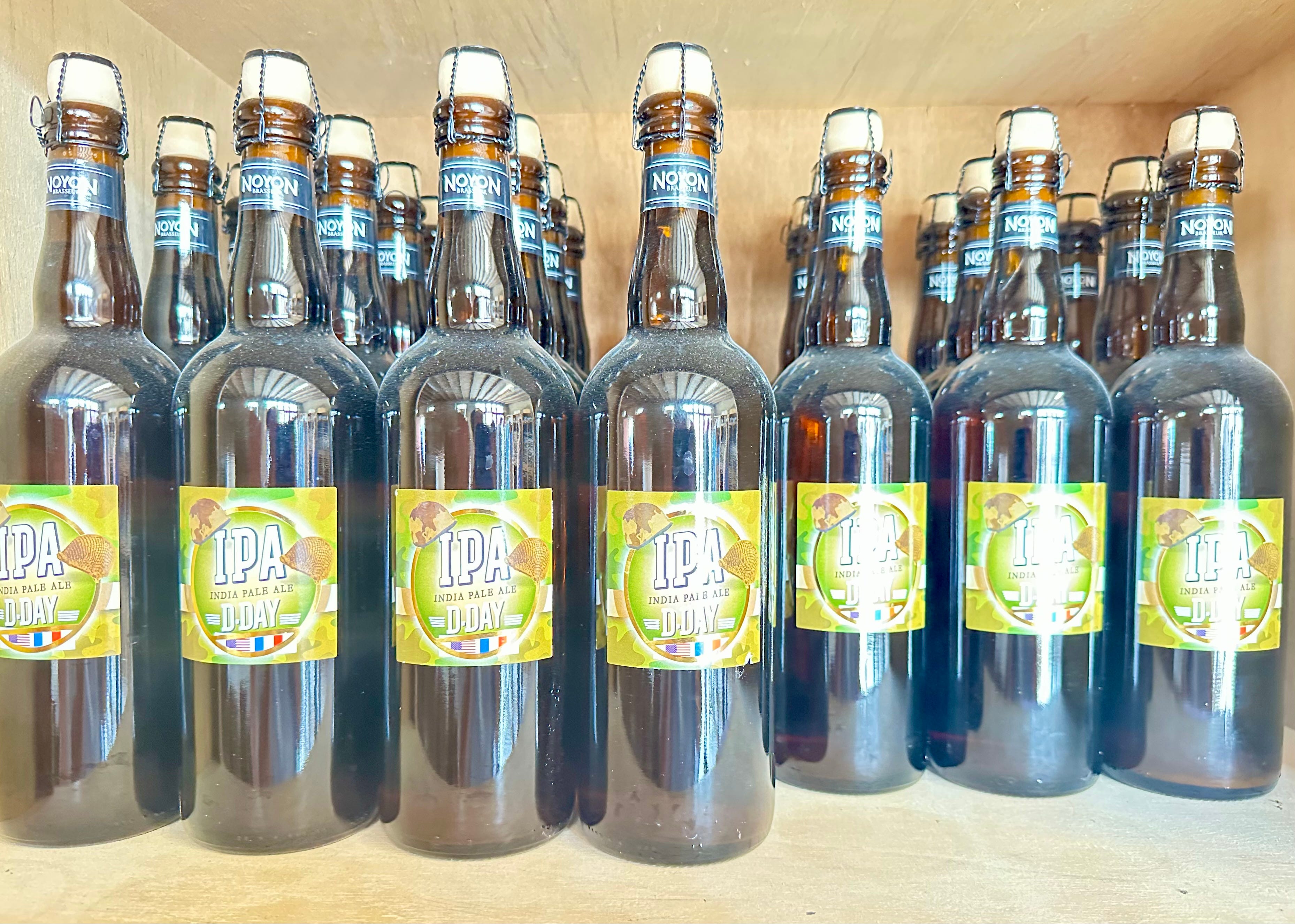
Photo: author
D-Day IPA is a refreshing and thirst-quenching India pale ale, which can be enjoyed as an aperitif with small cubes of aged Mimolette cheese.
Alcohol content: 6.5%
Nose: Grapefruit
Palate: Citrus
Finish: Green Tea with citrus
Serving temperature: 5°C to 8°C
12. D-Day Triple:
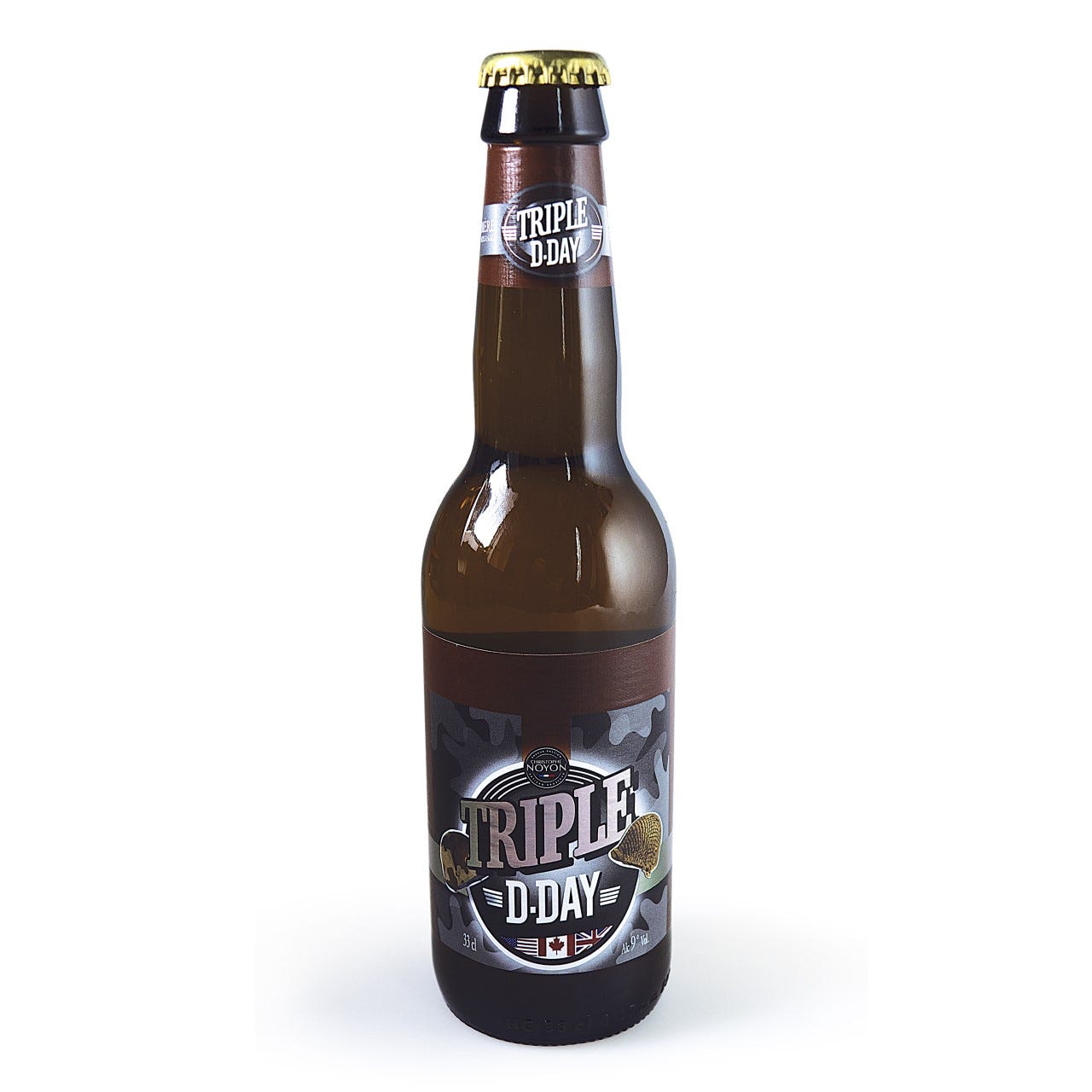
Photo: Brasserie des 2 Caps
This Triple, Belgian style beer is both powerful and fruity. It is pleasant as an aperitif and goes brilliantly with soft cheeses with washed rinds (Livarot, Pont l’Evêque).
Alcohol content: 9%
Nose: fruity
Palate: stone fruit, plum
Finish: well ripened plums
Serving temperature : between 5° and 8° C
Video: Brasseurs des Hauts de France, 2 min 42 sec
Awards:
In 2018, La 2 Caps won la médaille d’Or in the Ale blonde française category in the France Bière Challenge.
La Blanche de Wissant was awarded the Médaille de Bronze in the 2014 Concours général agricole; the Médaille d’Or in the 2015 The Best French Beers For USA and the Médaille de Bronze in the 2016 Concours général agricole.
La Noire de Slack has been awarded the Médaille d’Argent in the 2007 Concours général agricole; the Médaille de Bronze in the 2015 Concours général agricole; the Médaille d’Argent in the 2016 Concours général agricole and the Médaille d’Argent in the 2018 France Bière Challenge.
The superior quality of the D-Day Blonde beer was rewarded in both its inaugural year 2014 and in 2019, the 75th anniversary of the D-Day landing, with the gold medal in the Concours Général Agricole de Paris.
La Houle du Blanc-Nez was awarded a bronze medal at the 2024 France Bière Challenge.
Hours of Operation:
The shop is open all year round: Friday and Saturday from 10 a.m. to 7 p.m. During the summer, Tuesday to Saturday from 10 a.m. to 7 p.m. and Sunday from 3 p.m. to 7 p.m.
Guided 1 hour tours and tasting are available in July and August every Friday at 11a.m. and 3 p.m. (€6.50/person)
Reflections:
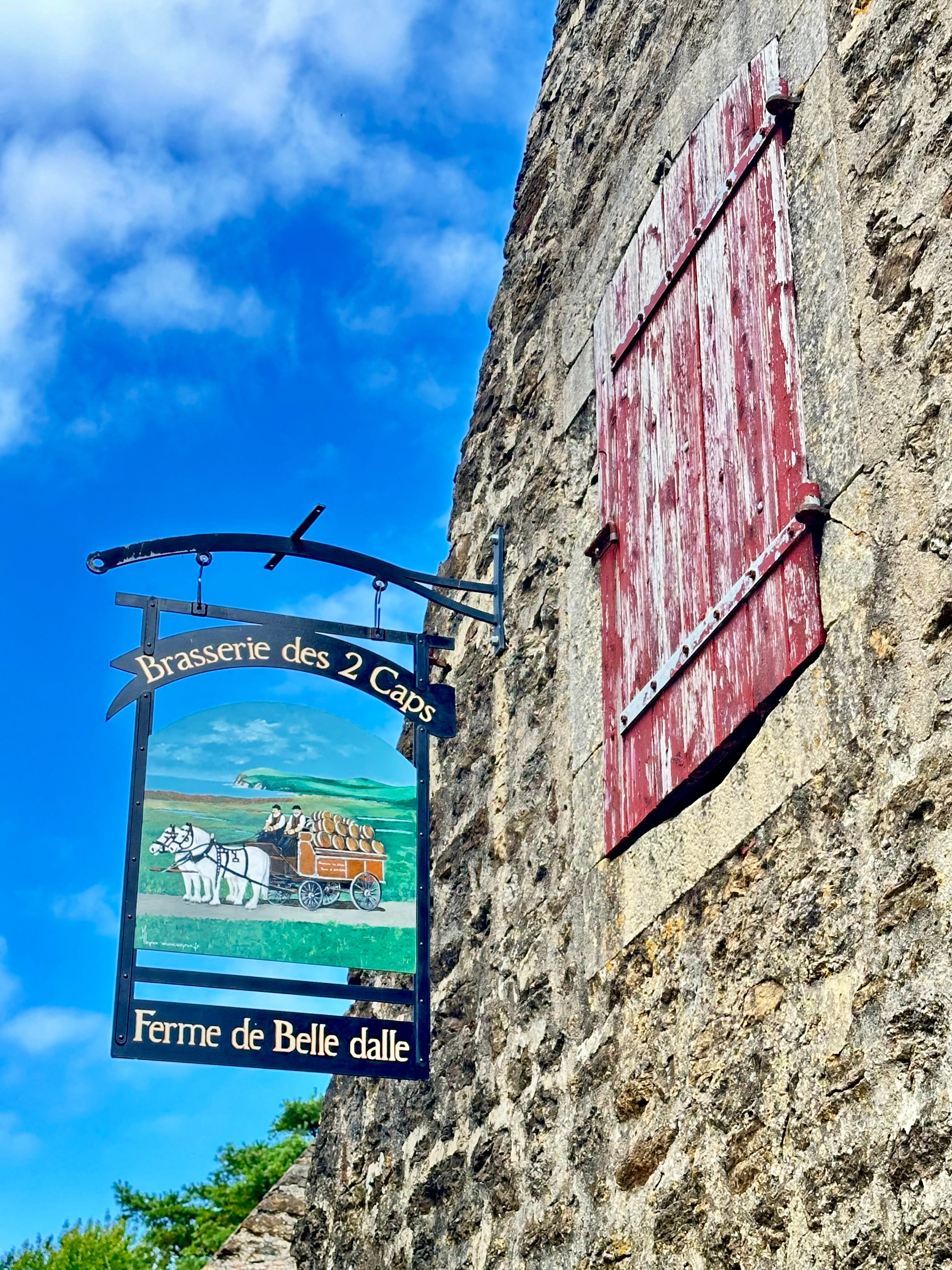
Photo: author
In the twenty years since he first decided to produce beer at La Ferme de Belle Dalle, Christophe Noyon has managed to forge a name for himself in this highly competitive market. Over the years, the quality and finesse of his beers have attracted a growing number of palates seeking authenticity. Today, with 10 employees, up to 7,500 hectolitres of beer are produced in the microbrewery per year.
The beers can be bought more easily in local wine merchants, delicatessens, cheese shops, as well as in small and larger local supermarkets and online. And it is becoming increasingly more common to be able to order a glass of draught beer from Brasserie des 2 Caps in local bars, cafés, hotels and restaurants.
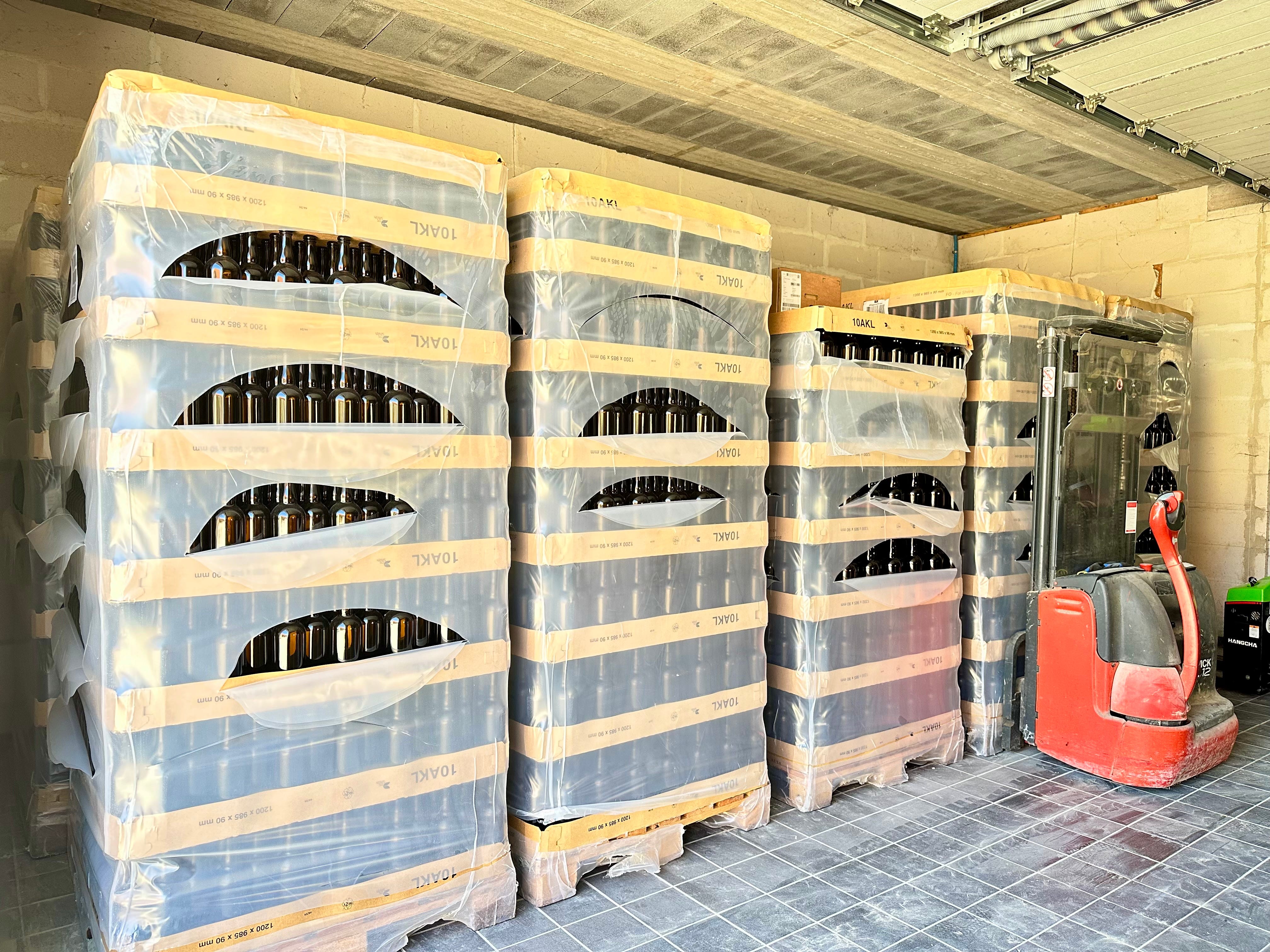
Photo: author
The main customers are from the local Opal Coast. “We don’t want to become too big,” continues Christophe Noyon. “We have a few orders from further afield, but we prioritise proximity.”
During the summer, many tourists from France, Belgium, Holland, Germany, Luxembourg, Britain, Ireland and further afield come to explore the brewery. Foreign customers represent a significant financial windfall for the brewery.
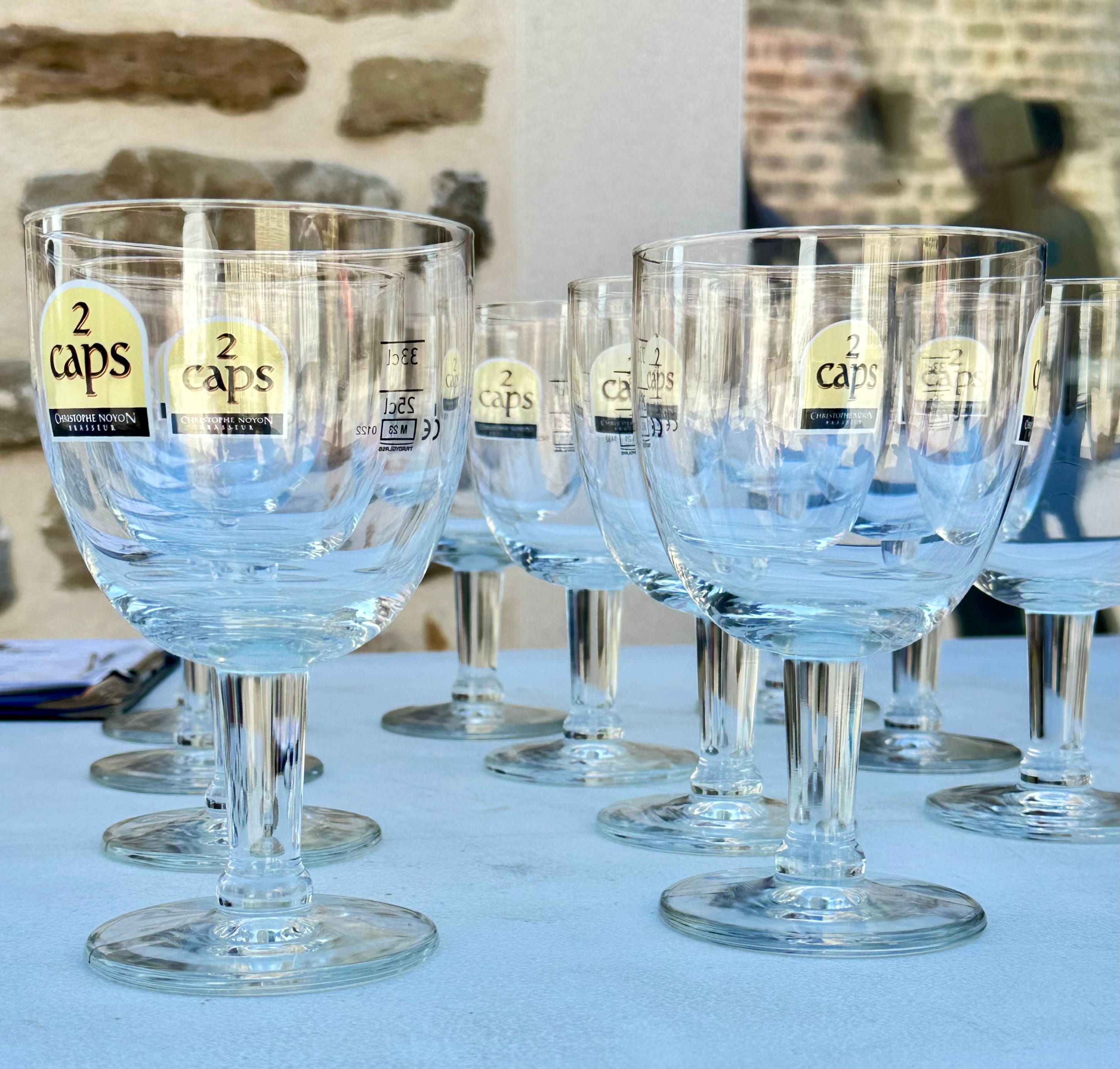
Photo: author
One of the key benefits of the success of Brasserie des 2 Caps is that in 2016 Christophe and Alexia Noyon were able to rebuild a farm building that had collapsed 40 years previously - with the original stones. This was one of the initial key purposes of the brewery’s project in 2005 - to bring this farmhouse back to life.
There was one beer at Brasserie des 2 Caps that I did not get an opportunity to taste on this occasion. But what I learnt about this beer was très intéressant.
Bière Collection Brasseur:
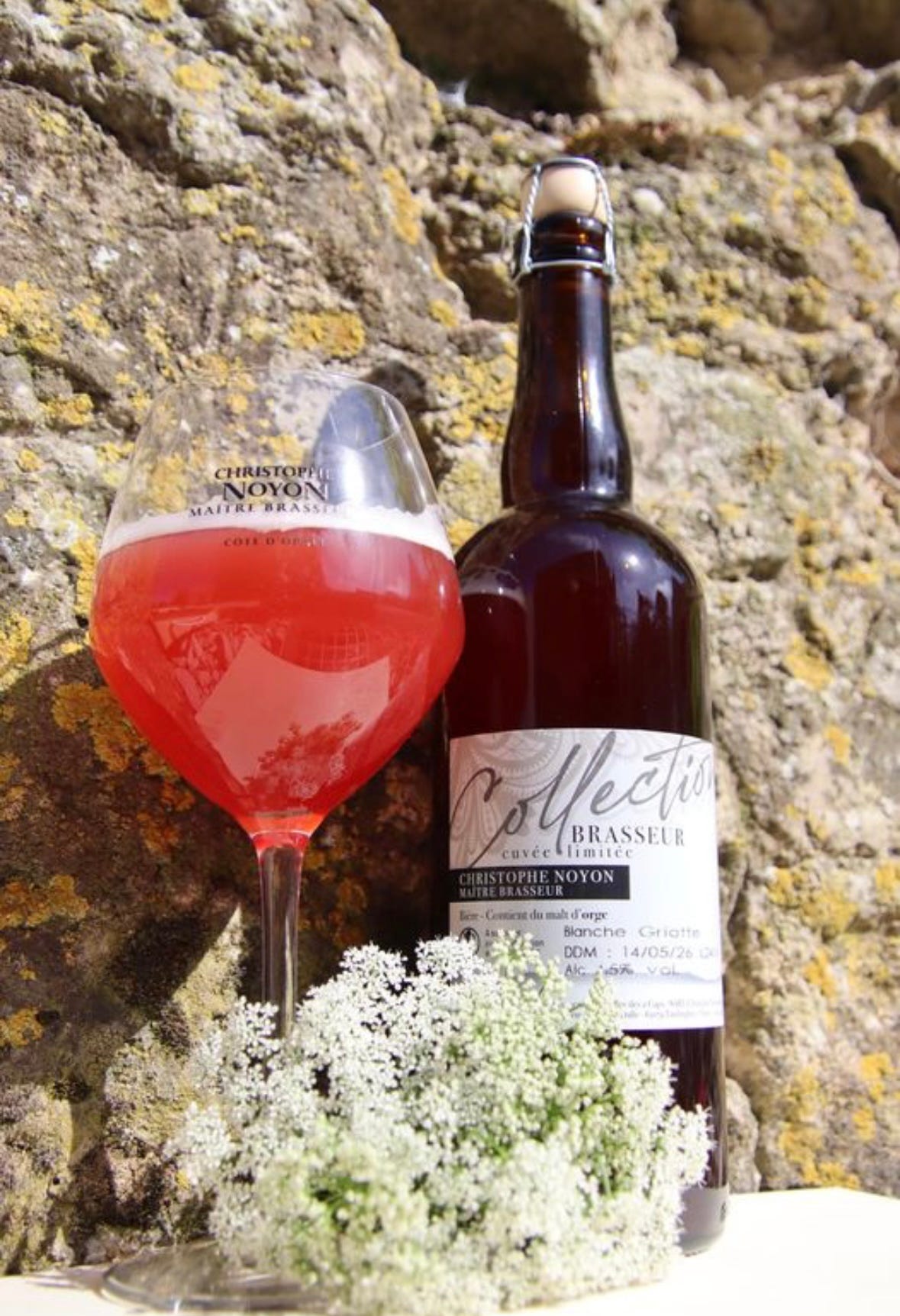
Photo: Brasserie des 2 Caps
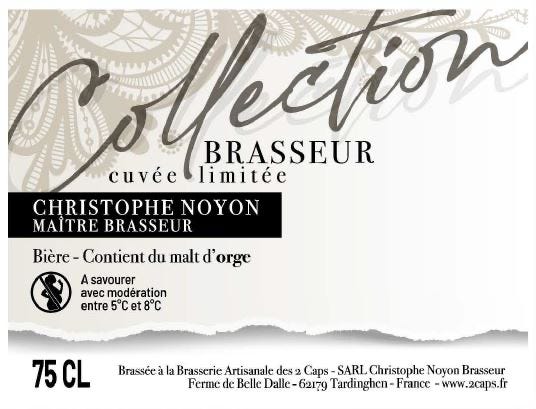
The Bière Collection Brasseur consists of limited-edition, ephemeral recipes. A pop-up beer is brewed approximately every three months.
Previous creations have included:
May 2023: 10% Triple beer, a little drier than the Houle du Blanc Nez.
June 2023: White beer with fresh basil leaves and lime zest, to be enjoyed as an aperitif or with fish.
December 2023: a hoppy blond beer at 8.5% vol.
June 2024: a Morello cherry white beer 4.5% vol. See photo above.
August 2024: a blonde beer with red fruits, 6.0% vol.
May 2025: American Pale Ale, 5.0% Vol.
The label’s lace design is a nod to Christophe Noyon’s great-grandfather, Lucien Noyon, founder of the 1919 Dentelles à Calais - a Leavers Lace manufacturer in Calais until 2019.
“If you are interested in the luxury textile that lace is and the history and techniques of lace making in Calais, you can read further here: Leavers Lace and Cité de la Dentelle, Calais
Caroline.
Introducing Contributor, Caroline McCormick-Clarke
Immerse yourself in all of Caroline’s articles on her Contributor page.