Rue du Cherche-Midi: The Paris Street with a Sundial Riddle
 Tomas k - Senior News Editor
Welcome to the 20 Streets of Paris Series - Episode #11
This is perhaps one of the streets in Paris with the most fanciful name.
“Cherche-midi”, which literally translates into English as “look for noon” or “look for the south”, is certainly an unusual name for a street.
So why is this shopping street on the Left Bank named as such?
There is no explanation that is unanimously accepted by historians.
The historian Gustave Pessard (1846–1932) suggests that there used to be a forest in the vicinity so dense that one could not see the sun at midday.
According to Maurice Louis Dumoulin, there was a property nicknamed the ‘maison de la chasse’ on the corner of Rue du Dragon and Rue du Four. The path leading from there is said to have been called ‘chemin qui va de la chasse au midi’ (the path leading from the hunting lodge to midday), then Rue du Chasse-Midi and finally, through a corruption of the name, Rue du Cherche-Midi. As evidence, the street does indeed appear under the name ‘Rue du Chasse-Midy’ on Boisseau’s map of Paris (1648).
The most widely accepted explanation is that this street owes its name to a sign depicting a sundial, near which were painted figures ‘looking for midday at two o’clock’.
This is a French idiomatic expression. ‘Chercher midi à quatorze heures’ means to unnecessarily complicate a situation or to look for problems where there are none.
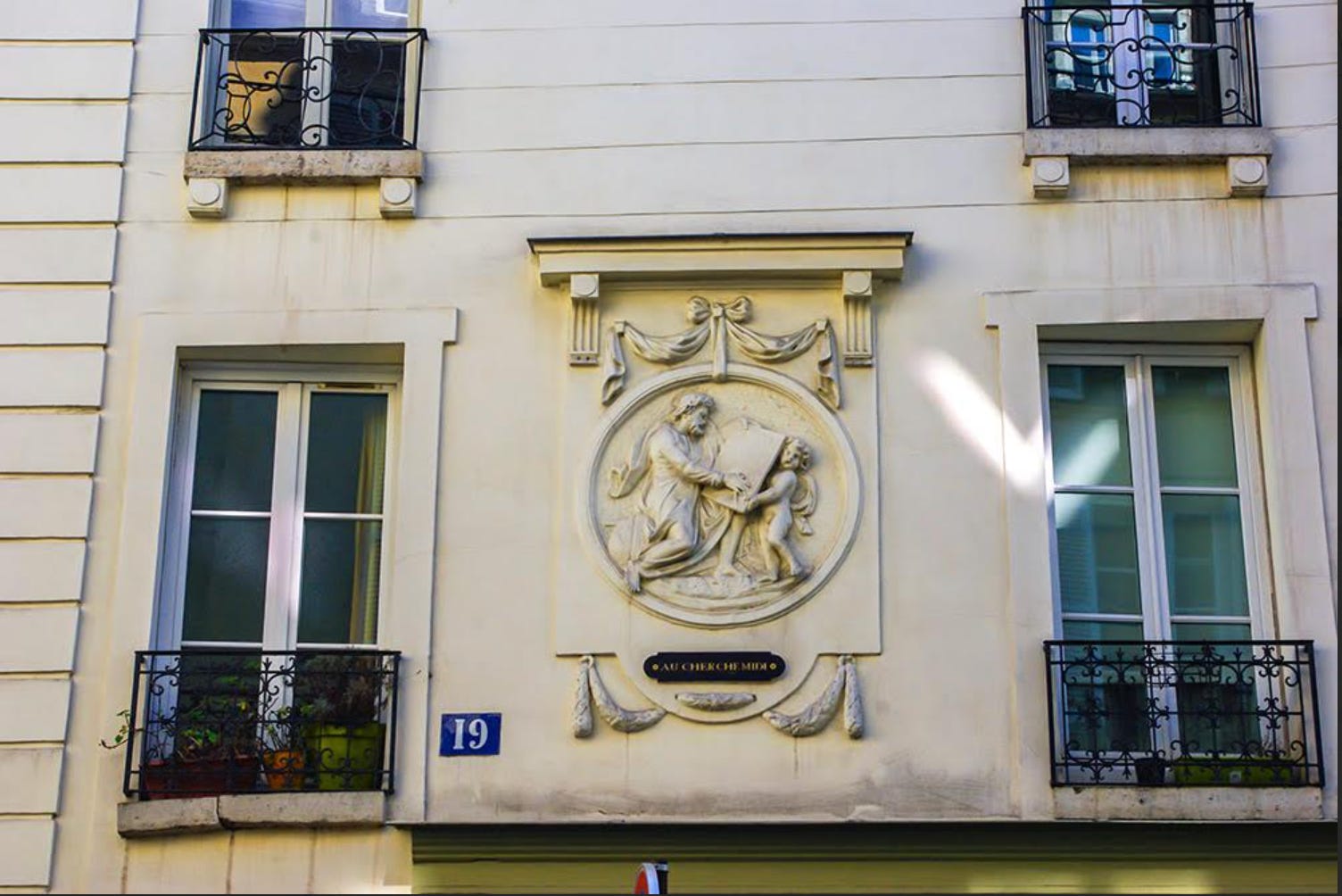
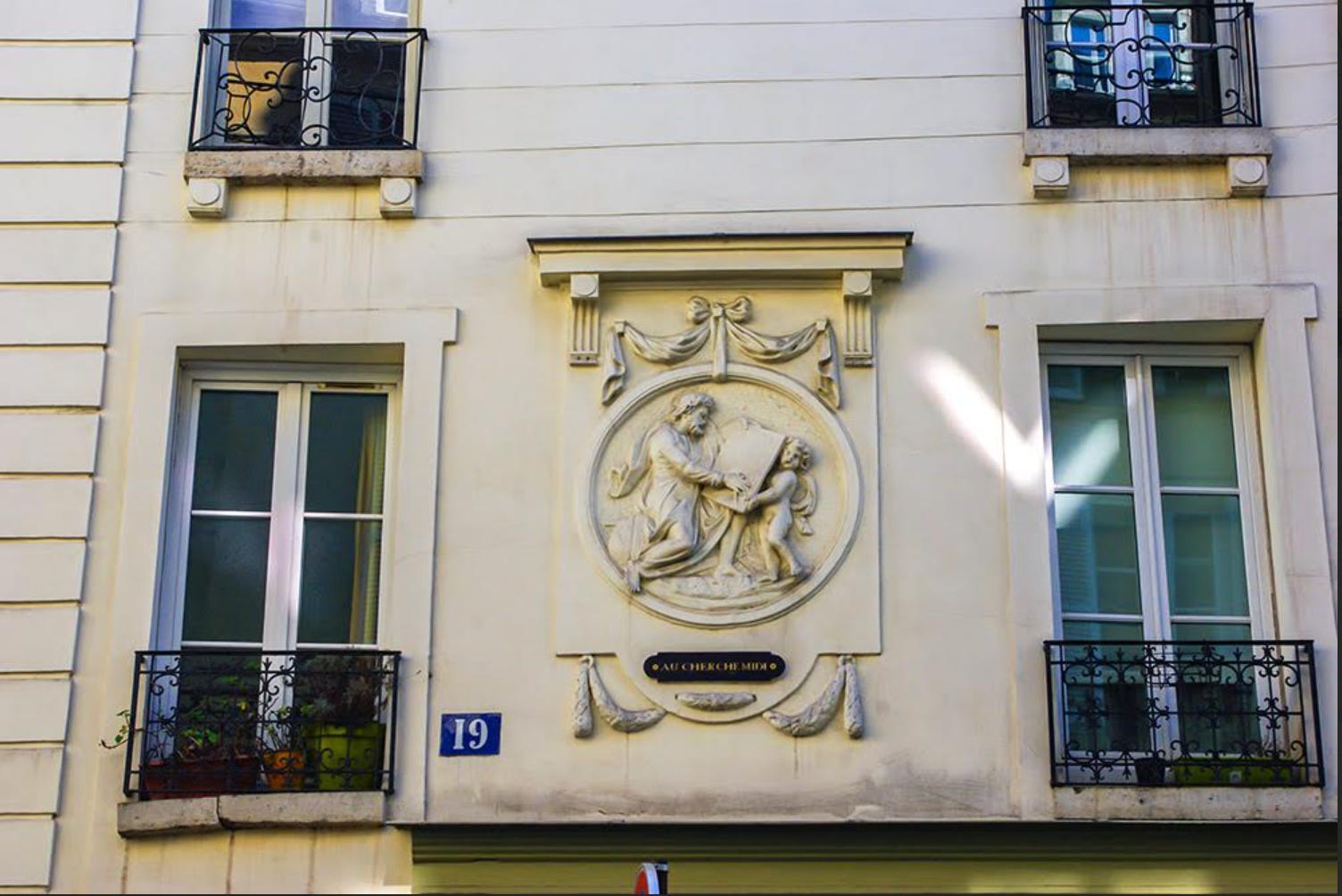
An interesting fact: take a look at the bas-relief on the first-floor façade of No. 19. It is a sign installed in 1874, but it replaces a sign dating from 1675 featuring the same design.
This sign depicts an astronomer reading the degrees on a sundial with his compass, the points of which are aimed at the 12 o’clock and 2 o’clock positions.
This scene illustrates the expression ‘to look for midday at two o’clock’, which is based on an Italian custom: the hours of the following day began thirty minutes after sunset.
Thus, depending on the season – as days were of varying lengths – midday fell between 3 pm and 7 pm but never at 2 pm. Consequently, it is utterly futile to ‘look for midday at two o’clock’, hence our famous idiomatic expression.
Another explanation, also of Italian origin, suggests that the following day did indeed begin at sunset, but as the time of sunset varied regularly with the seasons, it was impossible to set the hours definitively, and there was no point in ‘looking for midday at two o’clock’.
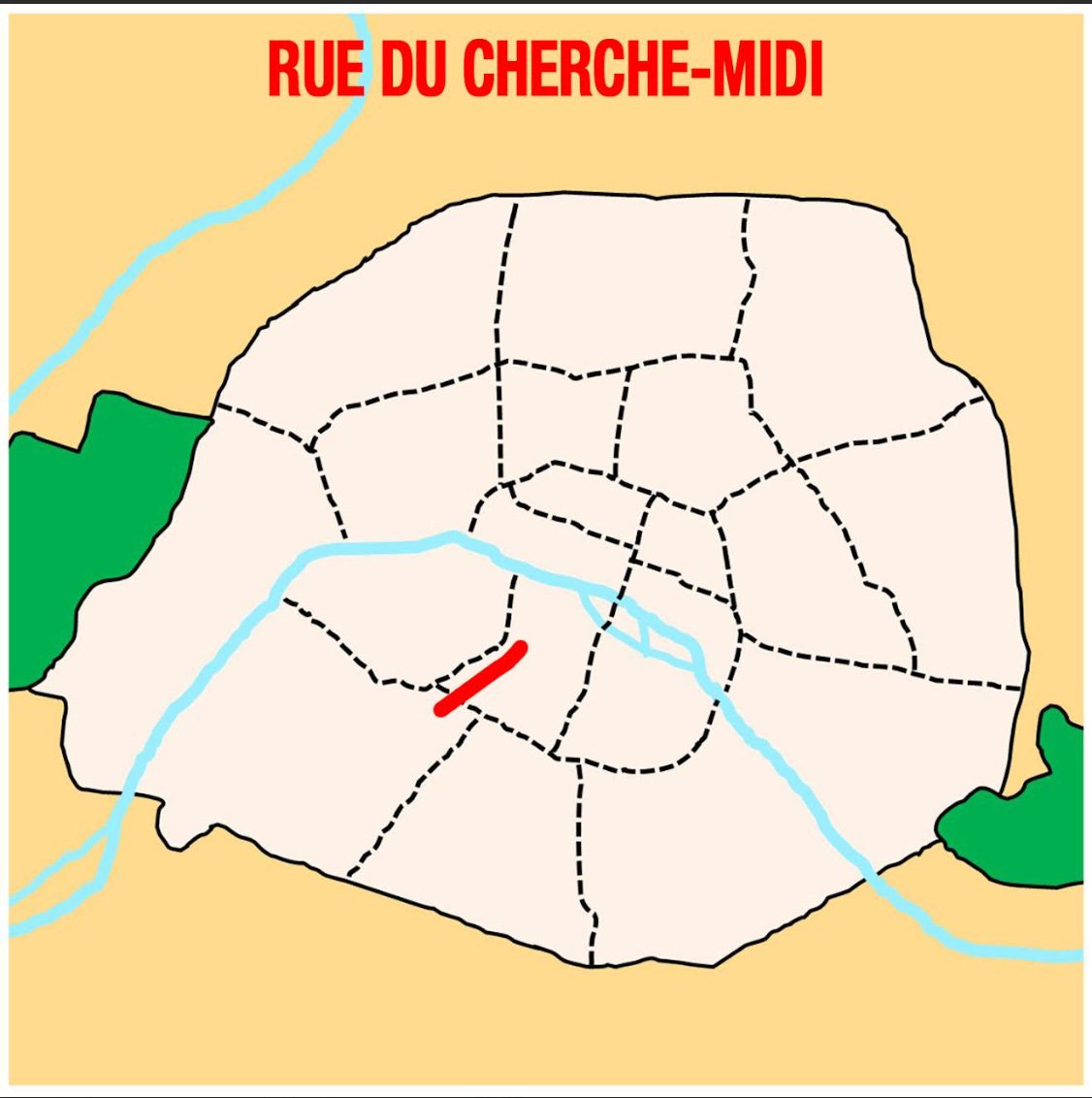
Today, Rue du Cherche-Midi is 1,175 metres long and runs from Place Michel-Debré in the 6th arrondissement to Place Camille-Claudel in the 15th arrondissement (though most of the street lies within the 6th arrondissement). It has become a lively shopping street lined with shops and cafés.
What to Notice on Rue du Cherche-Midi
The name means “look for noon” or “look for the south”, and historians do not agree on where it comes from.
The most widely accepted explanation is an old sign showing a sundial and figures “looking for midday at two o’clock”, which gave rise to the French expression chercher midi à quatorze heures: to complicate a situation unnecessarily.
Look up at No. 19: the first-floor bas-relief of an astronomer measuring a sundial with his compass was installed in 1874, replacing a sign from 1675 with the same design.
Under the Italian custom behind the idiom, the new day began thirty minutes after sunset, so midday fell between 3 pm and 7 pm and never at 2 pm.
The street is 1,175 metres long, running from Place Michel-Debré in the 6th arrondissement to Place Camille-Claudel in the 15th, and is today a lively shopping street of shops and cafés.
Have you ever caught yourself looking for midday at two o'clock? Or have you strolled along Rue du Cherche-Midi without once wondering about its name?
Introducing Contributor, Pierre Guernier:
Visit his Contributor Page — Explore more of Pierre’s work