Guide to the French Government system
 Tomas k - Senior News Editor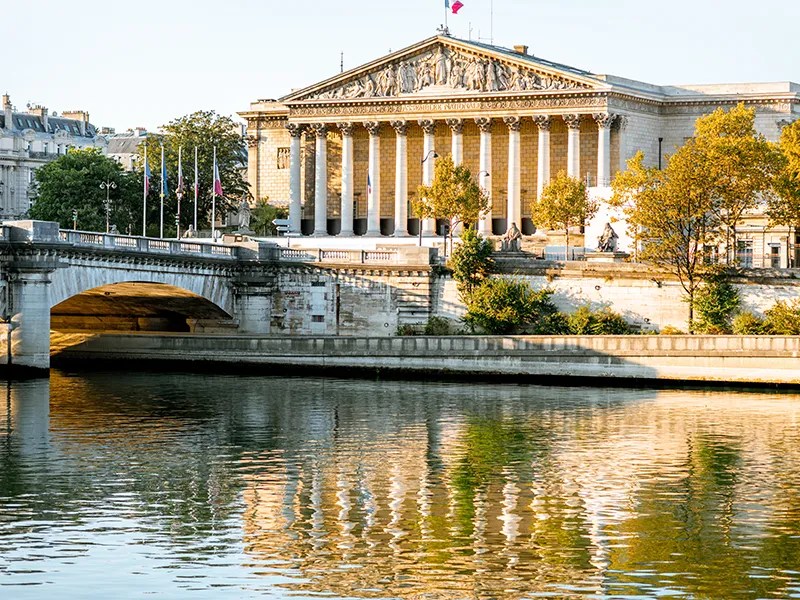
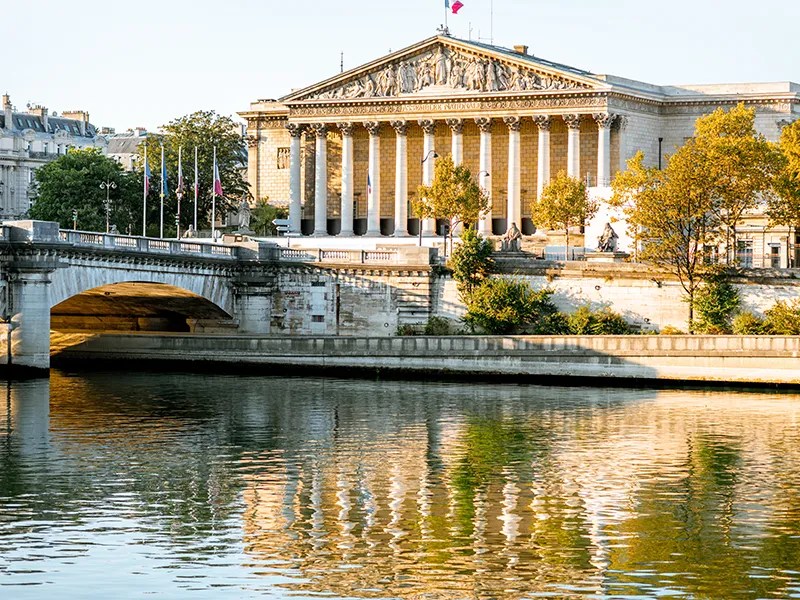
If you’re planning a move to France, the chances are good that you will interact with officials of one sort or another. France is legendary, not entirely unfairly, for its administrative processes, but once you understand who is responsible for what, it’s easier to navigate your way through the system. Sarah Daly’s guide to the French Government system looks at the various tiers of government to find out who is in charge of what, from the local mayor to the president of La République.
Guide to the French Government system
National Government
France first became a republic during the revolution in the 1790s. The Fifth Republic, established in 1958 by Charles de Gaulle, is now governed at a national level by the president and a prime minister, along with 577 deputies, 348 senators and a number of judges and magistrates. The legislative tier of government has powers, exercised by the National Assembly and the Senate, to propose, negotiate and vote on laws. It also ensures that the government upholds existing laws and it evaluates public policy. In addition, the government has executive powers to direct the administration and drive political policy. Judicial powers are then exercised by judges and magistrates.
Decentralised government
Many official and practical functions of government are administered at a regional, departmental or local level. These regional and local authorities have their own budgets and specific expertise to perform these roles. On the whole, most are structured as outlined below, but the cities of Paris and Lyon and the historic region of Alsace are exceptions, as are some of France’s overseas territories. All will perform the same basic functions, but specific responsibilities can differ from the model that applies across most of France.
Regional Government
France is divided into 18 administrative regions (13 in mainland France and five overseas territories). Each has a regional préfecture, an academic area (covering schools, universities, vocational training and professional development) and a health board. Regions are specifically responsible for transport (and any ports and airports in their areas), as well as regional trains. They deal with planning, land use, the environment and economic development at a strategic level, as well as participation in certain European programmes and administration of EU funds, such as for regional development and agriculture. Tourism, sport and culture, among other things, are managed at a shared regional, departmental and even local level.
Départements
Each département within France has its own préfecture and this is something you may interact with for residency permits and visa applications as well as for some other administrative processes. In addition, the département is responsible for services for children, older people, those with disabilities and management of revenu de solidarité active (RSA) benefit for those on low incomes. They also deal with maintenance of local roads, some local transport, emergency services and managing middle schools. In addition, they have shared responsibilities for heritage protection, sport, tourism, libraries, archives and museums. They also share responsibility for keeping alive regional languages through public education programmes.
Smaller units of administration
Within each département are arrondissements and cantons (the equivalent of boroughs and districts) that break the area up into more manageable areas. Each arrondissement will have a sous-préfecture which will deal with certain administrative functions. These relate to public order, police administration, managing large gatherings, public protection and the security of public spaces. The sous-préfecture may also have additional roles delegated by the préfet.
In addition, you will often find that individual communes team up to create a communauté d’agglomeration which may mirror the canton or arrondissement. This allows them to achieve economies of scale and pool resources to carry out functions that would otherwise be the responsibility of each individual commune.
The role of the commune and the mairie
Each town, commune or – in the case of Paris, Marseille or Lyon – arrondissement municipale, will have its own mairie, which operates at a very local level. The maire is in charge of the commune with a municipal council. They have a wide range of functions relating to housing, planning and social care and nearly 35,000 communes exist in France and its overseas territories. In reality individual communes will deal with all sorts of issues that relate to its inhabitants. They look after crèches and primary schools, manage public services and local government employment, support business start-ups and deal with street lighting and road-markings.
In rural communities you or your neighbours are very likely to know the maire. In urban areas this is less likely to be the case, but it’s often worth introducing yourself to the team at the mairie to help you to integrate into the local community. They are often the first port of call for specific administrative queries. If they can’t help, they will often point you in the direction of the appropriate organisation.
Find out more:
- Find out more about the role of national and regional government
- To find your mairie, type in the name of your commune and look for the site officiel which should tell you how to contact them. As well as being contactable via email and phone, most will have face-to-face sessions called permanences. These are fixed times when you can either book an appointment or turn up and wait to talk to someone.
- If you are struggling to understand who is responsible for what specific administrative process, or how to go about approaching certain agencies, our website already has lots of useful information. The French government also runs France Services. This is a free service that helps with tax returns and child support, health, disability and pension queries and legal issues as well as advising on energy-saving schemes and benefits. They have 2,800 offices across France and you can book a face-to-face meeting or consult them over the phone. It is unlikely that they will speak English in most cases however, so you may need to ask this when you contact them and take someone along to translate for you if they don’t.
You can also get help from hand-hold companies who specialise in French administration such as frenchadminassistance.com
Sarah Daly is a freelance writer who lives in the far north of France.
Want more France?
Discover more fabulous destinations in France with our free magazine The Good Life France
Love France? Have a listen to our podcast – everything you want to know about France and more!
All rights reserved. This article may not be published, broadcast, rewritten (including translated) or redistributed without written permission.
The post Guide to the French Government system appeared first on The Good Life France.