How to Appear French (Without Fully Understanding Anything)
 Tomas k - Senior News Editor

I don’t think I’m doing anything wrong.
That’s the part that makes it difficult.
Because nothing ever stops. No one corrects me. There’s no moment where someone leans in and says, quietly, this is where you missed it.
And yet, every so often, something shifts.
There were… signals.
A pause that lasted half a second too long.
A look that didn’t quite match the words that followed.
A moment where the conversation continued, but something in it had shifted, like a chair being moved slightly out of place while you weren’t looking.
And after a while, I started to notice them.
Not enough to fully understand what was happening, but enough to begin adjusting my behavior in ways that felt less like learning and more like quiet imitation.
Not convincingly.
But enough to get through a conversation without creating a situation.
Do Not Appear Overly Enthusiastic About Food
This one is important.
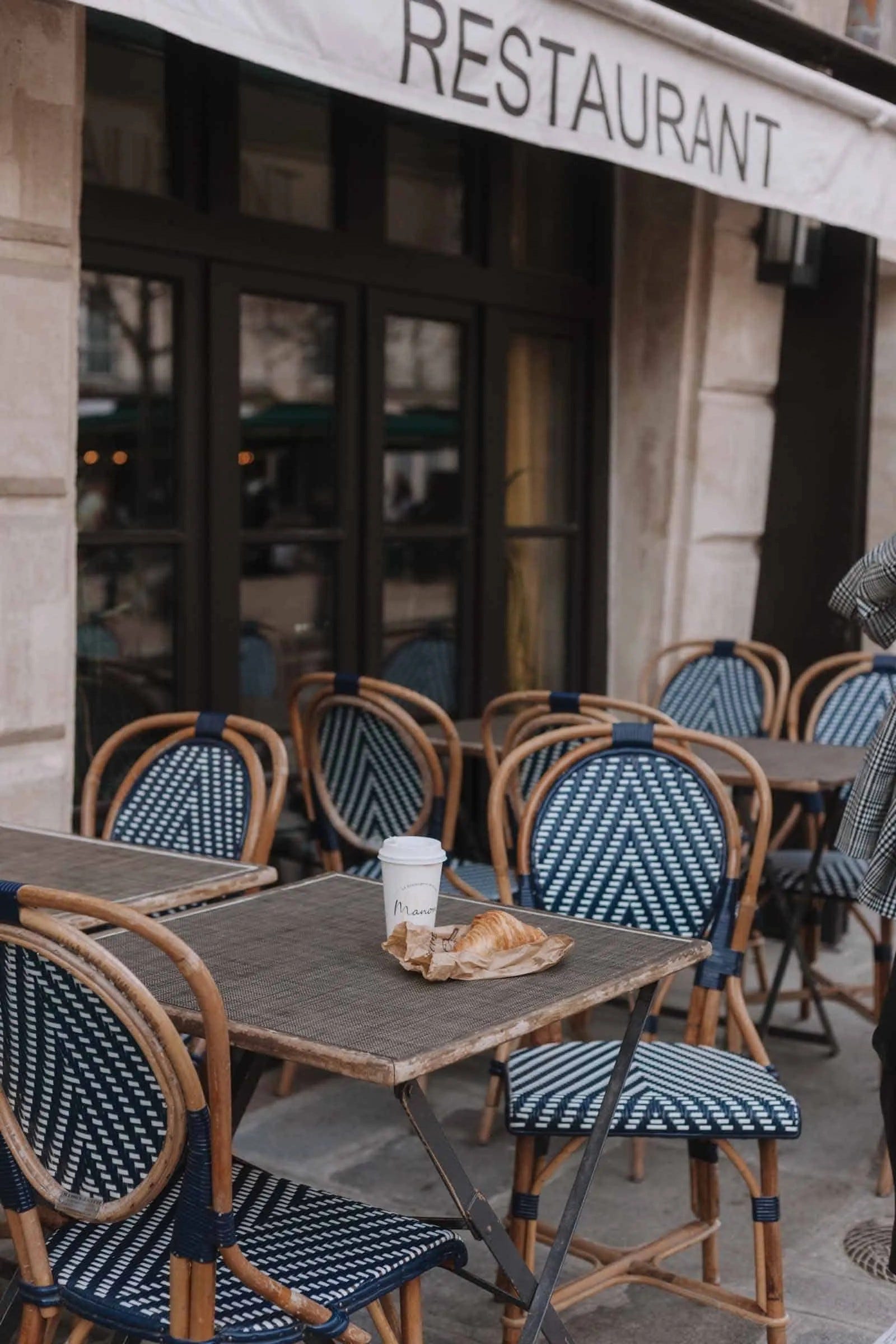
In theory, France is a country that takes food very seriously. Which is why it’s surprising to discover that visible enthusiasm is not always the correct response.
You do not say, “Oh my god, this is amazing,” even if it is.
You take a bite, pause, and allow your face to settle into something more restrained, as though you are considering not just the taste, but the intention behind it—the balance, the execution, whether it deserves approval.
Somewhere between a reaction and a verdict.
A slight narrowing of the eyes is acceptable. A small nod.
You are not reacting.
You are evaluating.
The difference is subtle, but it matters.
Assume You Already Know Things
There are names that exist here in a way that suggests you have always known them.
Writers. Films. People.
If someone mentions Juliette Binoche, you nod.
Not quickly. Not in a way that suggests you are catching up.
Calmly. Casually.
As though this name has always existed somewhere in your internal landscape, even if, until very recently, it absolutely had not.
If necessary, you can repeat it back.
Not to learn it.
Just to confirm that you already knew.
Dress as Though You Didn’t Think About It

Even if you did.
Especially if you did.
This is not about what you wear. It is about your relationship to what you wear.
Nothing should feel too new. Too coordinated. Too intentional.
If something matches perfectly, it becomes suspicious.
I have worn outfits that, in another country, would have been considered entirely reasonable, only to step outside and immediately understand that I had made a series of decisions that, while not wrong, were… too visible.
Too visible, like I had underlined myself in a room where no one else had.
The goal is not to look styled.
The goal is to look like you became this way gradually, without noticing.
Which, of course, requires noticing everything.
Never Rush Anything That Is Not On Fire
Time behaves differently.
This is not a complaint. It is an observation.
You do not move through a day attempting to get ahead of it.
You move through it as though it has already decided how it will unfold.
You wait. You sit.
You stop checking the time in the same way, because it doesn’t seem to be moving with the same urgency you brought with you.
Things take the amount of time they take.
Not slowly. Just… without negotiation.
And after a while, you stop trying to shorten them.
Avoid Direct Questions That Begin With “Why”
This seems harmless.
In some places, it is even encouraged.
Here, it lands differently.
“Why?” is not always received as curiosity. It can feel like a request for justification, or worse, an implication that something should be explained.
I asked it once.
Lightly. Casually.
The response was thorough. Detailed. Slightly defensive.
I have since adjusted.
Do Not Overcommit to Small Talk
There is a point at which conversation simply… stops.
Not awkwardly. Not abruptly.
Just… naturally.
You do not extend it unnecessarily.
You do not fill the silence with additional enthusiasm.
You allow it to end when it ends.
Anything beyond that begins to feel like effort.
And effort, in this context, is not the goal.
Rosé Has a Season
You will not be told when it begins.
You will not be told when it ends.
But at some point, you will understand that it has.
Not because anyone says anything, but because something shifts—the tone, the table, what’s being poured without comment, what appears on the table without discussion, like a decision that has already been made somewhere else.
What was once casual now feels… slightly misplaced.
No one explains it.
They don’t need to.
Adjust Without Announcing That You Are Adjusting
This may be the most important one.
You will learn things.
Slowly. Quietly.
Through observation, through repetition, through small moments where something didn’t land and you weren’t entirely sure why.
You do not narrate this process.
You do not say, “I’m learning so much.”
You simply… adjust.
And over time, the adjustments accumulate.
Not into mastery.
But into something that resembles fluency from a distance.
I am not French.
This remains clear.
But I have learned enough to move through certain situations without disrupting them.
To recognize when something is slightly off, even if I cannot fully explain it.
To sense the moment before it shifts.
To feel it, almost physically, like a change in air pressure.
Which, for now, feels like progress.
Not complete understanding.
Not even close.
But enough to pass through a conversation, a shop, a day…
without leaving a visible mark.
Jenny
Introducing Contributor Jenny Becker
Visit her Contributor Page — Explore more of Jenny’s work→
Thanks for reading MyFrenchLife™ – MaVieFrançaise®! This fabulous article by Jenny Becker is public, and we encourage you to share it.
MyFrenchLife™ – MaVieFrançaise® is a reader-supported publication. To receive new posts and support my work, consider becoming a free or paid subscriber.