Vivre Vite: BookClub Event wrap up
 Tomas k - Senior News Editor
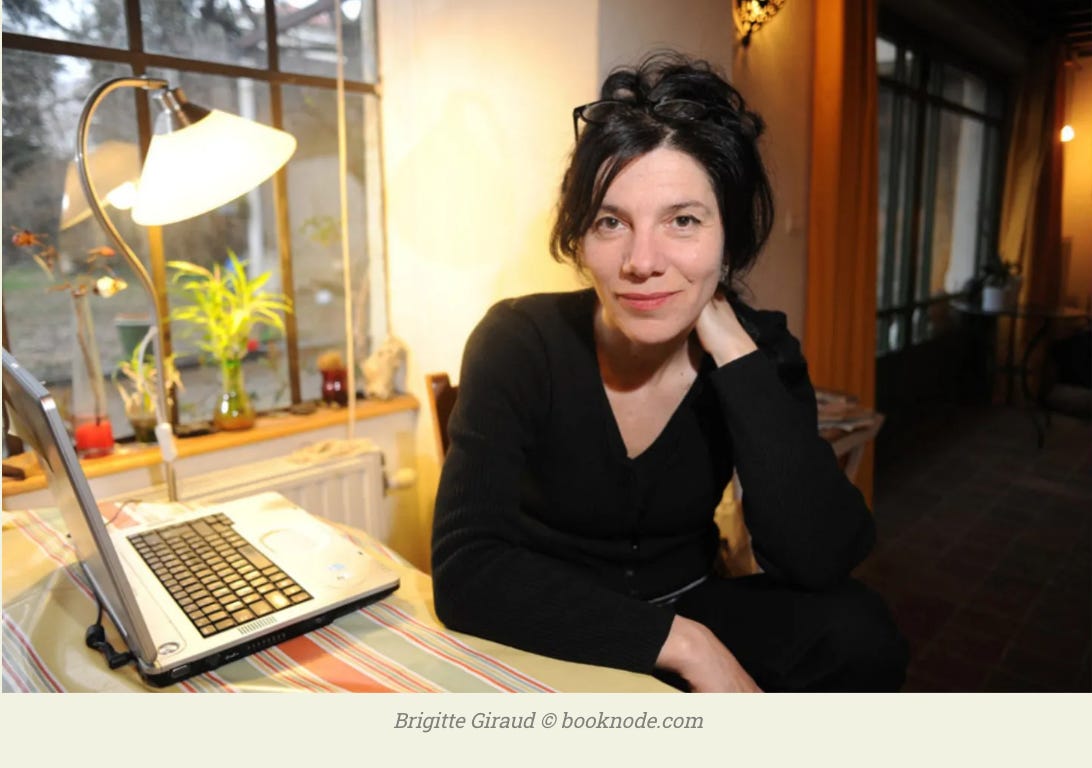
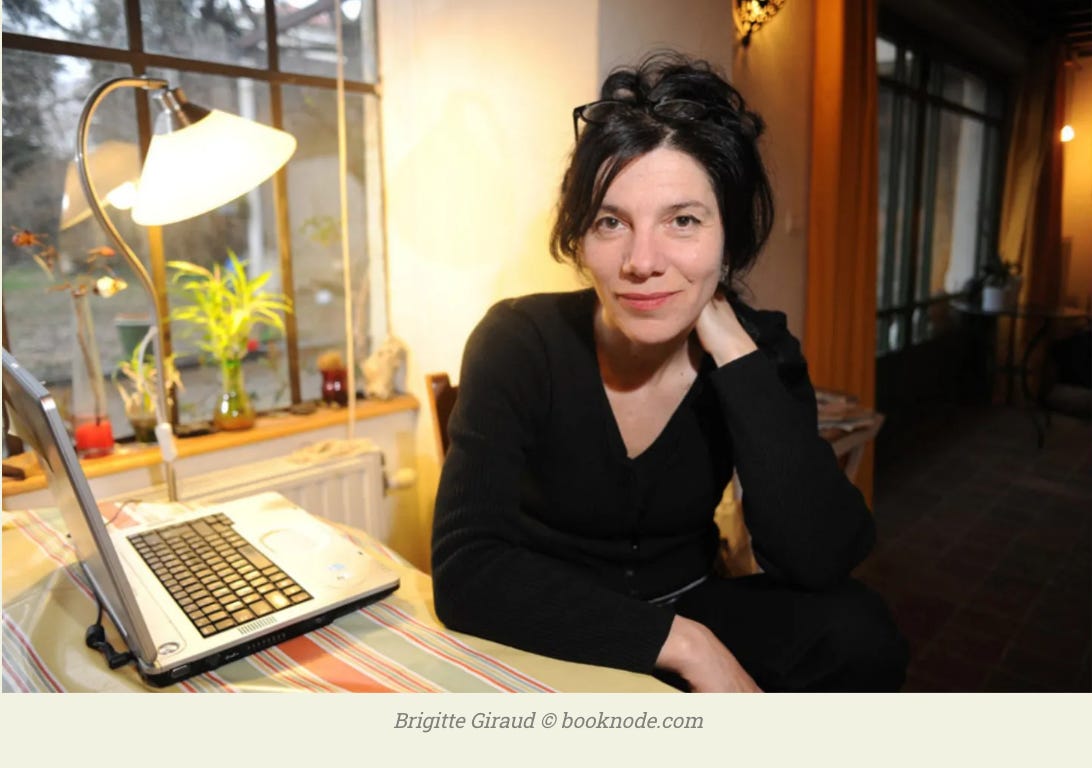
We had a fun BookClub discussion about Brigitte Giraud’s Vivre vite (Live Fast), the winner of the 2022 Prix Goncourt on 7/8 November.
Such a good roll-up! We had a lovely group of enthusiastic readers joining Keith and me from multiple time zones; we all spent about 90 minutes chatting about this memoir of love and remembrance.
There were subscribers who’ve been reading with us since the inception of this club, and others who joined us for the first time.
The book is short, under 200 pages, and nearly half the group read it in French! This really thrills me and confirms our position as a multilingual international community.
Those who read in French or French and English said that they appreciated the language being fairly easy to follow, rather than complex or flowery. Elisabeth, who read it in her native French, praised the structure and the writing style, and Miche appreciated the analysis of fate and responsibility, presented in such an accessible way. For those who also read it in English, there were mixed reviews on the translation, with some finding the English a faithful translation while others considering it somewhat flat given all the detail. Robyn, who read the English version, found it quite simple and wondered whether the book might be better in French.
Overall, everyone enjoyed the book, with most giving it a four out of five, some giving it a five and a few only a three. No one disliked the book, though not everyone was swept away. Lori found some sections tedious, and Carol, who loved the structure and reading it in French, said it didn’t often move her emotionally.
The book’s “what if” structure was generally well received. It required revealing the ending, the death of Giraud’s husband, Claude, early on, but that didn’t detract from the book. I remarked that a book we read in our BookClub years ago also used this device. Both Lullaby (Chanson douce) by Leïla Slimani and Vivre vite (Live Fast) by Brigitte Giraud use the narrative device of starting at the end, paired with retrospective reconstruction (or a ‘howdunit’ structure). Because the tragic outcome is established immediately, both Prix Goncourt-winning books shift the reader’s tension from suspense (what will happen?) to inevitability (how did this happen?).
Readers from very different locations said the book spoke to them. Barbara said the “what if” questions resonate with anyone who reads memoir. Beverly, from Calgary, found the portrayal of difficult life situations relatable and authentic, and Susan, from Colorado, felt the trauma and grief crossed cultural lines easily. Russell was surprised by how closely the book followed the way we question everything in grief, and enjoyed it despite worrying beforehand that it would be too sad. Claudette noted how suddenly life can change, and compared the book to Joan Didion’s work.
We asked whether the book’s style felt distinctly French. Lori found the sparseness of the final chapters characteristic of French films and books, and Carol said the rhythm and voice reminded her of contemporary French authors, though she found the lists could become repetitive.
There was a lively discussion about why sometimes the author was very detailed, and other times vague, and how she periodically went off on what seemed like tangents. Was this how she dealt with her grief? Did writing the book help her find closure? Several readers remarked on how the book reminded them of similar events in their own lives, and Coco found it so heart-wrenching that she was unable to finish, but will now do so after hearing the reactions of others.
Looking back on our wonderful conversation, one thought has really stayed with me. During our chat, we talked about Giraud’s behaviour as a pretty natural reaction to grief. And while that’s definitely part of it, it reminded me of something I read in Sarah Wilson’s ‘First, We Make the Beast Beautiful’ about how we process intense emotional shock, and it got me wondering if what we were actually seeing was a trauma response and not a grief response, or not only a grief response. When a loss happens so suddenly and out of nowhere, it can overwhelm the nervous system in a way that looks just like standard grief on the surface.
We also talked about what to read next.
I sought suggestions for our French BookClub: focused on recently translated, award-winning or best-selling French books, and several of you offered suggestions. Lori put forward Delphine de Vigan’s ‘Based on a True Story’, a novel, though she noted it is about 10 years old.
→I’m still seeking suggestions here for next year. Please leave your suggestions in the comments below. FRENCH BOOKCLUB
I raised the idea of starting our own MyFrenchLife Reading Circle. Keith described the one he attends in Provence, and it got me wondering whether we could build something similar within our community, in smaller groups with more room for conversation. Claudette, Emily, and Miche all said they liked the idea.
→ If interested in participating in our new reading circle, please leave a note in the comments. READING CIRCLE
In early October 2026, I asked “what you’re all reading” and “what I should read next”. Beverly, for one, had just finished reading Gisèle Pelicot’s ‘A Hymn to Life.’ →You can join that conversation here. WHAT I'M READING
I’m Reading…. What Are You Reading at the moment, if anything?
You may be surprised to learn that I read much more widely than books about France or by French authors!
It seems we’re a community that is not only interested in France, but that many of us also enjoy reading.
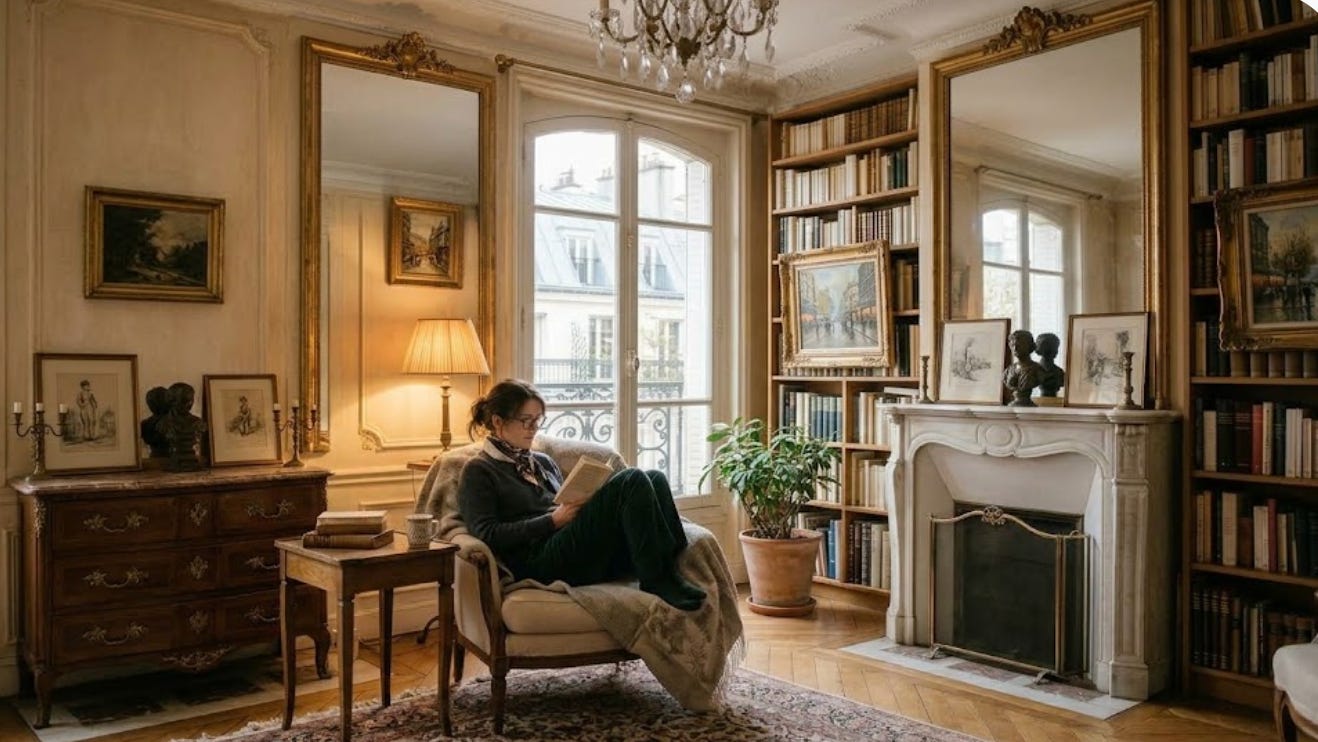
And… given what’s going on in France at the moment, many are feeling discombobulated. Many of us are finding it hard to concentrate: to think, to work, or even to read. But when I’m in that state of mind, even though this may seem a bit counter-intuitive, I force myself to read, and not the newspapers. For me, the ideal is fiction. Good quality fiction to take me to another place and another world. I dont find it escapism, because I am informed about the French troubles… It’s not head in the sand. It’s what I do to temper my nervous system, and it is working, at the moment, at least. You can read it and comment here→
So… I’d love to hear from you BELOW on all three ways we can read together.
Would you like to read for our next BookClub, and what would you add
Would you join a reading circle, and what would make it work for you?
And what are you reading right now, and what should I read next?
As we closed the event, Beverly said it was very worthwhile hearing all the different perspectives on Vivre Vite, and Emily thanked us for hosting the group. Thank you both, and thank you to everyone who joined us.
À bientôt et merci
Judy and Keith
Introducing Fondatrice, Judy MacMahon:
Visit her Contributor Page — Explore more of Judy’s work