La Boulangerie Part Two: Buying Bread with Bourdieu
 Tomas k - Senior News Editor
Because I mistakenly thought I might understand French life, I dove deep into the French sociologist Pierre Bourdieu, whom I find mystifying in a particularly French way.
Like everything else, sociology seems to display national characteristics. From what I can gather, American sociology often seems to be about how our roles keep society functioning, English sociology reflects how social class limits society’s functioning, and French sociology is one never-ending high-school philosophy discussion about how society exists, if at all.
Bourdieu (1930–2002), one of France’s most influential sociologists, argued that invisible structures shape even the most ordinary life events. Personal taste, social manners, cultural habits and socio-economic positions reveal themselves in the smallest things we do, such as buying bread. This is an especially French proposition: that something you have been doing perfectly happily all your life requires an intellectual to explain it to you. So, intrigued, I thought I would give Bourdieu a whirl. Armed with his opaque concepts and having dropped all preconceived notions, I went to the boulangerie with a field notebook titled Bourdieu
Boulangerie Field Notes, Book One.
My first observation concerned bonjour. Until Bourdieu enlightened me, I had bought into the illusion that it was a mere individual greeting. I now realize it is a social ritual. Everyone says it, not as an individual but as a part of something larger. It is a confirmation that all is well. And each time it was spoken, the baker, like a priest or shaman, intoned the prescribed reply. I wrote: “Bonjour has something of the gravity of ‘The Lord be with you’ and ‘And with your spirit.’ The priest officiates; the congregation participates. The bread may now be distributed.” A woman glanced at my notebook. I pretended to be making a shopping list.
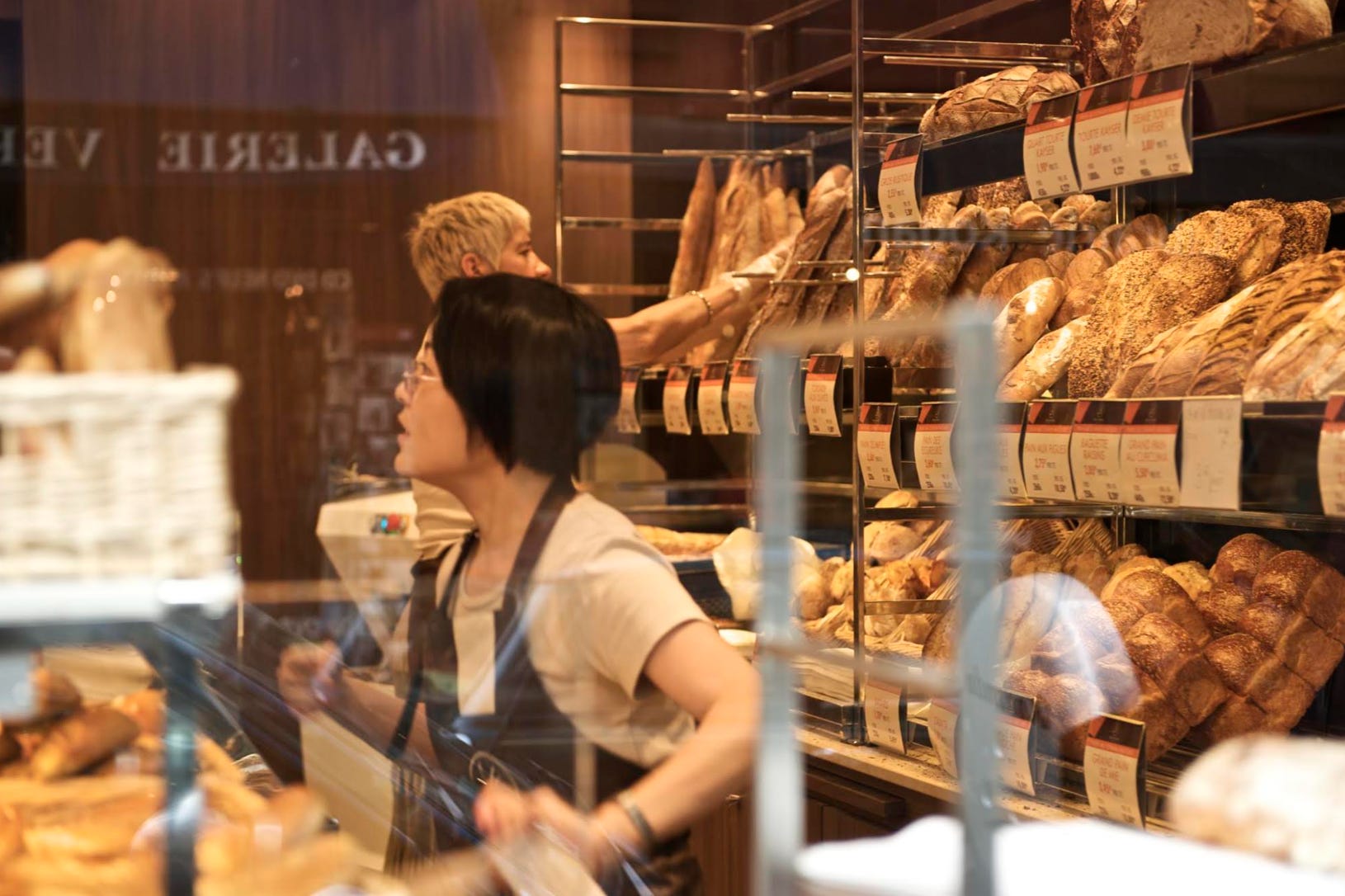
The bakery line was disappointingly conventional for a radical statement on the meaning of life. Rightfully, customers stood behind one another in the order they arrived. I approved of that and, from my childhood fish-and-chip-shop days, understood that the longest line indicated the best bakery. But my line of bread buyers lacked the chatter and banter of a chip shop. They were uncannily calm, seriously waiting, dutifully silent, not a cell phone in sight.
Sartre might reckon there was Being, but almost Nothing happening.
With their proximity to Nothingness, no one needed instructions. They knew when to step forward, how to address the baker, when to order, when to pay and when to move aside.
Everyone simply knew. Bourdieu had a word for this: habitus, socially acquired habits so deeply embedded that we perform them without conscious thought or significance. I want that habitus. I crave habitus deluxe!
I wrote:
Group reaffirms social cohesion throughout bread-distribution system.”
Then the counter came into my anthropological focus. It became a laboratory for what Bourdieu called distinction: the idea that taste is never entirely innocent. What we like can reflect upbringing, education and social position. A loaf might therefore reveal considerably more about its purchaser than intended.
I began classifying customers.
Tradition: possible cultural investment in staying low-key by being conventional.
Bien cuite: assertive; a leader with an aesthetic preference and a hint of adventure.
Pas trop cuite: authentic; refuses to relinquish personal taste for the status of cuite.
Pain au chocolat: should know better but can’t resist.
Croissant aux amandes: unclear. Further research required.
One customer asked for une baguette, others for une tradition.
I noted:
Possibly a probable class distinction.”
By now, even looking at the pastry case generated social structure. Did top shelf positioning indicate symbolic prestige? Was the croissant central because of cultural influence that manipulated people to like croissants?
Despite Bourdieu’s eminence, the French populace remained completely untroubled by the sociological significance of their behavior. Nobody discussed habitus. Nobody appeared concerned about bready cultural capital to be gained or lost. Nobody paused before ordering to consider whether personal taste was the internalized product of social, economic and cultural experience. They simply knew what they wanted. Greetings are traded, preferences communicated; from an early age, children absorb the rules, and familiar customers are gradually recognized. According to my increasingly reflective interpretation of Bourdieu, a whole community mirrors itself while everyone thinks they are acting individually. My notebook reflected such boulangerie profundity.
I had entered my participant observation hoping to understand French society from the detached perspective of a social scientist. But to my surprise, the baker recognized me and remembered my order. Clearly my repeated appearances had accumulated Bourdieusian social value. I was no longer merely shopping for bread. I had been promoted to the rank of an established participant in the local social field.
I put away my notebook, thanked the baker, and walked home carrying my tradition like a champ, as my new rank deserved. I had gone out to buy bread, but thanks to Bourdieu, I came back with a fresh slice of c’est la vie.
Richard
Introducing Richard Holdsworth:
Visit his Contributor Page — Explore more of Richard’s work