The Mitsouko I’ve Never Smelled - Part 3
 Tomas k - Senior News Editor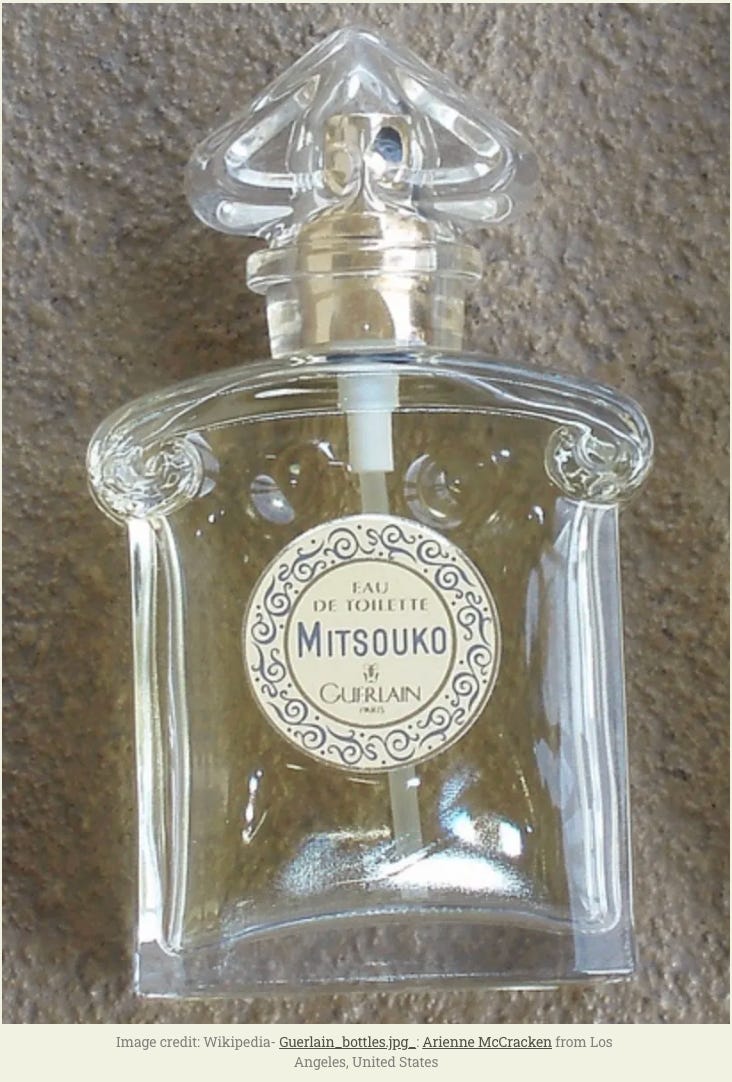
This is the third and final piece in my current perfume mini-series. If you haven’t read the first two, Part 1 is The Immortality Factory: Inside the Osmothèque and France’s War for Perfume’s Soul, and Part 2 is The €4 Billion Nose: When Private Equity Discovered French Perfume Smells Like Money.
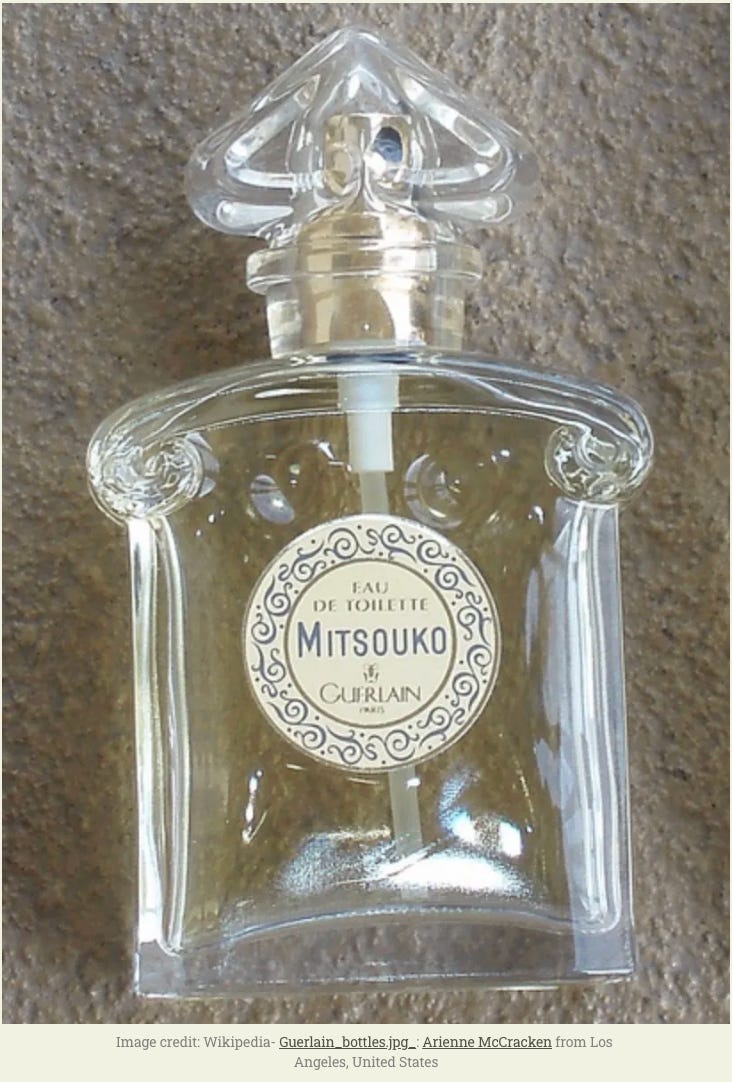
There is a Mitsouko in Versailles that I can’t buy. And now I’m rather desperate to smell it.
It’s not the Mitsouko I could walk into any Guerlain shop and buy today. I mean it’s not the Mitsouko that takes me back to Jacques Guerlain’s creation of 1919, before more than a century of changing materials, changing safety standards and reformulations got between his nose and mine.
It’s at the Osmothèque, France’s extraordinary perfume archive in Versailles, and no, before you ask, I haven’t smelled it. I wish I had. That’s how far down this particular wormhole I’ve gone. But here’s what really caught my attention and has held me there.
If I get myself to Versailles again soon and smell that old Mitsouko, will I be smelling something close to the perfume a woman dabbed onto her skin in Paris in 1919? And if I am, why can’t Guerlain make that perfume for me now?
And I think that that’s where this story gets interesting.
Mitsouko was created by Jacques Guerlain in 1919. It became one of the great chypre perfumes, built around that wonderful contrast of brightness above and something darker, earthier and mossy underneath. Most of that underneath, earthier aroma came from oakmoss. Which is where my trouble started.
Ah. Oakmoss.
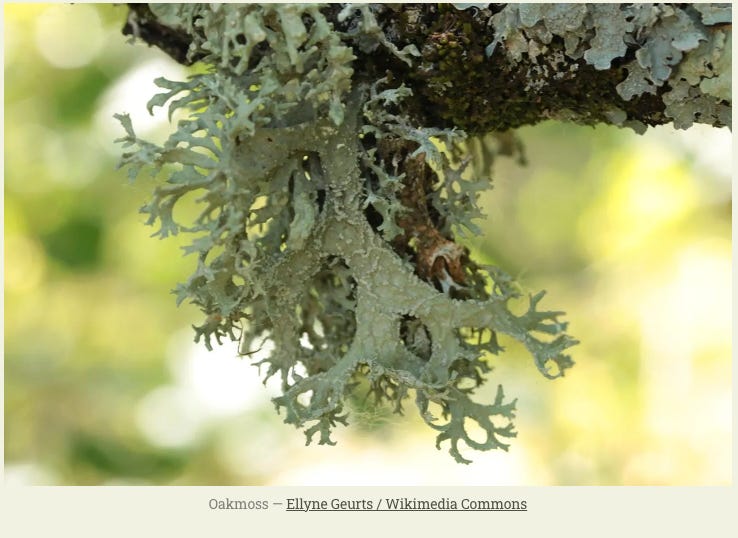
I thought I knew this bit. Oakmoss had been banned, hadn’t it?
So, there we are. French perfume heritage meets modern regulation, and it loses. Something beautiful has been taken away in the interests of making everything safer, cleaner, blander.
I could feel a rather good argument coming on. Except I was wrong. It’s annoying when that happens ;) But that didn’t stop me… When I went back to the actual EU regulation, what I found was much less convenient. There were two naturally occurring components of oakmoss and treemoss extracts, atranol and chloroatranol, that were prohibited in cosmetics after the EU’s Scientific Committee on Consumer Safety identified them among fragrance allergens of particular concern for contact allergy. Oakmoss itself wasn’t simply banned.
Then there’s IFRA, the International Fragrance Association. Its standard for oakmoss extracts restricts their use and includes specifications intended to keep atranol and chloroatranol at trace levels.
Ha! So much for my nice simple villain. And fair enough, really. Once I started reading about sensitisation and contact allergy, it became rather difficult to argue that other people should develop dermatitis so I can have a historically accurate perfume.
But that didn’t quite settle it for me because Mitsouko still exists.
The bottle says Mitsouko. Guerlain says Mitsouko. Someone who has worn it for years still walks into a shop and asks for Mitsouko.
Yet over its long life, the perfume has had to change.
So how much can you alter before the thing itself becomes something else?
I went looking for an answer and found myself with a much more interesting question instead. Yes, really.
When France protects its cultural heritage so fiercely, what happens when protecting the person means changing the heritage?
And this… somehow led me to Camembert. Ha!
Come a little further down this particular wormhole with me…
The rest of this deep-dive is for paid MyFrenchLife members, where we go beyond what happened in France to explore what it means.
Become an annual member or Mighty Supporter to access the full essay →
Paid subscribers can read on